聆风(Leaf)

Search documents
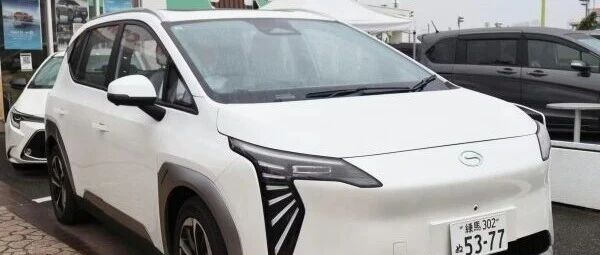
中国EV纷纷进入日本,广汽也要加入
日经中文网· 2025-12-11 02:47
Core Viewpoint - GAC Group plans to enter the Japanese electric vehicle (EV) market in the summer of 2026, aiming for 2,000 orders by 2027, amid declining domestic sales and increasing competition in the EV sector [2][4]. Group 1: Market Entry Strategy - GAC will sell its AION brand EVs in Japan through M Mobility Japan, targeting corporate clients initially with two models: AION UT and AION V [4]. - The AION UT will have a starting price of 3.3 million yen (approximately 149,800 yuan), while the AION V will start at 5 million yen (approximately 227,000 yuan) [4]. - GAC's total sales from January to September 2025 fell by 11% year-on-year to 1.18 million units, with AION brand sales down 20% to 180,000 units [4]. Group 2: Competitive Landscape - Other Chinese automakers, including BYD and Geely, have also entered the Japanese market, with BYD achieving 3,508 units sold in Japan from January to November 2023, a 64% increase year-on-year [6][7]. - The overall EV sales in Japan from January to November 2023 were 55,380 units, with EVs accounting for only about 1.5% of new car sales, indicating significant growth potential [7][9]. - Japanese automakers are responding with new EV models, intensifying competition in the market [9].




日经BP精选:日产君爵16年后才改款,背后是经销商长期被忽视的SOS
日经中文网· 2025-12-05 02:51
Group 1 - Nissan has launched a completely redesigned microvan "Elgrand" for the first time in 16 years, which is expected to be a key model in its new vehicle strategy [5][6] - The new model's release has been delayed, leading to criticism from dealers who accuse the company of being "irresponsible" [6] - The delay in the new vehicle's development is attributed to management's postponed decision-making processes [6]


月销仅1辆 日产艾睿雅处境尴尬
Xi Niu Cai Jing· 2025-12-04 02:44
Core Insights - Nissan's Ariya has experienced disappointing sales in the competitive Chinese electric vehicle market, with only 1 unit sold in September 2025 and a maximum monthly sales of 988 units in October 2023 [2] - Despite being an early entrant in the electric vehicle sector with the Leaf, Nissan has struggled to replicate this success with the Ariya, which has seen persistently low sales since its launch in 2022 [2] Pricing Strategy - The pricing strategy for the Ariya, set between 270,000 to 340,000 RMB, has been a significant factor in its poor sales performance, placing it in a highly competitive segment against established brands like Tesla and emerging Chinese manufacturers [3] - Nissan's brand value does not sufficiently support the high price point in the electric vehicle market, leading to consumer reluctance to purchase [3] - Attempts to lower prices later on have resulted in negative perceptions among early buyers and potential customers, creating a cycle of distrust regarding the brand's value retention [3] Product Performance - The Ariya lacks key selling points such as advanced technology and smart features, which are crucial for attracting Chinese consumers [4] - While it maintains Nissan's traditional strengths in comfort and build quality, its performance metrics, such as a CLTC range of approximately 600 kilometers and acceleration times of 5-7 seconds, do not stand out against competitors [4] - The vehicle's software and user interface fall short compared to systems from competitors like Huawei and Xiaopeng, diminishing its appeal [4] - Issues with winter range reduction and reliability have further tarnished the Ariya's reputation, contradicting earlier claims of its battery's performance in extreme conditions [4] Market Adaptation - In contrast, the Nissan N7, launched at a starting price of 119,900 RMB, has achieved monthly sales of around 6,000 units since April 2023, indicating that Nissan may have learned from the Ariya's challenges and is adapting to the Chinese electric vehicle market [5]

【汽车人】减持雷诺,日产套现50亿推进转型
Sou Hu Cai Jing· 2025-06-21 01:36
Group 1 - Nissan plans to reduce its stake in Renault by selling 5% of its shares, maintaining a 10% ownership after the sale, which is expected to generate 100 billion yen (approximately 4.96 billion RMB) for new model development [2][3][9] - The long-standing alliance between Nissan and Renault, which began in 1999, is transitioning to a "looser cooperation" phase, with both companies agreeing to lower their minimum shareholding from 15% to 10% [3][5] - Nissan's CEO Ivan Espinosa stated that this move does not indicate a weakening of the alliance but aims to focus more funds on product and technology upgrades, reflecting a shift towards a "low binding, high autonomy" model [8][12] Group 2 - Nissan's financial performance has significantly declined, with operating profit dropping by 87.7% to 69.8 billion yen (approximately 3.48 billion RMB) and a net loss of 670.9 billion yen (approximately 33.42 billion RMB) for the fiscal year 2024 [9][10] - The company faced a 17.2% drop in sales in China, the largest decline among mainstream joint venture brands, attributed to an aging product lineup and slow electric vehicle deployment [9][11] - Nissan is exploring new collaboration opportunities, including potential partnerships with Honda to reduce transformation costs and leverage each other's strengths in electric vehicle technology [12][14] Group 3 - The restructuring plan "Re: Nissan" aims to cut 250 billion yen in variable costs and 250 billion yen in fixed costs, including a workforce reduction of 20,000 employees and the closure of seven factories, with a goal of achieving positive operating profit and free cash flow by fiscal year 2026 [14][16] - The key to Nissan's future success lies not in the percentage of share reduction or redefined alliance relationships, but in its ability to catch up in the fields of new energy, intelligence, and market positioning [16]
日产放弃日本九州EV电池工厂计划
日经中文网· 2025-05-09 08:06
Group 1 - Nissan has decided to abandon the plan to build an electric vehicle (EV) battery factory in Kitakyushu, originally planned with an investment of approximately 153.3 billion yen due to poor performance in North America and China [1][2] - The factory was intended to produce lithium iron phosphate (LFP) batteries, which can reduce costs by about 30% compared to traditional batteries, and was expected to be operational by 2025 [1][2] - The cancellation of the project will significantly impact Nissan's EV business, which is already facing challenges from competitors like Tesla and BYD [2] Group 2 - Nissan's new president, Ivan Espinosa, is accelerating restructuring efforts, which include a plan to cut approximately 9,000 jobs, accounting for about 7% of the company's global workforce, and reduce production capacity by 20% [2] - The company has drastically revised its asset values and announced a projected loss of up to 750 billion yen for the fiscal year ending March 2025, compared to a profit of 426.6 billion yen in the previous fiscal year [2]