RACCO

Search documents
中国EV纷纷进入日本,广汽也要加入
日经中文网· 2025-12-11 02:47
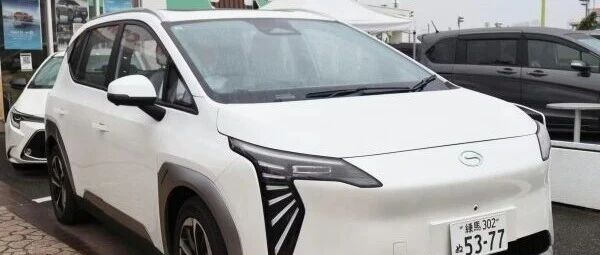
Core Viewpoint - GAC Group plans to enter the Japanese electric vehicle (EV) market in the summer of 2026, aiming for 2,000 orders by 2027, amid declining domestic sales and increasing competition in the EV sector [2][4]. Group 1: Market Entry Strategy - GAC will sell its AION brand EVs in Japan through M Mobility Japan, targeting corporate clients initially with two models: AION UT and AION V [4]. - The AION UT will have a starting price of 3.3 million yen (approximately 149,800 yuan), while the AION V will start at 5 million yen (approximately 227,000 yuan) [4]. - GAC's total sales from January to September 2025 fell by 11% year-on-year to 1.18 million units, with AION brand sales down 20% to 180,000 units [4]. Group 2: Competitive Landscape - Other Chinese automakers, including BYD and Geely, have also entered the Japanese market, with BYD achieving 3,508 units sold in Japan from January to November 2023, a 64% increase year-on-year [6][7]. - The overall EV sales in Japan from January to November 2023 were 55,380 units, with EVs accounting for only about 1.5% of new car sales, indicating significant growth potential [7][9]. - Japanese automakers are responding with new EV models, intensifying competition in the market [9].




王传福:将有重磅技术发布
财联社· 2025-12-05 09:19
Core Viewpoint - BYD's domestic market sales have declined for several consecutive months, attributed to reduced technological leadership and increasing market competition, while overseas sales have surged significantly [2][5]. Sales Performance - In November, BYD sold 480,000 new energy vehicles, a year-on-year decrease of 5.3%, but a month-on-month increase of 8.7%. The domestic sales for the same month were 343,000 units, marking a continuous decline for seven months [2]. - From January to November, BYD's cumulative sales of passenger vehicles reached 4.1306 million units, a year-on-year increase of 10.41%. However, excluding overseas sales, domestic sales showed a slight decline of 4.8% [2]. Product Segmentation - For the first eleven months of the year, BYD's pure electric and plug-in hybrid vehicles each accounted for approximately 50% of total sales, with pure electric vehicle sales reaching 2.066 million units and plug-in hybrids at 2.0646 million units [4]. - Pure electric vehicle sales have shown consistent year-on-year growth for eleven consecutive months, while plug-in hybrid sales have faced challenges, declining for eight consecutive months [4]. Market Dynamics - The overall market for new energy passenger vehicles in China saw retail sales of 1.282 million units in October, a year-on-year increase of 7.3%, with a penetration rate exceeding 57%. However, plug-in hybrid sales fell by 10.3% year-on-year [4]. - Increased competition in the plug-in hybrid segment is attributed to the entry of various domestic and joint venture brands, intensifying market dynamics [4][5]. International Expansion - BYD's overseas sales reached 912,900 units from January to November, a remarkable year-on-year increase of 153.58%. The company is expanding its international presence with new models tailored for markets like Japan [5]. - The company is investing in production facilities in countries such as Turkey and Brazil, anticipating rapid growth in overseas markets, particularly in Europe and Southeast Asia [5]. Technological Advancements - BYD plans to accelerate the "technology parity" strategy, with expectations to introduce advanced technologies to more affordable models by 2026 [5]. - The company aims to enhance its competitive edge by leveraging its engineering team of 120,000 to drive technological breakthroughs [2].

国内乘用车销量七连降,王传福称技术领先度不及以前
Feng Huang Wang· 2025-12-05 08:16
Core Viewpoint - BYD's domestic market sales have declined for several consecutive months, attributed to reduced technological leadership and increasing market competition due to product homogeneity [1][2] Group 1: Domestic Market Performance - In November, BYD sold 480,000 new energy vehicles, a year-on-year decrease of 5.3%, but a month-on-month increase of 8.7% [1] - The cumulative sales of BYD passenger vehicles from January to November reached 4.1306 million units, a year-on-year increase of 10.41%, while domestic sales saw a slight decline of 4.8% when excluding overseas sales [2] - The sales of pure electric models and plug-in hybrid models were nearly equal, each accounting for about 50% of total sales, but plug-in hybrid models have faced significant market challenges recently [2] Group 2: Technological Developments - BYD's chairman indicated that the company is working on significant technological advancements that are not yet disclosed, emphasizing the importance of their 120,000-engineer team for future innovations [1] - The company plans to accelerate "technology parity" by 2026, with advanced technologies being made available in more affordable models [4] Group 3: Overseas Market Expansion - BYD's overseas sales reached 912,900 units from January to November, a remarkable year-on-year increase of 153.58%, driven by strong demand in markets like Turkey and Brazil [2][4] - The company is expanding its manufacturing footprint internationally, with new factories planned in Uzbekistan, Hungary, Turkey, and Indonesia [4] - The introduction of new models tailored for specific markets, such as the K-EV for Japan, is part of BYD's strategy to enhance its global presence [3]
中韩等车企为何挤入日本EV市场?
3 6 Ke· 2025-11-26 04:32
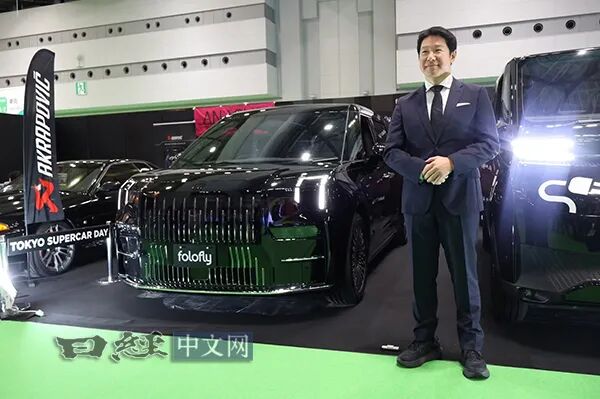
Group 1 - The Japanese market is unique for luxury 7-seater electric vehicles (EVs), with Zhejiang Geely's flagship MPV "Zeekr 009" set to enter in 2026, highlighting a gap in the market [2][3] - Folofly, a Japanese company, will begin accepting pre-orders for the "Zeekr 009" within the year, with deliveries starting in 2026, emphasizing the importance of establishing a local after-sales service network [3] - Kia plans to launch its mid-size EV "PV5" in Japan in spring 2026, collaborating with local companies to establish a sales and service network [5] Group 2 - BYD showcased its light electric vehicle "RACCO" at the Japan Mobility Show, aiming for a comprehensive strategy to penetrate the Japanese market [8] - Taiwanese company Hon Hai Precision Industry is also attempting to enter the Japanese market, with plans to release an EV based on its own developed chassis by 2027 [8] - The competition for EV market dominance in Japan is intensifying, with Chinese and Korean companies positioning themselves favorably against traditional Japanese automakers [10]
中韩等车企为何挤入日本EV市场?
日经中文网· 2025-11-26 02:47
Core Viewpoint - The Japanese market is unique for luxury 7-seater electric vehicles (EVs), with companies like Zhejiang Geely's Zeekr 009 and Kia's PV5 planning to enter this space by 2026, highlighting the competitive landscape for EVs in Japan [2][4][11]. Group 1: Market Entry and Strategy - Folofly, a Japanese company, will start selling Geely's Zeekr brand vehicles in Japan from 2026, focusing on the 6-7 seat flagship MPV Zeekr 009 [4]. - Geely, the second-largest car manufacturer in China, aims to leverage its high-performance and safety-focused EV brand, Zeekr, to capture market share in Japan [4][5]. - Kia plans to launch its mid-sized EV, the PV5, in Japan in spring 2026, collaborating with local firms to establish a sales and service network [7]. Group 2: Market Characteristics and Consumer Behavior - The Japanese EV market has a low penetration rate, with consumers being particularly discerning, which presents both challenges and opportunities for foreign brands [2][11]. - The pricing for the Zeekr 009 starts at 13 million yen (approximately 600,000 RMB), indicating a premium positioning aimed at environmentally conscious corporate clients [5]. - Kia's PV5 will have a starting price of 5.89 million yen (approximately 270,000 RMB) for the cargo version and 6.79 million yen (approximately 310,000 RMB) for the passenger version, catering to diverse consumer needs [7]. Group 3: Competitive Landscape - The global new car sales rankings show that South Korean and Chinese companies are gaining significant market share, with BYD and Geely among the top ten manufacturers [10]. - The competition in Japan is intensifying, with local automakers like Suzuki and Honda also launching new EV models, indicating a robust EV market landscape [11].

比亚迪携轻型EV吹响日本价格战号角
3 6 Ke· 2025-11-07 14:54
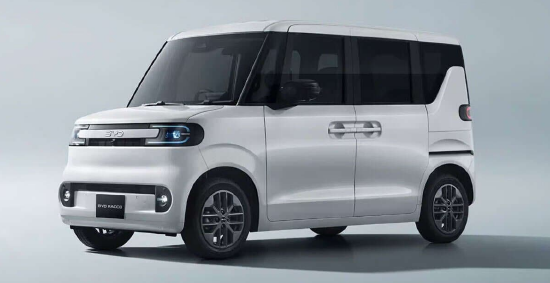
Core Points - BYD has launched a lightweight electric vehicle (EV) named "RACCO" specifically designed for the Japanese market, with a price expected to be below 2 million yen (approximately 93,000 RMB) [2][4] - Lightweight vehicles account for 40% of new car sales in Japan, and BYD aims to leverage this segment to boost EV adoption in a market where EV penetration is currently the lowest among developed countries [2][7] - The lightweight EV "RACCO" is set to be launched in the summer of 2026 and will comply with Japan's unique standards for lightweight vehicles, which include specific size and tax benefits [4][7] Market Context - The average retail price of lightweight vehicles in Japan is projected to be 1.63 million yen (approximately 75,800 RMB) in 2024, highlighting the importance of competitive pricing for EVs to gain market share [7] - BYD's competitive advantage lies in its ability to produce low-cost vehicles through vertical integration, starting from battery production [7][11] - The Japanese EV market is characterized by a low penetration rate of only 1-2% for new car sales, significantly lower than the approximately 20% in overseas markets, primarily due to underdeveloped charging infrastructure and high EV prices [7][8] Competitive Landscape - Other Japanese manufacturers, such as Suzuki, are also entering the lightweight EV market, with Suzuki planning to launch its own lightweight EV by 2026 [7][8] - There are signs of price competition emerging in Japan, with BYD and Toyota both reducing prices for their EV models in response to market dynamics [11] - The introduction of lightweight EVs is seen as a potential catalyst for increasing EV adoption in Japan, aligning with urban driving needs and addressing the limitations of current EV range [8]

比亚迪出海日本:没有从零开始的机会,而是从负数开始
雷峰网· 2025-10-30 11:06
Core Viewpoint - BYD is strategically entering the Japanese microcar market with the launch of the K-Car model RACCO, aiming to increase its market share in Japan, which has a significant demand for microcars [6][21]. Group 1: Historical Context - In 2004, BYD faced a lawsuit from Sony in Japan over lithium-ion battery patents, marking a challenging entry into the international market [2][3]. - BYD's resilience in the face of legal challenges led to a landmark victory in 2005, establishing its reputation and showcasing its technological confidence [4][5]. Group 2: Product Launch and Features - At the Tokyo Motor Show on October 29, 2025, BYD unveiled the K-EV BYD RACCO, a microcar specifically designed for the Japanese market, alongside its first plug-in hybrid model, the Sea Lion 06DM-i [8][12]. - The RACCO measures 3395mm in length, 1475mm in width, and 1800mm in height, accommodating four passengers and adhering to Japanese K-Car regulations [10]. - The vehicle features a high body design and dual sliding doors for ease of access in narrow streets, powered by BYD's blade battery with two range options, set to launch in summer 2026 [11]. Group 3: Market Dynamics - The Japanese microcar market is substantial, with projected sales of 1.56 million K-Cars in 2024, representing 35% of the total market, making it a strategic target for BYD [21]. - However, the market is dominated by local brands, with over 95% of the total car sales in Japan attributed to domestic manufacturers, posing a significant challenge for foreign entrants [23]. Group 4: BYD's Market Position and Growth - Since entering the Japanese market, BYD has evolved from a newcomer to a key player, with its electric buses achieving the highest market share in Japan [17]. - As of January to September 2025, BYD's electric vehicle sales in Japan reached 2,899 units, surpassing Toyota and marking a year-on-year growth of over 66% [18]. Group 5: Future Outlook - BYD plans to establish a lineup of 7 to 8 electric and hybrid models in Japan by 2027, indicating a long-term commitment to the market [18]. - The introduction of the RACCO is seen as a crucial step for BYD to enhance its market presence in Japan [19].
比亚迪在日本首次发布轻型电动车“RACCO”,计划2026年上市
Xin Lang Cai Jing· 2025-10-30 08:56
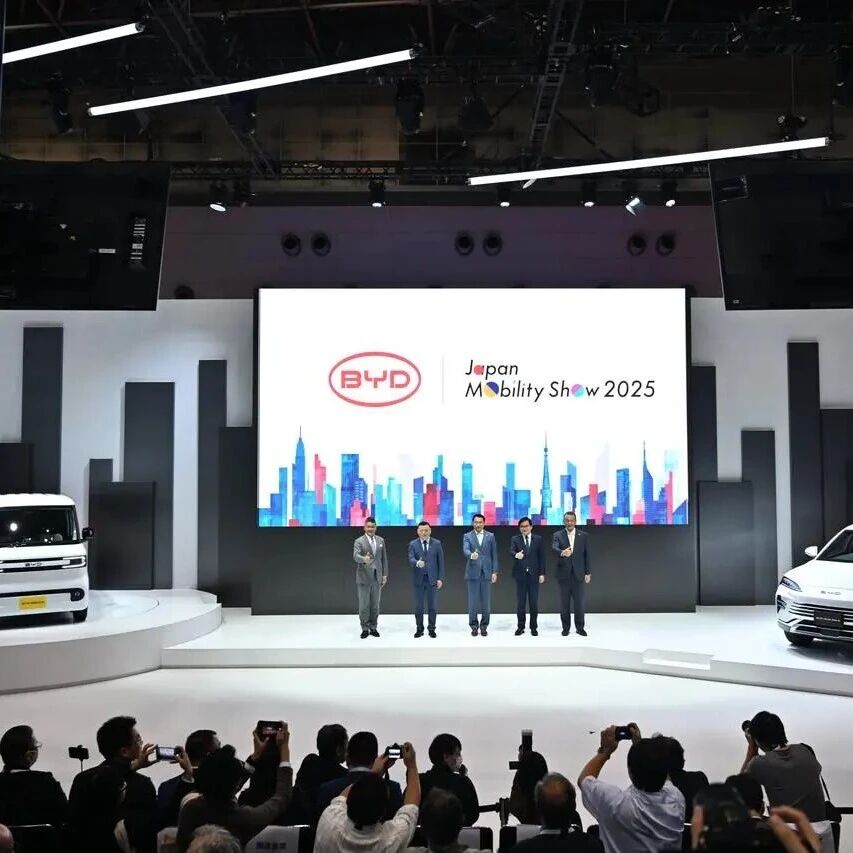
Core Insights - BYD unveiled its lightweight electric vehicle prototype "RACCO" at the Japan Mobility Show, planning to launch it in the Japanese market by summer 2026, marking its first independently developed model for overseas markets [2] - The vehicle dimensions are 3395×1475×1800 mm, designed to accommodate four passengers, targeting the "super high roof" segment that holds over 50% of the Japanese lightweight vehicle market share [2] - The RACCO features front-wheel drive, lithium iron phosphate batteries, and dual sliding doors in the rear, differentiating it from competitors like Nissan's "Sakura" and Honda's "N-ONE e:" [2] - BYD plans to offer both standard and long-range versions of the vehicle, aimed at daily commuting and outdoor travel, with an expected price range of around 2 million yen [2] - The specific battery capacity and range have not yet been disclosed [2] - BYD's Japan President, Atsuki Tofukuji, noted the rapid growth in demand for lightweight electric vehicles amid Japan's aging population, emphasizing the need for models that meet local market characteristics and competitive pricing strategies [2] - Lightweight vehicles account for approximately 40% of new car sales in Japan, a segment traditionally challenging for foreign automakers to penetrate [2] - BYD's entry into the market is expected to intensify competition in the lightweight electric vehicle sector, currently dominated by Nissan's "Sakura" and Mitsubishi's "eK X EV" [2]