
联想海神液冷技术

Search documents
联想+英伟达 干了件大事
2 1 Shi Ji Jing Ji Bao Dao· 2026-01-08 23:05
Core Insights - The dialogue at CES 2026 between Lenovo's CEO Yang Yuanqing and NVIDIA's CEO Jensen Huang marks a significant collaboration aimed at advancing AI technology and infrastructure [2][3][7]. Group 1: Collaboration and Innovation - Lenovo and NVIDIA announced the "Lenovo AI Cloud Super Factory," which aims to significantly reduce the "time to first token" for AI deployment and scale up to 100,000 GPUs to support trillion-parameter AI models [2][7]. - The collaboration leverages NVIDIA's latest Vera Rubin system, designed for advanced inference and AI agents, providing robust support for the initiative [2][8]. Group 2: AI Development and Strategy - Yang Yuanqing introduced the concept of "Hybrid AI," emphasizing the coexistence of personal, enterprise, and public intelligence to meet diverse needs [4][5]. - The focus on "human-centric intelligence" reflects a shift towards AI that serves individual and enterprise needs, moving beyond generic models [11][12]. Group 3: Infrastructure and Technology - The "AI Cloud Super Factory" aims to industrialize AI infrastructure, ensuring predictable performance and manageable operations, addressing the evolving demands of AI applications [8][9]. - Lenovo's liquid cooling technology will be integrated into the project, enhancing efficiency and safety in AI deployments [9]. Group 4: Market Position and Future Outlook - The partnership positions Lenovo as a leader in integrating design, manufacturing, and global deployment of AI infrastructure, while NVIDIA maintains its dominance in computational power [3][12]. - The dialogue suggests a pivotal moment in AI development, transitioning from algorithmic advancements to practical applications, with infrastructure builders like Lenovo and NVIDIA taking center stage [12].



联想、英伟达干了件大事
21世纪经济报道· 2026-01-07 02:51
Core Viewpoint - The dialogue between Lenovo's CEO Yang Yuanqing and NVIDIA's CEO Jensen Huang at CES 2026 highlights a significant collaboration aimed at advancing AI technology through the establishment of the "Lenovo AI Cloud Super Factory," which is expected to enhance AI deployment efficiency and scalability [1][6]. Group 1: Collaboration and Technology - Lenovo and NVIDIA are collaborating to create the "Lenovo AI Cloud Super Factory," which aims to support cloud service providers by significantly reducing the "time to first token" for AI deployment and scaling up to 100,000 GPUs [1][6]. - NVIDIA's latest platform, Vera Rubin, will play a crucial role in this collaboration, providing robust support for advanced AI training and inference systems [1][6]. - The partnership is positioned as a transformative step in making AI more accessible and practical for various applications, moving from cloud-based solutions to real-world usage [2][6]. Group 2: AI Strategy and Insights - Yang Yuanqing emphasizes the need for a hybrid approach to AI, combining personal, enterprise, and public intelligence to meet diverse user needs, moving beyond generic models [4][9]. - The concept of "Hybrid AI" aims to create tailored intelligent solutions that address the specific requirements of individuals and businesses, ensuring data privacy and security [4][9]. - The collaboration seeks to address the challenges of high inference costs and data privacy concerns that have hindered the widespread adoption of AI technologies [4][10]. Group 3: Infrastructure and Future Outlook - The "Lenovo AI Cloud Super Factory" is designed to industrialize AI infrastructure, making performance predictable and deployment manageable, which is essential as AI evolves to understand complex environments [6][10]. - Lenovo's capabilities in design, manufacturing, and global deployment will complement NVIDIA's expertise in chip and acceleration platforms, enhancing the overall effectiveness of the AI solutions [7][10]. - The partnership is expected to quadruple in scale over the next two years, indicating strong growth potential in the AI infrastructure market [7].

联想+英伟达,干了件大事
2 1 Shi Ji Jing Ji Bao Dao· 2026-01-07 02:35
Core Insights - The dialogue at CES 2026 between Lenovo's CEO Yang Yuanqing and NVIDIA's CEO Jensen Huang signifies a pivotal moment for the future of AI technology [3][4] - Lenovo announced a major collaboration with NVIDIA to establish the "Lenovo AI Cloud Super Factory," aimed at accelerating AI deployment for cloud service providers [3][4] Group 1: Collaboration and Technology - The partnership between Lenovo and NVIDIA is described as a convergence of the "Device King" and the "Power King," highlighting Lenovo's extensive market in computing devices and NVIDIA's dominance in GPU technology [4] - The "Lenovo AI Cloud Super Factory" aims to reduce the "time to first token" for AI deployment and scale up to 100,000 GPUs, supporting trillion-parameter AI models [3][4][9] - NVIDIA's latest platform, Vera Rubin, will play a crucial role in this collaboration, providing the necessary computational power for advanced AI applications [3][4] Group 2: AI Development and Strategy - Yang Yuanqing introduced the concept of "Hybrid AI," emphasizing the need for AI solutions that cater to individual and enterprise-specific needs rather than relying solely on generalized models [5][6][7] - The strategy aims to create personalized AI solutions, addressing concerns over data privacy and the high costs associated with generative AI [7][8] - The collaboration is positioned to transform AI infrastructure into a more industrialized and manageable resource, akin to utilities like water and electricity [14] Group 3: Future Implications - The dialogue suggests a shift in AI development focus from algorithmic advancements to practical applications, with Lenovo and NVIDIA emerging as key players in this new phase [14] - The integration of Lenovo's liquid cooling technology into the AI Cloud Super Factory plan indicates a commitment to efficient and sustainable AI infrastructure [9][13] - The partnership is expected to quadruple in scale over the next two years, reflecting the growing demand for AI capabilities [9]
联想携手英伟达推出“联想人工智能云超级工厂”
Xin Lang Cai Jing· 2026-01-07 02:33
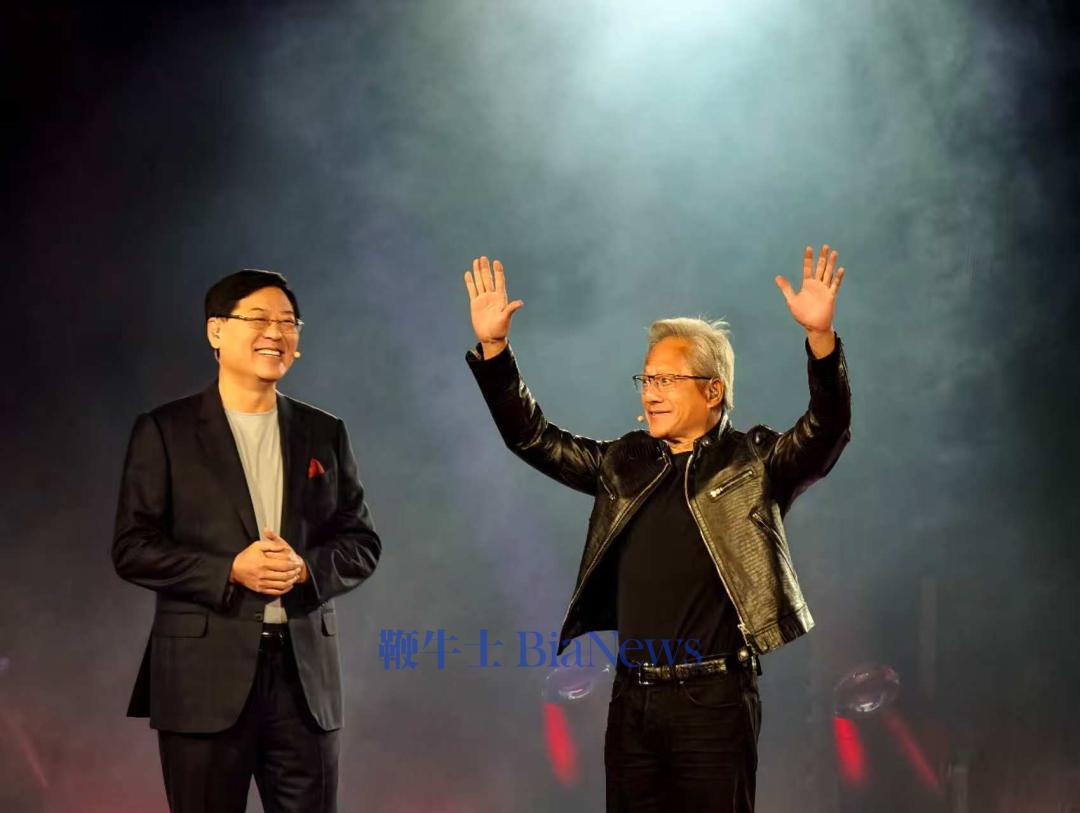
Core Viewpoint - Lenovo and NVIDIA announced a joint initiative to launch a gigawatt-level AI factory plan called "AI Cloud Super Factory" aimed at accelerating enterprise-level AI development [1] Group 1: Partnership and Collaboration - The collaboration marks a new milestone in the 30-year partnership between Lenovo's Chairman and CEO Yang Yuanqing and NVIDIA's CEO Jensen Huang [1] - Yang Yuanqing revealed that Lenovo's liquid cooling technology will be deeply integrated into this new initiative [1] Group 2: Industry Transformation - Jensen Huang emphasized that the current era represents a new platform starting point, with applications now being built on AI rather than traditional systems like Windows and PCs [1] - Huang stated that AI will become the foundational platform for the future, potentially serving as a part of the operating system [1]
黄仁勋、杨元庆官宣合作:推出「人工智能云超级工厂」
Di Yi Cai Jing· 2026-01-07 02:10
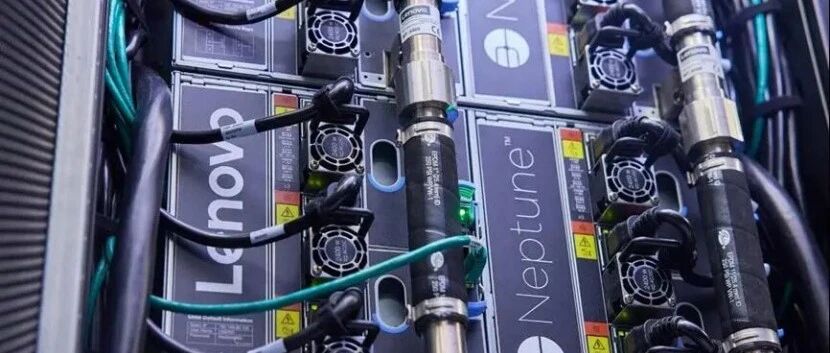
Group 1 - The core announcement is the collaboration between Lenovo and NVIDIA to launch the "Lenovo AI Cloud Super Factory" [1] - NVIDIA's newly released Rubin Platform will be part of this collaboration [2] - The initiative aims to significantly reduce the "time to first token" for AI deployment and rapidly scale to 100,000 GPUs, supporting trillion-parameter-level intelligent agents and large language models [3] Group 2 - NVIDIA's CEO Jensen Huang emphasized that the partnership is based on Lenovo's capability to manufacture a majority of the world's supercomputers and its ability to integrate self-designed manufacturing with global services [5] - Lenovo's Neptune liquid cooling technology will be deeply integrated into this plan [5]
黄仁勋、杨元庆官宣合作:推出“人工智能云超级工厂”
Di Yi Cai Jing· 2026-01-07 01:47
Core Insights - Lenovo Group announced a partnership with NVIDIA to launch the "Lenovo AI Cloud Super Factory" during the TechWorld conference on January 6 [1] - The collaboration aims to significantly reduce the "time to first token" for AI deployment and rapidly scale up to 100,000 GPUs, supporting trillion-parameter AI models and large language models [1] - NVIDIA's CEO highlighted Lenovo's capability in manufacturing a majority of the world's supercomputers and its ability to integrate self-designed manufacturing with global services [1] - Lenovo's liquid cooling technology will be deeply integrated into this initiative [1]
全球AI争霸背后的电力较量:能源焦虑与联想液冷的爆发式增长
Zhi Tong Cai Jing· 2025-11-21 05:47
Group 1: AI and Energy Demand - The AI competition has shifted from chip supply to power supply, with significant implications for data center investments, projected to reach $3 trillion globally [1] - AI's energy consumption is rapidly increasing, with the energy demand for AI inference workloads expected to reach petawatt-hours by 2026, potentially overwhelming power grids [2][3] - The cost of electricity for data centers is substantial, with a 1 GW data center potentially incurring annual electricity costs of $700 million to $876 million [3] Group 2: Energy Strategies of Tech Giants - Tech companies are increasingly viewing energy as a survival necessity, with energy efficiency improvements translating to significant cost savings [4] - Major tech firms are adopting aggressive strategies, such as building their own power plants to ensure energy supply for their data centers [5][6] - The "Stargate" project, involving OpenAI, SoftBank, and Oracle, aims to invest $500 billion in constructing multiple giant data centers globally [6] Group 3: China's Energy Strategy - China is leveraging its clean energy advantages and policy guidance to meet AI computing power demands, with a massive $1.2 trillion power project expected to fulfill 75% of the national AI computing needs [7] Group 4: Cooling Technologies - AI data centers face a cooling crisis, with cooling energy consumption accounting for approximately 40% of total power demand [9] - Liquid cooling technology is becoming essential for AI data centers, with its ability to handle higher heat densities compared to traditional air cooling methods [11] - The global data center cooling market is projected to grow from $18.78 billion in 2025 to $42.48 billion by 2032, with a CAGR of 12.4% [11] Group 5: Lenovo's Position in Liquid Cooling - Lenovo has established itself as a key player in the liquid cooling market, with a 154% year-on-year revenue growth in its liquid cooling technology [13] - The company’s liquid cooling solutions have demonstrated significant energy efficiency, achieving a PUE value below 1.1 [13] - Lenovo's liquid cooling systems have been deployed in over 80,000 units globally, showcasing its competitive edge and market recognition [14] Group 6: Future Outlook - The global AI boom is transforming energy infrastructure into a high-growth asset class, with liquid cooling technology becoming a critical solution for energy efficiency [15] - Companies like Lenovo are positioned to benefit from the increasing demand for efficient cooling solutions in the AI sector [15]
联想集团Q2业绩再超预期:AI基建热潮下被低估的“算力资产”
IPO早知道· 2025-11-20 07:21
Core Viewpoint - Lenovo Group's AI-related business revenue has increased to 30% of total revenue in FY26Q2, marking a 13 percentage point year-on-year increase, indicating strong growth in AI infrastructure and products [3][4]. Financial Performance - Lenovo's revenue for FY26Q2 reached 146.4 billion RMB, a 15% year-on-year increase, setting a record for the fiscal quarter and exceeding market expectations [3]. - Adjusted net profit rose by 25% year-on-year to 3.66 billion RMB, significantly outpacing revenue growth [3]. AI Business Growth - AI-related revenue now constitutes 30% of total revenue, up from 17% year-on-year, highlighting the growing importance of AI in Lenovo's business strategy [3][4]. - The Intelligent Devices Group (IDG) reported revenue of 108.1 billion RMB, a 12% increase, with AI PCs driving structural demand upgrades [4]. Infrastructure Solutions - The Infrastructure Solutions Group (ISG) achieved revenue of approximately 29.3 billion RMB, a 24% year-on-year increase, with significant growth in AI infrastructure revenue [5]. - Lenovo's liquid cooling technology revenue surged by 154% year-on-year, maintaining a leading position in global green computing [5][20]. Market Trends - The global AI capital expenditure is projected to exceed 500 billion USD in 2026, driven by increasing demand for computing power and AI infrastructure [6]. - The market is currently focused on companies that directly benefit from AI capital expenditures, rather than those involved in AI models and applications [9]. Investment Opportunities - Lenovo's valuation remains attractive, with a price-to-earnings ratio of approximately 12, significantly lower than peers like SMIC at 154 [23]. - The company is well-positioned to benefit from the ongoing AI infrastructure build-out, with strong performance in both cloud and enterprise infrastructure segments [15].
联想第二财季营收超疫情时所创纪录,AI相关收入占比近三成
Sou Hu Cai Jing· 2025-11-20 02:13
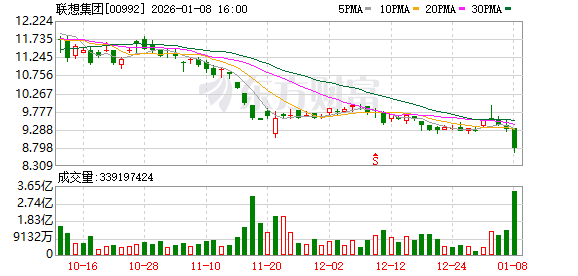
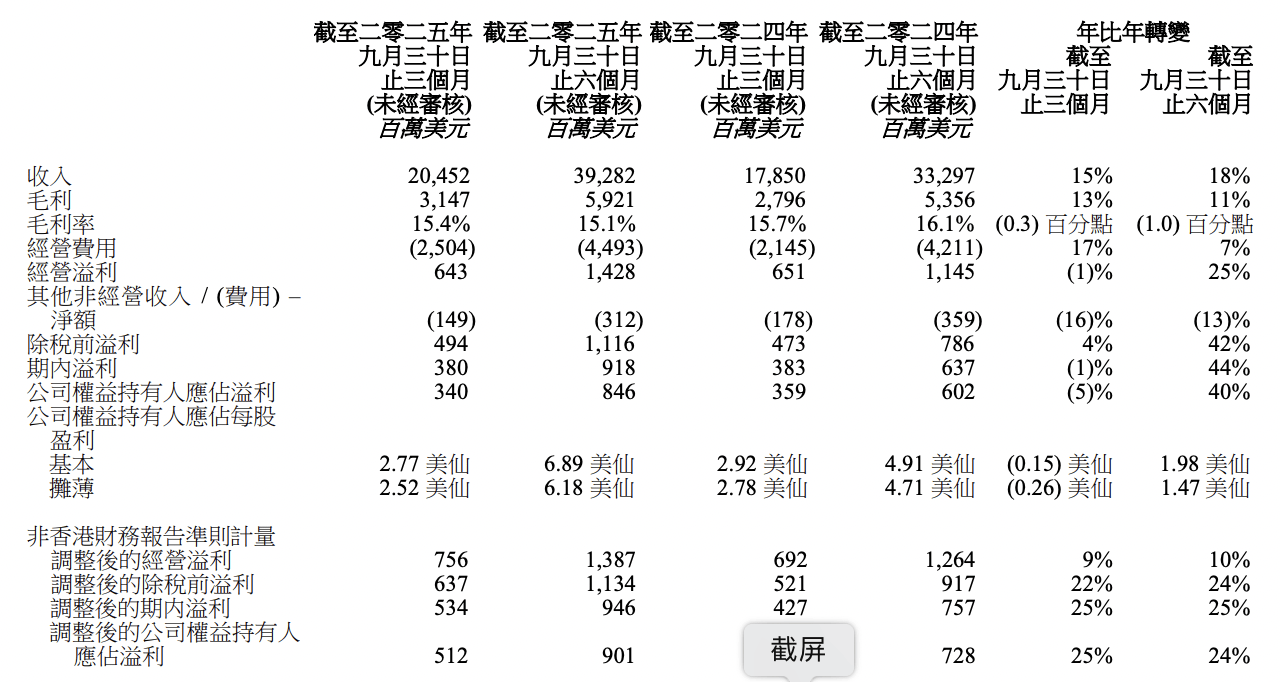
Core Viewpoint - Lenovo Group reported strong financial results for the second quarter of the fiscal year 2025/26, with revenue and net profit exceeding market expectations, driven by significant growth in AI-related business [1][2]. Financial Performance - Revenue for the second quarter reached $20.45 billion, a year-on-year increase of 15%, surpassing previous records set during the pandemic [1][2]. - Adjusted net profit grew by 25% year-on-year to $512 million, outpacing revenue growth [1][2]. - For the first half of the fiscal year, total revenue reached a record $39.28 billion, up 18% year-on-year, with adjusted profit attributable to equity holders increasing by 24% to $901 million [1][2]. Business Segments - The Intelligent Devices Group (IDG) saw a 15% year-on-year revenue increase, with operating profit rising by 13% [3]. - The PC business achieved a record high in the second quarter, with a global market share increase of 1.8 percentage points to 25.6% [3]. - AI-related revenue now accounts for 30% of total revenue, up 13 percentage points year-on-year, indicating a successful transition from strategic planning to actual performance contribution [2][3]. Infrastructure Solutions Group (ISG) - AI server revenue experienced high double-digit growth, although the segment reported an operating loss of $118 million due to increased investments in AI capabilities and infrastructure transformation [5]. - The Neptune liquid cooling technology contributed significantly to revenue growth, achieving triple-digit year-on-year growth in the second quarter [5]. Services Solutions Group (SSG) - The SSG recorded a record revenue increase of 19% year-on-year, with operating profit margin rising to 22%, leading to a 28% increase in operating profit [5]. - Operations and project solutions services accounted for a historical high of 58.9% of total revenue in this segment [5]. Regional Performance - The Asia-Pacific region (excluding China) saw a 30% year-on-year revenue increase, driven by strong smartphone sales during promotional events [5]. - Despite geopolitical challenges, the Chinese market maintained double-digit growth, with a 24% year-on-year revenue increase attributed to the popularity of AI PCs and high-end product offerings [6]. Market Reaction - Following the positive earnings report, Lenovo's stock price rose over 2%, reaching HKD 9.88, with a total market capitalization of HKD 122.6 billion [7].
AI散热需求爆发 联想Q2海神液冷技术收入同比增长154%
Ge Long Hui· 2025-11-20 00:57
Core Insights - Lenovo Group reported a 15% year-on-year revenue growth for Q2 of FY2025/26, reaching 146.4 billion RMB, marking a record high for the quarter and significantly exceeding market expectations [1] - The Infrastructure Solutions Group (ISG) generated approximately 29.3 billion RMB in revenue, reflecting a 24% year-on-year increase, maintaining a growth trend over multiple quarters [1] - The ISG operating profit margin improved by 0.3 percentage points year-on-year and 1.2 percentage points quarter-on-quarter, indicating a stabilization and recovery in business profitability [1] - The cloud infrastructure business achieved a historical high in revenue for the same period, with AI infrastructure business experiencing rapid growth and high double-digit revenue increase in AI servers, supported by strong order reserves for future deliveries [1] Industry Insights - The demand for high-performance computing is rapidly increasing, while energy consumption and heat dissipation challenges in data centers are becoming critical growth constraints [2] - Lenovo's liquid cooling technology revenue surged by 154% year-on-year, maintaining a leading position in global green computing [2] - The "Sea God" liquid cooling solution features a 100% full-cover cold plate design, reducing system power consumption by 40% compared to traditional air cooling, with a PUE value dropping below 1.1 [2] - The newly launched "dual-loop" phase change immersion cooling system enhances heat dissipation capabilities, doubling the efficiency compared to traditional solutions, with a system PUE as low as 1.035 [2] - As the global AI landscape shifts towards a focus on inference over training, there will be a rapid increase in demand for local inference, industry-specific AI, and high-efficiency infrastructure [2] - Lenovo ISG has established a stronger competitive barrier in the hybrid AI infrastructure sector, leveraging its dual-track strategy covering both cloud and enterprise infrastructure, which is expected to continue driving high-quality growth momentum [2]