腾讯元宝派

Search documents
大疆宣传视频被曝抄袭;泡泡玛特要做家电;经济日报评论员文章:外卖大战该结束了;胖东来员工平均收入9400元丨邦早报
创业邦· 2026-03-26 00:55
Group 1 - The article discusses the end of the "takeout war," emphasizing that price wars in the food delivery industry not only affect restaurant owners but also impact the livelihoods of ordinary people. It advocates for healthy competition based on technological innovation, efficiency improvement, and service optimization rather than capital-intensive cash-burning games [2] - Five express delivery companies, including YTO Express and Jitu Express, have jointly announced a price adjustment due to rising transportation costs from increased oil prices. In Guizhou, the minimum delivery fee has been raised to 1.2 yuan per ticket, with a 0.05 yuan increase per ticket [3] Group 2 - Pinduoduo reported a total revenue of 431.8 billion yuan for the year, marking a 10% year-on-year increase, although net profit declined. This is the first financial report since the implementation of a co-chairman system [3] - Pop Mart International Group projected a revenue of 37.12 billion yuan for 2025, with a year-on-year growth of 184.7%. The company reported significant growth across all major markets, including a 748.4% increase in the Americas [3] - Haidilao announced a revenue of 43.225 billion yuan for 2025, with a 1.1% year-on-year increase. The company's takeaway business revenue grew by 111.9% [3] Group 3 - Momenta, a smart driving solution provider, has secretly submitted its IPO application to the Hong Kong Stock Exchange, with an expected valuation exceeding 100 billion yuan [8] - SpaceX is reportedly planning to raise up to 75 billion dollars in its IPO, with discussions indicating a potential valuation of over 1.75 trillion dollars [12] - Japan's average monthly salary for full-time employees reached 340,600 yen in 2025, marking a 3.1% increase from the previous year, with the gender pay gap narrowing to the smallest level on record [17]


腾讯研究院AI速递 20260326
腾讯研究院· 2026-03-25 16:01
Group 1: Arm's AGI CPU Launch - Arm has launched its first self-designed data center CPU, the AGI CPU, utilizing TSMC's 3nm process with a 136-core Neoverse V3 architecture, a clock speed of 3.7GHz, and a TDP of 300W, specifically designed for AI infrastructure [1] - The chip abandons multi-threading design, achieving over 2x performance compared to x86 platforms, supporting air cooling for 8160 cores and liquid cooling for 45000 cores, with a capital expenditure saving of $10 billion per GW of computing power [1] - Meta is an early partner in the joint development, with over 50 companies including Cerebras, OpenAI, and Cloudflare supporting it, and Arm anticipates a total addressable market (TAM) of $100 billion for intelligent CPU [1] Group 2: OpenAI's Sora Shutdown - OpenAI has officially announced the shutdown of its Sora video generation platform and related APIs, reallocating resources towards productivity tools development, with an IPO expected as early as Q4 [2] - Disney has terminated all collaborations with OpenAI, including a proposed $1 billion investment and over 200 IP licensing agreements, while Sora's development will shift towards long-term simulations in robotics [2] - The AI video sector is experiencing rapid growth in China, with platforms like ByteDance's Seedance and Kuaishou integrating video ecosystems, resulting in over 60 million global creators [2] Group 3: Anthropic's Development Framework - Anthropic has extracted the generator-evaluator structure from GANs and applied it to multi-agent systems, addressing two major failure modes: AI's self-evaluation bias and context anxiety leading to incomplete tasks [3] - A four-dimensional scoring standard has been established in front-end design to drive iterative feedback loops, with aesthetic leaps occurring after 5 to 15 iterations; a planner-generator-evaluator tri-agent collaboration architecture is used for full-stack development [3] - With the enhancement of the Opus 4.6 model, the sprint structure and context reset can be removed, significantly simplifying the architecture; a functional DAW music production software was built in 4 hours at a cost of $124 using a single prompt [3] Group 4: WeChat's ClawBot and WorkBuddy Integration - WeChat has launched the ClawBot plugin, which integrates with Tencent's self-developed WorkBuddy, allowing users to remotely control computers to complete complex tasks via a simple scan [4] - WorkBuddy includes 141 industry experts across 12 fields, enabling the creation of multi-agent teams for parallel task execution, along with an automatic scheduling feature for unattended execution [4] - The product operates locally, ensuring data remains on the machine, and supports integration with major models like DeepSeek, as well as various IM platforms including WeChat, Feishu, and DingTalk, currently available for free [4] Group 5: MiniMax's Open Source Office Skills - MiniMax has released four open-source Office Skills (docx/xlsx/pdf/pptx) under the MIT license, addressing the issue of AI-generated documents being "openable but not deliverable" [6] - Word utilizes .NET OpenXML SDK to ensure format integrity, Excel bypasses Python libraries to directly manipulate XML while preserving formulas and macros, PDF separates cover and body rendering engines, and PPT defines four visual style recipes [6] - A self-circulating evolution mechanism comprising Execute-Evaluate-Fix phases has been established to continuously refine Skills around failure examples, achieving optimal results with the M2.7 model [6] Group 6: Tencent's Yuanbao Desktop Launch - Yuanbao has launched its desktop version, allowing real-time message synchronization between mobile and computer, with features for private chatting and querying while chatting [7] - The desktop version supports video calls, screen sharing, and convenient file drag-and-drop uploads, enhancing user experience [7] - The ClawBot social feature is also available on the desktop, allowing collaborative use of bots, with a limited-time free shrimp activity ongoing [7] Group 7: Apple's Independent Siri App Development - Bloomberg reports that Apple is internally testing an independent Siri application, featuring a complete dialogue interface, history records, and document upload capabilities, set to debut with iOS 27 at WWDC in June [8] - The new Siri aims to replace Spotlight as a unified search entry point, integrating into Dynamic Island and various system areas, allowing direct questioning of selected text and keyboard shortcuts [8] - Apple has signed a $1 billion agreement with Google to incorporate a customized Gemini model with 1.2 trillion parameters, adopting a modular architecture to ensure future engine replaceability and compensate for technological gaps [8] Group 8: LiteLLM Supply Chain Attack - The Python library LiteLLM, with a monthly download rate of 97 million, was poisoned on PyPI, with malicious versions 1.82.7 and 1.82.8 capable of stealing SSH keys, cloud credentials, API keys, and database passwords [9] - Attackers uploaded malicious packages using stolen PyPI release tokens, bypassing code reviews; the malicious code could also move laterally within Kubernetes clusters and implant persistent backdoors [9] - Ironically, the attack code was discovered due to a bug that caused exponential process forking, leading to crashes; Karpathy warns that supply chain attacks pose a significant threat to modern software, advising developers to audit source code and implement internal checks [9] Group 9: USC's Open Source Humanoid Robot Model - USC has released the open-source humanoid robot base model Ψ₀, which leads in success rates compared to NVIDIA's latest GR00T N1.6 [10][11] - The model employs a phased training paradigm, initially pre-training on 829 hours of human first-person perspective videos, followed by real machine data to train action experts, requiring only 80 remote operation data for fine-tuning [10][11] - The model architecture is decoupled into three layers: Qwen3-VL-2B visual language brain, a 500 million parameter MM-DiT action expert, and a reinforcement learning motion controller, enabling coordinated output of 43 degrees of freedom for full-body control [10][11] Group 10: a16z's Growth Investment Logic - a16z's Growth team allocates about 50% of investments to follow-up funding for early winners, with a strict focus on growth—portfolio companies average over 100% growth, while those below 60% struggle to secure continued investment [12] - In the AI era, valuation metrics are being redefined: low gross margins are acceptable if not reliant on third-party models, and engagement as a retention metric is more critical than revenue; the revenue benchmark is expected to rise from $100 million to $1 billion [12] - The firm is particularly optimistic about Waymo's leadership in autonomous driving, ElevenLabs' evolution from a top voice model to a platform, and Kalshi's regulatory-first approach to building barriers in prediction markets [12]


李成钢:中美就一些议题取得初步共识;严查!事关直播带货和网售食品;英伟达官方支持极简养虾丨每经早参
Mei Ri Jing Ji Xin Wen· 2026-03-16 22:25
Market Overview - US stock indices collectively rose, with the Dow Jones up 0.83%, Nasdaq up 1.22%, and S&P 500 up 1.01% [4] - Notable stock movements include Nebius rising nearly 15% and Meta increasing over 2% [4] - The Nasdaq Golden Dragon China Index rose 0.95%, closing at 7215.84 points, with significant gains in Chinese stocks like BYD up 8.2% and Xiaomi up 5.4% [4] Commodity Prices - WTI crude oil futures fell by $5.21, a decrease of nearly 5.28%, closing at $93.50 per barrel [5] - Brent crude oil futures increased by $2.93, up 2.84%, closing at $100.21 per barrel [5] - Gold prices saw a slight decline, with spot gold down 0.23% at $5007.93 per ounce [4] Economic Policies and Developments - The State Council of China, led by Premier Li Qiang, emphasized the need to implement key economic and social development tasks for 2026, focusing on market unification, service industry enhancement, and infrastructure development [6] - The Ministry of Industry and Information Technology announced a pilot program for hydrogen energy applications, aiming for a significant reduction in hydrogen costs by 2030 [11] - The Ministry of Industry and Information Technology also called for the construction of new information infrastructure, including 5G and intelligent computing [12] Corporate Developments - Leap Motor announced a projected net profit of 540 million yuan for 2025, marking its first annual profit and a significant turnaround from a loss of 282 million yuan the previous year [21] - Meta plans to invest up to $27 billion in AI computing power from Nebius, reinforcing its commitment to AI infrastructure [23] - Alibaba has established a new division, Alibaba Token Hub, integrating various AI initiatives, indicating a strategic push towards AI and blockchain integration [24] Regulatory Changes - The National Financial Regulatory Administration is accelerating the establishment of a financing system aligned with new real estate development models [10] - The Shanghai government has adjusted the minimum down payment ratio for commercial property loans to no less than 30% [15] - The Shenzhen government has introduced new regulations allowing employees to voluntarily increase their housing fund contributions, with a maximum rate of 12% [16] Industry Trends - The market is witnessing a significant shift towards AI and blockchain integration, with companies like Tencent and Baidu making strides in AI application development [35][37] - The retail sector is experiencing competitive pressures, as evidenced by Yonghui Supermarket's public letter to Sam's Club regarding fair competition practices [31][32]


互联网巨头AI超级入口的第一战场
Sou Hu Cai Jing· 2026-02-16 20:06
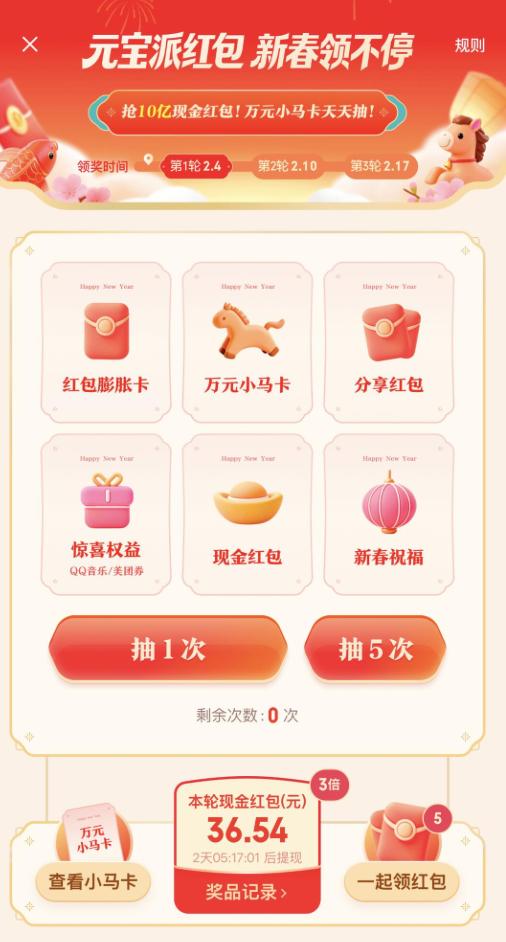
Core Viewpoint - The article discusses the intense competition among major internet companies during the Spring Festival, particularly focusing on the rise of AI applications and the strategic battles for user engagement and market share in the AI sector [3][4][37]. Group 1: AI Competition Landscape - The Spring Festival has become a battleground for internet giants to compete for traffic, with significant events like the 2015 payment war and the 2020 short video competition [3][4]. - In 2025, a new player, DeepSeek, emerged, surpassing existing applications in daily active users, indicating a shift in the AI market landscape [4]. - By 2026, the competition intensified, with major companies preparing extensively for the Spring Festival, marking it as a critical moment for AI applications [4][5]. Group 2: Model Updates and Innovations - Major companies like Baidu, Alibaba, and ByteDance have updated their AI models recently, with Baidu's Wenxin 5.0 featuring 2.4 trillion parameters and advanced multi-modal capabilities [6][8]. - Alibaba's Qwen3-Max-Thinking model, with over a trillion parameters and 36 trillion tokens of pre-training data, enhances its tool-calling capabilities [8][10]. - ByteDance launched several models, including Seedance 2.0 and Seedream 5.0 Lite, which significantly improved video and image generation capabilities [10][14][15]. Group 3: AI Super Entry Points - Companies are focusing on creating AI super entry points that integrate their core business models, such as Baidu's AI+search and Alibaba's AI+e-commerce [21][25]. - Alibaba's launch of the Qwen APP aims to enhance the e-commerce experience by integrating various services into a single platform [25][28]. - Tencent's Yuanbao group chat feature incorporates AI to enhance user interaction and engagement, including a cash red envelope feature during the Spring Festival [30][32]. Group 4: Cash Incentives and User Engagement - Major companies are investing heavily in cash incentives to attract users, with Tencent announcing a 1 billion yuan cash giveaway and Baidu offering 500 million yuan in red envelopes [35][37]. - The competition for user attention and brand recognition is driving these cash distribution strategies, as companies aim to establish their AI super entry points [37].



AI入口成大厂“兵家必争高地”
Nan Fang Du Shi Bao· 2026-02-03 03:58
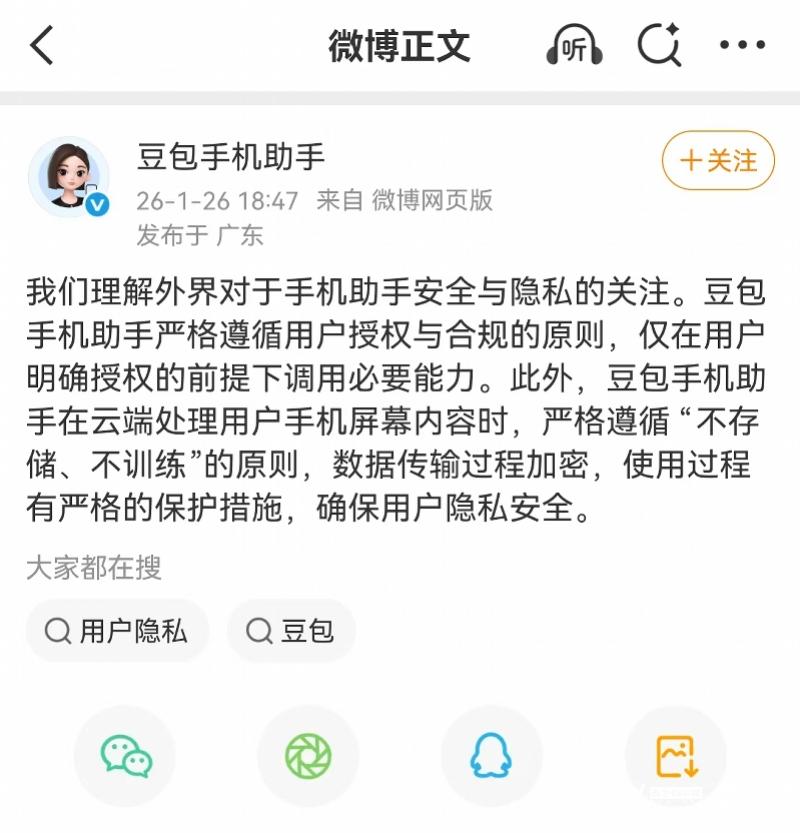
Core Viewpoint - The competition in the AI sector is intensifying, with companies like Tencent, ByteDance, and Alibaba exploring different approaches to AI assistants and smart devices, highlighting the importance of user privacy and security in their strategies [1][4][8]. Group 1: Company Strategies - Tencent's CEO, Ma Huateng, criticized the security risks associated with the "Doubao" phone's screen recording and cloud uploading features, emphasizing the need for responsible practices in technology [1][4]. - ByteDance, in collaboration with ZTE, aims to integrate AI directly into smartphones with the "Doubao" assistant, focusing on cross-application tasks without waiting for app interfaces to open [2][6]. - Alibaba's "Qianwen" AI application emphasizes a controlled ecosystem, integrating shopping recommendations and payment processes within its own platforms, which allows for better transaction and risk management [3][6]. Group 2: User Privacy and Security - The "Doubao" assistant claims to operate under strict user authorization and compliance, ensuring that no data is stored or used for training, with encrypted transmission and robust protective measures [5][6]. - Concerns about privacy and security have escalated, with users experiencing restrictions on popular apps like WeChat and Alipay due to the assistant's operations, raising questions about the balance between functionality and safety [5][6]. - Industry experts highlight that as AI assistants approach system-level capabilities, the challenges of ensuring user privacy and data security become more complex, necessitating clearer regulations and standards [6][7]. Group 3: Industry Trends and Future Directions - The AI industry is shifting from simple Q&A capabilities to more complex tasks, with a focus on creating intelligent agents that can perform actions on behalf of users, thus changing the interaction dynamics [2][8]. - There are two main approaches emerging in the market: the "screen reading + simulated clicking" method, which is more universal but faces platform barriers, and the "API interface calling" method, which is more structured and manageable [6][7]. - The competition among "Doubao," "Qianwen," and Tencent's "Yuanbao" signifies a new phase in the AI entrance battle, characterized by product innovation and the need for regulatory frameworks to support safe and effective AI deployment [8].

24小时环球政经要闻全览 | 2月2日
Ge Long Hui· 2026-02-02 01:02
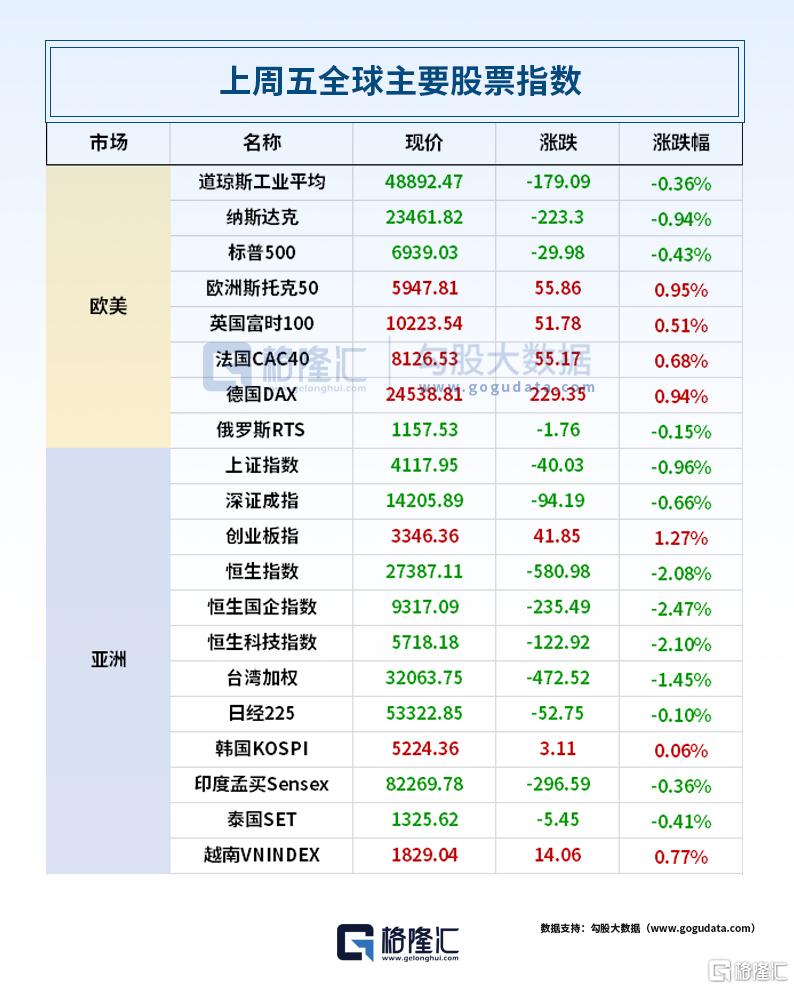
Market Performance - Major global stock indices experienced mixed results, with the Dow Jones Industrial Average down by 179.09 points (-0.36%) to 48,892.47, and the Nasdaq down by 223.3 points (-0.94%) to 23,461.82 [1] - European indices showed positive movement, with the Euro Stoxx 50 up by 55.86 points (0.95%) to 5,947.81, and the UK FTSE 100 up by 51.78 points (0.51%) to 10,223.54 [1] - Asian markets were mostly negative, with the Shanghai Composite Index down by 40.03 points (-0.96%) to 4,117.95, and the Hang Seng Index down by 580.98 points (-2.08%) to 27,387.11 [1] Precious Metals - On February 2, spot gold prices fell sharply, breaking below $4,700 per ounce, reaching a low of $4,698.81 before recovering to above $4,800 [1] - Silver prices also dropped, hitting a low of $76.78 before rising above $85 per ounce [1] - Analysts attribute the sharp decline to gamma squeeze and the expiration of concentrated options, alongside an increase in margin requirements for gold and silver futures announced by CME [1] Central Bank Policies - Bank of Japan committee members expressed caution regarding the steepening of the yield curve and increased volatility in long-term bonds, suggesting flexible bond purchases under exceptional circumstances [3] - Several committee members called for timely and moderate interest rate hikes, recommending a frequency of once every few months, citing the current financial environment as significantly accommodative [3] Geopolitical Developments - The U.S. government signaled a willingness to negotiate with Iran, with potential high-level meetings in Turkey, while also increasing military presence in the Persian Gulf [4] - A joint statement from foreign ministers of eight countries condemned Israel's violations of the Gaza ceasefire agreement, urging all parties to exercise restraint and support the peace process [4] Oil Production - OPEC+ confirmed a pause in oil production increases due to seasonal factors, maintaining a daily reduction of 1.65 million barrels and a voluntary reduction of 2.2 million barrels per day starting November 2023 [7] - The next meeting is scheduled for March 1, with a commitment to closely monitor the market and adjust policies as needed [7] Technology Investments - Sequoia Capital partner Shaun Maguire predicted that SpaceX's IPO in 2026 could become the largest wealth creation event in history, with its valuation soaring from $36 billion in 2019 to $800 billion [8] - Sequoia's investment of $1.2 billion is now valued at $12 billion, representing a tenfold return [8] Corporate Developments - Nvidia's CEO Jensen Huang clarified that the company's potential $100 billion investment in OpenAI is not a commitment and will be evaluated in stages, amid concerns about internal competition and business discipline [9] - Tencent's "Yuanbao" cash red envelope activity launched on February 1, aiming to replicate the success of the 2015 WeChat red envelope phenomenon, has led to the app topping download charts [10]
腾讯打响AI社交第一枪
3 6 Ke· 2026-02-02 00:22
Core Viewpoint - Tencent's launch of the 10 billion yuan Spring Festival red envelope activity through the Yuanbao app signifies a strategic move towards integrating AI into social interactions, aiming to enhance user engagement and experience in the WeChat ecosystem [1][3][4]. Group 1: Red Envelope Activity - The Yuanbao app's red envelope activity quickly gained traction, reaching the top of the Apple Store's free chart within 14 hours, showcasing its appeal and user engagement [1]. - The activity's simplicity, requiring no complex tasks for participation, contributed to its viral spread across social networks, including family and colleague groups [1][3]. Group 2: AI Integration - The red envelope initiative serves as a practical introduction to Yuanbao's AI capabilities, allowing users to experience AI features such as summarizing group chat points and generating festive content [3][6]. - Tencent's strategy focuses on "ecological empowerment," integrating AI into existing services rather than launching standalone AI products, which differentiates it from competitors like Alibaba and Baidu [5][6]. Group 3: Market Timing and Competition - The timing of the AI social push coincides with the peak social activity during the Spring Festival, maximizing user engagement and minimizing barriers to entry [4]. - The competitive landscape is intensifying, with rivals like ByteDance and Baidu making significant strides in AI, prompting Tencent to accelerate its AI social initiatives [5][7]. Group 4: User Experience and Product Design - Yuanbao's design as a separate entity from WeChat allows for more experimental features without risking the core user experience of WeChat, which is focused on simple social interactions [9][10]. - The platform aims to create a collaborative space where AI acts as a facilitator in group interactions, enhancing productivity and engagement [21][22]. Group 5: Future Potential and Challenges - The concept of AI social interaction is still in its infancy, with questions about user acceptance and the ability to create meaningful connections in a predominantly human-centric social environment [15][16]. - For Yuanbao to succeed, it must evolve beyond entertainment features to include robust productivity tools, establishing itself as a viable alternative to existing professional collaboration platforms [23][24].
撒下 5 亿,百度想用 AI 重做一遍“社交”
Sou Hu Cai Jing· 2026-01-29 14:25
Core Insights - The article discusses the evolving landscape of AI and social interaction, highlighting the competition among major players like Tencent, Baidu, and Alibaba in the AI chat space, particularly focusing on group chat functionalities as a new frontier for user engagement and collaboration [1][2][3] Group 1: Industry Dynamics - Tencent's return with "Yuanbao" and Baidu's entry with 500 million cash signals a strategic shift towards group chat functionalities, indicating a consensus among industry giants on the need for more sustainable user engagement models [1][2] - The historical context of the competition between the "BAT" (Baidu, Alibaba, Tencent) suggests that the current focus on group chat is a response to the limitations of traditional chatbot interactions, which have struggled to maintain user engagement [1][5] - The shift towards group chat as a collaborative space reflects a broader trend in the industry, where companies are moving from individual tool provision to creating environments for multi-agent collaboration [2][5] Group 2: Strategic Intent - Baidu's development of the Wenxin app's group chat feature aims to establish a new user habit of involving AI in collaborative tasks, moving beyond mere tool usage to integrating AI as a collaborator in daily activities [2][8] - The emphasis on goal-oriented collaboration in group chats is seen as a more effective approach for AI integration into social interactions, contrasting with traditional social media's focus on relationship maintenance [6][7] - Baidu's strategy reflects a significant shift from a technology-centric approach to a user-centric model, focusing on cultivating user habits that leverage AI for practical problem-solving [9][11] Group 3: Technological and Business Framework - Baidu has established a comprehensive "chip-cloud-model-application" ecosystem, which underpins its ability to offer AI services sustainably, thus enabling its aggressive investment in the group chat space [11][12] - The success of Baidu's AI applications, such as Wenku and Wangpan, demonstrates the potential for AI to generate stable revenue streams, reinforcing the company's confidence in its strategic direction [12] - The competitive landscape is characterized by a race to define the future of human-AI collaboration, with each company leveraging its unique strengths to capture market share and user engagement [13][14]
马化腾罕见点评豆包手机、阿里背后:AI入口争夺战已经打响
Nan Fang Du Shi Bao· 2026-01-27 09:56
Core Viewpoint - Tencent's CEO Ma Huateng expressed concerns about the security and responsibility of user data handling in AI applications, particularly criticizing the practices of ByteDance and ZTE's Doubao phone, while acknowledging Alibaba's AI ecosystem model [1][7]. Group 1: AI Applications and Market Competition - The competition for AI assistants and system-level intelligent agents is intensifying among major companies, with a focus on transforming user interaction from app-based to direct demand [5][9]. - ByteDance's collaboration with ZTE aims to integrate AI directly into smartphones, allowing for cross-application tasks without waiting for app interfaces to open [5][9]. - Alibaba's AI application "Qianwen" emphasizes a controlled API approach, integrating its services within its ecosystem, which has led to a noticeable increase in user inquiries [6][9]. Group 2: Privacy and Security Concerns - Ma Huateng's strong stance against cloud-based screen recording practices highlights the inherent risks associated with such technologies, emphasizing the need for secure data handling [7][8]. - Doubao phone assistant claims to operate under strict user authorization and compliance, ensuring no data storage or training occurs during cloud processing [3][7]. - The response from various platforms, including WeChat and payment apps, indicates a growing concern over security and privacy, leading to restrictions on Doubao's functionalities [8][9]. Group 3: Industry Trends and Regulatory Needs - The divergence in AI application strategies reflects a broader trend in the industry, with two main routes emerging: the "screen reading + simulated clicking" approach and the "API interface calling" method [9][10]. - The need for standardized regulations regarding personal information protection and data security in cross-app operations is becoming increasingly critical as the industry evolves [10]. - The competition among Doubao, Alibaba's Qianwen, and Tencent's Yuanbao signifies a new phase in the AI entry battle, characterized by product acceleration and the need for regulatory frameworks [10][11].