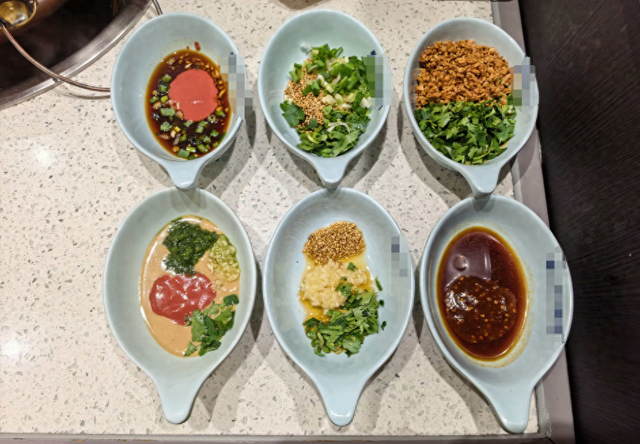
芝麻酱

Search documents
北京麻酱VS川渝油碟VS云贵蘸水,到底哪里的火锅蘸料最好吃?
Xin Lang Cai Jing· 2026-02-19 05:36
Core Viewpoint - The article explores the diverse dipping sauces used in hot pot across different regions of China, highlighting their unique flavors and cultural significance. Group 1: Types of Dipping Sauces - Northern Sesame Sauce Style: Characterized by a rich and thick sesame sauce, often a mix of 20% sesame paste and 80% peanut paste, commonly used in regions like Beijing and Inner Mongolia [6][8]. - Sichuan and Chongqing Oil Dip Style: Features a combination of dry dip (chili powder, sesame, salt) and oil dip (sesame oil, garlic), known for its spicy and fragrant profile [17][19]. - Yunnan and Guizhou Dipping Water Style: Known for its focus on spicy and aromatic flavors, using ingredients like roasted chili powder and various herbs [23][25]. - Coastal Fresh and Sweet Style: Emphasizes light and fresh flavors, often using seafood sauce or soy sauce, typical in regions like Guangdong and Hainan [33][35]. Group 2: Nutritional Insights - Sesame sauce is high in calories and fat, with one tablespoon containing nearly 100 kcal and 8 grams of fat, equivalent to the calories in two bowls of rice if consumed in excess [8][12]. - The Sichuan oil dip enhances flavor while also providing a way to mitigate the heat from spicy dishes, with ingredients that can increase dietary fiber and essential nutrients [22][23]. - The Guizhou dipping water is noted for being low in fat and enhancing appetite, while the Yunnan version offers a refreshing taste that balances richer meats [32][25]. Group 3: Health Considerations - The article advises caution regarding hidden calories in sauces like sesame and chili oils, which can contribute significantly to overall caloric intake [47][48]. - It highlights the importance of managing sodium intake, as many dipping sauces contain high levels of salt, potentially exceeding daily recommended limits [49][50]. - Recommendations for specific dietary needs include low-calorie options for weight loss and low-sodium alternatives for individuals with hypertension [54][55].

新华深读丨向油腻饮食说不
Xin Hua Wang· 2025-12-22 00:48
Core Viewpoint - The article highlights the rising health concerns associated with excessive oil consumption in China, where daily cooking oil intake significantly exceeds recommended levels, leading to various health issues including obesity and chronic diseases [10][13][15]. Group 1: Current Consumption Trends - The average daily cooking oil intake in China is 43.2 grams, which is about 33% higher than the recommended 25-30 grams [13][14]. - The total daily fat intake per person is 79.1 grams, exceeding the recommended 50-70 grams [13][14]. - In 2024, the estimated consumption of edible vegetable oil in China is projected to be 37.08 million tons, translating to an average per capita consumption of approximately 26.3 kilograms [13]. Group 2: Health Implications - Excessive oil consumption is linked to increased risks of hypertension, diabetes, and various cancers, with obesity being a significant public health issue in China [15][16][18]. - The prevalence of overweight and obesity among children and adults is alarming, with rates of 6.8% and 34.3% respectively [18][19]. - Long-term high oil intake can lead to metabolic diseases, including non-alcoholic fatty liver disease and type 2 diabetes [16][19]. Group 3: Cultural and Behavioral Factors - The preference for high-oil foods is deeply rooted in Chinese culinary traditions, where oil is seen as essential for enhancing flavor [21][22]. - Many consumers rely on intuition rather than measurement for oil usage, with 65% using personal experience to determine oil amounts [22][23]. - The shift from limited oil availability in the past to an abundance today has contributed to the current high consumption levels [24][25]. Group 4: Industry Response and Initiatives - A nationwide "reduce oil" campaign is being promoted, with guidelines suggesting daily oil intake should not exceed 25-30 grams [30][31]. - The food and restaurant industry is responding by offering smaller portion sizes and healthier cooking options, such as low-oil meals [33][35]. - Initiatives are being taken to educate consumers about healthier cooking practices and the importance of balanced oil consumption [30][31][38].
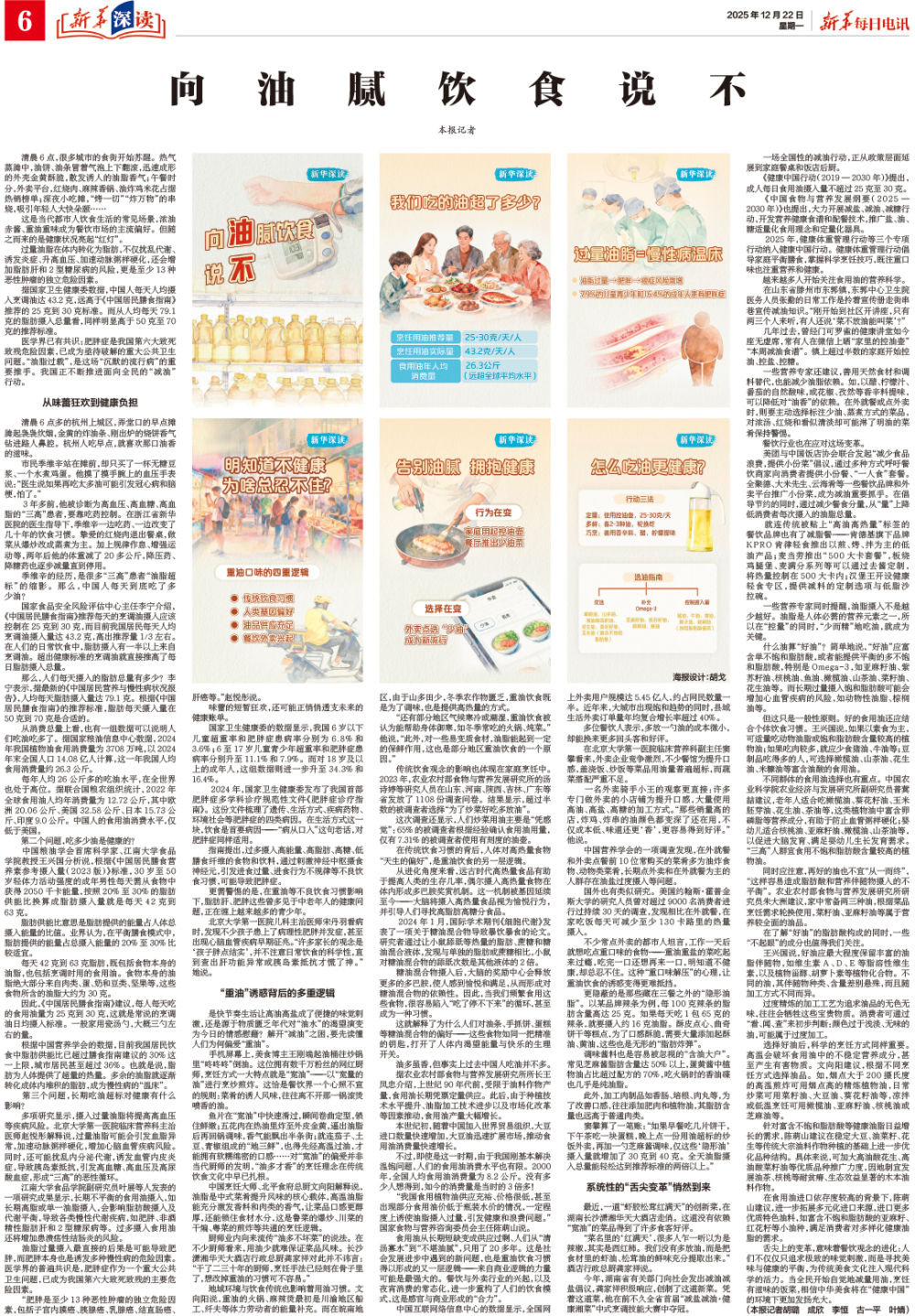
向油腻饮食说不
Bei Jing Ri Bao Ke Hu Duan· 2025-12-21 22:45
Core Viewpoint - The article highlights the growing concern over excessive oil consumption in China, which is linked to various health issues, including obesity and chronic diseases. The current average daily cooking oil intake is significantly above recommended levels, prompting a nationwide "reduce oil" initiative to address this public health challenge [1][3][17]. Group 1: Current Consumption and Health Risks - The average daily cooking oil intake in China is 43.2 grams, exceeding the recommended 25-30 grams by approximately one-third [3][4]. - The total daily fat intake per person is 79.1 grams, which is also above the recommended range of 50-70 grams [3][4]. - Excessive oil consumption is linked to serious health risks, including hypertension, diabetes, and various cancers, with obesity being a major public health issue in China [6][7][12]. Group 2: Dietary Trends and Cultural Influences - Traditional cooking practices favor high oil usage, with many consumers believing that more oil enhances flavor, leading to a cultural preference for "heavy oil" dishes [9][10]. - The rise of fast-paced lifestyles and the convenience of high-oil foods have contributed to the normalization of excessive oil consumption [8][14]. - The food delivery industry has further reinforced these trends, with many popular dishes being high in oil, salt, and sugar [14][19]. Group 3: Government Initiatives and Public Awareness - The Chinese government has initiated campaigns to promote reduced oil consumption, including guidelines that recommend daily oil intake not exceeding 25-30 grams [17][18]. - There is a growing public awareness regarding the health implications of high oil consumption, with more individuals adopting healthier cooking practices and dietary habits [18][19]. - The food and nutrition sector is responding to these changes, with restaurants and food services beginning to offer lower-oil options and smaller portion sizes [19][22]. Group 4: Future Directions and Recommendations - Experts suggest a balanced approach to oil consumption, emphasizing the importance of choosing healthier oils rich in unsaturated fats while reducing overall intake [20][21]. - There is a call for diversification in oil sources, promoting the cultivation of high-quality oilseed crops to meet the demand for healthier oils [22]. - The shift towards healthier eating habits is seen as a necessary evolution in Chinese culinary practices, aiming to balance taste and health [22].
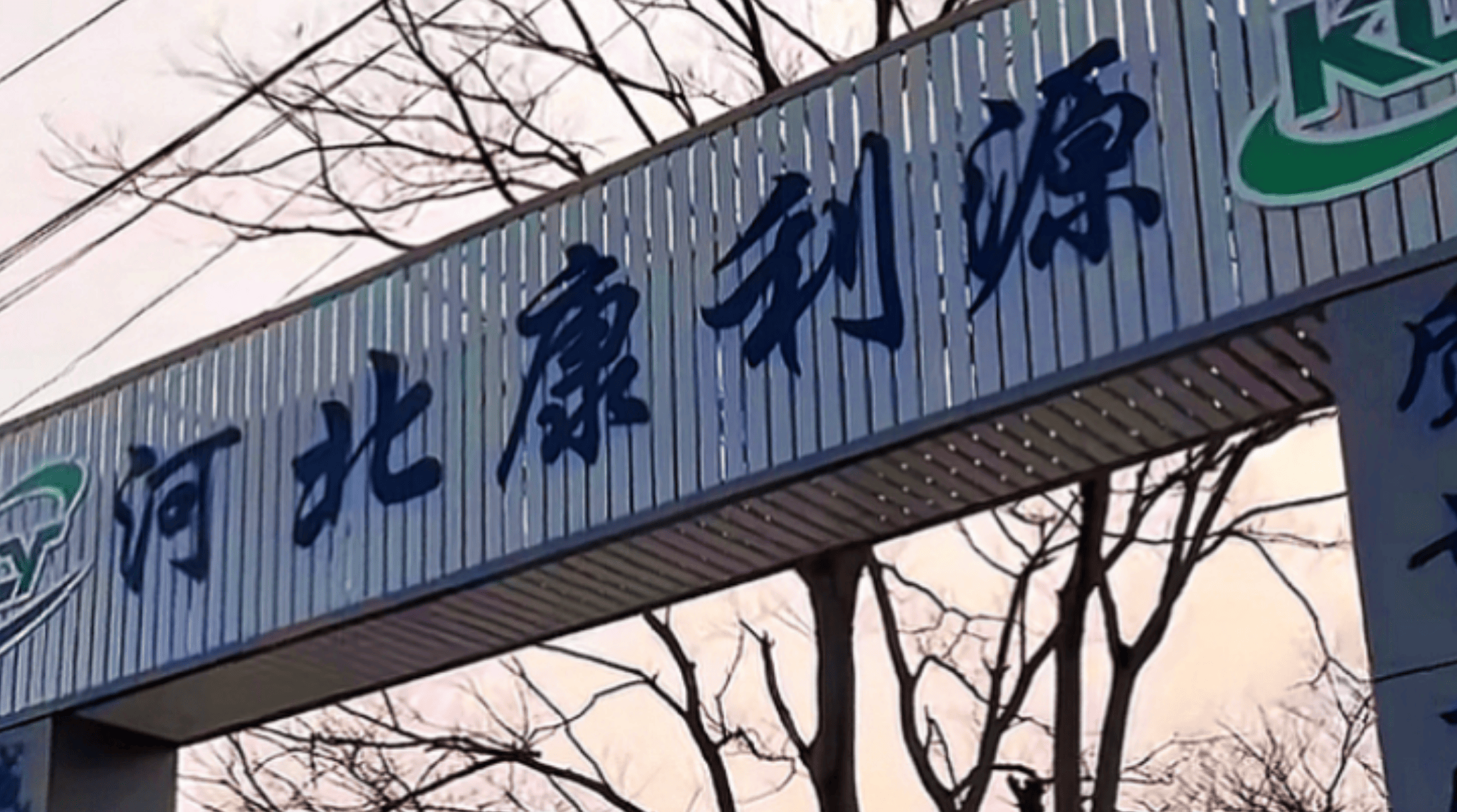
从田间到指尖:河北康利源携鸿福鹿品牌征程直播电商
Sou Hu Cai Jing· 2025-08-06 12:13
Core Viewpoint - The company, Hebei Kangliyuan Agricultural Products Co., Ltd., is launching its e-commerce strategy to expand its market presence and meet consumer demands for diverse and convenient shopping experiences [1][3]. Group 1: Company Overview - Hebei Kangliyuan Agricultural Products Co., Ltd. officially started operations on November 30, 2023, in Xingtai City, Hebei Province, focusing on the sale of agricultural products, primary agricultural product procurement, and food sales [1]. - The company has quickly gained a good reputation and considerable market share in traditional retail channels due to its stable supply capabilities and high product quality [1]. Group 2: E-commerce Strategy - The company recognizes that traditional retail models are limited by regional constraints and cannot meet the new consumer demands for variety and convenience [3]. - The e-commerce market presents a significant growth opportunity for the company, which aims to leverage its supply chain management experience to achieve rapid development [3]. - The company plans to focus on its core products, including sesame oil, sesame paste, and 28 sauce, while optimizing packaging and product specifications for e-commerce [5]. Group 3: Marketing and Brand Development - The company will concentrate on live-streaming e-commerce platforms like Douyin and Kuaishou, investing resources to enhance store operations and brand image [5]. - A professional new media operation team will be established to create engaging content across social media platforms, promoting the brand "Hongfu Lu" through cooking tutorials and health education [5]. Group 4: Customer Service and Quality Assurance - The company aims to extend its commitment to "safety" throughout the entire consumer journey by establishing a dedicated e-commerce after-sales team and optimizing return and exchange processes [6]. - A comprehensive quality assurance system will be implemented to ensure that online purchases provide the same level of trust as in-store selections [6]. Group 5: Future Outlook - The company is determined to use its e-commerce strategy to revitalize traditional agricultural products and ensure that consumers can enjoy safe and satisfying food [7]. - Future efforts will focus on deepening engagement in the e-commerce sector, providing high-quality products and services to carve out a unique space in the market [7].
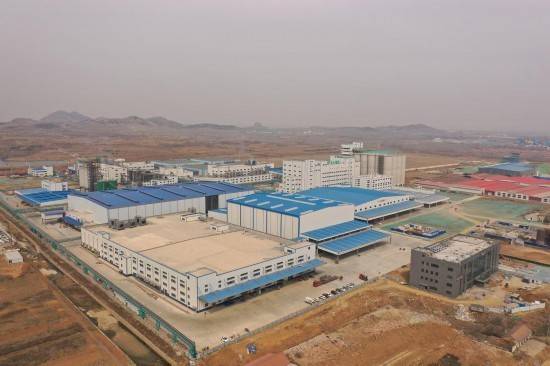
从3亿到18亿美元,世界500强企业为何在胶州持续投资?
Sou Hu Cai Jing· 2025-07-17 03:05
Core Insights - The Yihai Kerry (Qingdao) Food Industrial Park has significantly increased its investment from an initial $300 million to $1.8 billion, reflecting the favorable industrial ecosystem in Shandong and Qingdao [1][5] Investment and Expansion - The project, initiated by Singapore's Wilmar International, is one of the largest comprehensive food parks in China, with three phases of construction, the first of which is already operational [1][5] - The park has signed contracts with 17 upstream and downstream enterprises, with a total investment of 11.5 billion yuan [6] Raw Material Sourcing - The park's annual peanut consumption is 180,000 tons, all sourced locally from Shandong, which helps reduce raw material storage costs [2] - The establishment of a standardized production model has increased the income of over 300 local farmers by 12,000 yuan per acre [2] Logistics and Supply Chain - The park benefits from a strategic location near Qingdao Port and the Qingdao Jiaodong International Airport, enhancing its logistics capabilities [4] - A dedicated railway line has been established, reducing logistics costs by 30% and increasing sales in the northwest market by 40% [4][5] Production Efficiency - The park's soybean processing project is expected to import 3 million tons of soybeans annually, significantly lowering transportation costs [5] - The utilization rate of soybean crushing capacity is at 85%, and the wheat loss rate in the flour workshop has been reduced to 0.3%, setting a new industry standard [6] Future Prospects - The annual output value of the park currently exceeds 8 billion yuan, with projections to reach 45 billion yuan upon completion of the third phase [6] - Plans for a fourth phase are in development, aiming to create a trillion-yuan industrial chain [6]