
芦康沙妥珠单抗(佳泰莱)

Search documents
——海外消费周报(20260102-20260108):海外社服:澳门博彩收入维持双位数增长,元旦访客量数据创新高-20260109
Shenwan Hongyuan Securities· 2026-01-09 10:23
Group 1: Overseas Service Industry - The investment rating for the overseas service industry is positive, with Macau's gaming revenue maintaining double-digit growth and visitor numbers reaching historical highs [1][3]. - In December, Macau's gross gaming revenue was 20.9 billion MOP, representing a year-on-year increase of 14.8%, and recovering to 91% compared to the same period in 2019 [3]. - The total number of visitors to Macau in 2025 is projected to be 40.06 million, a year-on-year increase of 14.7%, marking a historical high [3]. Group 2: Overseas Pharmaceutical Industry - The investment rating for the overseas pharmaceutical industry is optimistic, with significant advancements in drug approvals and clinical trials [2][6]. - BeiGene's BCL2 inhibitor received conditional approval in China for treating chronic lymphocytic leukemia and mantle cell lymphoma, marking it as the first approved BCL2 inhibitor for MCL in the country [6][7]. - The Hang Seng Healthcare Index rose by 11.15%, outperforming the Hang Seng Index by 9.12 percentage points [6]. Group 3: Overseas Education Industry - The investment rating for the overseas education industry is favorable, with a focus on vocational training and spring enrollment [12][14]. - The education index increased by 2.7% in the first week of January, outperforming the Hang Seng National Enterprises Index by 1.3 percentage points [12]. - China Oriental Education is recommended as a top pick due to its proactive operational adjustments and expected enrollment growth in the second half of the year [14].
海外消费周报:澳门博彩收入维持双位数增长,元旦访客量数据创新高-20260109
Shenwan Hongyuan Securities· 2026-01-09 08:14
Group 1: Overseas Social Services - The investment rating for the overseas social services sector is positive, with a focus on Macau's gaming revenue maintaining double-digit growth and record visitor numbers during New Year's [1][4]. - In December, Macau's gross gaming revenue reached 20.9 billion MOP, representing a year-on-year increase of 14.8%, and recovering to 91% compared to the same period in 2019. The total gross gaming revenue is expected to grow by 9.1% in 2025 [4]. - The total number of visitors to Macau in 2025 is projected to be 40.06 million, a year-on-year increase of 14.7%, marking a historical high. On New Year's Day 2026, the number of visitors reached 188,000, the highest ever for that day [4]. Group 2: Overseas Pharmaceuticals - The investment rating for the overseas pharmaceuticals sector is also positive, with significant developments in drug approvals and clinical trials [2][7]. - BeiGene's BCL2 inhibitor received conditional approval in China for treating chronic lymphocytic leukemia and mantle cell lymphoma, marking it as the first and only BCL2 inhibitor approved for MCL in the country [8][9]. - The Hang Seng Healthcare Index rose by 11.15%, outperforming the Hang Seng Index by 9.12 percentage points, indicating strong market performance [7]. Group 3: Overseas Education - The investment rating for the overseas education sector is favorable, with a focus on vocational education and training [3][14]. - The education index increased by 2.7%, outperforming the Hang Seng Index by 1.3 percentage points, indicating a positive market trend [14]. - The report suggests focusing on Hong Kong vocational education companies, particularly China Oriental Education, which is expected to see enrollment growth due to strategic adjustments in response to market demand [16].
新版国家医保目录实施 科伦博泰三款创新药惠及患者
Zheng Quan Shi Bao Wang· 2026-01-01 07:12
Core Insights - The inclusion of three innovative drugs developed by Kelun-Botai in the national medical insurance directory signifies a successful transformation of innovation into accessible healthcare for patients, reflecting a collaborative effort between national policies and corporate innovation [1][3][5] Group 1: Product Development and Market Entry - Kelun-Botai's LuKangSatuzumab (佳泰莱) is the first domestically developed ADC drug approved for treating advanced triple-negative breast cancer (TNBC), marking a significant advancement in treatment options for patients who have undergone at least two prior therapies [2][4] - The company’s other two drugs, Westuzumab N01 and Tagolizumab, target colorectal cancer and nasopharyngeal carcinoma, respectively, and are also included in the new insurance directory, promoting affordable access to treatment [4][5] Group 2: Addressing Clinical Needs - The introduction of LuKangSatuzumab addresses a critical gap in treatment options for patients with late-stage TNBC and EGFR mutation-positive non-small cell lung cancer (NSCLC), providing new hope for those with limited alternatives [2][3] - The innovative drugs not only fill existing treatment voids but also aim to alleviate the financial burden on patients by being included in the insurance reimbursement system [3][6] Group 3: Economic and Social Impact - The pricing strategy for these innovative drugs is designed to be more affordable, preventing patients from falling into poverty due to medical expenses, which reflects the company's commitment to patient-centered care [4][5] - The recent adjustments in the national medical insurance directory demonstrate a strong support for innovative drugs, with 111 new drugs added, 97.4% of which are newly launched within the last five years, indicating a focus on enhancing patient access to cutting-edge treatments [5][6] Group 4: Sustainable Innovation Ecosystem - The collaboration between the government and pharmaceutical companies aims to create a sustainable innovation ecosystem, ensuring that clinical needs are met while providing reasonable returns for genuine innovation [6][7] - This dual engagement fosters a clearer direction for research and development, emphasizing the importance of addressing unmet clinical needs rather than merely replicating existing treatments [6][7]
中国创新药 2025 “破圈”全球
Guo Ji Jin Rong Bao· 2025-12-29 03:13
Core Insights - 2025 marks a pivotal year for China's innovative pharmaceuticals, with a significant increase in international collaborations and licensing agreements, indicating a shift from a pharmaceutical giant to a stronghold in the industry [1][3] - The total amount of outbound licensing agreements exceeded $100 billion, with upfront payments reaching $8.1 billion, showcasing a transition to multi-layered cooperation models [1][3] - China's biopharmaceutical market remains the second largest globally, with innovative drugs accounting for approximately 30% of global research, reflecting a critical leap from following to competing on a global scale [1][3] Internationalization - The internationalization of China's pharmaceutical industry saw explosive growth in 2025, highlighted by a surge in business development (BD) transactions and the popularity of "A+H" listings [3][4] - The total amount of outbound licensing for innovative drugs reached over $100 billion, a 75% increase from 2024, indicating a shift from merely selling products to actively engaging in global markets [3][4] - Notable BD transactions include significant agreements between major Chinese pharmaceutical companies and international firms, such as a $12.5 billion deal between Hengrui Medicine and GSK [3][4] Innovation - In 2025, advancements in cutting-edge technologies such as antibody-drug conjugates (ADC) and dual antibodies have shown promising results in cancer treatment [7][8] - The third-generation ADC technology has become mainstream, with significant efficacy demonstrated in treating solid tumors [7] - The dual antibody sector continues to lead, with Chinese companies achieving remarkable results in clinical trials, such as a 91% improvement in progression-free survival compared to existing treatments [8] Policy Support - The policy support for innovative drugs in China has reached unprecedented levels, with a notable increase in the number of approved innovative drugs [10][11] - The National Medical Products Administration approved 69 innovative drugs in 2025, a 44% increase from the previous year, covering various therapeutic areas [10] - The payment system for innovative drugs has been significantly upgraded, enhancing accessibility and affordability for patients [10][11] Mergers and Acquisitions - The pharmaceutical sector has seen a surge in mergers and acquisitions, with over 400 transactions announced globally, totaling approximately $111 billion, marking a 50% increase from 2024 [13][14] - Domestic mergers also showed strong activity, with significant deals indicating a shift towards quality improvement and resource consolidation among leading companies [13][14] - The trend reflects a transition from scale expansion to enhancing quality and efficiency, with companies focusing on high-value clinical pipelines [14]



2025年国谈落幕:双目录同步,创新药目录降价建议区间或为15%~50%
Di Yi Cai Jing· 2025-11-04 02:45
Core Insights - The national medical insurance negotiation concluded with significant changes, including the introduction of an innovative drug directory and a new price negotiation mechanism involving both domestic and foreign pharmaceutical companies [1][15] - The negotiation focused on price reductions ranging from 15% to 50%, with a particular emphasis on CAR-T therapies, which are expected to have a limited number of entries in the innovative drug directory [1][3][15] Group 1: Innovative Drug Directory - The innovative drug directory negotiation was a first, allowing for a new pricing negotiation mechanism between pharmaceutical companies and commercial insurance [1][15] - The number of drugs entering the innovative drug directory is expected to be limited, with estimates suggesting around 20 drugs may be included [1][3] - CAR-T therapies are a focal point, with successful negotiations reported for some products, indicating a competitive landscape for pricing [3][4] Group 2: Pricing Strategies - Pharmaceutical companies are presented with options to report under different categories, influencing their pricing strategies and negotiation approaches [2][10] - The negotiation dynamics reveal a split in strategies, with some companies prioritizing market share through price reductions, while others aim to maintain premium pricing for innovative products [10][11] - The expected price reductions for CAR-T therapies are under scrutiny, with some companies indicating that achieving a reduction below 15% may be challenging [3][4] Group 3: Commercial Insurance Impact - The introduction of the innovative drug directory is seen as a potential game-changer for how CAR-T therapies are covered under commercial insurance, although the actual impact remains to be seen [5][15] - There is skepticism regarding the inclusion of rare disease drugs in the commercial insurance directory, as insurers are less inclined to cover high-cost, low-volume medications [14][15] - The overall goal of the negotiations is to establish a sustainable market-based payment mechanism for innovative drugs, leveraging both public and commercial insurance [15]
四川建设世界一流重大科技基础设施集群成果丰硕
Zhong Guo Fa Zhan Wang· 2025-09-26 09:36
Core Viewpoint - Sichuan Province is prioritizing the development of major scientific and technological infrastructure as a key strategy to enhance original innovation capabilities and meet national strategic needs, with a focus on creating world-class research clusters in various fields [3][4]. Group 1: Nuclear Fusion Research - Sichuan is establishing an international forefront nuclear fusion research cluster in Chengdu, featuring the "China Fusion Engineering Test Reactor" and the world's first Z-pinch + local ignition fusion target technology [3][4]. - The province is the only one in China that integrates both magnetic confinement and inertial confinement fusion research, achieving significant breakthroughs in nuclear fusion technology [4]. Group 2: Astronomy Observation - A high-altitude astronomical observation cluster is being developed in Ganzi, with facilities at elevations above 4000 meters, including the world's highest cosmic ray observation station and the largest comprehensive aperture radio telescope [5]. - The high-altitude cosmic ray observation station has made significant discoveries, including the highest energy photons and the brightest gamma-ray bursts recorded to date [5]. Group 3: Deep Earth Science - In Liangshan, the world's deepest deep earth science facility is being constructed at a depth of 2400 meters, creating a world-class open experimental platform for interdisciplinary research [6]. - The facility has achieved major scientific results, including the successful operation of the world's strongest deep earth nuclear astrophysics accelerator [6]. Group 4: Biomedicine Innovation - Chengdu is developing a comprehensive biomedicine innovation cluster, focusing on translational medicine to expedite the conversion of basic research into clinical applications [7]. - The cluster includes national-level innovation platforms and has successfully developed various innovative drugs, including tumor mRNA vaccines and other therapeutic agents [7]. - Future plans involve enhancing operational efficiency of major scientific infrastructure and expanding the innovation ecosystem to better support industrial development [7].

科伦博泰生物-B中报观:商业化确定性拉升,全球创新价值再上台阶
Zhi Tong Cai Jing· 2025-08-18 11:26
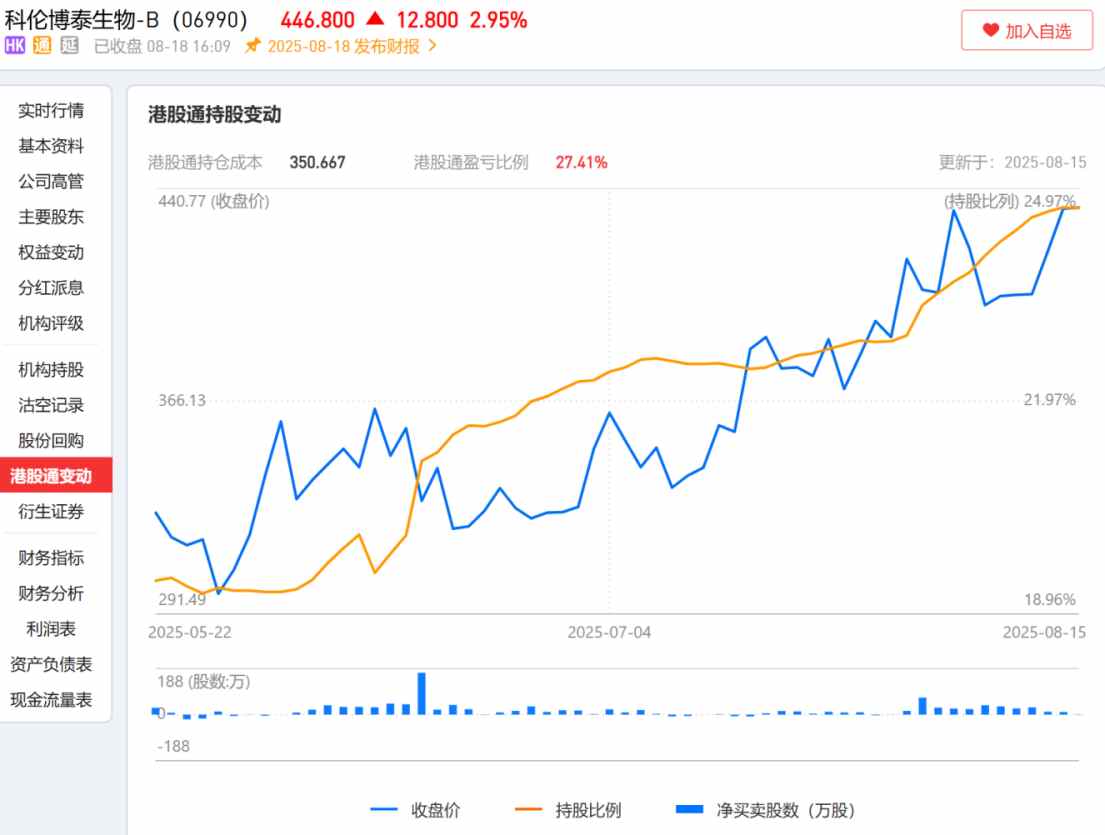
Core Viewpoint - The Hong Kong stock market's innovative pharmaceutical sector has seen a significant rebound this year, with net inflows of over 120 billion yuan into the pharmaceutical and biotechnology industry, highlighting a shift towards more reliable quality stocks [1] Group 1: Company Performance - Kelun-Biotech (06990) has emerged as a key target for market investment, achieving a historical high in stock price in August, with a market capitalization exceeding 100 billion HKD and a year-to-date increase of 192.40%, entering the "100 billion club" of Hong Kong's innovative pharmaceuticals [1] - The company's mid-2025 performance report indicates a transition from Biotech to Biopharma, with revenue driven by both business development (BD) collaborations and self-commercialization [3][4] - In the first half of 2025, Kelun-Biotech reported revenues of 950 million yuan, with cash reserves of 4.528 billion yuan, indicating strong cash flow and a shift in revenue structure from BD-driven to self-commercialization [4] Group 2: Commercialization Strategy - The company's core product, TROP2 ADC (Jiatailai), has shown strong commercial potential, generating sales of 51.698 million yuan in its first month post-launch and expanding its indications, which enhances market opportunities [5] - Kelun-Biotech has established a comprehensive commercialization capability, with a professional marketing team of 350 and a wide distribution network covering over 1,000 hospitals and partnerships with more than 60 distributors [8][9] - The company has successfully navigated market access, achieving broad coverage for its products across multiple provinces and actively pursuing inclusion in national insurance schemes to enhance drug accessibility [9] Group 3: Research and Development - Kelun-Biotech has increased its R&D investment, reaching 612 million yuan in the first half of 2025, and has developed three major technology platforms, ensuring a robust pipeline of over 30 candidate drugs [10][11] - The company's international collaborations with major pharmaceutical firms validate its technological capabilities and support the transformation of global innovative results into commercial value [11] - The dual strategy of BD collaborations and self-commercialization aligns with the trend of "true innovation + self-control" in the domestic pharmaceutical industry, positioning Kelun-Biotech as a key player in the Hong Kong pharmaceutical investment landscape [12]
科伦药业(002422):一季度业绩承压 全年季度环比望迎改善
Xin Lang Cai Jing· 2025-05-05 08:37
Core Viewpoint - The company reported mixed financial results for 2024 and Q1 2025, with a slight increase in annual revenue but a significant decline in quarterly performance due to high base effects from the previous year [1][2]. Financial Performance - In 2024, the company achieved operating revenue of 21.812 billion yuan, a year-on-year increase of 1.67%, and a net profit attributable to shareholders of 2.936 billion yuan, up 19.53% [1]. - For Q1 2025, the company reported operating revenue of 4.390 billion yuan, a year-on-year decrease of 29.42%, and a net profit of 584 million yuan, down 43.07% [2]. Profitability Metrics - The overall gross margin for 2024 was 51.69%, a decrease of 0.74 percentage points year-on-year, while the expense ratio was 32.27%, down 3.95 percentage points [3]. - In Q1 2025, the gross margin dropped to 48.67%, a decline of 7.17 percentage points year-on-year, with the expense ratio slightly increasing to 32.38% [3]. Business Segments - The infusion business generated sales of 8.912 billion yuan in 2024, a decrease of 11.85%, with sales volume of 4.347 billion bottles/bags, down 0.70% [4]. - Non-infusion drug sales increased by 5.41% to 4.169 billion yuan, driven by strong performance in the plastic water needle business [4]. - The antibiotic intermediates and raw materials segment achieved revenue of 5.856 billion yuan, a year-on-year increase of 20.90%, benefiting from increased market demand [4]. Innovation and Pipeline - The company launched its innovative drug, Lukanosatuzumab (佳泰莱), in November 2024, marking the beginning of a new era in innovative drug commercialization [5]. - Ongoing clinical trials for various ADC therapies are being conducted in collaboration with Merck, targeting multiple cancer types [5][6]. Future Projections - Revenue projections for 2025 to 2027 are estimated at 21.9 billion, 23.36 billion, and 23.98 billion yuan, with corresponding net profits of 3.02 billion, 3.35 billion, and 3.41 billion yuan [7]. - The company is expected to maintain a valuation of 19X for 2025 and 17X for 2026 and 2027 [7]. Investment Rating - The investment rating is maintained at "Buy" based on the company's growth potential and ongoing innovation efforts [8].