差异化创新

Search documents
三只松鼠(300783):利润阶段性承压 生活馆打造新机遇
Xin Lang Cai Jing· 2026-02-01 06:39
Core Viewpoint - The company expects a significant decline in net profit for 2025, with a projected range of 135-175 million yuan, representing a year-on-year decrease of 57.1%-66.9% [1]. Financial Performance - The company's net profit for Q4 2025 is expected to be between -26 to 14 million yuan, a year-on-year decline of 78.5%-138.6% [1]. - The non-net profit for Q4 2025 is projected to be between -12 to 8 million yuan, reflecting a year-on-year decrease of 85.1%-123.0% [1]. - Revenue forecasts for 2025-2027 are 10.87 billion, 12.57 billion, and 13.91 billion yuan, with year-on-year growth rates of +2.3%, +15.7%, and +10.7% respectively [3]. Strategic Initiatives - The company is actively exploring new business models, including the launch of "life halls" aimed at creating a community convenience living circle [2]. - The life halls will feature a multi-category self-owned brand supply system, focusing on fresh produce, ready-to-eat meals, and standard products [2]. - The company maintains its "high-end cost performance" strategy while moving towards higher quality and differentiation in its product offerings [2]. Innovation and Supply Chain - The company leverages its strong selection advantage in retail to drive rapid innovation and expand its differentiated product system [2]. - The self-owned supply chain supports the company's ability to explore new opportunities through differentiated innovation [2]. Profitability Outlook - Despite short-term profit pressures due to rising traffic costs, the company is expected to explore new growth opportunities through its ongoing business model innovations [3]. - The projected net profit for 2025-2027 is 160 million, 230 million, and 320 million yuan, with a year-on-year change of -59.7%, +41.9%, and +37.4% respectively [3].

全球首个cAMP偏向型GLP-1上市!先为达生物改写赛道格局
Ge Long Hui· 2026-01-30 07:30
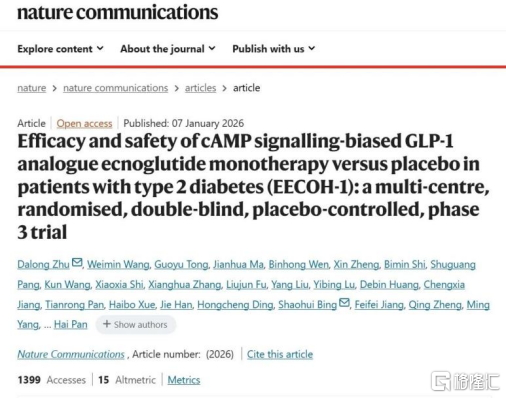
Core Insights - The article highlights the significant milestone achieved by the company, Xianweida Biopharmaceutical, with the approval of its innovative product, Enoglutide injection, by the NMPA for the treatment of type 2 diabetes, marking it as the world's first cAMP-biased GLP-1 receptor agonist approved for market [1][3]. Group 1: Product Innovation and Market Position - Enoglutide injection utilizes a unique cAMP-biased mechanism, allowing for targeted activation of the GLP-1 receptor's downstream cAMP signaling pathway, which enhances metabolic benefits while effectively lowering blood sugar levels [3][4]. - The product has received recommendations in the "2024 China Diabetes Prevention and Treatment Guidelines," indicating a shift towards precise signal regulation in diabetes treatment [3][4]. Group 2: Clinical Data and Efficacy - Two pivotal Phase III clinical studies (EECOH-1 and EECOH-2) demonstrated that Enoglutide injection provides significant benefits in blood sugar reduction, weight loss, and improvement in various metabolic indicators, with sustained efficacy for up to 52 weeks [4][6]. - The results of the EECOH-1 study have been published in the prestigious journal "Nature Communications," receiving recognition from leading experts in the diabetes and weight loss fields, underscoring the product's efficacy and safety [4][6]. Group 3: Market Potential and Growth Drivers - The approval of Enoglutide injection positions the company to enter the multi-billion-dollar GLP-1 market, with the global diabetes direct health expenditure surpassing $1 trillion in 2024 and the number of diabetes patients projected to rise to 853 million by 2050 [6][7]. - China, having the highest number of diabetes patients globally, offers a vast market opportunity for the commercialization of Enoglutide injection [6][7]. Group 4: Pipeline and Future Prospects - The company has initiated clinical studies for Enoglutide injection targeting weight loss and non-alcoholic fatty liver disease (NASH), which could enhance its market value and expand its patient coverage [7][9]. - The company is developing a diverse pipeline, including oral formulations and other innovative products, which are expected to address unmet clinical needs and strengthen its competitive position in the weight management sector [9][10]. Group 5: Capital Market and Growth Strategy - The company is in the process of listing on the Hong Kong Stock Exchange, which is anticipated to provide funding for R&D and commercialization efforts, thereby accelerating market penetration of its core products [12]. - The successful commercialization of Enoglutide injection and the advancement of other pipeline products are expected to enhance the company's profitability and growth potential [12].

秋霜不改丹青志!智飞生物以创新开新局 锚定“预防+治疗”主航线
Quan Jing Wang· 2026-01-14 02:22
Core Insights - The vaccine industry is entering a deep transformation period characterized by stock competition and structural adjustments, where differentiated innovation is crucial for companies to navigate through cycles [1] - Zhifei Biological, a leader in the domestic biological vaccine sector, is facing challenges due to a decline in industry overall prosperity by 2025, driven by reduced public vaccination willingness and intensified market competition [1] - The company anticipates a temporary net profit loss for the year, reflecting the industry's deep reshuffling [1] Company Strategies - In response to performance pressures, Zhifei Biological is taking proactive measures, including recognizing inventory and accounts receivable impairments to accurately reflect its financial status, thereby laying a solid foundation for future development [1] - The company has secured over 10 billion yuan in loans from financial institutions, guaranteed by its actual controller, to optimize operational capacity and restructure existing debts, reinforcing its financial stability [1] - Zhifei Biological is adjusting procurement plans with partners in its traditional vaccine agency line to alleviate upstream supply pressures while enhancing marketing strategies to accelerate inventory turnover [1] Research and Development - The company has over 40 products in its research pipeline, with several, including the diploid rabies vaccine and 15-valent pneumonia conjugate vaccine, currently under review for market approval, indicating significant market potential [2] - Zhifei Biological's self-developed products, such as the quadrivalent influenza virus split vaccine and the 26-valent pneumonia conjugate vaccine, have achieved notable breakthroughs, showcasing its technological leadership [2] - The company is committed to a differentiated competitive strategy focused on technological innovation and product iteration, which is expected to help it navigate the industry's adjustment cycle effectively [2]

纳芯微制定新战略:从中国,到全球
半导体芯闻· 2026-01-04 10:17
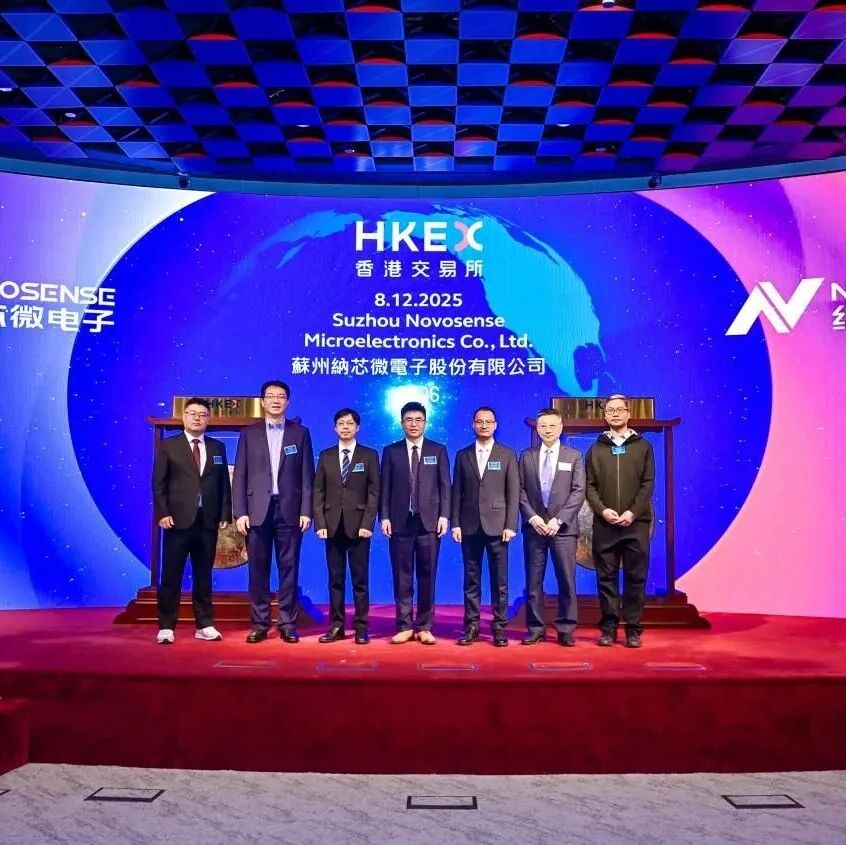
Core Viewpoint - Naxin Micro's listing on the Hong Kong stock market marks a significant step in its global expansion strategy, aiming to integrate China's industrial advantages with global resources to become an international chip enterprise [1][18]. Group 1: Company Background and Strategy - Naxin Micro, founded in 2013, chose to enter the sensor signal conditioning chip market, avoiding the saturated competition of low-cost alternatives to foreign giants, which has allowed it to establish a foothold in the chip market [3]. - The company shifted its focus in 2015 towards industrial and automotive sectors, avoiding homogeneous competition and fostering growth through innovative product strategies [4]. - Naxin Micro aims to leverage its Hong Kong listing to attract global talent, deepen strategic partnerships, and enhance service to global customers, transitioning from a local to a global player [1][18]. Group 2: Product Development and Market Position - Naxin Micro's product offerings have expanded significantly, with the number of saleable part numbers increasing from over 800 in 2021 to over 4,000 by Q3 2025, indicating robust product development and market growth [7]. - The automotive sector has become a key growth driver, with Naxin Micro's chips being used in approximately 40 to 50 units per electric vehicle, contributing to a significant revenue stream [8]. - Financial data shows that Naxin Micro leads in growth among the top five domestic analog chip companies, with a revenue increase of over 70% year-on-year for Q1-Q3 2025, even excluding contributions from acquisitions [8]. Group 3: Innovation and R&D Capabilities - Naxin Micro emphasizes joint innovation with clients, focusing on developing next-generation products based on industry trends rather than merely replacing imported chips [9]. - The company has established a comprehensive R&D process aligned with industry best practices, enabling rapid product line expansion and innovation [10]. - Naxin Micro has invested in various technological advancements, including differentiated process technologies, platform-based circuit designs, and specialized packaging solutions to enhance product performance and meet market demands [10][11][12][13]. Group 4: Global Expansion Strategy - Naxin Micro's "three-step" global development strategy includes local for local, local for global, and global for global, aiming to enhance brand exposure and operational capabilities through its Hong Kong listing [19][22]. - The company plans to establish its Hong Kong office as the overseas operations and sales headquarters, facilitating a streamlined supply chain and logistics for international clients [18][22]. - Future plans include setting up a research and development center in Hong Kong to attract overseas talent and support the company's growth [23]. Group 5: Organizational Development and Future Goals - Naxin Micro recognizes the need to enhance its organizational capabilities to surpass the $1 billion revenue threshold, focusing on building a systematic organizational structure and empowering lower-level employees [25][27]. - The company aims to transition from founder-driven to a more structured organization, ensuring sustainable growth through improved core capabilities and talent development [28].
药闻 | 以定力穿越周期:从宝济样本看创新药企差异化突围
Xin Hua Cai Jing· 2025-12-26 00:22
Core Viewpoint - Shanghai Baoji Pharmaceutical Co., Ltd. successfully listed on the Hong Kong Stock Exchange, achieving a market capitalization exceeding HKD 20 billion on its first day, demonstrating resilience and strategic foresight in a challenging market environment [1] Group 1: Company Growth and Strategy - Baoji Pharmaceutical has demonstrated a pattern of "counter-cyclical" growth, choosing to expand its R&D pipeline during economic downturns, such as the COVID-19 pandemic in 2019 and the tightening financing environment in 2022 [1] - The company emphasizes a clear strategic principle of either being the first or the only in its chosen fields, focusing on unmet clinical needs rather than competing in crowded markets [2] Group 2: Innovative Products - The company’s product SJ02 is the first long-acting follicle-stimulating hormone approved in China, addressing the needs of women facing fertility challenges with a more convenient treatment regimen [3] - KJ103, a novel IgG-degrading enzyme, targets acute autoimmune diseases, providing a new treatment pathway for conditions that have been traditionally difficult to manage [3] Group 3: Cost Management and Manufacturing - Baoji Pharmaceutical prioritizes cost management and efficiency in its manufacturing processes, aiming to make effective treatments accessible to a broader population [4][5] - The company has established a GMP-compliant production facility and is developing a second facility to enhance its manufacturing capabilities, which is expected to be operational by mid-2026 [5] Group 4: Market Expansion and Future Plans - The company plans to use approximately HKD 922 million raised from its IPO for the further development and commercialization of its core products, with a significant portion allocated to global market expansion [7] - Baoji Pharmaceutical aims to submit clinical trial applications for its products in Europe by mid-2026, indicating a commitment to international growth and collaboration with multinational pharmaceutical companies [7][8] Group 5: Industry Context - The Chinese innovative drug market is experiencing significant growth, with a notable increase in licensing agreements, although many biotech firms face challenges in R&D and commercialization capabilities [8][9] - Baoji Pharmaceutical's strategy contrasts with the trend of "selling seedlings," as it focuses on self-research and independent market entry, aiming to build a globally recognized pharmaceutical brand [9]
小行动大改变|跟卖、抄袭、工厂背刺后,他们学会了主动防御
商业洞察· 2025-12-15 09:42
Core Insights - The article discusses the challenges faced by cross-border e-commerce sellers in a highly competitive market, emphasizing the need for differentiation and unique growth strategies [1] - It highlights the experiences of three sellers who overcame significant obstacles to establish their brands and achieve success [1] Seller Case Studies Seller Liang Ting - Liang Ting transitioned from platforms like eBay and Wish to Amazon, facing challenges with product homogeneity and price wars [2][3] - A critical turning point occurred when one of her products was taken down due to copyright issues, prompting her to rethink her strategy [3][4] - She decided to create her own brand by collaborating with factories to develop unique products and enhancing brand visibility through consistent packaging and marketing efforts [5][6] - These actions led to a 40% repurchase rate and a stable annual sales figure of over 1 million euros [7] Seller Qi Fan - Qi Fan, initially a traditional factory operator, successfully transitioned to e-commerce but faced a severe price war in the small appliance category [8][10] - He discovered that a competitor had innovated their product development, reducing costs by 30%, which made it impossible for him to compete on price alone [10][11] - Qi Fan pivoted to focus on outdoor portable appliances, leveraging advancements in battery technology to create a new market niche [12][13] - His advertising strategy combined both on-platform and off-platform efforts, resulting in over 70% of his sales coming from organic orders [14][15] Seller Zheng Xiao Xing - Zheng Xiao Xing and her husband faced internal challenges when a trusted factory began cutting corners and selling inferior products, leading to a significant drop in sales [16][18] - They learned valuable lessons about maintaining professional boundaries in partnerships and implemented strict quality controls and legal protections for their products [19][20][21] - By optimizing their supply chain and focusing on product innovation, they elevated their store ranking to the top 3 in their category, achieving annual sales of 8 million yuan [22][23] Industry Trends - The article illustrates the ongoing competitive nature of the cross-border e-commerce industry, where sellers must continuously adapt to survive [24] - It emphasizes the importance of proactive strategies, such as product iteration and market analysis, to build a resilient brand [25][26] - The collective experiences of the sellers demonstrate that small, strategic actions can lead to significant changes in business outcomes [27]

关乎13亿人!现场直击最新医保药品目录解读会:“双目录”背后有这四大细节
Mei Ri Jing Ji Xin Wen· 2025-12-10 14:08
Core Insights - The National Healthcare Security Administration (NHSA) held a conference on December 9, 2023, to discuss the 2025 Medical Insurance Drug List, attracting significant interest from various stakeholders, including over 23,000 online viewers [1][6]. Group 1: Drug List Adjustments - The basic medical insurance fund, exceeding 3 trillion yuan, is directly linked to the annual release of the National Medical Insurance Drug List [6]. - In 2025, 114 new drugs were added to the basic medical insurance list, with 111 being new drugs launched within the last five years, marking a record high in both proportion and quantity [7]. - The adjustment process for the drug list has become clearer, with specific phases for preparation, application, review, and negotiation [7]. Group 2: Misunderstandings in Drug Pricing - There are misconceptions regarding the negotiation process, particularly the belief that all drugs must reduce prices upon renewal; only 30 out of 178 drugs negotiated for renewal experienced an average price drop of 13.8% [8]. - The average price reduction for the 15 drugs that were renewed was only 8.4% [8]. Group 3: Commercial Health Insurance Innovations - The NHSA introduced the first Commercial Health Insurance Innovative Drug List, which involves a more complex review process, including a re-evaluation by a specialized expert group [9]. - Certain drugs, while deemed valuable by basic medical insurance experts, were not included in the commercial insurance list due to concerns over their insurability and management difficulties [10]. Group 4: Challenges in Implementation - The NHSA aims to leverage the "three exclusions" policy to facilitate drug inclusion in hospitals and encourage the design of insurance products targeting the innovative drug list [11]. - There are significant challenges in aligning commercial insurance products with the innovative drug list, including low efficiency in claims processing and insufficient coverage [12]. Group 5: Differentiated Innovation in Pharmaceuticals - The NHSA emphasizes the need for differentiated innovation in pharmaceuticals, urging companies to provide robust evidence, such as head-to-head clinical trial data, to support claims of being "best in class" [15][16]. - The selection of reference drugs for economic evaluation is crucial, requiring a comprehensive approach that considers multiple dimensions of comparison [16][17].
“国谈”过评率仅约40% 国家医保局解释了五大原因
Di Yi Cai Jing· 2025-12-10 08:49
Core Insights - The success rate of negotiations for the National Essential Medicines List reached 88% in 2025, a significant increase from 76% the previous year, marking a seven-year high [1] - A total of 114 new drugs were added to the list, including 50 innovative first-class drugs, indicating a record number both in terms of proportion and quantity [2] - Nearly 100 drugs (98) were rejected during the formal review stage, with over 60% failing to pass expert evaluation, reflecting a continuous decline in the approval rate [1][4] Group 1: Negotiation Process and Outcomes - The negotiation process has matured over the past eight years, involving self-application by pharmaceutical companies, expert evaluations, and price negotiations, resulting in 718 submissions and 535 passing the formal review [2] - The expert evaluation phase saw a pass rate of 41.48%, with 129 drugs proceeding to negotiations, of which 112 were successfully included in the National Essential Medicines List [2] - The total number of drugs in the list increased to 3,253, with 1,857 Western medicines and 1,396 traditional Chinese medicines [8] Group 2: Reasons for Rejection - The decline in approval rates for drugs in the expert evaluation phase is attributed to increased clarity in application processes and heightened competition among similar drugs [4] - Several rejected drugs included first-class innovative drugs, with reasons such as lack of significant clinical value compared to existing treatments [5] - Four main reasons for rejection were identified: lack of innovation, high prices, and insufficient clinical necessity [6] Group 3: Support for True Innovation - The focus on "true innovation" emphasizes filling clinical gaps, offering superior alternatives, and providing better cost-effectiveness [7] - Successful new entries into the list included innovative treatments for various cancers and chronic diseases, reflecting a commitment to enhancing healthcare coverage [8] - The National Healthcare Security Administration aims to maintain a dynamic adjustment of the drug list to meet evolving clinical needs [8] Group 4: Value-Based Purchasing - The negotiation process incorporates a systematic value assessment, including expert evaluations and price calculations, to ensure fair pricing [9] - Recent improvements in price calculation methods aim to enhance fairness and scientific rigor in the evaluation process [10] - The emphasis on differentiated innovation requires pharmaceutical companies to provide substantial clinical evidence to support claims of added value [11]
“国谈”过评率仅约40%,国家医保局解释了五大原因
Di Yi Cai Jing· 2025-12-10 08:39
Core Insights - The approval rate for drugs outside the national essential drug list has reached a four-year low during the expert review phase, indicating increasing scrutiny and higher standards for innovation [1][4] - The success rate for negotiations in the upcoming 2025 national essential drug list has improved to 88%, up from 76% the previous year, marking a seven-year high [1] - A total of 114 new drugs will be added to the national essential drug list, including 50 innovative first-class drugs, reflecting a significant increase in both quantity and quality [2][8] Group 1: Approval Rates and Trends - The approval rate for drugs in the expert review phase has declined for two consecutive years, with only 41.48% of drugs passing this stage this year [2][3] - In the past three years, the number of drugs passing the formal review has increased, but the expert review approval rate has decreased from 74.2% to 47.0% [3] - Nearly 60% of drugs outside the essential list failed to pass the expert review, highlighting a trend towards stricter evaluation criteria [1][4] Group 2: Reasons for Non-Approval - Several drugs, including first-class innovative drugs, were not approved due to lack of significant clinical value compared to existing treatments [5][6] - The "Four No Changes" principle (no change in active ingredient, indication, administration route, or clinical value) has been identified as a key reason for low approval rates [6] - High prices and mismatched value with existing treatments have also contributed to the rejection of certain drugs, with examples of significant price discrepancies noted [6] Group 3: Support for True Innovation - The national healthcare authority emphasizes support for "true innovation" and "differentiated innovation," aiming to exclude drugs that do not significantly advance clinical outcomes [5][7] - Successful drugs entering the essential list share common characteristics such as filling therapeutic gaps and offering superior alternatives [7] - The overall speed and quantity of innovative drugs entering the national essential drug list have increased, addressing various medical needs including major diseases and rare conditions [8] Group 4: Value-Based Pricing and Evaluation - The negotiation process for the national essential drug list has evolved to include a more systematic and scientific value assessment, enhancing fairness and rigor in price evaluations [10] - The approach to pricing has shifted to support higher payment thresholds for drugs with greater innovation, reflecting a value-based pricing model [10][11] - The importance of robust clinical evidence in supporting claims of additional benefits for new drugs has been highlighted, particularly in competitive therapeutic areas [11][12]
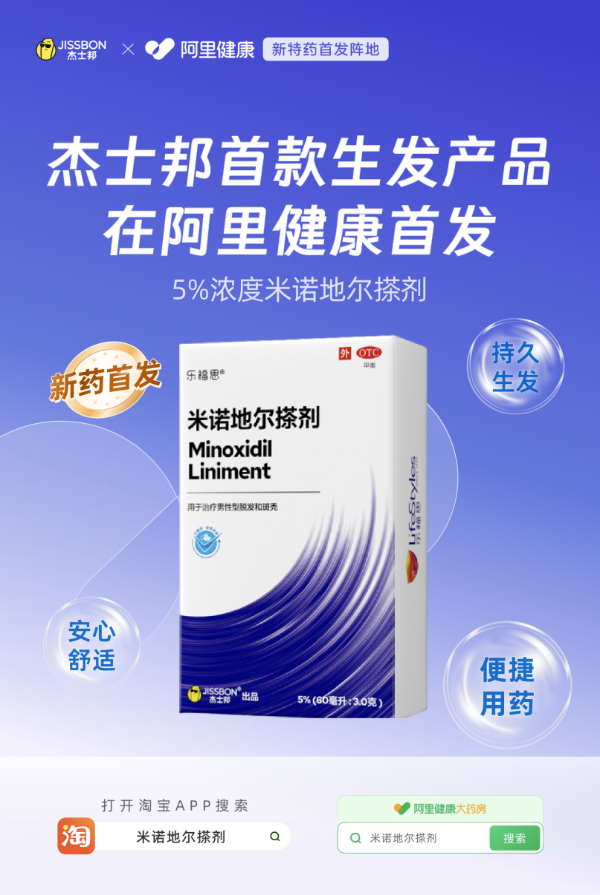
乐福思旗下杰士邦米诺地尔搽剂在阿里健康首发
Xin Hua Wang· 2025-12-10 06:56
Core Insights - The launch of the 5% minoxidil topical solution by Jissbon marks the brand's expansion into the hair health sector, previously known for its focus on sexual health products [1][4] - Hair loss is increasingly recognized as a public health issue, exacerbated by modern lifestyle factors such as stress and irregular routines, leading to a younger demographic experiencing hair loss [3][4] - The new minoxidil product aims to provide a low-sensitivity and refreshing user experience while ensuring stability and ease of storage, addressing key patient concerns regarding treatment effectiveness and safety [4][5] Product Details - The minoxidil solution utilizes a "golden concentration" of 5%, which is clinically validated for its efficacy in stimulating hair growth by improving local blood circulation around hair follicles [4] - The product is designed to withstand extreme temperatures, ensuring its usability in various conditions, which enhances consumer convenience [4] Market Strategy - Jissbon's entry into the hair health market is part of a broader strategy to diversify its product offerings, which now include male health medications, thereby creating a comprehensive portfolio in the sexual and health sectors [4][5] - The choice to launch on the Alibaba Health platform aligns with the company's strategy to leverage digital health platforms for efficient consumer engagement and to meet the demands of niche markets [4][5] Future Collaboration - Alibaba Health is positioned as a key partner for future product launches, with plans to deepen collaboration with Jissbon to develop new products that cater to consumer needs in the health sector [5]