
菜薹

Search documents
盘活“冬闲田” 轮作促增收
Xin Lang Cai Jing· 2026-02-09 20:19
Core Viewpoint - The article highlights the successful agricultural development in Longwo Village, focusing on the cultivation of rapeseed sprouts (菜薹) as a key project for rural revitalization, which has significantly increased the income of local farmers [1][2]. Group 1: Agricultural Development - Longwo Village has transformed its idle farmland into productive land by focusing on the cultivation of rapeseed sprouts, which has become a popular market item [1]. - The village has a favorable climate and soil conditions that contribute to the high quality of rapeseed sprouts, with an average annual temperature of 15.5°C and fertile soil along the Liuguang River [1]. Group 2: Infrastructure and Support - To ensure the successful cultivation and sale of rapeseed sprouts, the village has improved agricultural infrastructure, including roads and irrigation systems, facilitating seamless connections from farms to local markets [2]. - The local government plays an active role in connecting farmers with buyers, ensuring that farmers can sell their produce easily and confidently [2]. Group 3: Community Engagement and Future Plans - Longwo Village has established a development model that involves party leadership, collective village initiatives, and active participation from farmers, making the rapeseed industry a pillar of rural revitalization [2]. - Future plans include expanding planting areas, enhancing support services, and securing project funding to improve infrastructure, particularly addressing water shortages to boost farmers' confidence and motivation [2].
特色农业绘丰景 湟中沃野谱新篇
Xin Lang Cai Jing· 2026-01-25 21:22
Core Viewpoint - During the "14th Five-Year Plan" period, Huangzhong District of Xining City focuses on building a center for green organic agricultural and livestock products, emphasizing the development of specialty industries such as cool-season vegetables, ecological yaks, and disease-free potatoes, aiming to become a national benchmark for modern agriculture [2] Group 1: Agricultural Development - The district has established a modern agricultural industry system characterized by regional, specialized, and scaled development, with over 3 large-scale vegetable bases and 34 medium-sized bases, achieving a stable vegetable planting area of 130,800 acres and an annual output exceeding 340,000 tons, accounting for one-fifth of the province's total output [3] - The introduction of over 20 high-quality vegetable varieties and the promotion of 12 green production technologies have led to a 96% standardization rate in production technology, significantly increasing yields in various crops [3] Group 2: Value Chain Enhancement - The district aims to elevate specialty agriculture from production to processing, sales, and branding, achieving a total industrial output value exceeding 100 million yuan in the strawberry industry, with 6 million seedlings exported annually [4] - A 180 million yuan deep processing project for potatoes has commenced operations, enhancing the value chain of traditional bulk agricultural products [4] Group 3: Brand Development - A total of 23 vegetable trademarks have been registered, with 91 products certified as green food, forming a multi-layered brand matrix that includes regional public brands and enterprise brands, with nearly 50% of vegetable products sold outside the province [5] - The total output value of the entire vegetable industry chain exceeds 1.2 billion yuan, contributing to a significant increase in rural residents' disposable income from 12,655 yuan in 2020 to 18,472 yuan by 2025 [5] Group 4: Organizational Strengthening - The district has strengthened rural grassroots party organization construction, establishing 23 functional party organizations in agricultural cooperatives and industry chains, enhancing organizational cohesion and development leadership [6] - A talent policy has been implemented to attract 581 university graduates to rural areas, providing fresh expertise and support for agricultural upgrades [6]

为何霜打菜更甜更软糯 农业专家揭秘
Xin Lang Cai Jing· 2026-01-21 19:36
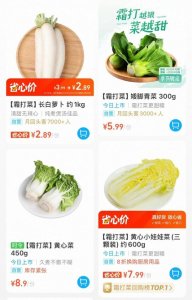
Group 1 - The core concept of "frosted vegetables" is that they undergo a survival response to low temperatures, leading to increased sweetness and improved texture due to the conversion of starches to soluble sugars [2][4] - Frosted vegetables are primarily cold-resistant varieties harvested in autumn and winter, such as cabbage, white radish, and spinach, while other vegetables like eggplant and tomatoes cannot withstand low temperatures [3][4] - The optimal tasting period for frosted vegetables varies by region, with the best flavor typically occurring from December to February, particularly for radishes and cabbages harvested during this time [4][5] Group 2 - Frosted vegetables cannot be artificially created at home using a refrigerator, as the process requires dynamic temperature changes and light for photosynthesis, which are not present in a static refrigerator environment [5] - The formation of frosted vegetables necessitates a stable low-temperature period lasting 5 to 7 days, along with day-night temperature fluctuations to drive sugar accumulation [5]
量足价稳!长沙春节“菜篮子”不愁供
Xin Lang Cai Jing· 2026-01-18 19:30
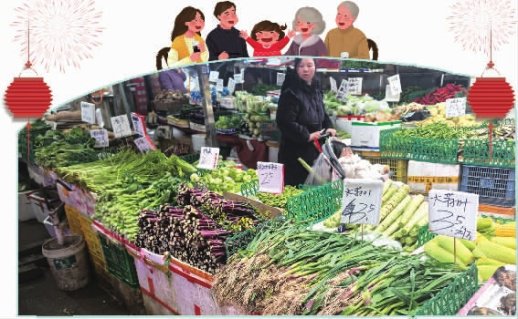
Core Viewpoint - The local vegetable supply in Changsha is abundant and prices remain stable as the Spring Festival approaches, ensuring that residents can enjoy a plentiful and affordable New Year's Eve dinner [2][3][4]. Group 1: Vegetable Supply and Pricing - Changsha has approximately 420,000 acres of cultivated vegetable land, with crops like cabbage, rapeseed, and greenhouse peppers in good condition, ensuring a steady supply during the Spring Festival [2][3]. - Local vegetable prices are generally stable, with most green vegetables priced under 6 yuan per kilogram, and specific prices for local produce such as 5 yuan for local asparagus and 6 yuan for local cabbage [4]. - The average wholesale price of vegetables in Changsha is 4.44 yuan per kilogram, with a mixed trend of price changes among 14 monitored vegetable types [5]. Group 2: Market Dynamics and Consumer Behavior - Consumers are actively purchasing local vegetables, with reports of stable prices and a preference for local produce over more expensive imported or out-of-season vegetables [3][4]. - There is an expectation of minor price fluctuations during the Spring Festival, but no significant increases are anticipated, particularly for local vegetables [5]. - The local agricultural department is taking measures to protect crops from potential cold weather impacts, ensuring continued supply stability [3].
青海高原冷凉蔬菜热销
Jing Ji Ri Bao· 2025-11-21 22:41
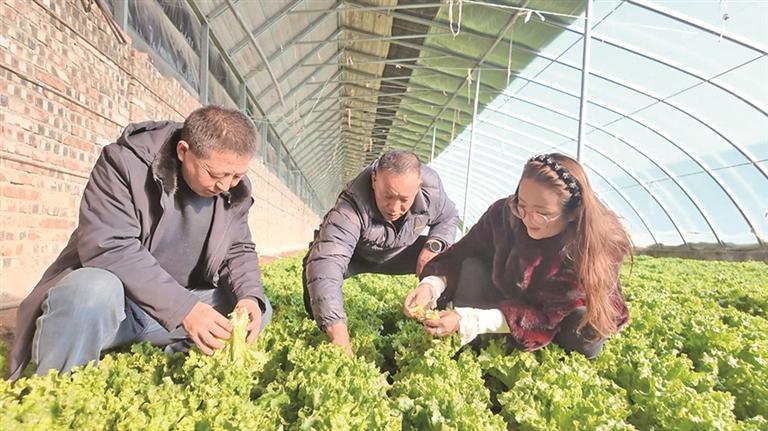
Core Insights - The article highlights the transformation of the agricultural landscape in Huangzhong District, Qinghai Province, where the cold climate has been leveraged to develop a thriving cool-season vegetable industry, significantly increasing farmers' incomes and promoting rural revitalization [1][2]. Group 1: Agricultural Development - The cool-season vegetable industry in Huangzhong District has turned previously idle land into productive agricultural bases, with farmers like Qi Ruying earning around 200 yuan per day from harvesting spinach [1]. - The district has adopted advanced agricultural techniques, such as water and fertilizer integration, which has expanded the area under cultivation from 300 acres in 2018 to 1,700 acres currently [1][2]. - The use of plastic film for soil temperature management has been crucial in overcoming the challenges posed by the high-altitude climate, allowing for effective cold and drought resistance [2]. Group 2: Economic Impact - The village of Banzhongying has developed a modern vegetable production base with over 1,200 greenhouses, achieving a total vegetable output of over 6,000 tons in 2024, generating an annual output value exceeding 19 million yuan [2]. - Farmers in Xichai Village have seen their incomes rise significantly, with one farmer reporting an increase of over 20,000 yuan in 2023 due to collaboration with agricultural experts [3]. - The average annual income for villagers in Gonghe Town has reached 15,000 yuan, showcasing the economic benefits of the agricultural initiatives [3][4]. Group 3: Brand and Market Development - Brand development is essential for the success of the cool-season vegetable industry, with Banzhongying Village establishing a brand sales system that combines online and offline sales channels, reaching major cities like Lanzhou and Shanghai [3]. - The introduction of an order-based agricultural model has ensured stable sales for farmers, with cooperative agreements established with merchants in Xi'an and Lanzhou [4]. - The cooperative's land transfer model provides farmers with stable rental income and job opportunities, contributing to an average annual income increase of 2,000 yuan for participating farmers [4].
一度吃菜多靠外省调运的青海 逆袭成了很多地方的“菜篮子” 高原冷凉蔬菜的“破圈”之路(乡村观察)
Ren Min Ri Bao· 2025-10-23 23:13
Core Insights - Qinghai Province has transformed its agricultural shortcomings into advantages by developing cool-season vegetables, becoming a significant supplier of fresh produce in China [1][3]. Group 1: Development of Cool-Season Vegetables - The cool-season vegetable industry in Qinghai has seen significant growth, with the planting area reaching approximately 660,000 acres and a production volume of around 1.58 million tons, of which 700,000 tons are exported [3]. - The region's high altitude, cool climate, and ample sunlight create ideal conditions for growing high-quality cool-season vegetables, which are marketed as eco-friendly products [3][4]. Group 2: Technological Advancements - The introduction of pest monitoring technology and water-fertilizer integration systems has improved the efficiency and yield of cool-season vegetable farming, with water and fertilizer usage reduced by about 40% and yield increased by approximately 10% [4][5]. - New vegetable varieties have been developed, including 28 highland specialty varieties and over 50 new varieties selected by national experts, enhancing both quality and yield [5]. Group 3: Market and Sales Coordination - The cooperative model has facilitated direct supply chains, allowing fresh vegetables to reach markets in Guangdong within 40 hours, meeting high-quality standards set by buyers [6]. - Qinghai's vegetable exports have reached 54.3% of the province's total vegetable output, with significant export volumes to international markets, including 4,200 tons valued at $1.28 million in the first half of the year [7]. Group 4: Economic Impact - The cool-season vegetable industry has generated substantial economic benefits, with annual production valued at over 760 million yuan, involving more than 20,000 farming households and providing over 500 million yuan in labor income [7][8].
高原冷凉蔬菜的“破圈”之路(乡村观察)
Ren Min Ri Bao· 2025-10-23 22:42
Core Insights - Qinghai Province has transformed its agricultural shortcomings into advantages by developing cool-season vegetables, becoming a significant supplier of fresh produce in China [1][3][4] Group 1: Development of Cool-Season Vegetables - The cool-season vegetable industry in Qinghai has evolved from small-scale farming to large cooperative operations, with the planting area reaching approximately 660,000 acres and a production volume of around 1.58 million tons, of which 700,000 tons are exported [3][4] - The region's high altitude, cool climate, and significant temperature variations provide an ideal environment for growing high-quality cool-season vegetables, which are marketed as eco-friendly products [3][4] Group 2: Technological Advancements - The introduction of pest monitoring technology and water-fertilizer integration systems has improved the efficiency and yield of cool-season vegetable production, with water-fertilizer integration saving about 40% in resources and increasing yields by approximately 10% [4][5] - New vegetable varieties have been developed, including 28 highland specialty varieties and over 50 introduced varieties, enhancing both quality and yield [5][6] Group 3: Market and Export Dynamics - The cooperative model has facilitated direct supply chains, allowing vegetables to reach markets in Guangdong within 40 hours, meeting high-quality standards set by local regulations [7][8] - Qinghai's cool-season vegetables are not only popular domestically but also have significant export potential, with 54.3% of the province's vegetable exports coming from certified bases, and an expected export volume of 10,000 tons for the year [8][9] Group 4: Economic Impact - The cool-season vegetable industry has become a major economic driver in Qinghai, with annual production valued at over 760 million yuan, benefiting more than 20,000 farming households and providing over 500 million yuan in labor income [8][9]
80个油菜新品种在杭集中展示
Hang Zhou Ri Bao· 2025-05-07 02:16
Core Viewpoint - The development of new high-yield and high-oil rapeseed varieties is crucial for enhancing the rapeseed industry and promoting rural revitalization in China [1][3]. Group 1: Event Overview - The 2025 Yangtze River Delta (Zhejiang) Rapeseed New Variety Conference was held in Hangzhou, focusing on the demonstration and promotion of new rapeseed varieties and technologies [1]. - The conference showcased 80 new rapeseed varieties, including 34 national high-yield and high-oil varieties, and 30 provincial advantageous varieties, all with an oil content of over 46% [2]. Group 2: Innovations and Developments - The event featured 10 short growth period varieties, with the shortest being 174 days, and 6 varieties that combine ornamental and economic value [2]. - Intelligent equipment such as blanket seedling transplanting machines, pneumatic seeders, and drones were displayed, along with processed rapeseed products and cultural derivatives [2]. Group 3: Future Directions - The conference aims to continue promoting high-yield and economically viable rapeseed varieties to support rural revitalization efforts [3]. - The event has been held for three consecutive years, showcasing innovative results and promoting diversified development and extension of the rapeseed industry [3].