
蜜桃四季春

Search documents
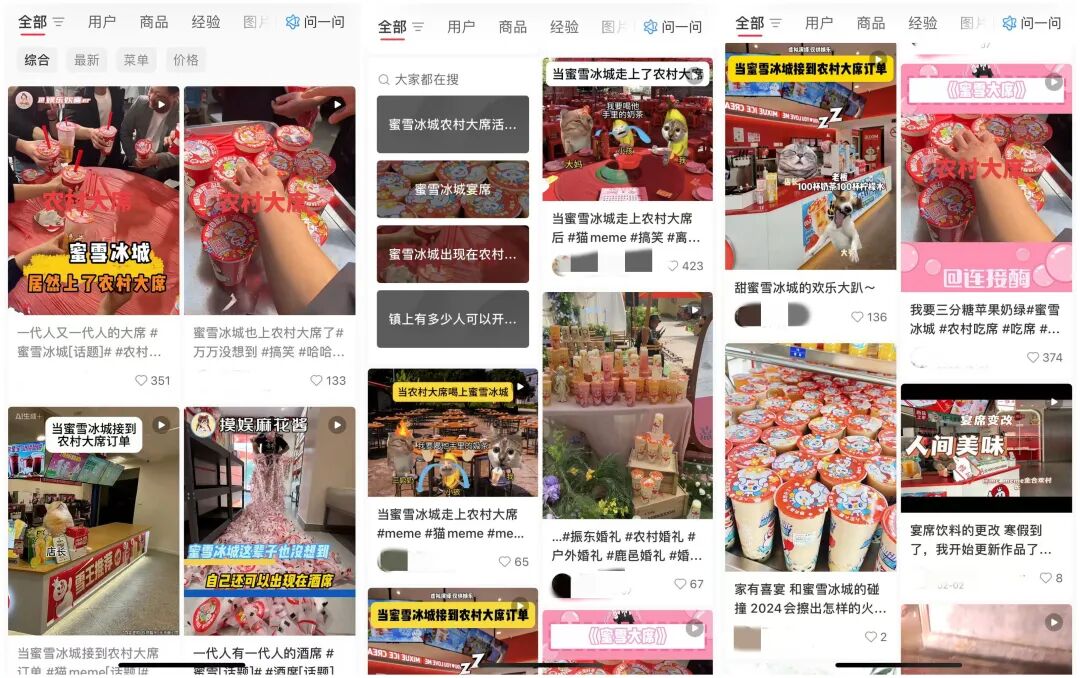
蜜雪冰城“杀入”农村大席,网友:比雪碧可乐好喝
3 6 Ke· 2026-02-11 03:09
Core Insights - The article highlights the rising popularity of Mixue Ice City as a beverage choice at rural banquets across various provinces in China, replacing traditional soft drinks like Sprite and Coca-Cola [1][3] - The trend indicates a shift in consumer preferences towards new tea beverages, which are becoming a staple at various social gatherings, including weddings and celebrations [5][6] Group 1: Market Trends - Mixue Ice City is increasingly being chosen for rural banquets, with a significant number of orders reported, such as 100-300 cups for a wedding, which can represent a substantial portion of daily sales for stores [3][5] - The average expenditure for beverages at a banquet is approximately 750 RMB for 150 guests, which is 3 to 4 times higher than traditional bottled drinks, yet consumers are willing to pay for this new style of hospitality [5][6] Group 2: Competitive Landscape - Other brands like Heytea and Bawang Tea are actively entering the banquet beverage market, moving from passive to proactive strategies to capture this growing demand [6][8] - Promotions such as group discounts and delivery services are being implemented by various brands to facilitate bulk orders, making it easier for consumers to choose new tea beverages for events [11][13] Group 3: Consumer Engagement - Brands are enhancing the emotional value of their products by creating unique experiences, such as offering free drinks to newlyweds and interactive activities at wedding receptions [14][16] - The integration of new tea beverages into social events reflects a broader change in consumer behavior, where the demand for convenience and experience is reshaping traditional dining customs [17][18]

“秋奶”出现蟑螂?蜜雪冰城道歉!
新浪财经· 2025-08-16 07:31
Core Viewpoint - The recent incident involving a cockroach found in an unopened cup of milk tea from Mixue Ice City highlights ongoing food safety issues within the company, which has faced over 10,000 complaints related to food safety, particularly concerning foreign objects in beverages [2][8][14]. Group 1: Incident Details - A consumer reported finding a cockroach in an unopened cup of jasmine milk tea purchased from a Mixue Ice City store in Ganzhou, Jiangxi [4][6]. - The company has issued an apology and refunded the consumer, while also stating that they are investigating how the cockroach entered the cup [4][5][6]. Group 2: Complaint Statistics - Mixue Ice City has accumulated over 10,000 complaints on the Black Cat Complaints platform, with many related to finding insects and foreign objects in their products [8][14]. - A recent complaint involved a consumer discovering a bug in a sealed cup of tea purchased through the company's app, indicating a pattern of food safety issues [10][12]. Group 3: Business Model and Financial Performance - As of December 31, 2024, Mixue Ice City operates 46,479 stores globally, with 99.96% being franchise stores, leaving only 17 as company-owned [14]. - The franchise model has allowed Mixue Ice City to expand rapidly, particularly in lower-tier cities, with 23,858 stores located in such areas, accounting for 57.4% of total stores [14]. - Financially, the company reported revenues of 24.21 billion yuan from product and equipment sales, a 21.7% increase year-over-year, and 620 million yuan from franchise services, a 52.8% increase [14].

“秋奶”出现蟑螂? 蜜雪冰城道歉!
Xin Lang Ke Ji· 2025-08-16 07:24
Core Viewpoint - The recent incident involving a cockroach found in an unopened cup of milk tea from Mixue Ice City has raised significant concerns about food safety and the company's operational practices, particularly its heavy reliance on a franchise model [2][4][7]. Group 1: Incident Details - A consumer reported finding a cockroach in an unopened cup of jasmine milk green tea purchased from a Mixue Ice City store in Ganzhou, Jiangxi [4]. - The company has issued an apology and refunded the consumer, while also compensating them 1,000 yuan as per food safety regulations [6][4]. - This incident is part of a larger pattern of complaints, with over 10,000 complaints related to food safety issues, including foreign objects in drinks [7][12]. Group 2: Business Model and Financial Performance - As of December 31, 2024, Mixue Ice City operates a total of 46,479 stores globally, with 46,462 being franchise stores, resulting in a franchise ratio of 99.96% [12][13]. - The company has expanded significantly, adding 8,914 stores compared to the previous year, with 57.4% of its stores located in third-tier cities and below [12][13]. - In 2024, Mixue Ice City's revenue from product and equipment sales reached 24.21 billion yuan, a year-on-year increase of 21.7%, while revenue from franchise and related services grew by 52.8% to 620 million yuan [13].
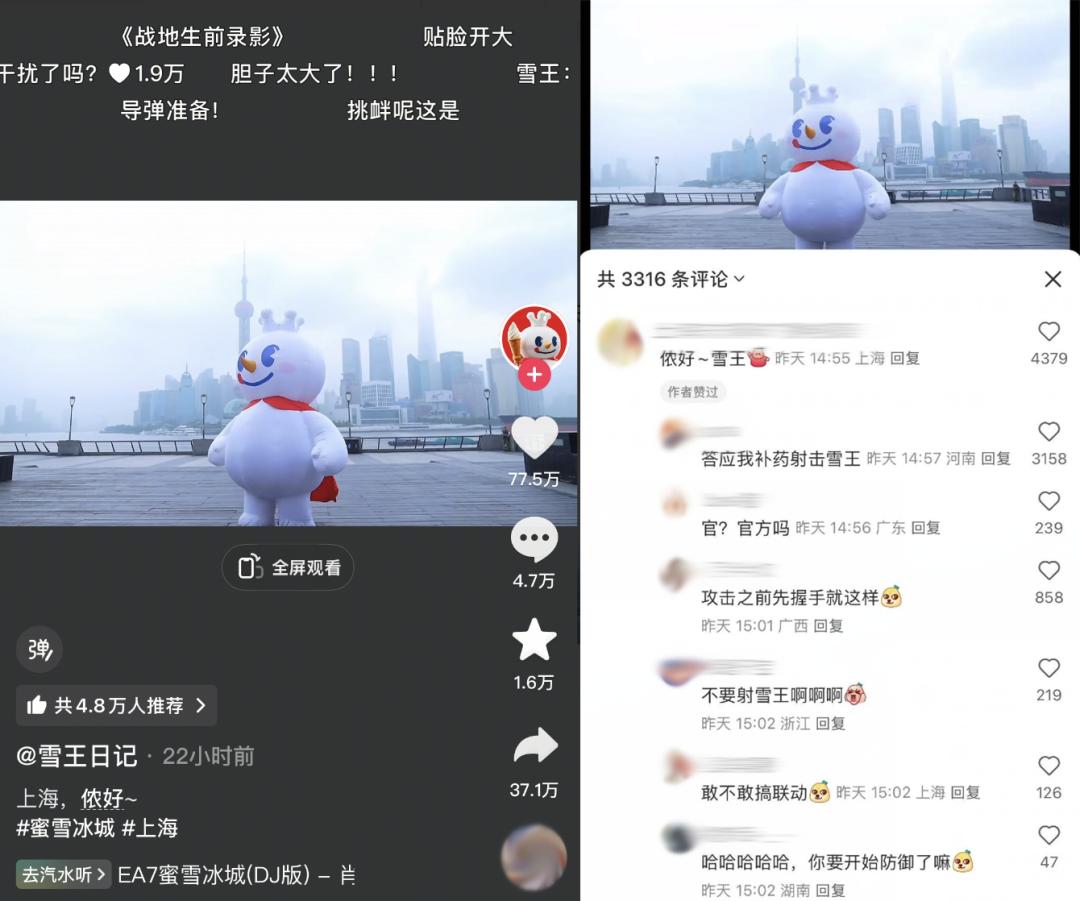
“在上海喝蜜雪冰城会被东方明珠攻击?” 玩地域梗的乐子人快把南京路柠檬水买爆了
3 6 Ke· 2025-07-24 07:36
Core Viewpoint - The article discusses the cultural phenomenon surrounding the brand Mixue Ice City in Shanghai, highlighting its rise as a popular milk tea brand amidst humorous regional stereotypes and social media engagement, particularly in relation to the Oriental Pearl Tower [1][3][4]. Group 1: Brand Engagement and Cultural Impact - Mixue Ice City has become a trending topic in Shanghai, with its mascot "Xue Wang" gaining significant attention on social media, including a video that approached one million likes [1][3]. - The humorous narrative of "Oriental Pearl attacking Mixue Ice City" reflects a deeper cultural commentary on regional stereotypes and the juxtaposition of low-cost brands against Shanghai's high-end consumer culture [4][8]. - The brand's popularity has led to a surge in social media posts featuring customers enjoying Mixue Ice City products at iconic Shanghai locations, indicating its status as a must-visit spot [23][25]. Group 2: Market Strategy and Expansion - Mixue Ice City has strategically expanded into Shanghai, initially focusing on non-core urban areas before moving into prime locations, which has been a significant aspect of its growth strategy [48][50]. - The brand's pricing strategy has been adjusted in response to the competitive landscape in Shanghai, with recent price increases reflecting the challenges of operating in a high-cost environment [54][56]. - The article notes that the brand's expansion is driven more by population density than economic indicators, suggesting a unique market positioning that prioritizes accessibility over traditional economic metrics [57][61].

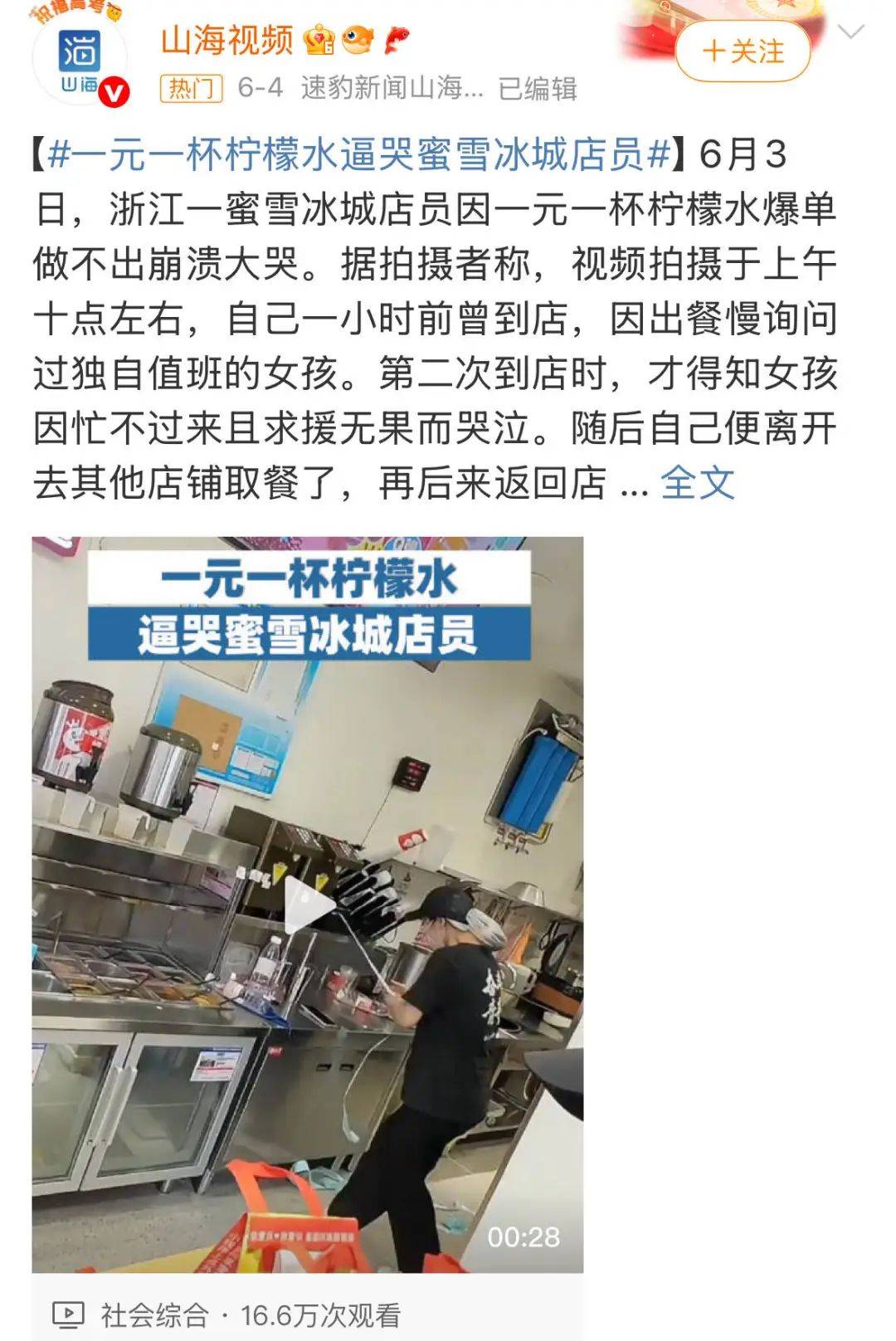
单手同时做3杯、爆单忙到大哭的蜜雪冰城打工人,为创造「1元柠檬水超低价神话」到底有多努力?
Sou Hu Cai Jing· 2025-06-10 09:51
Core Viewpoint - The recent viral video of a Mxue Ice City employee crying while working has sparked discussions about the working conditions and pressures faced by employees in the fast-food and beverage industry, particularly in the context of the company's rising stock prices and popularity due to its low-priced lemon water product [1][3][5]. Group 1: Employee Experience and Working Conditions - The employee's emotional breakdown was initially attributed to overwhelming work demands, but later clarified to be due to personal issues unrelated to work [5][9]. - Employees report long hours, with some working over 10 hours a day, often without breaks, especially during peak hours [13][21]. - The company has a policy discouraging employees from discussing negative aspects of their work experience publicly [5][9]. Group 2: Company Performance and Market Position - Mxue Ice City has seen significant stock price increases, with a nearly 5% rise following the viral incident, and over 20% increase in stock price over the past 20 days [3][9]. - The company has established itself as a leader in the lemon water market, capturing 80% of the market share and selling 11 billion cups in the first nine months of 2024 [26][28]. - Mxue Ice City operates over 46,000 stores globally, with a focus on maintaining low prices, exemplified by its 3 yuan lemon water [9][26]. Group 3: Financial Metrics and Employee Compensation - Mxue Ice City reported a revenue of 153.93 billion yuan in 2023, with an average revenue per employee of 237.2 thousand yuan, ranking second among major tea beverage companies [21][22]. - The average annual salary for employees is reported at 105,000 yuan, but actual earnings can vary significantly based on location and store performance [21][22]. - Employees often do not receive overtime pay or benefits, leading to disparities in compensation across different regions and stores [22][24]. Group 4: Franchise Model and Challenges - The majority of Mxue Ice City stores are franchises, with franchisees bearing significant operational risks and costs, while the company profits from selling raw materials to these franchises [36][37]. - The process to become a franchisee has become increasingly competitive, with a low acceptance rate of around 5% for applicants [33][34]. - Franchisees face pressure from rising operational costs and competition, which can lead to conflicts between franchisees and the company regarding pricing and product offerings [36][37].
“现饮界拼多多”蜜雪冰城 :“雪王”封王底气何在?
海豚投研· 2025-03-13 11:49
Core Viewpoint - The article highlights the rapid expansion and unique business model of the tea beverage brand Mixue, which has surpassed Starbucks in the number of stores globally, reaching over 45,000 locations. The brand's success is attributed to its low-cost, high-efficiency supply chain and standardized store operations, allowing it to maintain a high net profit margin despite lower gross margins compared to competitors [1][3][5]. Group 1: Company Overview - Mixue was founded in 1997, initially selling shaved ice, but pivoted to a low-cost ice cream model with a 1 yuan cone, which became a bestseller. The brand focuses on high-quality, affordable products, with top-selling items priced below 7 yuan, accounting for nearly 40% of sales [3][5]. - The company operates primarily through a franchise model, generating 95% of its revenue from the sale of products and equipment to franchisees, while franchise fees contribute less than 5% [5][6]. Group 2: Business Model and Expansion - Mixue's fixed assets account for 28% of total assets, significantly higher than competitors, indicating a heavy investment in production and logistics to support its franchise model. The company produces 60% of its raw materials in-house, enhancing cost efficiency [6][12]. - The average payback period for franchisees is 14-16 months, shorter than the industry average of 18-24 months, making it an attractive option for potential franchisees [7][8]. Group 3: Supply Chain and Operational Efficiency - Mixue has built a vertically integrated supply chain, controlling raw material sourcing, production, and logistics. This includes direct procurement from farms and self-built production facilities, which lowers costs by 20-40% compared to external suppliers [10][15]. - The company employs a standardized operational model, ensuring consistency in product quality and efficiency across its stores. This includes a centralized training program and strict compliance monitoring [16][17]. Group 4: Competitive Landscape - In the low-end tea beverage market (priced below 10 yuan), Mixue holds over 30% market share, significantly outpacing local competitors. The brand's efficient supply chain and operational model create a formidable barrier to entry for new players [21][22]. - The high-end and mid-range segments of the market are more fragmented and competitive, with many brands vying for market share, but Mixue's focus on low-cost offerings positions it uniquely in the market [19][20]. Group 5: Brand and Marketing Strategy - Mixue has developed a unique brand identity through its character "Xue Wang," which has become a central element of its marketing strategy. This IP has enhanced customer engagement and brand recognition [22][24]. - The brand's marketing efforts leverage social media and various platforms to promote its character, further solidifying its market presence and consumer loyalty [23][24].

蜜雪集团:蜜雪冰城:供应链壁垒与下沉红利双轮驱动,全球化打开长期空间-20250305
Tai Ping Yang· 2025-03-04 19:11
Investment Rating - The report assigns an "Accumulate" rating to the company with a target price of HKD 317.80, based on projected earnings growth and valuation metrics [1][9]. Core Insights - The company, Mixue Group, is positioned as a leading player in the global ready-to-drink beverage market, achieving a revenue growth rate of 21.2% and a net profit growth rate of 45.2% in the first three quarters of 2024 [3][4]. - The company's rapid expansion is driven by a combination of supply chain advantages and a focus on lower-tier markets, with a significant portion of its stores located in third-tier cities and below [5][6]. - The ready-to-drink tea industry is experiencing robust growth, with a projected CAGR of 17.3% from 2023 to 2028, and Mixue holds a 20% market share, making it the largest player in the sector [4][54]. Company Overview - Mixue Group was founded in 1997 and has rapidly expanded to over 46,479 stores globally, achieving a market share of 19% by store count [3][20]. - The company operates primarily through a franchise model, with 45,282 franchise stores and only 20 company-owned stores as of September 2024 [30][36]. - The revenue structure is heavily weighted towards B2B sales, with 98% of revenue coming from product and equipment sales to franchisees [36]. Industry Growth - The ready-to-drink tea market in China is currently valued at approximately CNY 258.5 billion, with a projected growth to CNY 312.7 billion in 2024, reflecting a 21% year-on-year increase [52][54]. - The market for affordable ready-to-drink beverages is expanding rapidly, with a CAGR of 22.2% expected from 2023 to 2028, driven by increasing consumer demand in lower-tier cities [54][55]. Supply Chain and Business Model - Mixue's competitive advantage lies in its vertically integrated supply chain, which allows for cost control and efficient distribution, with 70% of raw materials sourced in-house [5][6]. - The company has established five production bases across China, ensuring a steady supply of key ingredients and maintaining lower procurement costs compared to competitors [5][6]. International Expansion - Mixue is actively expanding its presence in Southeast Asia, with 4,792 overseas stores as of September 2024, and plans to increase this number significantly in the coming years [6][30]. - The company is also leveraging its supply chain to support its coffee brand, Luckin Coffee, which is experiencing rapid growth in the affordable coffee segment [6][29].