
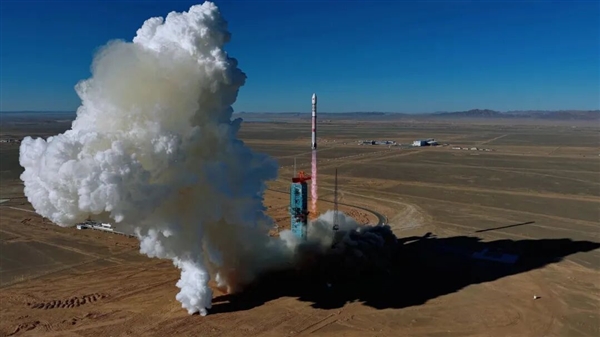
谷神星系列固体火箭

Search documents
太空基建不断加速,持续看好商业航天和卫星产业链
Guotou Securities· 2026-01-26 08:53
Investment Rating - The industry investment rating is "Outperform the Market - A" [4] Core Insights - The importance of aerospace and satellite technology is increasingly recognized, with the acceleration of space infrastructure construction benefiting the related industry chain in the long term [2][12] - The report highlights significant recent developments in the commercial aerospace and satellite industry, including the launch of new satellite networks and rockets, which are expected to enhance the application potential of satellite infrastructure [1][11] - The report suggests focusing on incremental directions in space infrastructure, such as space computing power, 3D printing, terminal direct connection, and inter-satellite connectivity, as well as value-enhancing segments in low Earth orbit satellites [2][12] Summary by Sections Industry Performance - The report indicates that the industry has shown a relative return of 14.7% over the past month, 9.2% over three months, and 23.8% over twelve months, with absolute returns of 16.5%, 11.2%, and 47.4% respectively [6][13] Recent Developments - The report details various recent events, including the launch of the "TeraWave" satellite communication network by Blue Origin, which will consist of 5,408 low Earth orbit satellites, and the successful launch of multiple satellites by different companies [1][11] - It also mentions the approval of policies in Beijing to support the development of commercial satellite remote sensing data resources from 2026 to 2030, indicating a favorable regulatory environment for the industry [1][11] Investment Focus - The report recommends paying attention to companies involved in satellite and space asset management, safety, and applications, as well as those engaged in testing and simulation services [2][12]
300万 送一个普通人“上天”
Feng Huang Wang· 2026-01-26 06:47
Core Viewpoint - The commercial space industry in China is experiencing a significant transformation, with private companies gaining momentum and preparing for IPOs, marking a new era of opportunities and challenges in the sector [5][24]. Group 1: Industry Developments - The successful launch of the reusable Zhuque-3 rocket by Blue Arrow Aerospace has garnered widespread attention, marking a milestone in China's commercial space endeavors [1]. - Numerous commercial space companies are actively preparing for their maiden flights, indicating a surge in industry activity [3]. - The commercial space sector is becoming more accessible to the public, with companies like Chuanqiu offering paid space tourism experiences [3]. Group 2: IPO Landscape - At least ten commercial space companies have initiated the IPO process, with five leading firms, including Blue Arrow Aerospace and Star Glory, particularly noteworthy [6][8]. - Blue Arrow Aerospace is ahead in the IPO race, having submitted its application to the Shanghai Stock Exchange, aiming to raise up to 7.5 billion yuan for technology and capacity enhancements [6][12]. - Other companies, such as Zhongke Aerospace and Star Glory, are also in various stages of the IPO process, focusing on reusable rocket technologies [8][9]. Group 3: Historical Context - The journey of leading companies in the commercial space sector has been challenging, with initial skepticism about their viability and funding difficulties [12][13]. - Significant investments from industry players like Goldwind Technology have played a crucial role in supporting these companies during their formative years [15]. - The turning point for the industry came with technological breakthroughs and favorable policies, allowing companies to pursue public listings [17][24]. Group 4: Challenges Ahead - The transition from successful testing to large-scale commercial services presents significant challenges, including cost control and the maturity of reusable technology [18][21]. - A robust industrial ecosystem and financial support system are essential to address these challenges and facilitate growth [19][22]. - The industry must innovate its business models to ensure profitability and market penetration, moving beyond traditional launch services [23][24].

商业航天股熄火,但商业航天潮才刚刚开始
3 6 Ke· 2026-01-13 11:03
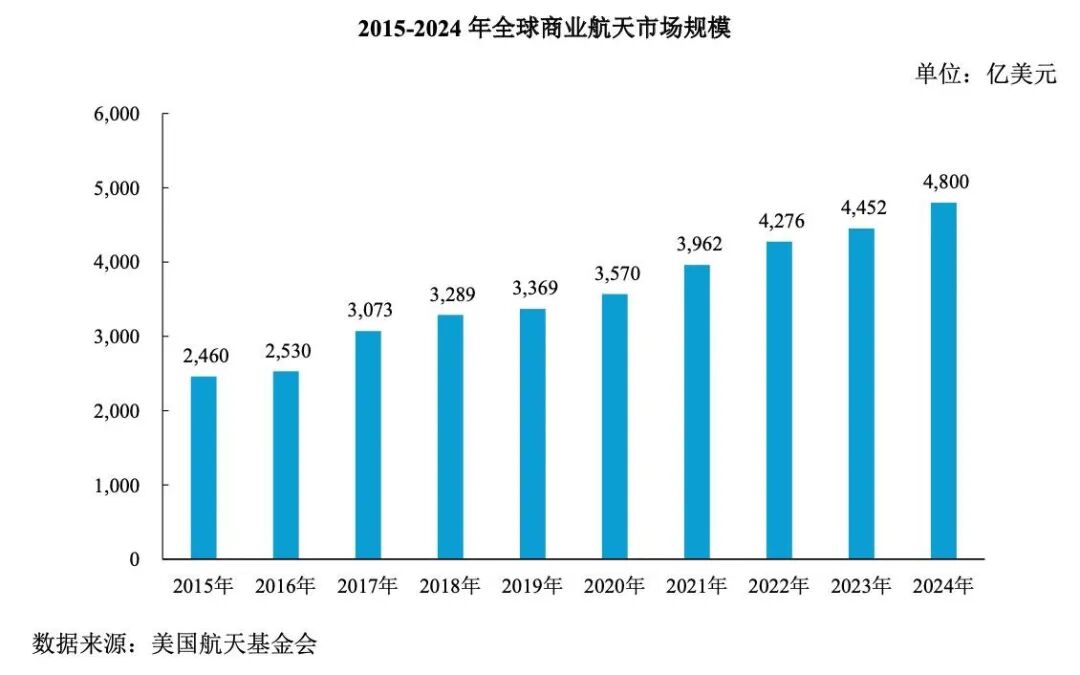
Core Viewpoint - The Chinese commercial space industry is transitioning from a phase characterized by "PPT rockets" to a more structured and sustainable business model, driven by the recent IPO guidelines that allow private rocket companies to enter the capital market [2][11]. Group 1: Market Dynamics - The commercial space sector is experiencing a "golden window period" as multiple private rocket companies, such as Blue Arrow Aerospace and Star River Dynamics, begin the IPO process [2][11]. - The focus of market attention is shifting from technological breakthroughs to engineering capabilities and cash flow certainty, with investors looking for stable launch frequencies and order visibility [3][11]. - Demand is reversing, with low Earth orbit satellite communications and remote sensing driving rocket production planning, indicating a shift from supply-driven to demand-driven dynamics [7][15]. Group 2: Company Strategies - Star River Dynamics has established a stable launch rhythm with its "Gushenxing" series solid rockets, expanding its applications in commercial remote sensing and low Earth orbit tasks [4]. - Blue Arrow Aerospace is betting on reusable technology with its liquid oxygen-methane engines and medium to large launch vehicles, aiming to emulate SpaceX's early-stage strategies [5]. - Zhongke Aerospace benefits from its affiliation with the Chinese Academy of Sciences, providing stronger certainty in engineering capabilities, while Tianbing Technology emphasizes rapid iteration and engineering efficiency [6]. Group 3: Infrastructure Development - The future of the space industry is increasingly viewed as a foundational infrastructure rather than a series of isolated projects, with stable and predictable launch demand emerging [8][15]. - The global space economy is projected to reach $612 billion by 2024, with commercial space revenue accounting for $480 billion, highlighting the growing importance of the sector [11]. - China's unique advantage lies in its complete supply chain, enabling large-scale domestic manufacturing across various components, which positions it well for future demand surges [15][16]. Group 4: Comparative Analysis - The Chinese model differs from SpaceX's approach by integrating multiple stakeholders, where the state ensures foundational technology and safety, while private companies focus on efficiency and market applications [14]. - The Chinese commercial space sector is not merely about individual company success but is evolving into a national-level industrial infrastructure, contrasting with the concentrated and overvalued U.S. commercial space market [17].
商业航天IPO集体起跑,资本想赌下一个“中国Space X”?
3 6 Ke· 2026-01-05 09:14
Core Insights - The Chinese commercial space industry is transitioning from being on the edge of national projects to becoming a center of capital imagination, with the recent implementation of IPO guidelines allowing private rocket companies to enter the capital market [1][3] - The current focus of the market is shifting from technological breakthroughs to engineering capabilities and cash flow certainty, as companies are now required to demonstrate sustainable business models rather than relying solely on financing [3][5] Group 1: Market Dynamics - More than ten companies, including Blue Arrow Aerospace, Star River Dynamics, and others, have initiated or completed listing guidance with local securities regulatory authorities, indicating a dual-track approach of pursuing listings in both A-shares and Hong Kong [3] - The commercial space sector is experiencing a "golden window period" driven by the convergence of policy, market, and capital forces, raising questions about whether this is the dawn of a long-term industry or merely a capital expectation being realized [3][5] Group 2: Company Strategies - Star River Dynamics has established a stable launch rhythm with its "Vulcan" series solid rockets, expanding its applications in commercial remote sensing and low-orbit satellite constellations [4] - Blue Arrow Aerospace is betting on reusable technology with its liquid oxygen-methane engines and medium to large launch vehicles, aiming to mirror SpaceX's early-stage approach [5] - Companies are now focused on proving three key aspects: the closure of their technology loops, the sustainability of their orders, and the resilience of their business models against market cycles [5][11] Group 3: Demand and Infrastructure - The demand for rockets is shifting from being supply-driven to being influenced by the construction pace of low-orbit satellite communication, remote sensing, and navigation constellations, which are now seen as essential infrastructure rather than one-off projects [6][12] - The future of the space industry will be determined by changes in demand structure, moving from exploratory needs to becoming foundational elements of the global digital economy [12][15] Group 4: Competitive Landscape - The competition in the space industry is evolving, with valuation metrics shifting from technological breakthroughs to traditional industrial and utility logic, focusing on launch frequency, cost per launch, and order visibility [13][14] - China's unique advantage lies in its complete supply chain, enabling it to scale production in materials, engines, electronics, and satellite integration, positioning it well for future demand surges [13][15] - The current landscape indicates that the opportunity in Chinese commercial space is not centered on a single "space unicorn," but rather on a comprehensive transition from national engineering to industrial infrastructure [15]
星河动力冲刺上市 “火箭”股集体蹿升
2 1 Shi Ji Jing Ji Bao Dao· 2025-10-24 05:00
Core Viewpoint - The commercial aerospace sector in China is experiencing a surge in interest and investment, with multiple private rocket companies preparing for IPOs, driven by supportive government policies and significant capital inflows [1][5]. Group 1: Market Dynamics - On October 24, stocks of commercial aerospace companies such as Aerospace Changfeng and Aerospace Science and Technology reached their daily limit, indicating strong market enthusiasm [1]. - The China Securities Regulatory Commission announced that Beijing Xinghe Power Aerospace Technology Co., Ltd. has submitted its IPO guidance, marking a significant step in the commercialization of private rockets [1][5]. - A total of five private rocket companies, with a combined valuation exceeding 855 billion yuan, are now in the IPO preparation phase, intensifying competition for the title of "first private rocket stock" [1][6]. Group 2: Company Profiles - Beijing Xinghe Power, established in 2018, has developed solid and reusable liquid rockets, with its "Gushenxing" series being the first to transition from experimental to commercial production in China [4]. - The company achieved a record-breaking 2.4 billion yuan in Series D financing in September, raising its post-money valuation to between 15 billion and 15.8 billion yuan [4]. - Other companies in the IPO pipeline include Tianbing Technology, Blue Arrow Aerospace, and Star Glory, with valuations of 225 billion, 220 billion, and 150 billion yuan respectively [2][6]. Group 3: Competitive Landscape - Xinghe Power leads the private rocket sector with a 51.3% success rate in domestic launches, having successfully launched 85 commercial satellites for 27 clients [8]. - The competitive landscape is evolving, with other companies like Blue Arrow Aerospace and Tianbing Technology also making significant strides in securing commercial contracts [8]. - The upcoming launches of reusable rockets by several companies, including Xinghe Power and Tianbing Technology, are expected to further stimulate investment interest in the commercial aerospace sector [8].
