
超导量子计算原型机‘祖冲之三号’

Search documents
科技新观察丨基础研究进入“从0到1”突破期——2025科技工作新亮点之二
Ke Ji Ri Bao· 2026-01-24 02:30
Core Insights - In 2025, China's foundational research is entering a breakthrough phase characterized by significant original achievements and advancements in various scientific fields [1][4][12] Group 1: Breakthroughs in Fundamental Research - China has made notable progress in fundamental research, achieving breakthroughs such as the first large-scale preparation of two-dimensional metal materials and the development of the "Zu Chongzhi III" superconducting quantum computing prototype, which set a world record [1][3] - The country has also successfully demonstrated the feasibility of thorium-based molten salt nuclear fuel conversion, reinforcing its leading position in the global molten salt reactor research field [3][12] - In the field of quantum technology, China maintains a leading position globally, with significant advancements in quantum computing capabilities and secure communication networks [3][12] Group 2: Investment and Funding in Research - In 2025, the proportion of foundational research funding in total R&D expenditure reached a historic high of 7.08%, reflecting a continuous increase in investment in foundational research [1][16] - The total R&D expenditure in 2025 was approximately 39,262 billion yuan, maintaining China's position as the second-largest investor in R&D globally [16] - Local governments, such as Shanghai, are implementing policies to enhance foundational research investment, including matching funds for private sector contributions [16] Group 3: Infrastructure and Support for Research - China has over 70 major scientific facilities that support foundational research, contributing to significant achievements in various fields, including particle physics and astrophysics [9][12] - The "FAST" telescope has made groundbreaking discoveries in pulsar research, showcasing the capabilities of China's major scientific infrastructure [7][12] - The establishment of a comprehensive research system and the continuous support for young scientific talent are crucial for fostering original innovations in foundational research [15][16]


2025年创新领域盘点——创新活力持续迸发
Ren Min Ri Bao Hai Wai Ban· 2025-12-30 00:42
Core Insights - In 2025, China's technological innovation continues to thrive, with significant advancements in various fields such as artificial intelligence, quantum information, life sciences, and clean energy, contributing to high-quality development and improved living standards [1] Group 1: Fundamental Research - China has achieved new heights in fundamental scientific research, with multiple results breaking international records and filling gaps in various fields [2] - The Jiangmen Underground Neutrino Observatory (JUNO) has successfully measured two key parameters of neutrino oscillation with a precision 1.5 to 1.8 times better than previous international standards [2] - The Chinese Academy of Sciences' team has developed a unique "atomic-manufactured van der Waals squeezing technology," successfully creating five types of two-dimensional metals, marking a significant breakthrough in the field [3] - As of August 2025, China leads the world with 2,342 hot papers, accounting for 53.2% of the global total, and ranks second in high-citation papers with 76,271, representing 37.41% of the world share [3] Group 2: Cutting-edge Technologies - China has made remarkable progress in quantum computing, with the release of the "Zuchongzhi 3" superconducting quantum computing prototype, which outperforms the fastest supercomputers [4] - In artificial intelligence, the DeepSeek-R1 model has achieved performance comparable to top global models with fewer computational resources, marking a shift in AI development strategies [4] - The number of AI companies in China has surpassed 5,300, accounting for 15% of the global total, establishing a comprehensive industrial system [4] Group 3: Robotics and Aerospace - The embodied intelligent robot industry is rapidly emerging, with significant public demonstrations of robots at major events [5] - The Tianwen-2 probe successfully launched, marking China's first asteroid sampling and comet flyby mission, filling a technological gap in small celestial body exploration [6] - The EAST nuclear fusion experiment has achieved a world record of 1 million degrees Celsius for 1,066 seconds, validating the feasibility of controlled nuclear fusion energy [6] Group 4: Life Sciences and Resource Utilization - In life sciences, breakthroughs in pest control and cancer treatment have been achieved, promoting green and precise pest management and developing new strategies for nasopharyngeal cancer immunotherapy [8] - The South-to-North Water Diversion Project has delivered over 80 billion cubic meters of water, benefiting 185 million people and addressing groundwater over-extraction issues [9] - China's high-speed rail technology has set new records, with the CR450 train achieving speeds of 453 km/h, leading the world in operational efficiency [9] Group 5: Global Collaboration - China's innovation is characterized by open collaboration, contributing to global technological progress, particularly in renewable energy, which has surpassed fossil fuels in new electricity generation [10] - The DeepSeek model has been made available globally, leading to widespread adoption and recognition in various industries [10] - China has taken the lead in establishing international guidelines in healthcare and agriculture, enhancing global public health and agricultural safety [11]
“十五五”规划建议前瞻布局未来产业,要做好哪些事?
Nan Fang Du Shi Bao· 2025-11-30 01:10
Core Insights - The "14th Five-Year Plan" emphasizes the strategic layout of future industries, marking a shift from planning to actionable strategies for economic growth [3][5][7] - The plan identifies six key areas: quantum technology, biomanufacturing, hydrogen and nuclear fusion energy, brain-computer interfaces, embodied intelligence, and sixth-generation mobile communication, which are expected to drive new economic growth [5][9][12] - The development of future industries is seen as essential not only for domestic growth but also for maintaining a competitive edge in global technology [7][9] Future Industries - The "15th Five-Year Plan" introduces a proactive approach to future industries, aiming to transform cutting-edge technologies into practical applications that can stimulate economic growth [3][5][7] - The plan outlines a comprehensive strategy that includes exploring diverse technological routes, typical application scenarios, feasible business models, and market regulatory frameworks [12][16] - The focus on future industries is expected to create new supply and demand dynamics, integrating with new consumption patterns and business models [7][12] Economic Impact - The anticipated growth in future industries could potentially create new economic pillars, with projections suggesting the addition of new scales equivalent to multiple high-tech industries in China over the next decade [9][12] - The successful implementation of the plan relies on a robust supply chain and a large-scale application environment, which are crucial for the development of these advanced technologies [9][12][16] - The plan aims to ensure that future industries not only emerge from research labs but also become significant contributors to the economy, enhancing overall economic structure [5][12] Technological Advancements - Significant advancements in quantum computing, such as the "Zuchongzhi 3" prototype, demonstrate the potential of future technologies to outperform existing systems dramatically [10] - The development of 6G technology is progressing, with over 300 key technologies established, indicating a strong foundation for future communication advancements [15] - The plan emphasizes the importance of creating viable business models to ensure that these technologies can be effectively commercialized and integrated into the market [16] Societal Transformation - The advancements in future industries are expected to redefine everyday life, enhancing convenience and efficiency in various aspects such as healthcare, transportation, and communication [16][20] - The integration of these technologies aims to improve the quality of life, making energy cleaner and daily activities more efficient [16][21] - The vision for the future includes a more liberated lifestyle, allowing individuals to focus on creativity and experiences rather than mundane tasks [21]

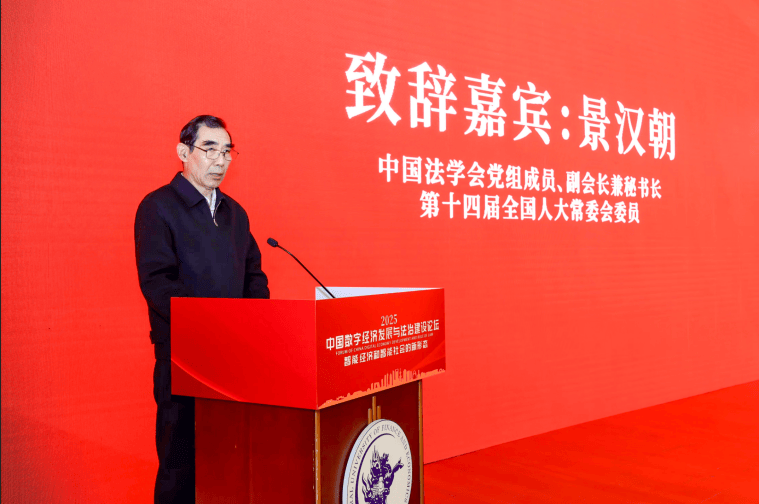
“2025中国数字经济发展与法治建设论坛”在京举行
Sou Hu Cai Jing· 2025-11-16 01:07
Core Viewpoint - The forum on "2025 China's Digital Economy Development and Legal Construction" emphasizes the integration of artificial intelligence with various sectors to promote a new form of intelligent economy and society, aligning with national strategies and legal frameworks [1][3][4]. Group 1: Forum Highlights - The forum was co-hosted by several prestigious institutions, focusing on the theme of "New Forms of Intelligent Economy and Intelligent Society" [1]. - Key figures, including officials from the Chinese Law Society and Central University of Finance and Economics, delivered speeches highlighting the importance of legal frameworks in supporting the development of the intelligent economy [3][4]. Group 2: Legal and Economic Integration - The forum stressed the need for a robust legal system to ensure the sustainable and orderly development of the intelligent economy, which is seen as a core element of economic and social progress [4]. - The establishment of interdisciplinary educational programs was discussed, aiming to cultivate talents adept in both legal and technological fields to meet the demands of the digital economy [4]. Group 3: Major Events Announced - Ten significant impactful events related to the development of China's digital economy and legal construction were announced, including the issuance of government policies and legal amendments aimed at enhancing the AI sector [12]. - Notable events include the release of the "Artificial Intelligence+" action plan and the Supreme Court's publication of judicial guidelines on data rights protection [12]. Group 4: Expert Insights - Experts highlighted the dual transformation of society, emphasizing the need for legal preparations for the intelligent society while continuing to uphold the rule of law in the industrial society [7]. - The role of artificial intelligence in scientific research was discussed, with a focus on its potential to drive innovation and the necessity of a legal framework to support its sustainable development [9][10]. Group 5: Participation and Support - The forum received strong support from various sectors, including economics, technology, and law, with significant media coverage and participation from around 180 representatives and nearly a million online viewers [15].
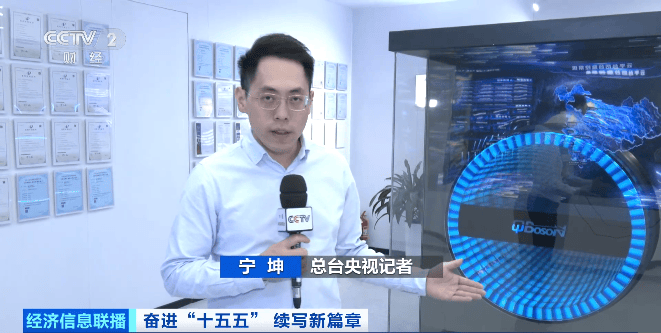
我国量子科技领域取得多项重大突破,多应用场景逐步落地
Sou Hu Cai Jing· 2025-10-29 15:40
Core Viewpoint - Quantum technology has become a key focus for multiple research and development efforts, with significant breakthroughs transitioning the industry from theoretical research to practical applications [1]. Group 1: Quantum Computing Developments - A new model of a photonic quantum computer can perform complex calculations for 1,000 users in just 1.9 milliseconds, achieving over a hundredfold improvement in computational power compared to classical computing [3]. - The latest generation of quantum computers developed by Beijing Boson Quantum Technology Co., Ltd. has reached a capability of 1,000 quantum bits, allowing control over 1,000 variables in a single computation [9]. - The company aims to produce over 30 photonic quantum computers annually by 2026, indicating a shift towards practical applications during the "14th Five-Year Plan" period [11]. Group 2: Applications and Collaborations - The company has established collaborations with several key laboratories, universities, and research institutions to expand applications in artificial intelligence, financial risk control, and biomedicine [5]. - The ability to generate vast amounts of new data using small samples can significantly aid in vaccine design and public safety [7]. - The development of superconducting quantum computing prototypes and advancements in quantum communication by major telecom operators highlight the ongoing progress in the quantum information field in China [13][15]. Group 3: Industry Position and Future Outlook - China's quantum information sector is positioned in the global first tier, with the industry still in its early stages of development [15]. - The "14th Five-Year Plan" aims to accelerate technological breakthroughs and the transformation of scientific achievements into practical applications [15].
“深交所·创享荟”专题交流活动在京举办:量子科技“叠加”资本赋能 促融资升温、产业化提速
Zheng Quan Shi Bao Wang· 2025-04-30 09:43
Core Insights - The event "Quantum Technology Industrialization and Capital Empowerment New Opportunities" highlighted the importance of capital markets in accelerating the development of quantum technology in China [1] - Quantum technology is seen as a potential leader in the next technological revolution, with significant attention from various countries [1] - Despite advancements, the industry faces challenges such as lack of enthusiasm from downstream applications and export restrictions on certain equipment [1] Group 1: Industry Growth and Investment - The number of global quantum technology-related companies exceeded 600, with total financing surpassing $10 billion by the end of 2024 [2] - China's quantum technology sector is in the first tier globally in terms of technical level, capability, and talent reserve, but funding for industrialization remains relatively low [3] - The financing environment for quantum technology has improved, with more opportunities for collaboration between companies and investors [4] Group 2: Capital Market Opportunities - The capital market is increasingly focused on supporting hard technology enterprises, with a favorable environment for long-term capital investment [4] - The establishment of the ChiNext board has provided a significant financing channel for quantum technology-related companies, aiding their growth [5] - The Shenzhen Stock Exchange aims to support high-quality development in frontier fields like quantum technology through various financial instruments and services [6]