
超级增程车型

Search documents
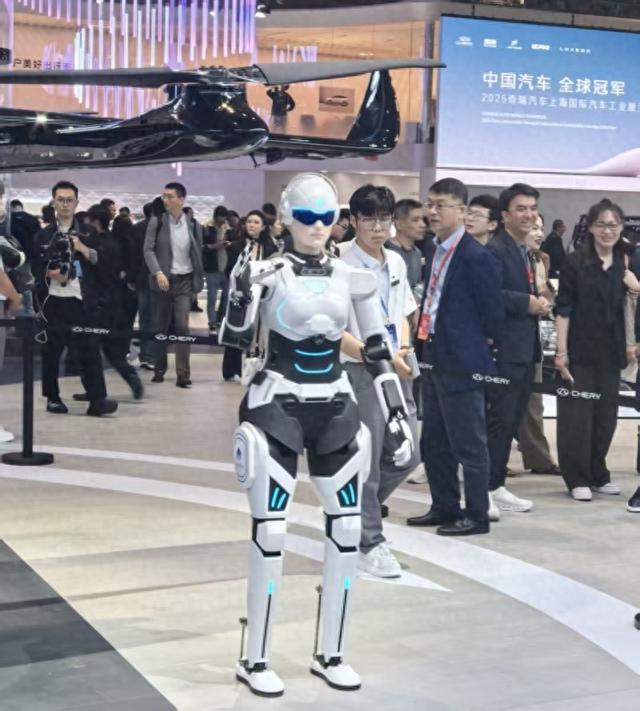
2026年,人形机器人、飞行汽车与Robotaxi的“量产分水岭”
Hua Xia Shi Bao· 2026-02-25 15:31
Core Insights - Xiaopeng Motors has outlined its strategic plan for 2026, emphasizing a shift from "capable" to "mass production" with a focus on "physical AI" [2][3] - The company aims to launch three super-extended range models in Q1 and introduce at least four new vehicles to overseas markets throughout the year, while also increasing its global workforce by 8,000 [2][4] Strategic Goals - The year 2026 is defined as a pivotal year for Xiaopeng, with a clear timeline for scaling up production based on accumulated technological reserves [2][3] - Xiaopeng plans to achieve mass production and delivery of its split-type flying car and the next-generation IRON humanoid robot within the year, with the latter targeting commercial applications in shopping malls and stores [3][5] Market Expansion - Xiaopeng's overseas sales target for 2026 is set at 90,000 units, doubling last year's figure, with a focus on key markets such as Israel, Germany, Norway, Thailand, and France [3][4] - The company aims for overseas sales to contribute over 70% of its profits by 2030, with a long-term goal of reaching 1 million units sold internationally [3][4] Workforce Development - To support its ambitious goals, Xiaopeng plans to hire 8,000 new employees, with 5,000 positions reserved for campus recruitment, highlighting the importance of talent acquisition in achieving its strategic objectives [4][5] - The company emphasizes a cultural shift towards AI literacy among all employees, integrating technology and decision-making processes [4][5] Industry Context - The competitive landscape for "physical AI" is intensifying, with other players like Yushu Technology and Volant Aerotech also making strides in humanoid robots and flying cars, respectively [5][6] - The timeline for commercializing eVTOL and Robotaxi services is critical, with 2026-2027 seen as a decisive period for these technologies [6][7]


购置税补贴兜底 乐道沈斐重申“纯电+换电”路线
Zheng Quan Shi Bao Wang· 2025-11-24 22:12
Core Viewpoint - The ongoing shift in the Chinese electric vehicle market is characterized by a transition from pure electric vehicles to extended-range vehicles, with companies like NIO and Li Auto adapting their strategies accordingly [2][3]. Group 1: Company Strategies - NIO's Senior Vice President, Shen Fei, emphasized the company's commitment to a "pure electric + battery swap" strategy, rejecting the need for extended-range technology [2]. - Li Bin, CEO of NIO, noted that the user experience from pure electric technology has surpassed the inconveniences of charging, leading to a surge in sales of large three-row pure electric SUVs [3][4]. - Shen Fei highlighted that the battery swap system offers significant advantages in safety and user experience, with 90% of users relying on battery swaps and home charging [5]. Group 2: Market Trends - The Chinese electric vehicle market is witnessing a "technical route adjustment," with companies like Xpeng launching extended-range models while others, like Li Auto, are increasingly focusing on pure electric vehicles [2]. - The number of charging stations in China has reached between 6 million and 10 million, indicating a robust infrastructure supporting the pure electric vehicle market [4]. - NIO is targeting profitability this quarter, with a focus on expanding its market presence in lower-tier cities through its extensive battery swap network [7].
何小鹏:机器人市场潜力比汽车大 售价有望看齐
Di Yi Cai Jing· 2025-11-18 05:49
Core Insights - Xiaopeng Motors reported Q3 2025 total revenue of 20.38 billion, a year-on-year increase of 101.8%, with total deliveries of approximately 116,000 units, up 149.3% year-on-year, and a gross margin of 20.1%, an increase of 4.8 percentage points year-on-year [1] Group 1: Robotics Business - Xiaopeng plans to achieve sales of over 1 million units for its humanoid robots by 2030, with the CEO believing that the market potential for robots is greater than that for cars [1] - The current generation of Xiaopeng's robots is the seventh, with plans for true mass production of the eighth generation [1] - The company aims to leverage synergies between automotive and robotics sectors, with plans to test robots in commercial scenarios by 2026 [2] Group 2: Cost and Pricing Strategy - The BOM cost of robots is expected to approach that of cars, with software costs constituting 50% of the robot's BOM compared to only 10% for cars [2] - Xiaopeng aims to price its robots competitively to achieve the vision of widespread household adoption [2] Group 3: Robotaxi Business - Xiaopeng's Robotaxi will not use high-precision maps or LiDAR, with plans to launch three Robotaxi models by 2026 and initiate trial operations in China [3] - The company plans to collaborate with various service providers in the Robotaxi industry chain, with a focus on technology operations and business models [2] Group 4: Future Projections - For Q4, Xiaopeng anticipates total deliveries between 125,000 and 132,000 units, a year-on-year increase of 36.6% to 44.3%, with expected revenue between 21.5 billion and 23 billion [3] - In Q1 of the following year, Xiaopeng will launch seven super extended-range models to capture market share in key segments [3]
何小鹏:机器人市场潜力比汽车大,售价有望看齐
Di Yi Cai Jing· 2025-11-18 05:41
Core Insights - Xiaopeng Motors reported a total revenue of 20.38 billion yuan for Q3 2025, a year-on-year increase of 101.8%, with total deliveries of approximately 116,000 vehicles, up 149.3% year-on-year, and a gross margin of 20.1%, an increase of 4.8 percentage points year-on-year [1] Group 1: Robotics Business - Xiaopeng plans to achieve sales of over 1 million humanoid robots by 2030, with the CEO believing that the market potential for robots is greater than that for cars [1] - The current generation of Xiaopeng robots is the seventh, with plans for true mass production of the eighth generation [1] - The BOM cost of robots is expected to approach that of cars, with software costs constituting 50% of the robot's BOM compared to only 10% for cars [2] Group 2: Robotaxi Business - Xiaopeng's Robotaxi will not use high-precision maps or LiDAR, with plans to launch three Robotaxi models by 2026 and begin trial operations in China [3] - The company aims to establish a technical operation and business model for Robotaxi before collaborating with partners like Gaode [2] - Xiaopeng anticipates total deliveries of 125,000 to 132,000 vehicles in Q4, a year-on-year increase of 36.6% to 44.3%, with expected total revenue of 21.5 billion to 23 billion yuan, a year-on-year increase of approximately 33.5% to 42.8% [3]