纯电+换电

Search documents
蔚来沈斐称乐道不会轻易降价,电池换新将年赚万元差价
Xin Lang Cai Jing· 2025-12-10 01:17
Core Viewpoint - The company, Leida Auto, is cautious about price reductions, emphasizing that a drop in sales should not lead to hasty price cuts, which could destabilize the brand [1]. Group 1: Business Strategy - Leida Auto plans to double its battery supply for its nationwide battery swap network by investing over 8,000 new battery packs, with completion expected by mid-January 2026 [1]. - The current vehicle ownership for Leida Auto is approximately 120,000, with 2,300 available battery swap stations [1]. - The company aims to profit from the price difference in electricity during peak hours, with potential earnings of about 60 yuan per battery per day, translating to an annual profit of approximately 20,000 yuan per battery [1]. Group 2: Market Performance - Leida Auto has achieved over 110,000 pure electric vehicle deliveries, with an average transaction price surpassing that of Cadillac and nearing Audi [1]. - In November, Leida Auto delivered 11,794 vehicles, contributing to a total of 36,275 vehicles delivered by NIO, marking a year-on-year increase of 76.3% [4]. - NIO reported a record revenue of 21.79 billion yuan for Q3 2025, reflecting a year-on-year growth of 16.7% and a quarter-on-quarter increase of 14.7%, with a gross margin of 13.9%, the highest in nearly three years [4]. Group 3: Leadership Changes - In April, Leida Auto underwent a leadership change, with Shen Fei taking over as president, leading to a rebound in sales, particularly for the L90 model, which has seen over 10,000 deliveries for three consecutive months [4].


乐道汽车沈斐:不跟风“大增程” 押注纯电+换电是长远更优选项
2 1 Shi Ji Jing Ji Bao Dao· 2025-12-02 14:00
Core Viewpoint - Leida Automobile's management emphasizes a commitment to a pure electric system that is "chargeable, swappable, and upgradable," rejecting the current trend of extended-range electric vehicles (EREVs) [1][2]. Group 1: Product Strategy - Leida's strategy focuses on enhancing user experience by avoiding the added weight and cost of range-extending systems, which are deemed unnecessary given the significant increase in charging infrastructure over the past five to six years [1]. - The company advocates for a battery-swapping model, allowing users to select a "reasonable capacity" battery pack and upgrade temporarily for long trips, which is seen as a more efficient use of funds [1]. - Currently, about 20%-30% of L90 users opt for the 60 kWh standard battery pack [1]. Group 2: Battery Safety and Management - Approximately 90% of Leida users rely on battery swapping and home charging, reducing risks associated with high charging rates [2]. - The battery swapping stations create a dynamic monitoring network that can detect minute damages and manage battery health proactively, a capability that fixed battery models cannot achieve [2]. Group 3: Market Performance and Challenges - In November, Leida delivered 11,794 vehicles, reflecting a 32% month-over-month decline [3]. - The primary challenge identified is increasing vehicle sales, which hinges on enhancing brand awareness and organizational capabilities [3]. - The company plans to continue product iterations based on family user needs and maintain market vitality through special edition models like the L90 Black Knight version [3].
乐道汽车沈斐:不跟风“大增程”,押注纯电+换电是长远更优选项
2 1 Shi Ji Jing Ji Bao Dao· 2025-12-02 13:54
Core Viewpoint - The company, Ledao Automotive, emphasizes its commitment to pure electric and battery swapping systems over the increasingly popular range-extended electric vehicle (REEV) models, arguing that this approach offers better long-term value and user experience [1][2]. Group 1: Company Strategy - Ledao Automotive's president, Shen Fei, stated that the company will not follow the trend of large battery range-extended vehicles, instead focusing on a system that is "chargeable, swappable, and upgradable" [1]. - The company believes that the added weight and cost of range-extending systems do not provide a good user experience, especially given the significant increase in charging station availability over the past five to six years [1]. - The battery swapping model allows users to choose a battery of "reasonable capacity" and upgrade temporarily for long trips, which is seen as a more efficient use of funds [1]. Group 2: Battery Safety and Management - Approximately 90% of Ledao users rely on battery swapping and home charging, which reduces the risks associated with high charging rates [2]. - The battery swapping stations create a dynamic monitoring network that can detect battery issues and perform maintenance, providing a proactive management capability that fixed battery models cannot achieve [2]. Group 3: Market Performance and Challenges - Ledao's L90 model has been delivering over 10,000 units monthly, leading to a delay in the launch of the L80 model, which is now expected in the first half of next year [2]. - In November, Ledao delivered 11,794 vehicles, a 32% month-over-month decline, highlighting the challenge of increasing sales and brand awareness [3]. - The company faces multiple challenges, including the reduction of replacement subsidies, the introduction of new energy vehicle purchase taxes, and increased competition in the market [2][3].
385天交付破10万辆 乐道总裁沈斐坦言最大挑战仍是“多卖车”
Zhong Guo Jing Ying Bao· 2025-11-26 11:07
Core Insights - The main challenge for the company is to increase vehicle sales, despite strong product performance of models L60 and L90, which have shown steady sales growth [2] - The company has achieved significant milestones, including delivering over 100,000 vehicles in just 385 days, ranking second among new brands in delivery speed [3] - The company is committed to the "pure electric + battery swap" strategy, believing it is more efficient than range-extended systems, especially with the growing number of charging stations [4][5] Sales Performance - The L90 model has consistently sold over 10,000 units per month for the past three months, making it the top-selling electric SUV in its category [3] - The L60 model has garnered over 75,000 users since its launch, maintaining a top-three position in its market segment [3] Product Strategy - The company plans to launch the L80 model in the first half of next year, having postponed its release due to higher-than-expected sales of the L90 [3] - The focus is on creating vehicles that cater to family needs, emphasizing space, comfort, safety, and energy efficiency [7][8] Market Positioning - The company aims to enhance brand awareness and internal team cohesion to improve sales performance [2] - The company believes that the current market environment should not dictate its success, focusing instead on internal improvements and product quality [7] Technological Approach - The company emphasizes the importance of a robust battery swap network, which it believes is essential for the success of its electric vehicle strategy [4][5] - The company has invested in understanding consumer needs by engaging with approximately 2,700 families to develop a value formula tailored for the Chinese market [8]
购置税补贴兜底 乐道沈斐重申“纯电+换电”路线
Zheng Quan Shi Bao Wang· 2025-11-24 22:12
Core Viewpoint - The ongoing shift in the Chinese electric vehicle market is characterized by a transition from pure electric vehicles to extended-range vehicles, with companies like NIO and Li Auto adapting their strategies accordingly [2][3]. Group 1: Company Strategies - NIO's Senior Vice President, Shen Fei, emphasized the company's commitment to a "pure electric + battery swap" strategy, rejecting the need for extended-range technology [2]. - Li Bin, CEO of NIO, noted that the user experience from pure electric technology has surpassed the inconveniences of charging, leading to a surge in sales of large three-row pure electric SUVs [3][4]. - Shen Fei highlighted that the battery swap system offers significant advantages in safety and user experience, with 90% of users relying on battery swaps and home charging [5]. Group 2: Market Trends - The Chinese electric vehicle market is witnessing a "technical route adjustment," with companies like Xpeng launching extended-range models while others, like Li Auto, are increasingly focusing on pure electric vehicles [2]. - The number of charging stations in China has reached between 6 million and 10 million, indicating a robust infrastructure supporting the pure electric vehicle market [4]. - NIO is targeting profitability this quarter, with a focus on expanding its market presence in lower-tier cities through its extensive battery swap network [7].
乐道发起新攻势
Hua Er Jie Jian Wen· 2025-11-24 11:04
Core Viewpoint - The company, Leida, is focusing on increasing vehicle sales and brand recognition while navigating challenges such as changing tax policies and competition in the electric vehicle market [3][5][9]. Group 1: Company Strategy and Challenges - Leida has successfully stabilized its sales with the L60 and L90 models, achieving monthly sales of around 20,000 units [2]. - The company is facing challenges from upcoming adjustments to new energy vehicle purchase tax policies and local subsidy reductions, which could impact sales [3][7]. - Leida's president, Shen Fei, emphasizes the importance of internal improvements over external competition, focusing on brand awareness and team cohesion [3][9][15]. Group 2: Product Development and Market Position - The launch of the L80 model has been postponed to Q1 or Q2 of next year to better manage production capacity and market timing [5][17]. - Leida's strategy includes a commitment to pure electric vehicles combined with battery swapping technology, which they believe will be more efficient than competing with large battery range-extended vehicles [10][12][18]. - The company aims to enhance its product offerings by innovating on existing models, such as the L90 Black Knight Special Edition, to maintain market vitality [16]. Group 3: Industry Trends and Future Outlook - The electric vehicle market is expected to see a significant increase in public charging infrastructure, with estimates of 6 to 10 million charging stations by 2025 [3][10]. - Leida views the entry of major players like GAC and CATL into battery swapping as validation of their chosen strategy [4][14]. - The company is optimistic about its growth potential, aiming for a significant increase in sales by 2026, which is crucial for supporting NIO Group's profitability [5][15].
直击车展|乐道汽车总裁沈斐:乐道的成交均价已经超过了凯迪拉克,非常接近奥迪
Xin Lang Ke Ji· 2025-11-21 02:51
Core Viewpoint - The 2025 Guangzhou International Auto Show highlighted the achievements of LeDao Automotive, particularly in electric vehicle deliveries and pricing strategies [1] Group 1: Company Performance - LeDao Automotive has delivered over 110,000 pure electric vehicles, achieving both volume and price increases [1] - The average transaction price of LeDao vehicles has surpassed that of Cadillac and is very close to Audi [1] Group 2: Industry Positioning - In response to competitors focusing on super range-extended vehicles, LeDao's president stated that the combination of pure electric and battery swapping eliminates the need for range extension [1] - The president emphasized that the future of range extension ultimately leads to pure electric solutions, with battery swapping being the preferred option [1]
直击车展|乐道汽车总裁沈斐:纯电+换电根本不需要做增程,电池变大就是超级增程了吗?
Xin Lang Ke Ji· 2025-11-21 02:33
Core Insights - The core message highlights the successful delivery of over 110,000 pure electric vehicles by LeDao Auto, indicating a significant growth in both volume and pricing [3]. Group 1: Company Performance - LeDao Auto has achieved a delivery of over 110,000 pure electric vehicles, demonstrating a strong market presence [3]. - The average transaction price of LeDao vehicles has surpassed that of Cadillac and is very close to Audi, indicating a competitive positioning in the premium segment [3]. Group 2: Industry Trends - In response to inquiries about competitors focusing on super range-extended vehicles, LeDao's president emphasized that the combination of pure electric and battery swapping eliminates the need for range extension, suggesting a shift in industry focus towards pure electric solutions [3].
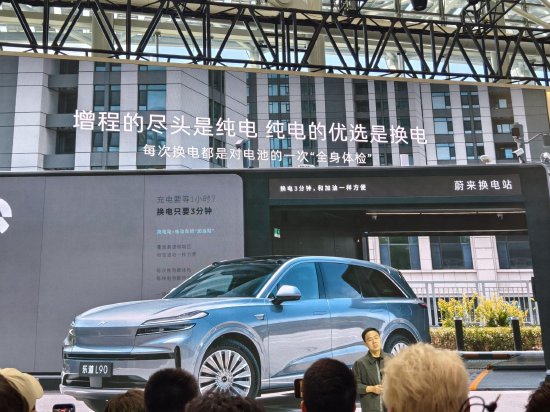
蔚来秦力洪:增程式混动并不省成本,纯电+换电才是“最优解”
Jing Ji Guan Cha Bao· 2025-04-29 08:11
Core Viewpoint - NIO's co-founder Qin Lihong stated that range-extended hybrid technology is not a cost-saving solution, and that pure electric vehicles combined with battery swapping are the optimal solution for increasing driving range [1] Group 1: Electric Vehicle Strategy - NIO focuses exclusively on pure electric vehicles and has not ventured into range-extended hybrids, distinguishing itself in the market [1] - The newly launched Ladao L90, a pure electric large SUV, aims to address the lack of spacious vehicles that can accommodate multiple passengers and luggage [2] - NIO has established over 3,200 battery swapping stations nationwide, with more than 1,900 compatible with the Ladao brand, and this number continues to grow [2] Group 2: Market Performance and Challenges - The Ladao brand's market performance has not met expectations, with over 37,000 units of the Ladao L60 delivered in its first six months, indicating potential in its segment [3] - Three main reasons for Ladao's underperformance include overly high initial product expectations, unfulfilled company commitments, and execution shortcomings [3] - The new CEO of Ladao, Shen Fei, plans to rebuild team confidence and improve foundational capabilities to enhance market position [3] Group 3: Profitability Goals - NIO is accelerating efforts to achieve profitability by the fourth quarter, with Ladao playing a crucial role in this objective [4] - The company aims for reasonable sales growth, improved vehicle gross margins, and enhanced cost management to support profitability [4] - Qin Lihong emphasized that the performance in the fourth quarter will depend on current and future efforts rather than last-minute actions [4]
对话蔚来秦力洪:增程车型并不省成本 “纯电+换电”是更好的“增程”
Zhong Guo Jing Ying Bao· 2025-04-27 12:53
Core Insights - NIO's second brand, Ladao, has delivered over 37,000 units of its first model, L60, within six months of its launch, indicating a strong market performance despite initial high expectations [2][6] - The Ladao brand aims to fill gaps in its product offerings and enhance its market position, with the recent introduction of the L90 model, which is positioned as a flagship SUV [3][5] - NIO emphasizes its commitment to pure electric vehicles and battery swapping technology, rejecting the notion that range-extended vehicles are a cost-saving solution [6][7] Product Performance - L60's sales performance has been satisfactory, with over 37,000 units delivered, although it has not met the company's initial expectations [6] - The L90 model, featuring a large electric front trunk and spacious interior, aims to meet consumer demands for space and energy efficiency [3][5] Strategic Direction - NIO's strategy involves leveraging its existing brand reputation and product line to introduce more accessible models, allowing consumers to familiarize themselves with the brand [5] - The company believes that its battery swapping infrastructure, which has seen an investment of approximately 10 billion yuan, provides a competitive edge over traditional charging methods [7][8] Market Positioning - NIO has established a strong presence in Shanghai, with over 100,000 vehicles delivered, benefiting from a well-developed battery swapping network that alleviates consumer concerns about electric vehicle range [8] - The company asserts that its technological and business model advantages create significant barriers to entry for competitors, making it difficult for others to replicate its success [8]