
车联网解决方案

Search documents
研判2026!中国车载智能网联解决方案行业政策、产业链、收入规模、重要企业及发展趋势分析:受益于汽车智能化趋势,行业收入规模保持增长[图]
Chan Ye Xin Xi Wang· 2026-02-11 01:28
Core Insights - The article emphasizes the growth and significance of intelligent connected vehicles (ICVs) in China's future transportation system, driven by technological advancements, policy support, and market demand [1][6]. Industry Overview - Intelligent connected vehicles are seen as a crucial component of future transportation, with production steadily increasing in China. By 2025, the expected production volume is approximately 11.38 million units, with a market penetration rate of about 32.10% [1][7]. - The market for in-vehicle intelligent connected solutions is projected to grow significantly, reaching 169.3 billion yuan by 2025 and 236.5 billion yuan by 2026 [1][7]. Industry Definition and Categories - In-vehicle intelligent connected solutions rely on interactive wireless networks, integrating vehicle-mounted devices and sensors to create a comprehensive network among vehicles, infrastructure, and users. The solutions encompass six domains: connectivity, intelligent driving, cabin, chassis, power, and body [2][5]. Current Development Status - The intelligent connected vehicle sector is transforming the automotive industry, driven by advancements in technology and increasing demands for smart transportation systems. This sector is pivotal for the integration of automotive technology with AI and information communication [5][6]. Industry Value Chain - The value chain of in-vehicle intelligent connected solutions consists of hardware, software, and services. The upstream includes components like chips and sensors, while the downstream focuses on applications in passenger and commercial vehicles [7][8]. Policy Environment - The development of intelligent connected vehicles is supported by government policies aimed at promoting smart automotive technologies, which provide a solid foundation for the growth of in-vehicle intelligent connected solutions [8][9]. Competitive Landscape - The competition in the in-vehicle intelligent connected solutions industry is intensifying, shifting from product-based competition to a focus on comprehensive capabilities and ecosystem collaboration. Key players include Yundong Intelligent, Weihan Co., Lianyou Technology, and others [9][10]. Key Companies - Yundong Intelligent is a leading supplier in the sector, integrating various advanced technologies to enhance vehicle intelligence. In the first three quarters of 2023, the company reported revenues of 301 million yuan, with significant contributions from communication solutions [10][11]. - Weihan Co. specializes in high-reliability, low-cost wireless communication products and has successfully implemented its digital energy management solutions across various applications, achieving significant market penetration [10][11]. Development Trends - The in-vehicle intelligent connected solutions are evolving towards modular design, leveraging data on vehicle location, speed, and routes to create dynamic interactive wireless networks [11][12].



天有为:加码研发投入力度,精准发掘新的海外业务增长机遇
Zheng Quan Shi Bao Wang· 2025-12-24 07:58
Core Viewpoint - The company is focused on expanding its market presence, particularly in overseas markets, while enhancing its product and technology innovation capabilities to drive growth and improve operational efficiency [1][2][3] Group 1: Company Overview - The company, Tianyouwei, specializes in the research, design, production, sales, and service of automotive instruments, and is gradually expanding into the smart cockpit sector [1] - Key products include electronic combination instruments, full LCD combination instruments, dual-screen instruments, and other electronic products and services [1] - The company has established three R&D institutions in Suifenhe, Harbin, and Dalian, along with an EMC professional laboratory [1] Group 2: Market Expansion and Strategy - The company is actively expanding its overseas market presence, with current clients including Hyundai Kia Group, Stellantis Group, SsangYong, and Proton [2] - The two-wheeler market is seen as having significant growth potential, driven by the wave of smart and diversified industrial upgrades [2] - Strategic partnerships have been established with leading domestic and international two-wheeler companies, including Yadea, Aima, Qianjiang, Dayun, Benda, and Wuyang Honda [2] Group 3: Acquisition and Integration - The company plans to use €1 million of its own funds to acquire 100% of the shares of Kr mer Automotive Systems GmbH (Kramer), which specializes in in-car infotainment systems, digital cockpits, and connected vehicle solutions [3] - Following the acquisition, Kramer will be included in the company's consolidated financial statements, enhancing its capabilities in providing competitive products and services to high-end passenger car clients in Europe [3] - Kramer has supplier qualifications for well-known automotive brands such as Bentley, Jaguar, Land Rover, Porsche, Mercedes-Benz, and Volkswagen, aligning well with the company's existing technology and business expansion needs [3]
投资总额超50亿元,20家企业签约落户斗门
Nan Fang Du Shi Bao· 2025-12-19 13:08
Group 1 - The event "Intelligent Connected Travel · Chain Moving Future" was held in Zhuhai, where 20 companies signed agreements with a total planned investment exceeding 5 billion yuan, covering various sectors including smart terminal manufacturing, supply chain support, and technology research and development [1][3]. - Many signing companies are from Jiangsu and Zhejiang provinces, enhancing the electronic supply chain. Notable companies include Zhejiang Baobiao Electronics Co., Ltd. and Zhejiang Dishi Technology Co., Ltd., which invested 500 million yuan and 200 million yuan respectively [3]. - The signing companies are considered high-quality enterprises in the smart short-distance transportation industry chain, which will help strengthen, supplement, and extend the regional industrial ecosystem [3]. Group 2 - The smart consumer terminal industry is viewed as a key area integrating advanced manufacturing, artificial intelligence, and the Internet of Things. The first smart consumer terminal industrial park in Guangdong was established in Fushan Industrial Park, attracting companies like Ninebot Technology and Leifeng [5]. - The development plan for the smart consumer terminal industry in Doumen aims to achieve an industry scale of over 30 billion yuan by 2027 and to reach a trillion-level cluster by 2030, ultimately establishing itself as a source of industrial innovation and standard output [5]. - Doumen District is committed to creating a better business environment and establishing a regular supply-demand docking platform, ensuring that entrepreneurs can invest, start businesses, and develop with confidence [5].

天有为:拟百万欧元收购德国克莱默,该公司营收近亿却资不抵债
2 1 Shi Ji Jing Ji Bao Dao· 2025-12-10 01:47
Group 1 - The core point of the article is that Tianyouwei (603202.SH) announced the acquisition of 100% equity in Kramer Automotive Systems GmbH for €1 million, aligning with its internationalization strategy to expand into the European market and enhance profitability and competitiveness [1] Group 2 - Kramer Automotive Systems GmbH, established in 1974 and based in Reutlingen, Germany, specializes in the research and manufacturing of in-vehicle infotainment systems, digital cockpits, and connected vehicle solutions [1] - As of June 30, 2025, Kramer reported total assets of 12.99 million RMB, total liabilities of 19.52 million RMB, and a net asset value of -6.53 million RMB, indicating a financially distressed position [1] - For the fiscal year 2024, Kramer generated operating revenue of 90.44 million RMB but reported a net loss [1] - The valuation of Kramer was determined using the market approach, with the total equity value assessed at 8.57 million RMB, reflecting an increase of 231.16% over the book net assets [1] - The final transaction price of €1 million was negotiated based on this valuation [1]
天有为拟收购克莱默100%股权,进一步完善在欧洲的销售渠道布局
Zheng Quan Shi Bao Wang· 2025-12-09 12:21
Core Viewpoint - The company plans to acquire 100% of Krmer Automotive Systems GmbH for €1 million, which will enhance its market position and operational capabilities in the automotive sector [1][2][3] Group 1: Acquisition Details - The acquisition will be funded using the company's own funds and will result in Krmer being fully consolidated into the company's financial statements [1] - Krmer specializes in the development and manufacturing of in-vehicle infotainment systems, digital cockpits, and connected vehicle solutions [1] - The acquisition aligns with the company's strategy to expand its international presence and enhance its product offerings [3] Group 2: Strategic Implications - The acquisition is expected to positively impact the company's future development by leveraging Krmer's sales team and customer relationships, particularly with high-end automotive manufacturers [2] - It will strengthen the company's sales channel in Europe and improve its competitive position in the region [2][3] - The integration of Krmer's operations is anticipated to create synergies in technology development and market resource sharing, benefiting both entities [2][3] Group 3: Future Growth Plans - The company aims to continue developing its automotive instrument business while expanding its global market share and seeking growth opportunities in international markets [2] - Plans include establishing subsidiaries and production bases in Mexico and South Korea to enhance responsiveness to international clients [2] - The company expects its new factory in Mexico to begin operations by June 2025, targeting the North American market [2]
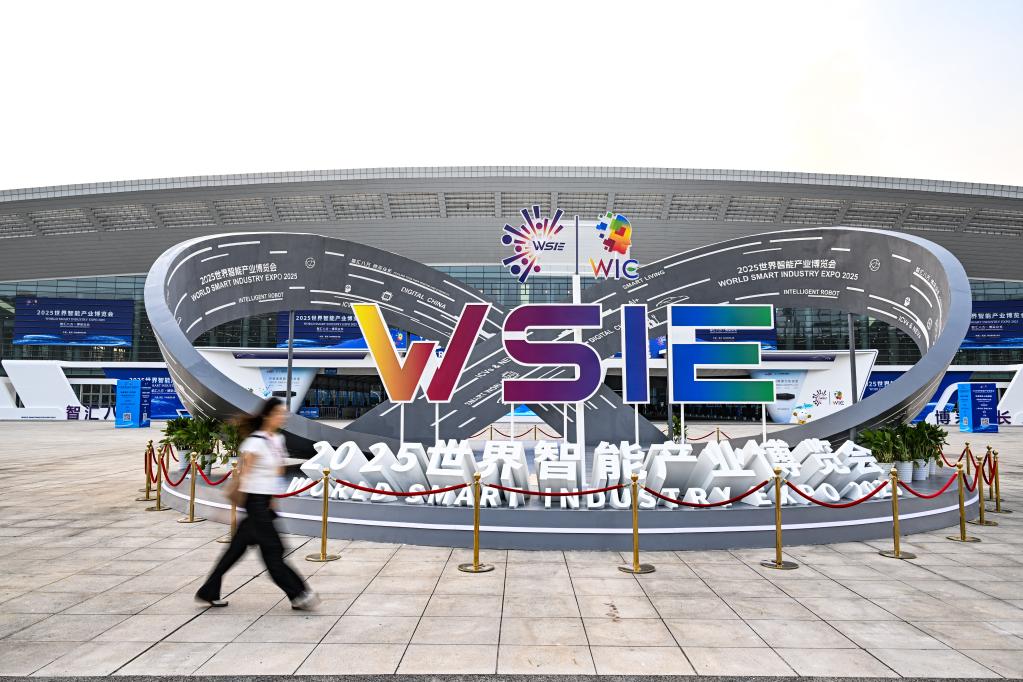
2025世界智能产业博览会在渝开幕 集中展示3000余项创新成果
Xin Hua Wang· 2025-09-05 07:00
Group 1 - The 2025 World Intelligent Industry Expo opened on September 5 in Chongqing, co-hosted by the governments of Chongqing and Tianjin, focusing on "Artificial Intelligence+" and "Smart Connected New Energy Vehicles" as the annual themes, attracting over 600 domestic and foreign enterprises with an indoor exhibition area of 130,000 square meters and an outdoor experience area of 40,000 square meters, showcasing more than 3,000 innovative achievements in the intelligent industry [1] - The Vice Minister of the Ministry of Industry and Information Technology, Xin Guobin, stated that China is leveraging new industrialization to continuously cultivate and expand the artificial intelligence industry, achieving positive progress, with over 1,000 core enterprises in artificial intelligence and more than 400 national-level specialized and innovative "little giant" enterprises [2] - The 2025 Expo emphasizes professional exhibition, featuring five specialized sectors: smart connected new energy vehicles, digital cities, intelligent robots, smart home, and low-altitude economy, combining professional exhibition with immersive experiences to showcase new characteristics, hotspots, and visions of intelligent industry development [2] Group 2 - The Expo will showcase the latest in autonomous driving technology, vehicle networking solutions, and battery innovations, as well as typical cases and experiences from the digital construction of Chongqing, such as the super-large city governance model and "Jiangsu Computing into Chongqing" [2] - The event will also present the latest technologies, products, and integrated solutions from home appliance interconnectivity to whole-house control, aiming to create a platform for displaying cutting-edge achievements in the intelligent industry [2] - The Expo focuses on the integration of technology and scene innovation, utilizing new-generation information technologies such as 5G, mixed reality, and digital 3D simulation to vividly present applications like low-altitude drone delivery, multi-scenario end-to-end assisted driving, and human-robot interaction, guiding audiences to experience the unique charm of intelligent technology reshaping life scenes [2]
上海临港首批无人驾驶出租车开放运营
Zheng Quan Ri Bao Wang· 2025-08-18 12:18
Group 1 - Shanghai has officially launched its autonomous taxi service in Lingang, marking a significant step in the commercialization of autonomous driving technology [1][2] - The service covers 58 locations in the main urban area of Lingang, operating daily from 8 AM to 8 PM, with a starting fare of 16 yuan for the first 5 kilometers and 4 yuan per kilometer thereafter [2] - The launch aligns with Shanghai's policy framework aimed at normalizing and scaling the operation of intelligent connected vehicles, with a goal to achieve 6 million passenger trips using L4 autonomous driving by 2027 [2][3] Group 2 - The issuance of autonomous taxi licenses is expected to attract more companies to the autonomous driving sector, enhancing China's influence in the global smart transportation field [3] - Shanghai's initiative is seen as a model that could accelerate the adoption of Robotaxi services across other cities in China [3] - The coordinated efforts in licensing, practical applications, and policy planning are creating a complete ecosystem for the autonomous driving industry, benefiting all segments of the supply chain [4] Group 3 - Companies are actively positioning themselves to capture market opportunities in the Robotaxi sector, focusing on cost reduction, hardware reliability, and regulatory improvements [4][5] - Wanma Technology has established a RoboX comprehensive solution team to provide global vehicle networking and autonomous driving solutions, with a focus on various autonomous vehicle applications [5] - The commercialization of high-level autonomous driving technology in China is progressing rapidly, although further regulatory and institutional improvements are necessary for large-scale development [5]
