
车载信息娱乐系统

Search documents
保时捷中国总裁及首席执行官潘励驰:以“质大于量”战略应对车市变局
Zhong Guo Zheng Quan Bao· 2026-01-29 23:09
Core Viewpoint - The Chinese automotive market has maintained growth over the past three years, but luxury and high-end segments are facing significant challenges due to price wars and the rise of domestic brands. Porsche China is navigating these changes by balancing brand heritage with market transformation and addressing trust issues and channel adjustments [2]. Group 1: Trust Crisis and Response - The "Dong'an incident" involving the sudden closure of Porsche centers in Zhengzhou and Guiyang due to operational issues raised concerns about brand credibility, affecting customers who had paid for vehicles but did not receive them [3]. - Porsche China has initiated a rapid response to this crisis, ensuring that customers who have paid will receive their vehicle certificates within the month and offering tailored solutions for those who have paid deposits but have not received their vehicles [3]. - The incident highlighted potential risks in managing dealer networks for luxury brands, emphasizing the need for a balance between expansion and control [3]. Group 2: Open Collaboration and Brand Integrity - In the context of the smart automotive transformation in China, Porsche is open to collaborating with local tech firms but emphasizes "deep co-creation" rather than simple procurement [4]. - Porsche is working with Botai Carlink to develop an infotainment system tailored to Porsche vehicles, ensuring it meets local user habits while aligning with driving characteristics [4]. Group 3: Strategic Optimization in Channels and Products - Porsche China plans to reduce its dealer network from over 100 to 80 by 2026, focusing on quality over quantity in its channels [6]. - The brand is transforming traditional dealerships into immersive centers that integrate new car sales, used car business, and after-sales services, while also exploring temporary pop-up spaces to manage costs and enhance consumer access [6]. - There are currently no specific plans for local production, as Porsche prioritizes maintaining its core values and manufacturing standards, although it remains open to future possibilities [7]. Group 4: Product Development and Market Strategy - Porsche is advancing the development of new B and D class SUVs tailored to the Chinese market, with upcoming electric models and China-exclusive vehicles set to support market stability [7]. - The success of Porsche's "Winning Back China" strategy will not be measured solely by sales but by brand strength, consumer satisfaction, and positive community feedback, reflecting a long-term approach during market adjustments [7][8].

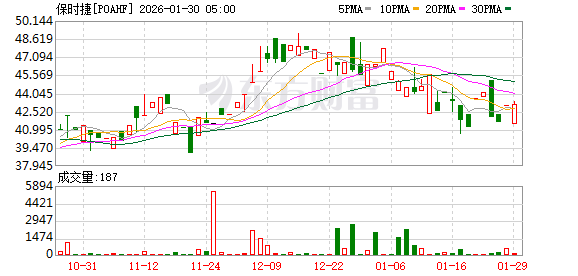
以“质大于量”战略应对车市变局
Zhong Guo Zheng Quan Bao· 2026-01-29 21:02
Core Viewpoint - The Chinese automotive market has maintained growth over the past three years, but luxury and high-end segments are facing significant challenges due to price wars and the rise of domestic brands. Porsche China is navigating these changes while balancing brand heritage and market transformation [1]. Group 1: Brand Reputation and Crisis Management - The "Dong'an Incident" involving the closure of two Porsche centers due to operational issues raised concerns about brand credibility, affecting customers who had paid for vehicles but could not obtain them [2]. - Porsche China has initiated a rapid response to this crisis, ensuring that customers who have paid will receive their vehicle certificates within the month and offering tailored solutions for those who have made deposits but have not received their vehicles [2]. - The incident highlights potential risks in managing dealer networks for luxury brands, emphasizing the need for a balance between expansion and control [2]. Group 2: Innovation and Technology Adaptation - Porsche is open to collaborating with local technology firms to adapt to the smart driving needs of Chinese consumers while maintaining its brand's driving heritage [3]. - The company is working with Baotai Carlink to develop a vehicle infotainment system tailored for Porsche models, ensuring it meets local user habits and integrates well with driving characteristics [3]. - Porsche has set three non-negotiable principles for its smart driving technology: prioritizing safety, focusing on enhancing the driving experience rather than replacing it, and retaining driver control at all times [3]. Group 3: Strategic Optimization and Market Positioning - Porsche China plans to reduce its dealer network from over 100 to 80 by 2026, focusing on quality over quantity in its dealership structure [4]. - The brand is transforming traditional dealerships into immersive centers that integrate new car sales, used car business, and after-sales services, enhancing customer experience [4]. - Porsche is also exploring temporary pop-up spaces to address high rental costs in prime locations, improving consumer access while managing expenses [5]. Group 4: Product Development and Future Plans - There are currently no specific plans for local production in China, as Porsche prioritizes maintaining its core values and manufacturing standards [6]. - The company is advancing the development of new B and D class SUVs tailored to the Chinese market, with upcoming electric models and exclusive offerings aimed at stabilizing market presence [6]. - Success for Porsche in the Chinese market will be measured by brand strength, consumer satisfaction, and community feedback rather than just sales figures, reflecting a long-term strategic approach [6]. Group 5: Overall Market Challenges - Porsche China is responding to the pressures of a declining luxury car market, the rise of domestic brands, and the impact of smart technology with a comprehensive strategy that emphasizes quality over quantity [7]. - The ongoing transformation is viewed as a long-term endurance challenge, with the effectiveness of Porsche's strategies yet to be validated by market outcomes [7].
中国区CEO潘励驰:保时捷不会让消费者当小白鼠丨36氪专访
36氪· 2026-01-29 10:21
Core Viewpoint - Foreign luxury brands are experiencing a continuous decline in sales in China, necessitating transformation and change. Porsche's sales in China dropped by 26% in 2025, marking four consecutive years of decline, driven by a fundamental shift in customer demand towards a perfect technological experience in vehicles [6][11]. Group 1: Sales and Market Dynamics - Porsche sold 42,938 vehicles in China in 2025, reflecting a 26% year-on-year decline [6]. - The market for SUVs, particularly the Cayenne, has seen a price drop of over one-third in suggested retail prices over three years, allowing consumers to purchase C-class SUVs at B-class prices [17]. - The shift in customer demand is attributed to local brands leveraging their technological ecosystems, enabling them to respond more swiftly to market changes compared to established brands like Porsche [17]. Group 2: Strategic Adjustments - Porsche is actively adjusting its dealer network, reducing the number of dealerships from 114 in 2025 to 80 by 2026, and plans to decrease dealer inventory levels by 30% [7]. - The company is prioritizing customer service over production volume, indicating a willingness to lower output to ensure customer satisfaction [7]. - Porsche plans to introduce several models exclusive to the Chinese market, including a fully electric Cayenne and two new B-class and D-class SUVs by the end of the decade [7]. Group 3: Technological Collaboration and Innovation - Starting mid-2026, Porsche will implement a new in-car infotainment system developed in collaboration with Baotai Car Union across several models, including the 911 and Taycan [8]. - Porsche is open to partnerships with various local tech companies, including Huawei, for smart driving technologies, emphasizing the need for deep collaboration due to the complexity of high-level intelligent driving systems [12][13]. Group 4: Design and Brand Identity - Porsche's design language is recognized as strong, with the company expressing pride in the imitation of its designs by other brands, asserting that originality will always be valued [10][14]. - The company acknowledges the increasing speed of Chinese automakers and is considering ways to adapt its development cycles while maintaining quality and safety standards [18][19]. Group 5: Market Strategy and Future Outlook - Porsche's strategy to "win back China" does not solely focus on sales volume but rather on maintaining brand strength and meeting consumer expectations [22][23]. - The company faces challenges from macroeconomic factors and increased competition, with a focus on flexibility and learning from market dynamics to adjust its strategies effectively [22].

中国区CEO潘励驰:保时捷不会让消费者当小白鼠|36氪专访
3 6 Ke· 2026-01-29 05:04
Core Insights - Foreign luxury brands, including Porsche, are experiencing a continuous decline in sales in China, with Porsche's sales dropping by 26% in 2025 compared to the previous year, marking four consecutive years of decline [1] - The CEO of Porsche China, Pan Lich, emphasized that the structural changes in sales are driven by a fundamental shift in customer demand, where Chinese consumers now seek a perfect technological experience in their vehicles [1][9] - The competitive landscape is intensifying, leading to price wars, particularly in the SUV market, where suggested retail prices have decreased by over one-third in three years [1][9] Sales and Market Strategy - Porsche is actively adjusting its strategy in response to challenges, including the closure of some dealerships, with plans to reduce the number of dealerships from 114 to 80 by 2026 and decrease inventory levels by 30% [2] - The company is set to launch several China-exclusive models and a pure electric version of the Cayenne, along with new B-class and D-class SUVs by the end of the decade [2] - Porsche is collaborating with local tech companies, including Baidu, to enhance its in-car infotainment systems, indicating a shift towards more partnerships with local firms [5][6] Design and Brand Identity - Pan Lich addressed concerns regarding design similarities between Porsche and domestic brands, asserting that this reflects the strength of Porsche's design language and that originality will always be valued [3][6] - The company believes that the recognition of its design will ultimately lead consumers to appreciate the original brand, despite the increasing number of look-alike models [3][6] Future Outlook and Challenges - The CEO highlighted the importance of understanding the Chinese market better and taking actions to revive performance, indicating a commitment to adapt to local consumer preferences [4] - Porsche's strategy to "win back China" does not solely focus on sales volume but rather on maintaining brand strength and meeting consumer expectations [14][15] - The company is facing challenges from macroeconomic factors and intensified competition, with a need to remain flexible and responsive to market changes [14][9]
北交所新质生产力后备军筛选二十八:关注汽车产业链核心部件潜力企业,莫森泰克、环能涡轮、富士智能等
KAIYUAN SECURITIES· 2026-01-19 07:48
Group 1 - The report highlights the potential of 218 companies listed on the Beijing Stock Exchange, covering diverse sectors such as high-end equipment, TMT, chemical new materials, consumption, and biomedicine, with a focus on specialized and innovative enterprises [14][15] - Among the 26 companies listed in 2025, notable selections include Star Map Measurement and Control, Development Technology, and Tian Gong Co., which have shown strong performance and growth potential [14][15] - The report emphasizes the importance of innovation-driven growth in the automotive industry, particularly in areas like hydrogen energy, commercial aerospace, and low-altitude economy [14] Group 2 - The report focuses on 16 selected innovative companies, including Mosentech, Huaneng Turbo, and Fuji Intelligent, which have strong technological attributes and market positions [2][3] - Mosentech, a leader in automotive intelligent opening and closing systems, is projected to achieve a revenue of 1.956 billion yuan in 2024, with a net profit of 264.226 million yuan, reflecting a growth of 24.42% and 36.84% respectively [2][9] - Huaneng Turbo, a key supplier of turbochargers in the international automotive aftermarket, is expected to generate 426 million yuan in revenue and 161 million yuan in net profit in 2024, benefiting from the growth of the turbocharger market [3][9] - Fuji Intelligent, known for precision components in consumer electronics and automotive sectors, anticipates a revenue of 975 million yuan and a net profit of 81.8396 million yuan in 2024 [3][9] - Hongjing Electronics, focusing on chassis and intelligent cockpit products, is projected to achieve a revenue of 1.075 billion yuan and a net profit of 78.5702 million yuan in 2024 [3][9] - Ruixin Electric, a leader in automotive starter motors, expects a revenue of 400 million yuan and a net profit of 61.52 million yuan in 2024 [3][9] - Yuanda Health Technology, a small giant in water filtration systems, is projected to achieve a revenue of 1.005 billion yuan and a net profit of 94.2044 million yuan in 2024 [4][9]
广州:加快推进国家5G车联网先导区建设 支持在公共交通领域率先探索自动驾驶示范应用
Zheng Quan Shi Bao· 2026-01-08 11:46
Core Viewpoint - The Guangzhou Municipal Government has issued a plan to accelerate the construction of a strong advanced manufacturing city from 2024 to 2035, focusing on smart connected vehicles and intelligent transportation applications [1] Group 1: Smart Connected Vehicles - The plan supports the establishment of demonstration zones for smart connected vehicles based on broadband mobile internet [1] - It emphasizes the acceleration of the national 5G vehicle networking pilot zone construction [1] - The initiative includes the development of intelligent driving cockpit solutions and in-vehicle infotainment systems [1] Group 2: Autonomous Driving Applications - The plan encourages the public transportation sector to explore autonomous driving demonstration applications [1] - It aims to create world-class demonstration application cases in the field of autonomous driving [1] - The establishment of closed testing zones and several semi-open and fully open testing areas for smart connected vehicles is supported [1] Group 3: Road Testing and Advanced Systems - The plan promotes the acceleration of road testing for smart connected vehicles [1] - It supports the development of advanced driver assistance systems and tire pressure monitoring systems [1] - The initiative aims to enhance the overall infrastructure for intelligent transportation solutions [1]
广州:加快推进国家5G车联网先导区建设 支持在公共交通领域率先探索自动驾驶示范应用
Zheng Quan Shi Bao Wang· 2026-01-08 09:27
Core Viewpoint - The Guangzhou Municipal Government has issued a plan to accelerate the construction of a strong advanced manufacturing city from 2024 to 2035, focusing on smart connected vehicles and intelligent transportation applications [1] Group 1: Smart Connected Vehicles - The plan supports the establishment of demonstration zones for smart connected vehicles based on broadband mobile internet [1] - It emphasizes the acceleration of the national 5G vehicle networking pilot zone construction [1] - The initiative includes the development of intelligent cockpit solutions and in-vehicle infotainment systems, as well as advanced driver assistance systems [1] Group 2: Autonomous Driving Applications - The plan encourages the public transportation sector to explore autonomous driving demonstration applications [1] - It aims to create world-class demonstration application cases in the field of autonomous driving [1] - The establishment of closed testing zones and several semi-open and fully open testing areas for smart connected vehicles is supported [1] Group 3: Road Testing and Development - The plan promotes the acceleration of road testing for smart connected vehicles [1] - It includes support for tire pressure monitoring and air conditioning control systems as part of the vehicle technology development [1]
获2.5亿元订单!这家企业汽车显示屏积压订单超62亿元......
Xin Lang Cai Jing· 2026-01-05 10:44
Core Insights - TopRun Total Solutions announced a contract to supply display modules worth 52 billion KRW (approximately 250 million RMB) to a German automotive manufacturer [1][3][5] - The supplied modules will include a 10-inch digital instrument cluster, a 14-inch central information display (CID), and a co-driver display (COD) [1][5] Company Overview - TopRun Total Solutions is a manufacturer of automotive display components, including backlight units (BLU), in-vehicle infotainment systems (IVI), head-up displays (HUD), and organic light-emitting diode (OLED) components [3][5] - The company is expanding its business with Chinese automotive manufacturers and collaborating with LG Display and Continental Group [3][5] Financial Performance - The company's order backlog for automotive displays has reached approximately 1.3 trillion KRW (around 626.6 million RMB), marking the highest level since its establishment [3][5] - The contract with the German manufacturer will be fulfilled through Aumovio, a subsidiary of Continental Group, over a five-year period starting in 2027 [3][5] Strategic Outlook - The CEO of TopRun Total Solutions, Park Yong-geun, stated that the company's technological capabilities have been recognized by a luxury German automotive brand, indicating potential for positive developments in the upcoming year [3][5]
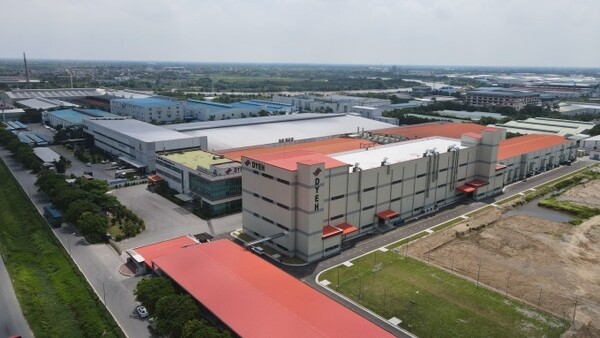
天有为:加码研发投入力度,精准发掘新的海外业务增长机遇
Zheng Quan Shi Bao Wang· 2025-12-24 07:58
Core Viewpoint - The company is focused on expanding its market presence, particularly in overseas markets, while enhancing its product and technology innovation capabilities to drive growth and improve operational efficiency [1][2][3] Group 1: Company Overview - The company, Tianyouwei, specializes in the research, design, production, sales, and service of automotive instruments, and is gradually expanding into the smart cockpit sector [1] - Key products include electronic combination instruments, full LCD combination instruments, dual-screen instruments, and other electronic products and services [1] - The company has established three R&D institutions in Suifenhe, Harbin, and Dalian, along with an EMC professional laboratory [1] Group 2: Market Expansion and Strategy - The company is actively expanding its overseas market presence, with current clients including Hyundai Kia Group, Stellantis Group, SsangYong, and Proton [2] - The two-wheeler market is seen as having significant growth potential, driven by the wave of smart and diversified industrial upgrades [2] - Strategic partnerships have been established with leading domestic and international two-wheeler companies, including Yadea, Aima, Qianjiang, Dayun, Benda, and Wuyang Honda [2] Group 3: Acquisition and Integration - The company plans to use €1 million of its own funds to acquire 100% of the shares of Kr mer Automotive Systems GmbH (Kramer), which specializes in in-car infotainment systems, digital cockpits, and connected vehicle solutions [3] - Following the acquisition, Kramer will be included in the company's consolidated financial statements, enhancing its capabilities in providing competitive products and services to high-end passenger car clients in Europe [3] - Kramer has supplier qualifications for well-known automotive brands such as Bentley, Jaguar, Land Rover, Porsche, Mercedes-Benz, and Volkswagen, aligning well with the company's existing technology and business expansion needs [3]
天有为:拟百万欧元收购德国克莱默,该公司营收近亿却资不抵债
2 1 Shi Ji Jing Ji Bao Dao· 2025-12-10 01:47
Group 1 - The core point of the article is that Tianyouwei (603202.SH) announced the acquisition of 100% equity in Kramer Automotive Systems GmbH for €1 million, aligning with its internationalization strategy to expand into the European market and enhance profitability and competitiveness [1] Group 2 - Kramer Automotive Systems GmbH, established in 1974 and based in Reutlingen, Germany, specializes in the research and manufacturing of in-vehicle infotainment systems, digital cockpits, and connected vehicle solutions [1] - As of June 30, 2025, Kramer reported total assets of 12.99 million RMB, total liabilities of 19.52 million RMB, and a net asset value of -6.53 million RMB, indicating a financially distressed position [1] - For the fiscal year 2024, Kramer generated operating revenue of 90.44 million RMB but reported a net loss [1] - The valuation of Kramer was determined using the market approach, with the total equity value assessed at 8.57 million RMB, reflecting an increase of 231.16% over the book net assets [1] - The final transaction price of €1 million was negotiated based on this valuation [1]