轨道交通车辆

Search documents
创业潮流,产业链你中有我
Xin Jing Bao· 2026-02-26 02:04
Core Insights - The article highlights the effective flow and integration of talent, technology, capital, and markets among the Beijing-Tianjin-Hebei region, leading to various employment stories and economic growth [1][19]. Group 1: Economic Growth and Collaboration - By 2025, the GDP growth rates for Beijing, Tianjin, and Hebei are projected to be 5.4%, 4.8%, and 5.6% respectively, indicating a stable and improving economic environment [1][19]. - The collaboration among the three regions is fostering industrial restructuring and innovation chain extension, enhancing overall development quality [1][19]. Group 2: Agricultural Innovations - The Hebei Shouheng Gaobeidian International Agricultural Trading Center has become the largest agricultural wholesale market in the region, facilitating the growth of local agricultural businesses [2][4]. - The success stories of local entrepreneurs, such as Fan Enhui and Yang Shili, illustrate the potential of agricultural products like sweet potatoes and local flowers to thrive in larger markets [2][7][8]. Group 3: Transportation and Manufacturing - Hebei Jingche Rail Transit Vehicle Equipment Co., Ltd. exemplifies the "Beijing design + Hebei manufacturing" model, producing over 1,200 trains for national use since its establishment [12][13]. - The company has created a collaborative platform for product development and manufacturing, enhancing efficiency and reducing costs [14]. Group 4: Technological Advancements - The establishment of the Beijing embodied intelligence super factory marks a significant step in smart manufacturing and innovation within the region [16]. - The region has seen a surge in technology-based enterprises, with over 4,500 registered in Tianjin, indicating a robust environment for innovation [17]. Group 5: Future Development Plans - The "Modern Capital Urban Circle Spatial Coordination Plan (2023-2035)" aims to enhance the collaborative development of Beijing, Tianjin, and Hebei, focusing on industrial synergy and innovation [20][21]. - The plan emphasizes the importance of leveraging each region's strengths to foster economic growth and improve the quality of life for residents [21].

希迪智驾20260126
2026-01-26 15:54
Summary of the Conference Call for Xidi Zhijia Company Overview - **Company**: Xidi Zhijia - **Industry**: Autonomous Driving in Mining Sector Key Points and Arguments 1. **Product Offerings**: Xidi Zhijia has developed autonomous mining trucks, heavy-duty trucks, and rail transit vehicles, significantly reducing operational costs for mine owners by replacing drivers and saving hundreds of thousands in annual salaries [2][4][6]. 2. **Market Deployment**: The company has successfully deployed autonomous and manned vehicle operations in large coal mines in Northwest China, addressing the gradual replacement of traditional vehicles and increasing order volumes, with expectations of reaching 100 units per order by 2025 [2][4][5]. 3. **Revenue Growth**: Revenue is projected to grow from over 30 million yuan in 2022 to 410 million yuan in 2024, with expectations of nearing 1 billion yuan in total revenue for 2025, maintaining a gross margin of 20%-25% [2][8]. 4. **Technological Edge**: The company possesses a full-stack autonomous driving technology, multi-agent algorithms, metaverse simulation technology, and self-manufacturing capabilities, operating under a light-asset model to help operators save costs and improve efficiency [2][9]. 5. **Future Growth**: Xidi Zhijia anticipates rapid growth in the next two years, particularly in the autonomous mining truck sector, aiming to become China's first profitable autonomous driving company by the end of 2026 while expanding into overseas markets like Australia and Saudi Arabia [3][9]. 6. **Regulatory Support**: The mining sector's high-risk and high-pollution environment has led to strong policy support for automation, making it a promising area for autonomous driving technology [4][6]. 7. **Market Potential**: The autonomous mining vehicle market is expected to grow significantly, with regulations mandating a high degree of automation in new mining operations by 2027. The market for unmanned wide-body trucks alone could reach 80 billion yuan if 80% of new vehicles are automated [14]. 8. **International Projects**: The company is involved in international projects, including the China-Vietnam border crossing and bulk material transport in Mongolia, indicating a strong international presence and growth potential [8][19]. 9. **Unique Business Model**: Xidi Zhijia adopts a product sales model rather than owning vehicles, ensuring product quality and fostering long-term partnerships with clients [17]. 10. **Challenges and Solutions**: The company addresses challenges in autonomous driving, such as technology maturity, policy acceptance, and cost-effectiveness, by focusing on high reliability and significant cost savings in mining operations [6][12]. Additional Important Content - **Differentiation from Competitors**: The company emphasizes its unique advantages, including comprehensive technology, strong R&D capabilities, and a light-asset operational model, which positions it favorably against competitors [11][12]. - **Future Directions**: Beyond mining, the company is exploring autonomous applications in large infrastructure projects and energy management, indicating a broader vision for its technology [22]. - **Accounts Receivable Management**: The company has learned from past experiences with financing defaults and is implementing stricter management of accounts receivable to mitigate risks [21]. This summary encapsulates the key insights and strategic directions discussed during the conference call, highlighting Xidi Zhijia's position in the autonomous driving market, particularly within the mining sector.
中国产业经济行业 现状格局与投资规划分析报告2026年版
Sou Hu Cai Jing· 2025-12-20 13:41
Core Insights - The report provides a comprehensive analysis of the current state and future prospects of various industries in China, focusing on investment opportunities and macroeconomic factors influencing these sectors [3][4][5]. Group 1: Macroeconomic Environment - The report discusses the macroeconomic environment for industrial investment in China, including policies, economic growth, and foreign direct investment trends [3][4]. - It highlights the GDP growth forecast for 2025, indicating a positive outlook for economic expansion [3]. - The analysis includes fixed asset investment scale from 2020 to 2025, showing significant growth trends [3][4]. Group 2: Industry-Specific Investment Opportunities - The real estate sector is analyzed for its investment environment, including policy impacts and market conditions, with a focus on urban complexes and tourism real estate as key opportunities [5][6]. - The internet industry is identified as a strategic emerging sector, with investment opportunities in mobile payment and e-commerce [5][6]. - The energy sector is highlighted for its investment potential, particularly in renewable energy resources and processing [6][7]. Group 3: Mergers and Acquisitions - The report outlines the trends in mergers and acquisitions within various industries, noting increased regulatory scrutiny and the rise of private equity as a driving force [4][5]. - It discusses the active merger activities in cultural media and real estate sectors, indicating a dynamic market environment [4][5]. Group 4: Emerging Industries - New energy and new materials industries are emphasized for their growth potential, supported by government policies and increasing market demand [15][16]. - The biotechnology sector is also highlighted, with a focus on investment opportunities arising from policy support and market trends [15][16]. Group 5: Regional Investment Analysis - The report provides a detailed analysis of investment environments across different regions in China, identifying specific opportunities in provinces like Guangdong and Jiangsu [20][21]. - It emphasizes the importance of regional characteristics in shaping investment strategies and opportunities [20][21].


涉及新兴领域、交通运输和环境保护!一批重要国家标准发布
Yang Shi Xin Wen Ke Hu Duan· 2025-12-10 02:41
Emerging Fields - The release of five national standards related to cybersecurity aims to strengthen national cybersecurity defenses and promote healthy development of the digital economy [1] - Seven national standards in information technology will ensure interoperability and security of information systems through unified technical application specifications [1] - Three national standards for artificial intelligence social experiments support the healthy and orderly development of intelligent societies [1] - Seven national standards for nanotechnology will assist in unifying relevant technical characterization and testing specifications [1] Transportation and Environmental Protection - A total of 44 national standards covering automotive steering systems, vehicle brake fluids, railway construction machinery, rail transit vehicles, shore power for ships, containers, and aerospace components will aid in building a strong transportation nation [1] - Ten energy-saving and environmental protection standards related to industrial boiler economic operation, meat processing, food processing, alcoholic beverages, and lead-zinc will contribute to pollution prevention efforts [1] Safety Production - National standards for assessing combustible dust explosion risks and guidelines for gas protection station construction in chemical parks will enhance safety management in hazardous chemical production [2] - Five emergency management national standards, including guidelines for emergency drills and scenario construction methods, will improve emergency response capabilities [2] - Eleven mandatory national standards for fire trucks will ensure technological advancement in fire truck products and enhance the operational capabilities of firefighting teams [2] Public Services - Three national standards for educational service management and seven guidelines for standardized education course construction in logistics, elderly care, automation, and the Internet of Things will lay the foundation for cultivating versatile talents and promoting education integration [2] - Guidelines for the usability of home health care products and services will support the development of an age-friendly society [2] - Four national standards related to digital asset management, including digital maturity and cultural digital asset valuation, will enhance the digitalization level of asset management and improve transparency and security in digital asset transactions [2] Daily Life - National standards for smart textiles will guide the standardized development of smart textile products [3] - The introduction of national standards for biodegradable plastic shopping bags will promote resource recycling [3] - Two national standards for testing methods related to formaldehyde content in leather and short-chain chlorinated paraffins will improve detection of harmful substance limits [3] - Eight national standards for surgical implants and sterilization of medical products will enhance the quality and safety of medical devices [3] - Additional national standards were released for rice, navel oranges, rural toilets, and oil drilling equipment [3]
涉网络安全技术等领域 市场监管总局批准发布一批重要国家标准
Xin Hua Cai Jing· 2025-12-09 03:18
Group 1: Emerging Fields - The release of 5 national standards related to cybersecurity technology aims to strengthen national cybersecurity defenses and promote healthy development of the digital economy [1] - 7 national standards in information technology will ensure interoperability and security of information systems through unified technical application specifications [1] - 3 national standards for artificial intelligence social experiments support the healthy and orderly development of intelligent society [1] - 7 national standards for nanotechnology will assist in unifying relevant technical characterization and testing specifications [1] Group 2: Transportation and Environmental Protection - 44 national standards covering automotive steering systems, vehicle brake fluids, railway construction machinery, rail transit vehicles, shore power for ships, containers, and aerospace components contribute to the construction of a strong transportation nation [2] - 10 energy-saving and environmental protection standards in industrial boilers, meat processing, food processing, alcoholic beverages, and lead-zinc industries support the fight against pollution [2] Group 3: Safety Production - National standards for assessing combustible dust explosion risks and guidelines for gas protection station construction in chemical parks aim to enhance safety levels in chemical production [2] - 5 emergency management national standards, including guidelines for emergency drills and scenario construction methods, are designed to improve emergency response capabilities [2] - 11 mandatory national standards for fire trucks ensure technological advancement in fire truck products and enhance the operational capabilities of fire rescue teams [2] Group 4: Public Services - 3 national standards for educational organization management certification requirements and 7 guidelines for standardized education course construction in logistics, elderly care, automation, and IoT lay the foundation for cultivating versatile talents and promoting education integration [2] - Guidelines for the usability of home health care products and services support the construction of an age-friendly society [2] - 4 national standards related to asset management digital maturity and cultural digital asset valuation aim to improve the digital level of asset management and enhance transparency and security in digital asset transactions [2] Group 5: Daily Life - National standards for smart textiles guide the standardized development of smart textile products [3] - The introduction of national standards for biodegradable plastic shopping bags promotes resource recycling [3] - National standards for testing methods related to formaldehyde content in leather and fur, as well as short-chain chlorinated paraffins, enhance detection capabilities for harmful substances [3] - 8 national standards for surgical implants and sterilization of medical products aim to improve the quality and safety of medical devices [3] - Additional national standards were released for rice, navel oranges, rural toilets, and oil drilling equipment [3]
盈利2542万元 新筑股份第三季度业绩回升
Zheng Quan Shi Bao Wang· 2025-10-26 15:59
Core Viewpoint - New筑股份 reported a significant decline in revenue for the first three quarters of 2025, primarily due to reduced sales in rail transit vehicles, but managed to reduce losses substantially compared to the previous year [1][2]. Financial Performance - For the first three quarters, the company achieved revenue of 1.057 billion yuan, a year-on-year decrease of 36.97% - The net loss was 42.2918 million yuan, a year-on-year reduction in losses of 83.39% - In the third quarter, revenue was 353 million yuan, down 35.82% year-on-year, while profit reached 25.4184 million yuan, an increase of 135.30% year-on-year [1]. Shareholder Changes - New major shareholders include Zeng Zuobin, Chengdu General Engineering, Zhou Rong, and Sun Jufen - In March, significant share transfers occurred, with 66.1138 million shares (8.60% of total shares) and 122 million shares (15.90% of total shares) transferred to Shudao Group, changing the controlling shareholder from Sichuan Development (Holding) to Shudao Group, while the actual controller remains the Sichuan Provincial State-owned Assets Supervision and Administration Commission [2]. Strategic Restructuring - New筑股份 is undergoing asset restructuring, including a planned acquisition of 60% of Shudao Clean Energy and divestment of loss-making traditional business segments - This restructuring aims to improve operational conditions by integrating high-quality assets and focusing on clean energy generation, which will become a core business [3]. Management Enhancement - Since August, the company has introduced several executives with backgrounds in Shudao Group, enhancing its management capabilities in energy, mining investment, and capital operations - This move is intended to infuse Shudao's corporate culture into New筑股份 [4].

奋勇争先,决战决胜“十四五”|京津冀协同发展不断迈上新台阶
Ren Min Ri Bao· 2025-09-14 11:05
Core Viewpoint - The article emphasizes the importance of the coordinated development of the Beijing-Tianjin-Hebei region as a national strategy for regional coordination, focusing on high-quality development and innovation-driven growth [1][18]. Group 1: Economic Development - The overall economic strength of the Beijing-Tianjin-Hebei region has continuously improved, with the regional economic total crossing six trillion yuan milestones over 11 years, becoming a strong driving force for national high-quality development [1]. - In 2024, the GDP of Beijing, Tianjin, and Hebei reached 49,843.1 billion yuan, 18,024.3 billion yuan, and 47,526.9 billion yuan respectively, with year-on-year growth rates of 5.2%, 5.1%, and 5.4%, all exceeding the national average [8]. Group 2: Industrial Transformation - Beijing is transitioning from a "large and complete" model to a "high-precision" one, focusing on alleviating "big city problems" and promoting deep transformation [3]. - Over 3,000 general manufacturing enterprises have been relocated from Beijing, and the proportion of new business entities in technology and commerce has increased from 40.7% in 2013 to 67.7% in 2024 [4]. Group 3: Collaborative Innovation - The three regions are enhancing collaborative innovation and industrial cooperation, with over 120 key component enterprises from Tianjin entering the supply chains of major automotive manufacturers in Beijing [9]. - The establishment of the Beijing-Tianjin-Hebei intelligent connected new energy vehicle technology ecological park aims to create a concentrated space for the automotive parts industry [10]. Group 4: Infrastructure Development - The railway and highway operating mileage in the Beijing-Tianjin-Hebei region has exceeded 11,000 kilometers, forming a basic transportation circle of 1 to 1.5 hours among major cities [15]. - The Beijing Subway Line 22, a significant project for interconnectivity, is nearing completion, enhancing transportation links between Beijing and Hebei [14]. Group 5: Public Services and Quality of Life - The integration of public services has improved, with over 44 social security service items available for cross-province processing, enhancing the convenience for residents [16][17]. - The PM2.5 annual average concentration in the region has decreased by over 60% compared to 2013, reflecting significant environmental improvements [17].
蜀道集团加速解决同业竞争 拟将新能源资产置入新筑股份
Mei Ri Jing Ji Xin Wen· 2025-05-27 13:52
Core Viewpoint - New筑股份 is planning a significant asset restructuring to address competition issues with its controlling shareholder, 四川蜀道清洁能源集团有限公司, by acquiring 60% of its shares and divesting certain subsidiaries [1][3][5]. Group 1: Asset Restructuring Details - New筑股份 announced a temporary suspension of trading on May 26, 2023, to facilitate the restructuring process [1]. - The restructuring involves the acquisition of 60% of 四川蜀道清洁's shares and the sale of 100% stakes in two subsidiaries: 四川发展磁浮科技有限公司 and 成都市新筑交通科技有限公司 [1][4]. - 四川蜀道清洁 has total assets of 308 billion yuan and reported revenue of 1.17 billion yuan with a net profit of 62.34 million yuan for the previous year [2][4]. Group 2: Business Segments and Financial Performance - New筑股份 operates in three main business segments: rail transit, photovoltaic power generation, and bridge functional components, with the latter being primarily represented by 新筑交科 [2][5][6]. - The photovoltaic segment generated approximately 650 million yuan in revenue, accounting for over 26% of total revenue, while rail transit remains the largest segment, contributing over 50% of total revenue [5][6]. - The company reported a total revenue of 2.483 billion yuan last year, with a net loss of 409 million yuan [5][6]. Group 3: Implications of the Restructuring - The restructuring is seen as a strategic move to eliminate competition between New筑股份 and its controlling shareholder, thereby enhancing operational efficiency [3][6]. - The divestment of the bridge functional components business is expected to allow New筑股份 to focus on strengthening its rail transit and renewable energy segments [5][6]. - The restructuring reflects the internal business realignment within the蜀道集团, which recently became the controlling shareholder of New筑股份 [6][7].
新筑股份拟置入蜀道集团新能源资产 还涉及这家市值800亿元的上市公司
Mei Ri Jing Ji Xin Wen· 2025-05-26 13:36
Core Viewpoint - New筑股份 is planning a significant asset restructuring to address competition issues with its controlling shareholder, 四川蜀道清洁能源集团有限公司, by acquiring a 60% stake in it and divesting certain subsidiaries [1][4][7]. Group 1: Asset Restructuring Details - New筑股份 intends to acquire 60% of 四川蜀道清洁 and sell 100% of 四川发展磁浮科技有限公司 and 新筑交通科技有限公司 [1][4]. - The restructuring aims to eliminate competition between New筑股份 and its controlling shareholder, while also focusing on strengthening its core businesses in轨道交通 and光伏发电 [4][10]. - 四川路桥, a listed company with a market value of 806.5 billion, is involved in the asset transfer process [1][4]. Group 2: Financial Overview - As of the end of 2024, 四川蜀道清洁 has total assets of 308 billion and reported revenue of 1.17 billion with a net profit of 62.34 million [4][8]. - New筑股份 reported total revenue of 2.483 billion last year, with a net loss of 409 million, where轨道交通业务 accounted for over 50% of total revenue [8][10]. - The revenue from the bridge component business, primarily handled by 新筑交科, was 429.9 million, representing 17.94% of New筑股份' total revenue [10]. Group 3: Business Segments - New筑股份 operates in three main business segments:轨道交通,光伏发电, and桥梁功能部件, with the latter being the focus of the divestiture [4][10]. - The company has four main subsidiaries, with two of them being targeted for divestiture in the restructuring plan [8][10]. - The restructuring reflects an internal business reorganization within蜀道集团, which recently became the controlling shareholder of New筑股份 [10][11].
投资项目持续上新,跨国企业高管缘何纷至沓来?
Sou Hu Cai Jing· 2025-03-31 00:15
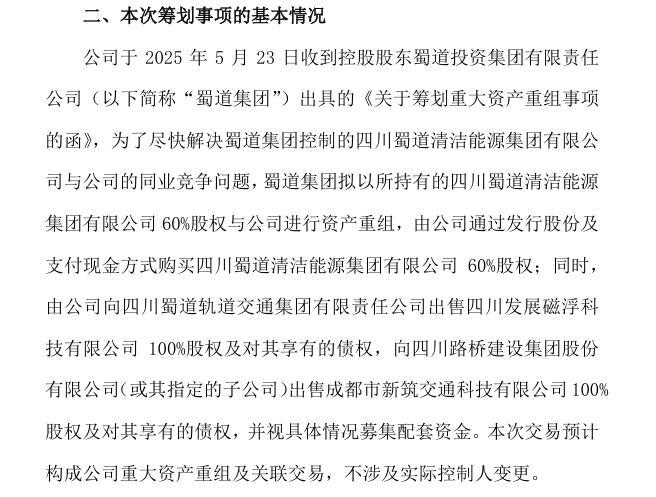
Group 1 - The core viewpoint of the articles highlights the increasing foreign investment in China, driven by favorable policies and the rapid establishment of foreign enterprises [1][5][26] - Tesla's Shanghai energy storage factory has successfully exported its first large-scale commercial electrochemical energy storage systems, showcasing the speed of foreign investment in China [1][3] - Toyota has invested over 100 billion yen to establish a Lexus electric vehicle and battery R&D company in Shanghai, indicating a strong commitment to the Chinese market [3][5] Group 2 - AstraZeneca announced a $2.5 billion investment to establish its sixth global strategic R&D center in Beijing, marking its second such center in China [5] - Foreign companies are exploring new business models and launching new products in China, such as a U.S. company setting up a R&D and experience center in Guangzhou [5][8] - Siemens has launched 18 products tailored for the Chinese market, developed by its newly established China Innovation Product Division [8][10] Group 3 - German investment in China has increased by 54.7% year-on-year in the first two months of the year, reflecting a strong interest in the Chinese market [11] - Over 8,000 German companies operate in China, with more than 50% being global "hidden champions," and 80% of these companies have invested in China [11][13] - The collaboration between German "hidden champions" and Chinese "specialized and innovative" companies is focused on expanding market opportunities and international cooperation [17][19] Group 4 - The Ministry of Commerce has been actively engaging with foreign enterprise executives, meeting with at least 26 multinational company leaders since late February [22][24] - The discussions have frequently centered around themes of "high-level opening up," "stability," "innovation," and "supply chain," indicating the priorities of foreign investors [24][26] - Feedback from foreign enterprises suggests that successful application of new products or business models in China can lead to global success, emphasizing the importance of the Chinese market [27][29]