通义万相2.5

Search documents
结构分化,重点关注AI及盈利兑现度:2026年港股互联网&科技策略前瞻
Guohai Securities· 2026-02-06 01:43
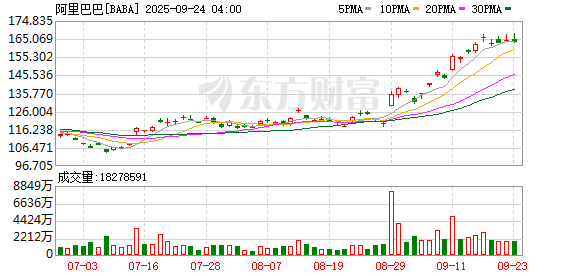
Core Insights - The report emphasizes a structural differentiation in the Hong Kong internet and technology sector, highlighting a focus on AI and profitability realization as key investment themes for 2026 [4][5][6]. Valuation Perspective - Since early 2025, the valuation of the Hang Seng Technology sector has been on the rise, with the Hang Seng Technology PE-TTM at 20.05 times as of December 31, 2025, which is 0.77 standard deviations below the historical average [4][9]. - The Hang Seng AH premium index stood at 123.46 as of December 31, 2025, below the historical average of 193.92, indicating a low valuation environment [9]. Funding Perspective - There has been a significant acceleration in southbound capital inflows since 2025, with notable increases in allocations to consumer, technology, and pharmaceutical sectors [5][13]. - The proportion of Hong Kong Stock Connect holdings in internet companies has increased, with Tencent's share rising from 10.1% to 11%, Kuaishou from 11.61% to 16.64%, Meituan from 10.4% to 20.76%, and Kingdee from 24.22% to 28.22% by December 31, 2025 [5][18]. - The anticipated interest rate cuts by the Federal Reserve are expected to provide a liquidity floor for Hong Kong stocks, leading to a market characterized by strong indices, structural differentiation, and increased concentration among leading firms [5][19][21]. Internet Sector Dynamics - User traffic in the internet sector is stabilizing, with a strategic shift towards high-quality growth, driven by generative AI technologies that are penetrating high-frequency demand scenarios [22][28]. - The user base for AI applications is growing robustly, with significant increases in monthly active users (MAU) for various AI apps and platforms [28][30]. - Major internet companies are focusing on AI as a strategic direction, with substantial capital expenditures planned for AI development, including Alibaba's projected capex of 1,252 billion RMB, ByteDance's 1,600 billion RMB, and Tencent's 863 billion RMB for FY2026 [6][35]. AI and Advertising Integration - AI is becoming a critical driver for revenue generation, with domestic companies like Tencent and Alibaba leveraging AI in advertising to enhance efficiency and effectiveness [41][43]. - The report highlights the positive feedback loop between capital expenditure on AI and revenue generation, as seen in global leaders like Google, which is expected to invest between 910 to 930 billion USD in AI-related capital expenditures in 2025 [37][38]. Recommendations - The report maintains a "recommended" rating for the technology sector, focusing on companies such as Tencent, Alibaba, Bilibili, NetEase, Kuaishou, JD Health, and XPeng Motors as key investment targets [7].
国内大模型全面被“万亿参数”卷进去了?
3 6 Ke· 2025-09-29 04:46
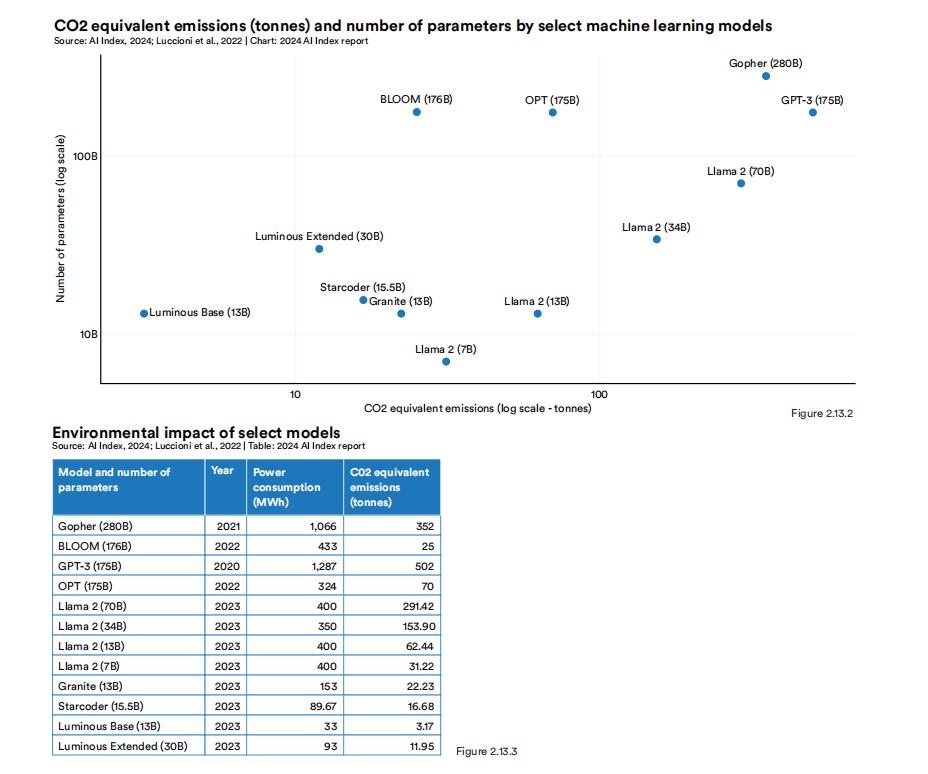
Core Insights - Alibaba announced its Qwen3-Max model has surpassed "one trillion parameters," marking a significant milestone in the domestic AI landscape [1][2] - The announcement is seen as both a product upgrade and a declaration of status, positioning Alibaba among global leaders in AI technology [2] - The model achieved impressive results in various international benchmarks, indicating its competitive edge [2] Group 1: Model Performance and Features - Qwen3-Max achieved an accuracy of 86.4% in the AIME25 math reasoning test, ranking among the top three globally [2] - In the SWE-Bench Verified programming benchmark, it scored 69.6%, second only to GPT-4.1 [2] - The model is segmented into different versions: Thinking for complex reasoning, Instruct for instruction following, and Omni for real-time voice interaction and multimodal capabilities [2] Group 2: Market Dynamics and Pressures - Domestic companies are compelled to pursue trillion-parameter models due to market pressures and investor expectations [4][5] - Over 50 domestic AI companies are projected to raise over 30 billion yuan in funding by 2024, with a focus on matching international giants in technical metrics [4] - The perception that larger models equate to greater reliability drives enterprise purchasing decisions, further pushing companies towards larger parameter counts [4] Group 3: Cost and Efficiency Challenges - Training a trillion-parameter model can consume between 20 to 50 million kilowatt-hours of electricity, with costs exceeding hundreds of millions yuan when considering the entire process [6][10] - The marginal performance improvements of larger models often do not justify the exponentially increasing costs, leading to diminishing returns [10] - The operational costs for deploying trillion-parameter models can be significantly higher, impacting the feasibility for smaller enterprises [10] Group 4: Strategic Intent and Future Directions - Alibaba's ambition extends beyond parameter count; it aims to position Qwen3-Max as the "operating system" for its cloud ecosystem [11][13] - The strategy involves binding enterprises and developers to Alibaba Cloud through APIs and toolchains, increasing switching costs for users [13] - The future of AI competition may hinge on "intelligent density," focusing on effective intelligence output per unit of computational resource rather than sheer parameter size [14][15]


七连发!阿里多款重磅发布亮相云栖大会
Sou Hu Cai Jing· 2025-09-24 11:32
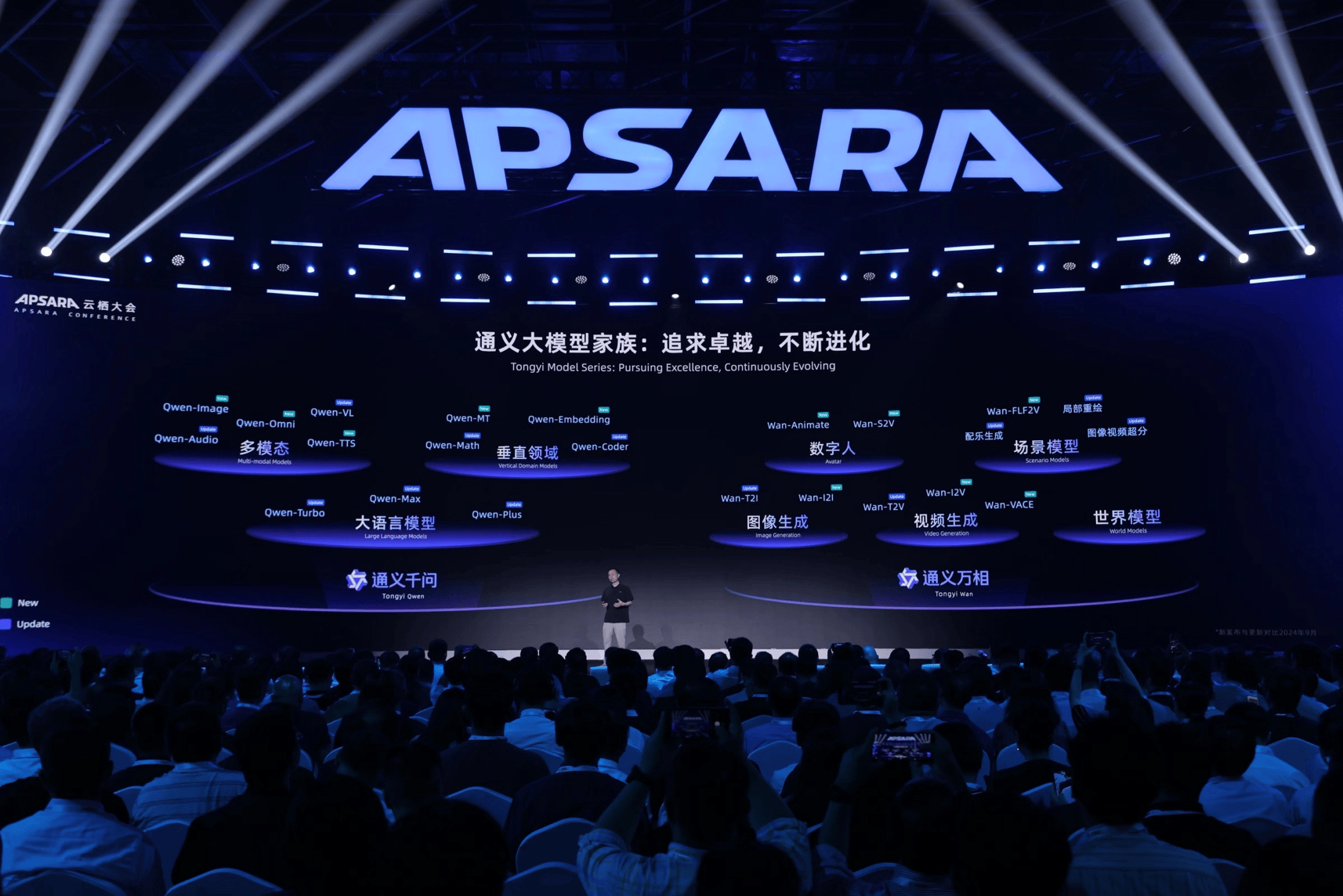
Core Insights - Alibaba Cloud's CTO Zhou Jingren announced the launch of seven large model technology products at the 2025 Yunqi Conference, covering various fields such as language, speech, vision, multimodal, and coding, achieving breakthroughs in model intelligence, agent tool utilization, and deep reasoning capabilities [1][3]. Large Language Models - The flagship model Qwen3-Max was introduced, outperforming competitors like GPT-5 and Claude Opus 4, ranking among the top three globally. It features a pre-training data volume of 36 terabytes and over one trillion parameters, showcasing strong coding and agent tool capabilities [3]. - In the SWE-Bench Verified test, the Instruct version of Qwen3-Max scored 69.6, placing it in the global top tier, while it achieved a groundbreaking score of 74.8 in the Tau2-Bench test, surpassing Claude Opus 4 and DeepSeek-V3.1 [3]. Next-Generation Model Architecture - The Qwen3-Next model was launched with a total of 80 billion parameters, activating only 3 billion for performance comparable to the flagship Qwen3 model with 235 billion parameters, marking a significant breakthrough in computational efficiency [4]. - Qwen3-Next is designed to address future trends in model scaling, utilizing innovative techniques such as mixed attention mechanisms and high sparsity MoE structures, reducing training costs by over 90% compared to denser models [4]. Specialized Models - The Qwen3-Coder model received significant upgrades, enhancing its performance in code generation and completion, with a 1474% increase in API call volume on OpenRouter, ranking it second globally [4]. Multimodal Models - The Qwen3-VL model was released, achieving major advancements in visual understanding and multimodal reasoning, outperforming Gemini 2.5-Pro and GPT-5 in 32 core capability assessments [9]. - Qwen3-VL can interpret images and perform tasks like a human, with enhanced capabilities in 3D grounding and context length, supporting over two hours of video understanding [10]. Comprehensive Model Family - The Tongyi Wanshang model family was introduced, featuring the Wan2.5-preview series, which includes models for generating videos and images, significantly lowering the barriers for high-quality video creation [13]. - The Tongyi Bailing voice model family was also launched, including Fun-ASR for speech recognition and Fun-CosyVoice for speech synthesis, designed for various applications such as customer service and entertainment [15]. Market Position and Impact - The Tongyi model family, encompassing 300 large models across various modalities, has achieved over 600 million downloads globally since its first open-source release in 2023, becoming the leading open-source model [17]. - The model family has served over one million customers and is ranked first in the enterprise-level large model invocation market in China for the first half of 2025, according to a Sullivan report [17].
刚刚,阿里CEO吴泳铭发布「ASI宣言」:超级智能才是终局!
Sou Hu Cai Jing· 2025-09-24 11:25
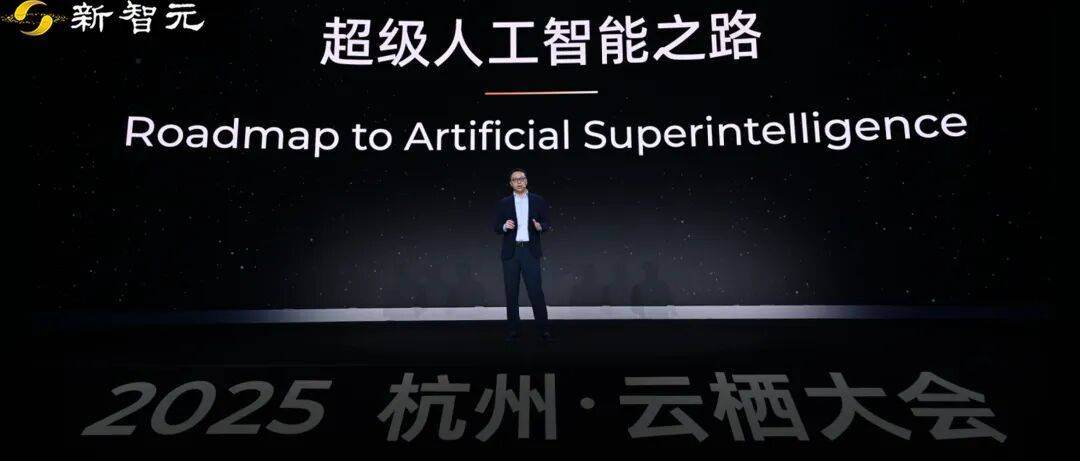
Core Insights - Alibaba has unveiled its ambitious blueprint for Artificial Super Intelligence (ASI), asserting that the realization of Artificial General Intelligence (AGI) is a certainty, while ASI will elevate human intelligence beyond current limits [6][9][22] - The company aims to liberate humans from 80% of daily tasks through AGI, while ASI is expected to create "super scientists" and "full-stack super engineers" capable of solving complex global issues at unprecedented speeds [11][12][22] Summary by Sections AGI and ASI Vision - The new CEO of Alibaba, Wu Yongming, has shifted focus towards ASI, emphasizing its potential to redefine human capabilities and the future of humanity [8][9] - AGI is described as the beginning of an intelligence revolution, with ASI representing the ultimate goal of surpassing human intelligence [12][22] ASI Roadmap - Alibaba has outlined a three-phase evolution towards ASI: 1. Emergence of intelligence (Learning Man) 2. Autonomous action (Assisting Man) 3. Self-iteration (Surpassing Man) [24][26] - The first phase involves AI learning from vast amounts of digitalized human knowledge, while the second phase focuses on AI assisting humans through tool usage and programming capabilities [25][28] Technological Advancements - The company has introduced several advanced AI models, including Qwen3-Max, which surpasses GPT-5 in performance, and Qwen3-VL, which enhances visual understanding and interaction capabilities [36][38][41] - Qwen3-Omni aims to integrate multiple modalities, allowing AI to process and generate audio, text, and visual content seamlessly [42][43] Future Infrastructure and Strategy - Alibaba positions itself as a full-stack AI service provider, anticipating a future where AI capabilities will be delivered through a few dominant cloud computing platforms [34][35] - The company believes that AI will become the most critical commodity, akin to electricity, with a significant increase in data center energy consumption projected by 2032 [34][35] Market Impact - The advancements in AI technology are expected to lead to a massive transformation in the IT industry, with AI agents and robots becoming ubiquitous in daily life [35][36] - Alibaba's commitment to open-source models aims to democratize access to AI technology, similar to the Android model in the mobile space [34][36]
通义App接入通义万相2.5 免费生成10秒高清视频
Xin Hua Cai Jing· 2025-09-24 07:41
Core Insights - Alibaba launched the Tongyi Wanshang Wan2.5 preview series model at the Yunqi Conference, integrating a video generation model into the Tongyi App for user interaction [2] - The Tongyi Wanshang 2.5 model can generate videos with synchronized audio, sound effects, and background music, enhancing the video generation capabilities [2] - Users can create 10-second high-definition videos at 24 frames per second, meeting film-level quality standards, and can generate up to 15 videos daily for free [2] Summary by Categories Product Features - The Tongyi Wanshang 2.5 video generation model offers audio-visual synchronization, allowing for the creation of videos that include matching voices, sound effects, and music [2] - Video length has increased from 5 seconds to 10 seconds, with support for 1080P HD output at 24 frames per second [2] - The model's command capabilities have improved, enabling complex continuous changes in video generation, such as camera movements [2] User Experience - Users can experience the capabilities of the Tongyi Wanshang 2.5 model for free by entering video generation commands in the Tongyi App [2] - The app allows users to generate a maximum of 15 watermark-free videos daily [2] Development Timeline - Since February of this year, the Tongyi Wanshang has continuously released various models, including text-to-video and image-to-video generation capabilities, all accessible through the Tongyi App [2]