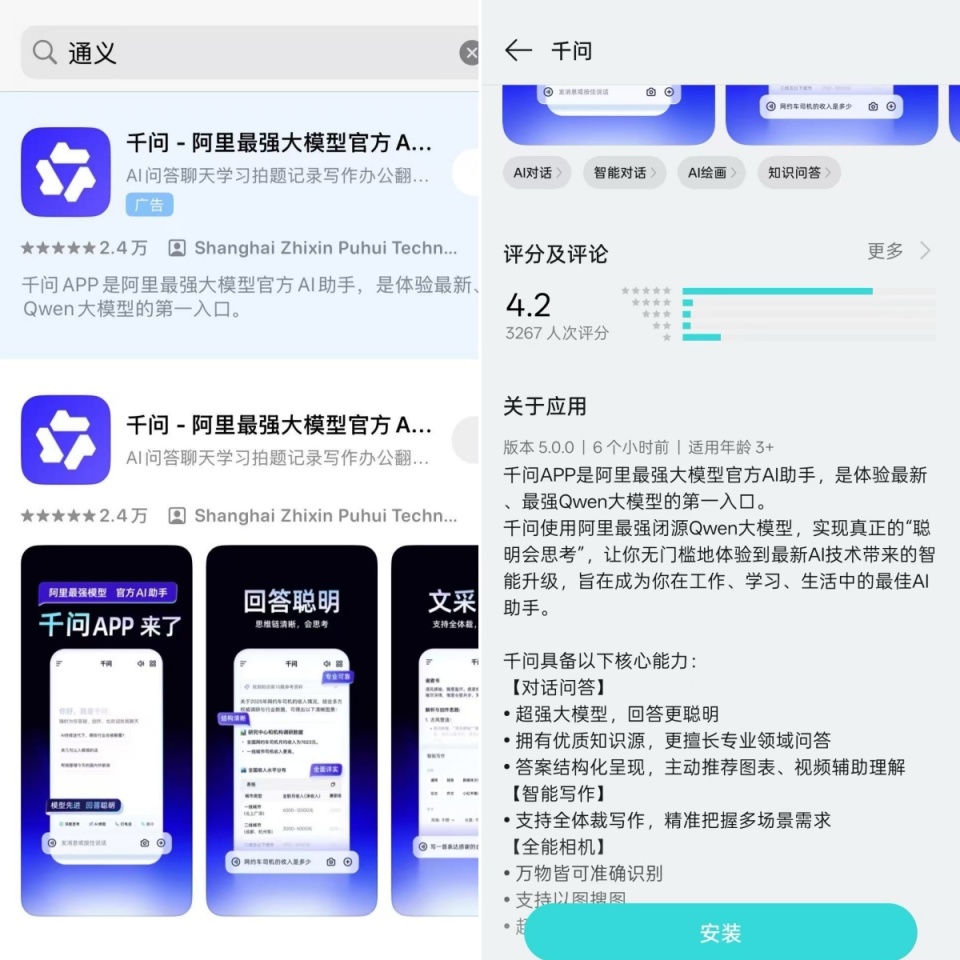
通义App

Search documents
蔡崇信复盘阿里AI:“早”做,不等于领先
3 6 Ke· 2026-02-07 02:22
Core Insights - Alibaba's Chairman, Joe Tsai, acknowledged that the company started working on Transformer models in 2019 but failed to allocate sufficient resources for their development until the launch of Tongyi Qianwen in 2023, marking a significant entry into the AI race [1][5][24] Group 1: Adoption - The first key point emphasized by Tsai is that AI must be used in practical scenarios to generate real value, not just developed as models [6][7] - The Tongyi App is crucial in Alibaba's AI strategy, serving not only as a user interface but also as a test for the AI's capabilities in real-world applications [8][11] - The unique characteristics of the Chinese market, such as the lower acceptance of enterprise software payment models compared to the U.S., necessitate alternative paths for AI adoption, making the Tongyi App a vital attempt to ensure real usage of models [9][10] Group 2: Scale - Tsai pointed out that AI investment is shifting focus from training to inference, with major tech companies increasing their capital expenditures from $60-80 billion to $120-150 billion annually [12][12] - Inference is identified as the main battleground for AI costs, as it is a daily requirement for users and businesses, unlike training which occurs less frequently [13][14] - The ability to handle high concurrency and maintain stability under load is crucial for scaling AI models, with Alibaba opting to deploy models on its own cloud infrastructure to control performance and throughput [15][16] Group 3: Open Source - Tsai advocates for open source as a practical choice rather than an idealistic one, driven by the commercial landscape and market conditions in China [17][18] - The primary value of open source is not cost but sovereignty, allowing companies and developers to have full control over their models [18][20] - Alibaba's strategy involves making Tongyi Qianwen open source while encouraging users to utilize Alibaba Cloud for training and inference, creating a commercial loop where infrastructure usage generates revenue [22][23]

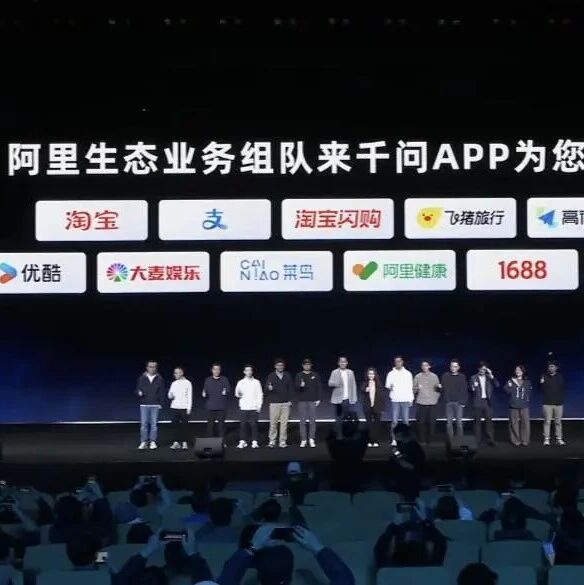
「举家」托举千问,阿里在赌什么?
雷峰网· 2026-01-15 10:43
Core Viewpoint - The article discusses the transformation of Alibaba's Qianwen from a chat assistant to a task-oriented assistant, integrating various services within the Alibaba ecosystem to enhance user experience and streamline transactions [2][3][4]. Group 1: Product Updates and Features - Qianwen has integrated over 400 new functionalities, including food delivery, shopping, and travel booking, marking its evolution into a service-oriented AI [2][3]. - The update signifies Qianwen's first engagement with transactions, indicating a shift from experimental to business validation within Alibaba's ecosystem [3]. - The AI now directly connects user needs with Alibaba's services, allowing for a seamless process from demand to payment, enhancing user convenience [6][10]. Group 2: User Engagement and Growth - Qianwen achieved over 100 million monthly active users within two months of launch, primarily attracting students and white-collar workers [10]. - The app's download surged from around 10,000 to over 150,000 daily, attributed to Alibaba's promotional efforts and user curiosity [10]. - User inquiries for product recommendations increased by 300% month-over-month, indicating a shift towards Qianwen being used as a decision-making tool [11]. Group 3: Competitive Landscape and Strategic Positioning - Alibaba's ability to integrate transactions within its ecosystem gives Qianwen a competitive edge over other companies like ByteDance and Tencent, which face challenges in creating a closed-loop transaction system [13][16]. - The article highlights that while other companies have attempted similar integrations, Alibaba's established transaction capabilities allow for smoother implementation and lower organizational friction [13][15]. - Qianwen's approach to becoming a transaction entry point is seen as a significant step in the commercialization of AI applications, potentially influencing the broader industry [19][21]. Group 4: Future Implications and Challenges - The transition to a transaction-oriented AI raises questions about user satisfaction and the potential for dissatisfaction if recommendations do not meet expectations [17]. - As Qianwen becomes a transaction entry point, it will face regulatory, risk management, and compliance pressures [18]. - The long-term success of Qianwen will depend on its ability to convert initial user engagement into sustained growth and reliable transaction pathways [11][19].

高盛点评“中国AI大厂之战”:阿里 vs 腾讯 vs 字节
华尔街见闻· 2025-11-29 13:26
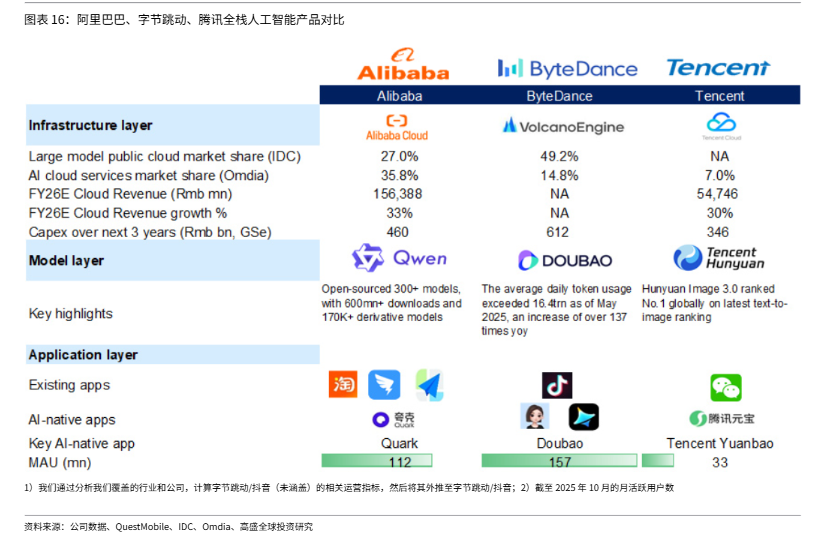
Core Viewpoint - The article discusses the competitive landscape of China's AI industry, highlighting the strategic choices of major players like Alibaba, ByteDance, and Tencent as they navigate a battle for capital efficiency, infrastructure dominance, and traffic entry points. Group 1: Alibaba's Strategy - Alibaba is adopting a "full-stack" approach similar to Google's, with a significant capital expenditure increase of 80% year-on-year, reaching 32 billion RMB in the September quarter [2] - The company's cloud revenue grew by 29% year-on-year, with AI-related revenue achieving triple-digit growth for the ninth consecutive quarter, and is expected to accelerate to 38% growth in the December quarter [3] - Alibaba aims to establish a "full-stack" barrier in the AI market, positioning itself as a dominant player through heavy asset investment [4] Group 2: ByteDance's Approach - ByteDance leverages its massive traffic advantage, with a daily token consumption of 30 trillion, approaching Google's 43 trillion, significantly outpacing competitors like Baidu and DeepSeek [7] - The company's app "Doubao" leads in domestic AI application activity, while its overseas education app Gauth saw a 394% year-on-year revenue increase [8] - ByteDance's strategy creates substantial inference demand, allowing it to encroach on traditional cloud giants in the Model as a Service (MaaS) sector, capturing 49.2% of the public cloud market share for large models [11] Group 3: Tencent's Strategy - Tencent maintains a conservative approach, reducing capital expenditures while focusing on seamlessly integrating AI capabilities into its extensive social and payment ecosystem [12][14] - The company has integrated its AI assistant "Yuanbao" into WeChat Pay, enhancing operational efficiency for small and medium-sized businesses [14] - Tencent's strategy emphasizes high implementation certainty despite lower capital expenditure figures compared to competitors [14] Group 4: Competitive Dynamics - The competition between China and the U.S. in AI has entered a "dynamic alternation" phase, with Chinese models rapidly iterating and catching up within 3-6 months after significant advancements in U.S. models [4][17] - Chinese companies exhibit resilience through unique "Chinese speed" and open-source ecosystems, with 80% of AI startups utilizing open-source models [17] - Cost control is a competitive advantage for Chinese models, as seen with Kuaishou's "Kling" video generation model, which offers significantly lower prices than global counterparts [17] Group 5: Valuation Insights - Goldman Sachs analysts assert that the Chinese AI sector is not in a bubble, with projected P/E ratios for Tencent and Alibaba at 21x and 23x for 2026, respectively, lower than those of major U.S. tech companies [18]
高盛点评“中国AI大厂之战”:阿里 vs 腾讯 vs 字节
美股IPO· 2025-11-29 11:00
Core Insights - The report by Goldman Sachs analyzes the competitive landscape of China's AI industry, focusing on the strategic choices of major players like Alibaba, ByteDance, and Tencent [2][6][18]. Group 1: Alibaba's Strategy - Alibaba is pursuing a "full-stack" approach similar to Google's, with a significant capital expenditure increase of 80% year-on-year, reaching RMB 32 billion [6][7]. - The company aims to build a robust AI infrastructure through vertical integration of "base models + multimodal capabilities," despite challenges in chip supply [6][7]. - Alibaba Cloud's external revenue grew by 29% year-on-year in the September quarter, with AI-related revenue achieving triple-digit growth for nine consecutive quarters [7][8]. Group 2: ByteDance's Approach - ByteDance is leveraging its dominance in consumer applications to enhance its foundational infrastructure, with daily token usage surpassing 30 trillion, approaching Google's 43 trillion [10][14]. - The company's education app Gauth has seen a 394% year-on-year increase in monthly revenue, indicating strong market performance [11]. - ByteDance's Volcano Engine holds a 49.2% market share in the public cloud market for large models, showcasing its competitive edge [14]. Group 3: Tencent's Position - Tencent has adopted a more restrained approach, reducing capital expenditures while focusing on integrating AI capabilities into its extensive social and payment ecosystem [15][17]. - The company has integrated its AI assistant "Yuanbao" into WeChat Pay, enhancing operational efficiency for small and medium-sized businesses [17]. Group 4: US-China AI Competition - The competition between the US and China in AI has entered a "dynamic alternation" phase, with Chinese models expected to rapidly iterate and catch up within 3-6 months following significant advancements in US models [4][19]. - Chinese companies are noted for their resilience and speed, with many leveraging open-source models to enhance their capabilities [19]. Group 5: Valuation Insights - Goldman Sachs indicates that the current state of the Chinese AI sector does not reflect a bubble, with expected P/E ratios for Tencent and Alibaba at 21x and 23x respectively, lower than those of major US tech companies [20].

高盛点评“中国AI大厂之战”:阿里 vs 腾讯 vs 字节
Hua Er Jie Jian Wen· 2025-11-29 09:18
Core Insights - The report by Goldman Sachs highlights the intense competition in China's AI sector, focusing on the strategic choices of major players like Alibaba, ByteDance, and Tencent, and suggests a new normal of "dynamic alternation" in the US-China AI competition [1][2] Group 1: Alibaba's Strategy - Alibaba is adopting a "full-stack" approach similar to Google's, with a significant increase in capital expenditure, which surged by 80% year-on-year to reach 32 billion RMB in the September quarter [3][4] - The company's cloud revenue grew by 29% year-on-year, with AI-related revenue achieving triple-digit growth for the ninth consecutive quarter, and is expected to accelerate to 38% growth in the December quarter [4][6] Group 2: ByteDance's Approach - ByteDance is leveraging its massive traffic advantage, with a daily token consumption of 30 trillion, approaching Google's 43 trillion, and significantly surpassing competitors like Baidu [9][13] - The company's application "Doubao" leads in domestic AI application activity, while its overseas education app Gauth saw a 394% year-on-year increase in monthly revenue [9][13] Group 3: Tencent's Strategy - Tencent is maintaining a conservative approach, reducing capital expenditure while focusing on seamlessly integrating AI capabilities into its extensive social and payment ecosystem [14][15] - The company has integrated its AI assistant "Yuanbao" into WeChat Pay, enhancing operational efficiency for small and medium-sized businesses [15] Group 4: US-China AI Competition - The report outlines a "dynamic catch-up" cycle in the US-China AI competition, where Chinese models typically follow significant advancements in US models within 3-6 months [16][17] - Chinese companies are noted for their resilience and aggressive cost control, with many leveraging open-source models to enhance their capabilities [17] Group 5: Valuation Insights - Goldman Sachs indicates that the current state of the Chinese AI sector does not reflect a bubble, with projected P/E ratios for Tencent and Alibaba at 21x and 23x respectively, lower than those of major US tech companies [18]
天猫、京东、小红书交出“双11”成绩单; 阿里启动“千问”项目|一周未来商业
Mei Ri Jing Ji Xin Wen· 2025-11-16 23:15
E-commerce and Retail - Xiaohongshu's "Double 11" event saw a 73% year-on-year increase in sales contribution from buyers, with the number of merchants exceeding 10 million growing by 140% and products exceeding 1 million growing by 145% [1] - JD.com reported a 40% increase in the number of users placing orders and nearly 60% growth in order volume during "Double 11," with logistics automation covering over 95% of the supply chain [2] - Tmall's "Double 11" achieved its best growth in four years, with nearly 600 brands surpassing 100 million yuan in sales, and over 34,000 brands seeing year-on-year growth [3] - Walmart's CEO Doug McMillon will step down at the end of January, with John Furner taking over, signaling a strategic transition for the retail giant [4] Logistics and Supply Chain - China Mobile participated in the D-round financing of New Stone's unmanned vehicles, indicating a collaboration in AI and autonomous driving technology [5][6] Food and Beverage - Xibei stated that opening and closing stores is a normal business practice, with recent closures being part of a dynamic adjustment strategy in response to market conditions [7] Instant Retail - Meituan's flash purchase platform reported over 800 brands doubling their sales during "Double 11," reflecting the growing importance of instant retail channels [8] Autonomous Driving - Didi's autonomous driving division announced a strategic partnership with Abu Dhabi to support smart transportation and sustainable traffic ecosystems [9] AI and Technology - Alibaba has launched the "Qianwen" project to develop a personal AI assistant, aiming to compete directly with ChatGPT, highlighting the company's commitment to AI technology [10][11] Investment and Innovation - "Wujie Power" completed a 300 million yuan angel round of financing, indicating strong investor confidence in the embodied AI robotics sector [12]
阿里旗下通义App名称更名为为千问App
Feng Huang Wang· 2025-11-15 00:48
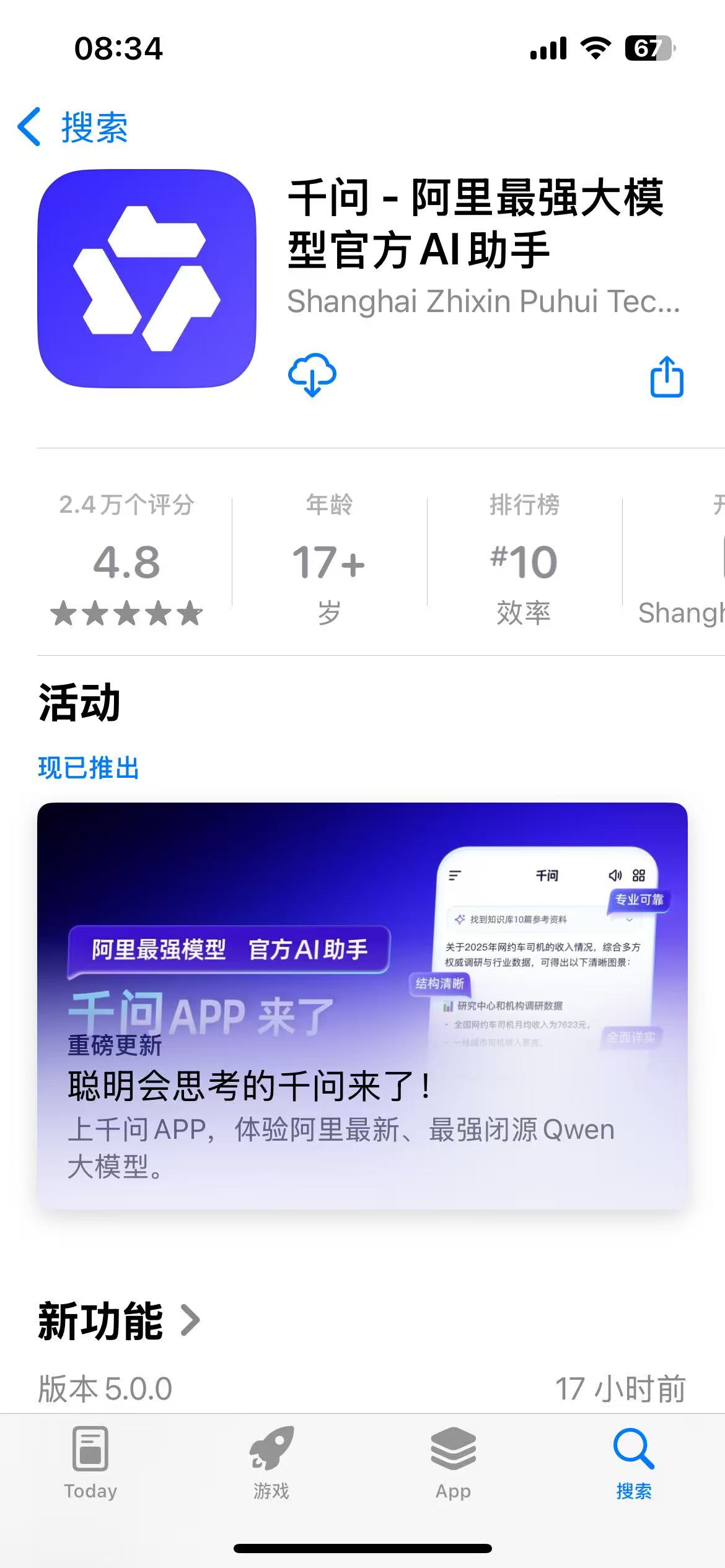
Core Insights - Alibaba's Tongyi App has been renamed to Qianwen App, with the version updated from 3.59.1 to 5.0.0 [1] - The Qianwen project, based on the Qwen model, aims to create a personal AI assistant to compete directly with ChatGPT, entering the global AI application market [1]
通义App更名
财联社· 2025-11-15 00:46
Core Viewpoint - Alibaba has rebranded its Tongyi App to Qianwen App, indicating a strategic shift towards developing a personal AI assistant that competes directly with ChatGPT [1] Group 1 - The version of the app has been upgraded from 3.59.1 to 5.0.0, reflecting significant enhancements in its capabilities [1] - The Qianwen project has been initiated secretly by Alibaba, showcasing the company's commitment to advancing in the AI sector [1] - The Qianwen App is built on the Qwen model, which is positioned as a leading AI technology, aiming to compete in the global AI application market [1]
阿里旗下通义App名称更名为千问App
Mei Ri Jing Ji Xin Wen· 2025-11-15 00:42
Group 1 - The article discusses the launch of Alibaba's latest closed-source large model, Qwen, which is expected to enhance user experience significantly [6] - The new features of the Qwen model are highlighted, indicating advancements in AI technology and its applications [6] Group 2 - The article mentions the increasing interest in AI applications within the investment sector, suggesting potential growth opportunities for companies involved in AI development [7] - There is a focus on the gaming industry, indicating that new applications and technologies are being integrated into gaming platforms [7]
“通义”App更名为“千问”:定位为阿里最强大模型官方AI助手
3 6 Ke· 2025-11-14 09:41
Core Insights - Alibaba's AI application "Tongyi" has undergone a significant brand upgrade and is now officially renamed "Qianwen" [1] - The Qianwen app is positioned as Alibaba's most powerful AI assistant, featuring capabilities such as conversational Q&A, intelligent writing, and a multi-modal camera function [1] - The app has been launched on both the Apple App Store and Android platforms, with a major version upgrade from 3.60.0 to 5.0.0 [1] Development and Strategy - The Qianwen project was secretly initiated by Alibaba, aiming to compete directly with ChatGPT and is seen as a critical battle in the AI era [3] - Over a hundred engineers have been assigned to the Qianwen project, with dedicated office space allocated at Alibaba's headquarters [3] - An international version of the Qianwen app is also in development, leveraging the Qwen model's global influence to attract overseas users [3] Infrastructure Investment - The Qwen model, which has been in development for three years, is now recognized as the leading open-source large model globally [4] - Alibaba's management has emphasized the importance of investing in AI infrastructure, with a commitment to a three-year investment plan of 380 billion yuan [4][6] - At the recent Cloud Summit, Alibaba showcased its new generation of high-density supernode architecture, which is optimized for training and inference of models with over 100 billion parameters [5]