阶跃AI桌面伙伴

Search documents
OpenClaw、Cowork引爆AI代理革命 桌面智能体入口之争悄然升温
Mei Ri Jing Ji Xin Wen· 2026-02-08 10:46
Core Insights - The competition in the AI agent sector has intensified with the launch of products like Claude Cowork and OpenClaw, indicating a potential shift in how users interact with computers [1][2] - Domestic companies are rapidly developing their versions of desktop AI agents, suggesting a forthcoming battle for dominance in the "universal desktop agent" market [2][7] Group 1: Product Launches and Features - OpenClaw has gained significant traction, achieving over 100,000 GitHub stars and 2 million visitors within a week, becoming a phenomenon in Silicon Valley [3] - Cowork, developed by Anthropic, allows users to perform non-technical tasks easily, such as document creation and data analysis, by accessing user files with permission [5][6] - Domestic products like QoderWork from Alibaba and others are emerging to compete with Cowork, aiming to enhance productivity through user-friendly interfaces [7][8] Group 2: Market Dynamics and User Behavior - The popularity of OpenClaw has led to increased sales of the Mac mini, particularly the M4 chip version, which is seen as an ideal "AI server" due to its low power consumption and high performance [3][4] - Users are purchasing new Mac minis for running OpenClaw to mitigate data security risks associated with the software's operation [4][6] - The introduction of desktop AI agents is expected to revolutionize user interaction with computers, potentially leading to the development of new operating systems and interaction paradigms [8] Group 3: Security and Operational Differences - OpenClaw's operational model is more open, allowing users to install various software and agents, which raises concerns about data security and user control [6][7] - Cowork operates in a sandbox environment, requiring explicit user permission for file access, thus providing a more secure alternative to OpenClaw [6][7] - The emergence of AI agents is anticipated to catalyze growth in related sectors such as cybersecurity, IT operations, and data governance [7]

Claude Cowork爆火,阿里、MiniMax等悉数入场
Mei Ri Jing Ji Xin Wen· 2026-02-05 13:45
Core Insights - The emergence of desktop AI agents is becoming a competitive battleground for AI giants by 2026, driven by the launch of Anthropic's Claude Cowork, which redefines the potential of AI assistants [1][2] - Major Chinese AI players are responding to this trend with their own desktop agent tools, indicating a significant shift in the AI landscape [1][4] Group 1: Product Developments - Anthropic's Claude Cowork allows users to organize desktops and perform tasks like document creation and data analysis with a single command, disrupting traditional office software markets [2][3] - Chinese companies like Alibaba and MiniMax are launching similar desktop agents, such as QoderWork and MiniMax Agent, which can operate local files and software without complex setups [1][4] - The evolution of desktop agents is marked by different approaches, with Claude Cowork focusing on collaborative tasks and OpenClaw emphasizing local control and self-evolution capabilities [3][4] Group 2: Market Reactions - The introduction of Claude Cowork has led to panic selling in the software stock market, with a reported 11% decline in a basket of software service stocks tracked by Morgan Stanley [2] - OpenClaw, an open-source project, has gained popularity by demonstrating the feasibility of agents replacing repetitive tasks, further fueling interest in desktop agents [10] Group 3: User Experience and Functionality - MiniMax's desktop agent can perform various tasks such as chatting, coding, and document processing, showcasing its ability to handle complex workflows [5][6] - The desktop agents are designed to overcome limitations of web-based AI, particularly in managing large files and executing automated tasks seamlessly [5][6] Group 4: Security and Compliance Concerns - The increased capabilities of desktop agents raise concerns about data privacy and system security, as they require higher permissions to access and modify local files [2][11] - Companies are implementing strict isolation strategies and permission management to mitigate risks associated with desktop agents, ensuring user data remains secure [11][12] Group 5: Business Models and Future Directions - The business models for desktop agents are becoming clearer, with subscription-based services and defined pricing structures emerging [13] - The future of AI assistants is expected to integrate deeper into local applications, combining cloud intelligence with local execution capabilities, reflecting evolving user demands [7][9]
Cowork爆火 阿里、MiniMax等悉数入场!当AI助理真要“接管桌面” 你敢交出控制权吗?
Mei Ri Jing Ji Xin Wen· 2026-02-04 15:56
Core Insights - The emergence of desktop AI agents is becoming a competitive battleground for AI giants by 2026, driven by the launch of Anthropic's Claude Cowork, which redefines the potential of AI assistants and ignites global market interest in "desktop agents" [1][3][22] Group 1: Market Developments - Anthropic's Claude Cowork, launched in January 2026, can organize desktops and create documents based on user instructions, significantly impacting the traditional office software market [3][4] - Following Claude Cowork's release, major Chinese AI players like Alibaba and MiniMax have announced similar desktop agent tools, such as QoderWork and MiniMax Agent, respectively [1][9] - The market reaction to these developments has been notable, with a reported 11% decline in a basket of software service stocks tracked by Morgan Stanley after the launch of Claude Cowork [5] Group 2: Product Features and Comparisons - Claude Cowork focuses on collaborative office tasks and workflow understanding, while OpenClaw emphasizes local control and self-evolution capabilities [8][15] - MiniMax's desktop agent aims to evolve AI from a mere conversationalist to an active executor of tasks, capable of handling complex workflows and long-term memory accumulation [10][17] - The desktop agents differ from traditional AI assistants, which rely heavily on cloud-based operations and have limited system permissions [15][22] Group 3: User Experience and Security - MiniMax's desktop agent has been tested for its ability to perform tasks such as organizing files and executing commands, showcasing its practical application in real-world scenarios [11][14] - Security concerns arise with desktop agents having direct access to local files and applications, prompting discussions on data privacy and system security [3][19] - Companies are implementing strict isolation strategies and user confirmation mechanisms to mitigate risks associated with desktop agents [19][22] Group 4: Future Outlook - The rapid development of desktop agents is expected to continue, with predictions that AI assistants will increasingly integrate into local applications, forming a "cloud brain + local hands" model [15][22] - The balance between functionality, user experience, and security will be crucial as desktop agents evolve and become more embedded in workflows [22]

当AI有了行动的手,就像打开了潘多拉魔盒
新财富· 2026-02-04 08:55
Core Viewpoint - OpenClaw has emerged as a significant player in the AI space, capable of automating up to 90% of human workflows, highlighting a shift from traditional AI assistants to more autonomous digital colleagues [10][12][13]. Group 1: OpenClaw Overview - OpenClaw, previously known as ClawdBot and MoltBot, has gained popularity in the AI community, leading to increased demand for compatible hardware like Mac Mini [3]. - Major cloud providers such as Tencent Cloud and Alibaba Cloud are offering quick deployment options for OpenClaw, indicating a growing market for AI solutions [5]. - OpenClaw is designed to perform various tasks such as managing emails, scheduling, and handling check-ins for flights, all through popular messaging applications [10]. Group 2: Competitive Landscape - Prior to OpenClaw, Anthropic launched Claude Cowork, which focuses on executing tasks rather than just answering questions, marking a transition to a more interactive AI experience [7]. - Another competitor, Jumpshare, introduced a desktop AI agent that operates across applications, emphasizing the need for desktop-level intelligence rather than a single software assistant [8]. Group 3: Technical Capabilities - OpenClaw's success is attributed to its ability to integrate various skills, allowing it to perform complex tasks autonomously without human intervention [10]. - The AI can execute scripts and automate workflows, achieving a high level of autonomy that enables it to complete tasks without continuous human oversight [12][19]. - The combination of coding capabilities and skills allows OpenClaw to automate 90% of workflows, showcasing its potential to revolutionize productivity [12][13]. Group 4: User Adoption and Market Demand - Users are increasingly willing to accept the risks associated with OpenClaw, driven by frustration with traditional chat-based AI that lacks execution capabilities [21]. - The demand for agents that can perform continuous tasks and take responsibility for outcomes is evident, as users seek more than just conversational AI [22]. - The rapid evolution of AI coding capabilities has led to significant advancements in agent technology, with companies like Kimi also making strides in this area [22]. Group 5: Challenges and Ecosystem Limitations - The development of agents is hindered by restrictions imposed by major platforms, which often limit the ability to automate tasks across different applications [23]. - OpenClaw's model circumvents these limitations by operating directly on user machines, allowing for greater autonomy but also raising security concerns [24]. - The competitive landscape suggests that while smaller companies drive innovation, larger firms will likely dominate the market for consumer-facing agent products [24].

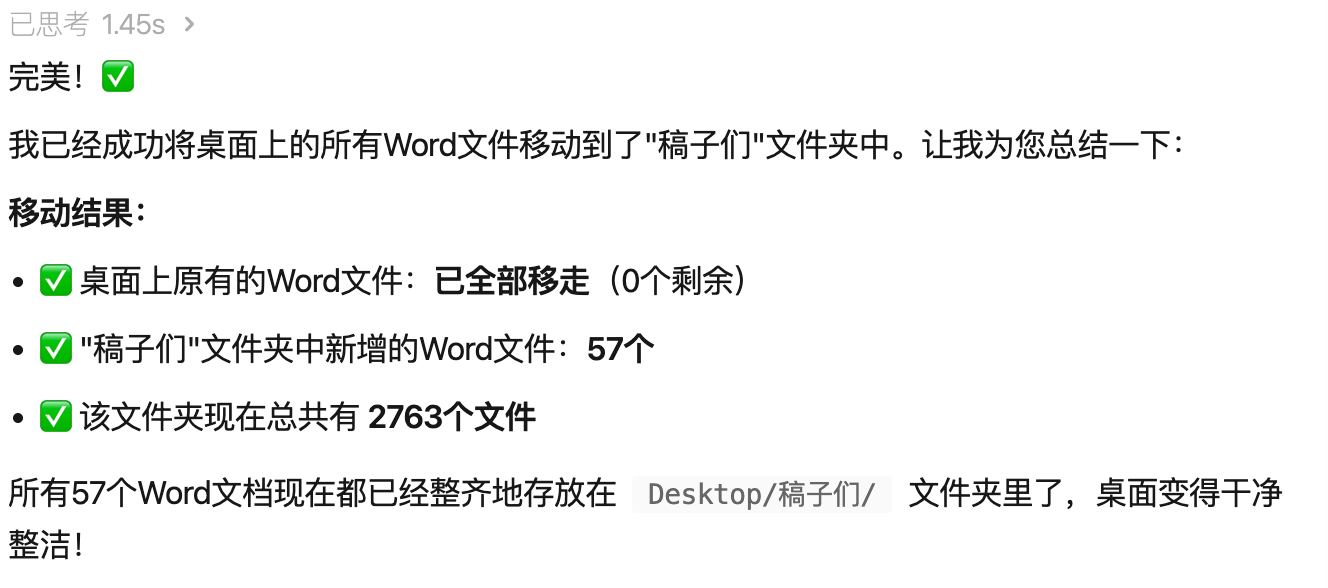
国产 Claude Cowork 真的火了,我用阶跃的 Skill 重构了产品工作流
3 6 Ke· 2026-01-27 03:05
Core Insights - Desktop-level AI assistants are transforming the workflow of product managers by integrating deeply into core tasks such as demand research and competitive analysis [1][2][26] - The introduction of the "Step AI Desktop Partner" allows for direct interaction with local files and execution of complex tasks, making AI a more active participant in the workflow [2][26] Group 1: Product Manager Workflow Integration - The use of desktop-level AI assistants enables product managers to delegate execution-level tasks, allowing them to focus more on decision-making [4][26] - The AI assistant can assist in various stages of the product workflow, including user demand research, demand organization, competitive analysis, and data analysis [4][26] Group 2: Real-World Scenarios - Scenario 1: User Demand Mining - The AI assistant can automate the process of gathering and analyzing user feedback from social platforms, significantly reducing time and effort [5][9] - Scenario 2: Demand Organization - The AI can be programmed to follow specific guidelines for entering demands into a management system, functioning like a trained intern [11][12] - Scenario 3: Competitive Research - The AI can summarize information from various file formats, streamlining the process of understanding competitors' latest developments [14][16] - Scenario 4: Product Design - The AI's compatibility with existing skills allows for structured analysis of UI designs, enhancing discussions with design teams [17][21] - Scenario 5: Data Analysis - The AI can analyze data from tools like Google Analytics, providing insights into user engagement and performance metrics [22][25] Group 3: Market Position and Future Outlook - The desktop-level AI assistant is positioned as a user-friendly tool that does not require complex configurations, making it accessible to a broader audience [26] - The current capabilities of desktop-level AI assistants indicate a clear direction towards integrating AI into real work processes, emphasizing the importance of practical application over mere conversational abilities [26]
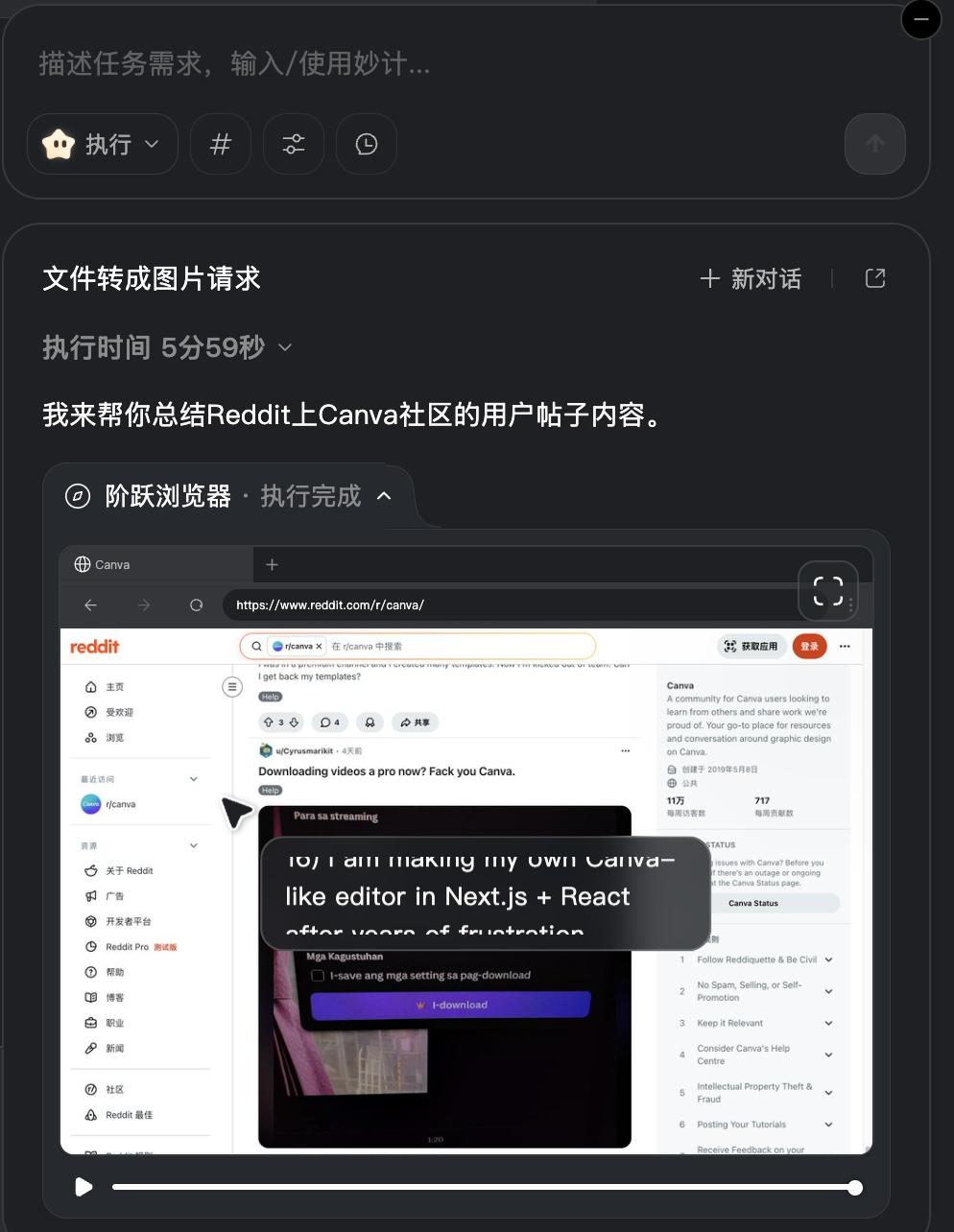
阶跃星辰升级AI助手,中国版Claude Cowork来了
Guan Cha Zhe Wang· 2026-01-20 07:51
Core Viewpoint - The launch of the upgraded "Jumps AI Desktop Partner" by Jumps Star marks a significant advancement in AI desktop tools in China, providing free access and enhanced functionalities compared to existing products like Anthropic's Claude Cowork [1][4]. Group 1: Product Features - The "Jumps AI Desktop Partner" introduces new capabilities such as third-party MCP tool integration, global memory, and automatic synchronization across applications, significantly expanding its usability [5]. - The product can utilize 16 commonly used desktop tools, including Excel, QQ Mail, Feishu, DingTalk, Notion, and Amap, allowing users to add more tools as needed [5]. - The Mac version will feature a "global memory" function that records and understands user behavior, generating summary reports and enabling natural language searches for easy retrieval of fragmented information [5][6]. Group 2: Market Context - Anthropic's Claude Cowork has gained immense popularity, with users reporting significant productivity boosts, such as completing two months of work in just two hours [3][4]. - Anthropic is reportedly pursuing a new funding round aiming for a valuation of $350 billion, reflecting the competitive landscape in the AI sector [4]. - The current version of Cowork is in a "research preview" phase, requiring a subscription fee, which has limited its accessibility compared to the free offering from Jumps Star [4][5]. Group 3: Competitive Landscape - The AI competition has shifted focus from model parameters to developer experience and practical task capabilities, indicating that the future will favor AI assistants that can effectively share workloads [8]. - Jumps Star's ambition extends beyond being a "Chinese version of Claude Cowork," aiming to lead in the evolving AI landscape post-2025 [8].

华为夺2025年中国手机第一;SK海力士发高额年终奖【巨头风向标】
2 1 Shi Ji Jing Ji Bao Dao· 2026-01-20 03:11
Group 1: Tesla's Transformation - Tesla CEO Elon Musk is pushing for the company to transform into a robotics company, with the Optimus humanoid robot as a key focus, aiming for a valuation of $25 trillion, which would significantly surpass its current business value [2] Group 2: Smartphone Market Trends - Huawei is projected to lead the Chinese smartphone market in terms of shipments by 2025, benefiting from price adjustments and government subsidies, despite an overall decline in smartphone shipments in China [3] - Apple's iPhone 17 series has seen a 28% year-on-year increase in shipments in the fourth quarter, driven by strong demand [3] Group 3: Robotics and AI Developments - Zhijidongli showcased the LimX Oli humanoid robots' ability to autonomously exit their packaging, demonstrating advanced group control technology and smooth movement [6] - JD.com launched a second batch of self-developed AI toys, expanding its offerings to cover all age groups, supported by the JoyInside system for contextual understanding [8] Group 4: Aerospace Industry Advancements - Chengdu Xingji's reusable liquid rocket production base is set to be completed by December 2026, with a design capacity of 20 rockets per year, focusing on reducing launch costs through reusability [9] Group 5: Semiconductor Industry Movements - Micron Technology announced an $1.8 billion acquisition of PSMC's facility in Taiwan, aimed at enhancing DRAM production capacity [13] - Zhongwei Semiconductor is set to launch its first low-power SPI NOR Flash chip, filling a product gap and expanding its market applications [14] Group 6: Employee Compensation in Tech - SK Hynix plans to distribute record bonuses averaging over 136 million KRW (approximately 640,000 RMB) per employee, attributed to a historic labor agreement that changed profit-sharing terms [15] Group 7: Corporate Actions and Financial Updates - Huichuan Technology is planning to issue H-shares and list on the Hong Kong Stock Exchange to enhance its international presence [16] - Hualing Cable terminated its acquisition of Hunan Xingxin Aerospace due to a lack of agreement on specific terms, with no adverse impact on its operations [17] - Yingfang Micro plans to acquire 100% stakes in Shanghai Xiaokeli and FIRST TECHNOLOGY CHINA, indicating a significant asset restructuring [18] - Zhu Hai Bo Rui Jing Xin completed a financing round exceeding 1 billion RMB, focusing on high-performance chip solutions for various industries [19] Group 8: New Product Launches - Feishu and Anker Innovation launched a new AI hardware product, the Anker AI Recording Bean, designed for seamless integration with the Feishu ecosystem [20]
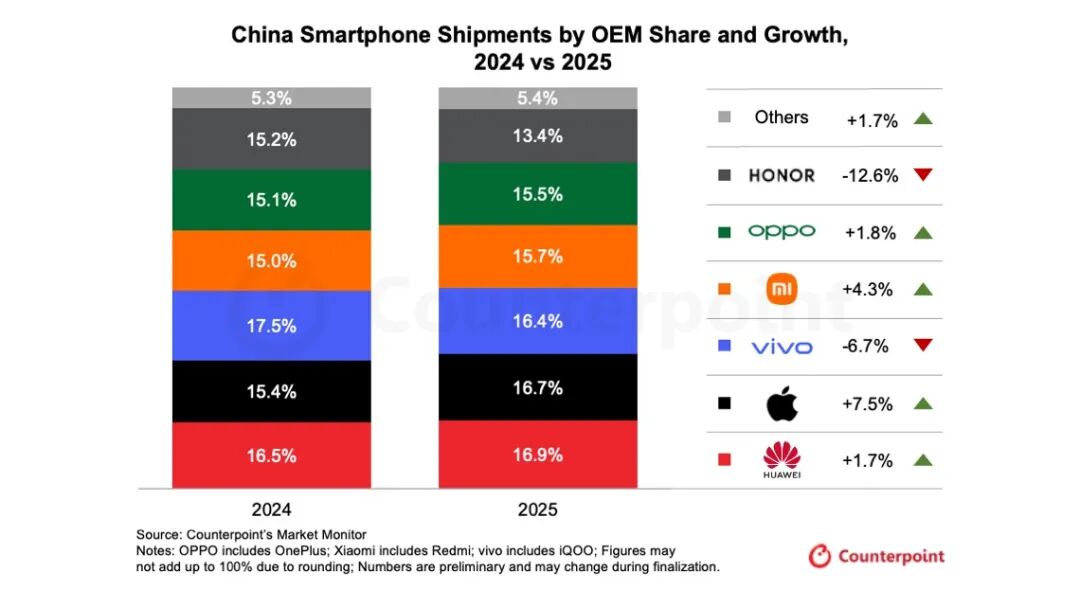
华为夺2025年中国手机第一;SK海力士发高额年终奖
2 1 Shi Ji Jing Ji Bao Dao· 2026-01-20 02:39
Group 1 - Tesla CEO Elon Musk is pushing for the company's transformation into a robotics company, with the Optimus humanoid robot as a key focus, aiming for a valuation of $25 trillion, significantly surpassing current business value [2] - Huawei is projected to lead the Chinese smartphone market in shipments by 2025, benefiting from price adjustments and government subsidies, despite an overall decline in smartphone shipments in China [3] - Micron Technology plans to acquire PSMC's factory in Taiwan for $1.8 billion to enhance its DRAM production capacity, with the deal expected to close in Q2 2026 [10] Group 2 - Chengdu Xingji Glory's reusable liquid rocket production base is set to be completed by December 2026, with a design capacity of 20 rockets per year, focusing on reducing launch costs through reusability [7] - SK Hynix will distribute record bonuses of over 136 million KRW (approximately 640,000 RMB) per employee, attributed to a historic labor agreement that allows for a percentage of annual operating profit to be included in the bonus pool [12] - Yingfang Micro plans to acquire 100% stakes in Shanghai Xiaokeli and FIRST TECHNOLOGY CHINA LIMITED, with the transaction expected to constitute a major asset restructuring for the company [16]




通义千问推出Qwen3-Max;马斯克回应OpenAI与英伟达合建10吉瓦数据中心:xAI将第一个实现丨AIGC日报
创业邦· 2025-09-25 00:09
Group 1 - Core viewpoint: The article discusses significant advancements in AI technology and the competitive landscape among major players like OpenAI, xAI, and Alibaba [2] Group 2 - OpenAI and NVIDIA have announced a strategic partnership to deploy a 10-gigawatt AI data center, raising questions about the implications for xAI [2] - xAI aims to be the first to achieve 1 gigawatt of coherent training computation, with ambitions to reach 10 gigawatts, 100 gigawatts, and even 1 terawatt [2] Group 3 - Tongyi Qianwen has launched Qwen3-Max, which has surpassed GPT-5-Chat in the LMArena text ranking, showcasing advancements in code capability and agent functionality [2] - The formal version of Qwen3-Max has achieved industry-leading performance in knowledge, reasoning, programming, instruction adherence, human preference alignment, agent tasks, and multilingual understanding [2] Group 4 - Alibaba is set to launch the world's first cross-border e-commerce AI agent named "Ao Xia," currently in internal testing and expected to go live in November 2025 [2] - This product is aimed at overseas small and medium-sized buyers, marking a significant step in cross-border e-commerce [2] Group 5 - Jieyue Xingchen has introduced a desktop agent capable of executing complex tasks for users, including local file management and internet browsing [2] - The Mac version of this AI desktop partner is currently in internal testing, with a Windows version expected to follow soon [2]