
雪花纯生

Search documents
中国必选消费品3月价格报告:白酒批价跌多涨少,婴配粉外大众品均加大折扣
Haitong Securities International· 2026-03-27 05:29
Investment Rating - The report assigns an "Outperform" rating to multiple companies in the essential consumer goods sector, including Guizhou Moutai, Wuliangye, and Yili [1]. Core Insights - The wholesale prices of baijiu are experiencing more declines than increases, with significant discounts being applied to general consumer goods, excluding infant formula [1][32]. - The report highlights a trend of increasing discounts across various consumer goods categories, indicating a competitive pricing environment [5][19]. Summary by Category Baijiu Pricing Trends - Among 38 monitored baijiu products, 18 saw price declines, 13 experienced increases, and 7 remained stable. The month-on-month price changes for products above 1500 yuan ranged from -10% to -3%, while year-on-year changes were between -25% and -15% [32]. - In the 700-1500 yuan price range, 4 out of 5 products saw price declines month-on-month, with changes ranging from -8% to -2% [33]. - For products priced between 500-700 yuan, 2 products increased in price while 2 decreased, with month-on-month changes from -5% to +3% [34]. - In the 300-500 yuan category, 5 products increased while 5 decreased, with month-on-month changes ranging from -4% to +4% [35]. - For products below 300 yuan, 6 increased in price while 4 decreased, with month-on-month changes from -5% to +5% [36]. Discount Trends in Consumer Goods - Discounts for liquid milk products increased from an average of 66.1% to 64.5%, while median discounts remained stable [19][22]. - The average discount for condiments decreased from 86.2% to 74.9%, indicating a significant reduction in pricing strategies [19][22]. - Convenience foods saw a drop in average discounts from 92.6% to 87.3% [19][22]. - Beer products experienced a decrease in average discounts from 81.6% to 79.4% [19][22]. - Soft drinks also saw a reduction in average discounts from 85.4% to 79.1% [19][22]. - In contrast, discounts for infant formula products narrowed, with average discounts increasing from 88.4% to 93.3% [20][39].





2025华润啤酒财报亮眼:“三大引擎”驱动,稳坐行业龙头
Sou Hu Cai Jing· 2026-03-24 17:00
Core Viewpoint - China Resources Beer reported a revenue of 37.985 billion yuan for 2025, an increase of 6.537 billion yuan compared to 31.448 billion yuan in 2020, with a net profit attributable to shareholders of 5.724 billion yuan, reflecting a year-on-year increase of 19.6% [1][3] Group 1: Financial Performance - The net cash inflow from operating activities for 2025 increased by 2.9% to 7.127 billion yuan, demonstrating the company's ability to create business value [3] - The dividend per share for 2025 was 1.021 yuan, a year-on-year increase of 34.3%, with a payout ratio rising to 98.2% [3] - The beer business maintained stable revenue of approximately 36.489 billion yuan, with a gross margin increase of 1.4 percentage points to 42.5% [8] Group 2: Strategic Initiatives - The company is focusing on a high-end strategy, with beer sales reaching approximately 11.03 million kiloliters in 2025, a year-on-year increase of 1.4% [7] - The growth in mid-to-high-end beer products is attributed to a shift in consumer preferences towards quality over quantity, creating new growth opportunities [4] - The company has launched innovative products such as Belgian-style white beer and black beer, as well as health-oriented products like "Zhang Zhongjing Medicinal Beer" and "Oyster Peptide Beer" [12][14] Group 3: Market Positioning - China Resources Beer is recognized as a leader in the high-end strategy, with nearly 25% of overall sales coming from mid-to-high-end beer products [8] - The company is actively expanding its multi-category layout, responding to diverse consumer demands through innovative product offerings [10] - The company has established strategic partnerships with major online platforms to capture the growing online consumption market, particularly targeting the Z generation [17] Group 4: Future Outlook - The company plans to deepen its integration into the Guangdong-Hong Kong-Macao Greater Bay Area by relocating its headquarters to Shenzhen, leveraging regional advantages for digital transformation [18] - The white liquor business reported a revenue of 1.496 billion yuan in 2025, with a resilient profit of 264 million yuan after excluding goodwill impairment [19] - The company aims to adapt to market changes by focusing on low-alcohol products and enhancing consumer engagement with its key product lines [19]


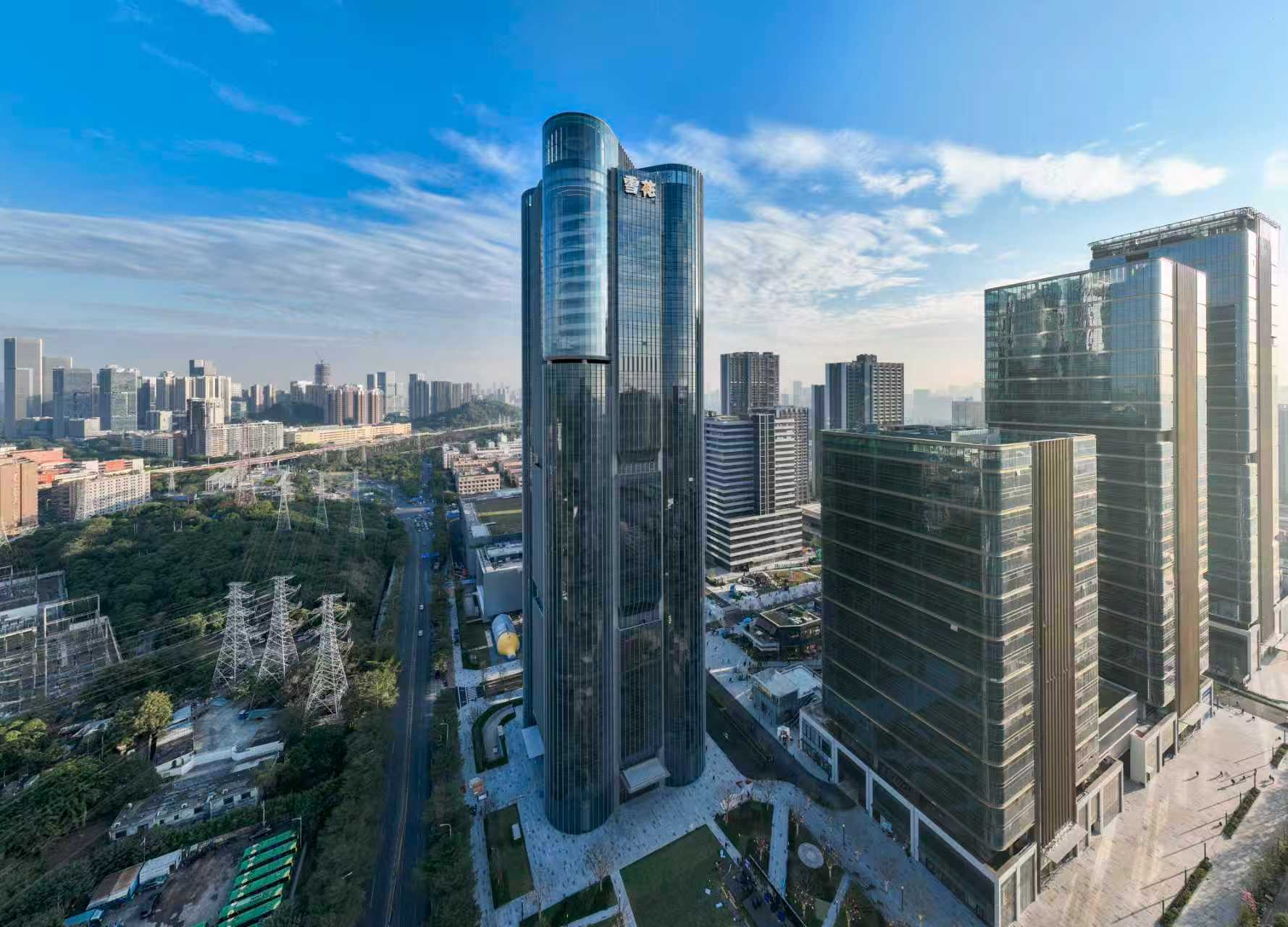
2026年中国啤酒行业报告:存量博弈下的高端化突围与产业链价值重塑
Qin Ce Xiao Fei Yan Jiu· 2026-03-12 01:30
Investment Rating - The report provides a positive outlook on the Chinese beer industry, highlighting the potential for growth driven by premiumization and market restructuring [5]. Core Insights - The Chinese beer market is transitioning from volume-driven growth to value-driven growth, with a significant shift towards high-end and craft beer segments [31][32]. - The market is expected to grow from RMB 6,043 billion in 2019 to RMB 9,293 billion by 2029, with a compound annual growth rate (CAGR) of 4.0% from 2019 to 2024 and 4.8% from 2024 to 2029 [17][24]. - The competitive landscape is characterized by a "dual oligopoly" with the top three companies holding over 55% market share, indicating a concentration of resources towards leading brands [66]. Summary by Sections Industry Overview - The Chinese beer industry is experiencing a dual trend of stable industrial beer and a breakout in craft beer, with the latter growing at a CAGR of 38.4% from 2019 to 2024 [24][21]. - The market is witnessing a shift towards premiumization, with consumers increasingly willing to pay for higher quality and diverse flavors [31][32]. Industry Chain - The upstream supply chain is under pressure due to high dependency on imported raw materials like barley and hops, while the downstream is seeing a value upgrade through enhanced distribution channels [46][49]. - The industry is moving towards a more resilient supply chain management approach, focusing on cost control and sustainable practices [49][40]. Competitive Landscape - The top three players in the market are China Resources Beer, AB InBev, and Tsingtao Brewery, with market shares of 21.60%, 17.30%, and 16.70% respectively [64][66]. - The market is increasingly favoring local brands, which are expected to capture a larger share of the market, growing from 58.8% in 2019 to an estimated 69.1% by 2029 [29]. Market Dynamics - The average price of beer is projected to rise from RMB 14.6 per liter in 2019 to RMB 19.2 per liter by 2029, reflecting a shift in consumer value perception [31]. - The report highlights the importance of innovative packaging and distribution channels, which are becoming critical for market growth [33][37]. Future Trends - The industry is expected to continue evolving towards a more diversified product offering, with a focus on health-conscious and low-alcohol options [55]. - The increasing emphasis on sustainability and green production practices is shaping the future of the industry, with leading brands adopting eco-friendly measures [40][41].
“啤酒之王”百威亚太:三重冰VS三把火,新帅面临破局大考
Xin Lang Cai Jing· 2025-11-14 01:32
Core Viewpoint - The article discusses the challenges faced by Budweiser APAC in the Chinese beer market, highlighting the need for strategic reforms under the new CEO, Cheng Yanjun, to address declining sales and market share [1][18]. Group 1: Performance Overview - Budweiser APAC has experienced a continuous decline in beer sales for eight consecutive quarters, with a 3.1% drop in the Chinese market during Q4 2023 [3][4]. - In 2024, the company reported an 8.8% decline in beer sales and a 7% decline in revenue, with the Chinese market seeing an 11.8% drop in sales and a 13% drop in revenue [3][4]. - For the first nine months of 2025, Budweiser APAC's beer sales were 6.614 billion liters, down 7% year-on-year, and revenue was $4.691 billion, down 6.6% [4][5]. Group 2: Market Challenges - The company faces significant challenges in the Chinese market due to a shift in consumer preferences towards non-drinking channels, which now account for over 60% of beer sales, surpassing traditional drinking channels [11][12]. - Budweiser APAC's market share in China decreased by 149 basis points in 2024, and it lost its position as the revenue leader in the Chinese beer industry to China Resources Beer [12][13]. - The company has struggled to adapt to the fast-growing 8-10 yuan price segment, where local brands have gained a strong foothold [12][13]. Group 3: Strategic Changes - Cheng Yanjun, the new CEO, has initiated a comprehensive reform strategy focusing on regaining market share and enhancing the company's presence in non-drinking channels [15][18]. - The company aims to leverage its Budweiser and Harbin brands, with Budweiser maintaining a premium positioning and Harbin targeting the core price segment [15][18]. - Despite some initial improvements in Q2 2025, the company reported a further decline in revenue and sales in Q3 2025, indicating the complexity of the market environment [16][18]. Group 4: Future Outlook - The effectiveness of the new strategies implemented by Cheng Yanjun will be critical in determining Budweiser APAC's performance in 2026, as the company navigates the challenges of adapting to local market dynamics [18][19].

华润啤酒(00291.HK):高端化驱动 啤酒龙头从更大迈向更强
Ge Long Hui· 2025-09-12 02:55
Core Viewpoint - China Resources Beer is successfully implementing its high-end strategy, which is driving an increase in ton price and gross margin [1] Group 1: High-End Strategy and Market Position - The company is firmly executing its "battle for high-end" strategy, establishing a matrix of "Chinese brands + international brands" to solidify its leading market position [1] - The use of popular brands like "Yong Chuang Tian Ya" and "Snow Beer" helps to enhance market share, while premium brands like Heineken and Red Horse elevate product positioning, driving ton price and profit margin increases [1] - The company is actively developing new products to meet consumer demands for personalization and differentiation [1] Group 2: Capacity Optimization - The company is proactively shutting down excess capacity, reducing the number of factories from 98 in 2017 to 60 by 2025, while maintaining a production capacity of 19.2 million kiloliters [1] - Factories are widely distributed across 25 provinces and municipalities in China, covering most regions of the country [1] Group 3: Operational Efficiency and Profitability - The implementation of the "Three Precision Management" strategy (streamlining organization, lean cost, and refined business) has led to significant improvements in operational efficiency [1] - In the first half of 2025, the company's gross margin increased to 48.9%, and net profit margin rose to 24.0% [1] Group 4: Management Transition and Market Confidence - The company has experienced a smooth management transition, actively communicating with investors and emphasizing that core strategies remain unchanged [1] - The new management team has extensive frontline experience in the beer business and has successfully led recent channel and marketing innovations, helping to stabilize market confidence and eliminate uncertainties [1] Group 5: Financial Projections - Revenue projections for 2025-2027 are estimated at 38.87 billion, 40.65 billion, and 42.20 billion yuan, with year-on-year growth of +0.6%, +4.6%, and +3.8% respectively [2] - Net profit attributable to shareholders is projected to be 5.89 billion, 6.29 billion, and 6.79 billion yuan for the same period, with year-on-year growth of +24.3%, +6.8%, and +7.8% respectively [2] - Earnings per share (EPS) are expected to be 1.82 yuan, 1.94 yuan, and 2.09 yuan for 2025-2027 [2]
华润啤酒(00291):首次覆盖报告:高端化驱动,啤酒龙头从更大迈向更强
Western Securities· 2025-09-11 12:39
Investment Rating - The report gives a "Buy" rating for China Resources Beer [5][12] Core Views - China Resources Beer is executing its high-end strategy effectively, driving up tonnage price and gross margin. The company has established a matrix of "Chinese brands + international brands" to solidify its market position and enhance product pricing [1][12] - The company is optimizing its production capacity by shutting down excess facilities, reducing the number of factories from 98 in 2017 to 60 by 2025, while maintaining a capacity of 19.2 million kiloliters [1][12] - The implementation of "Three Precision Management" has improved operational efficiency, with gross margin rising to 48.9% and net profit margin to 24.0% in the first half of 2025 [1][12] Summary by Sections Company Overview - China Resources Beer is a leading player in the Chinese beer industry, focusing solely on beer after divesting non-beer businesses in 2015. The company has a significant market presence with a strong brand portfolio [17][19] Industry Analysis - The Chinese beer market is experiencing stagnation in sales volume, with a projected CAGR of -0.4% from 2010 to 2025. However, the retail price of beer is expected to continue rising, indicating potential for price increases [36][38][43] - The market is concentrated, with the top three players (China Resources, Tsingtao, and Budweiser) accounting for 60.1% of the market share as of 2023, suggesting limited room for further consolidation [45][47] Investment Logic - The long-term strategy focuses on high-end product development, leveraging both domestic and international brands to enhance product pricing and market share. The company aims to continue optimizing its product structure to drive tonnage price and profit margin improvements [63][68] - The forecast for revenue from 2025 to 2027 is projected at 38.87 billion, 40.65 billion, and 42.20 billion yuan, with net profit expected to reach 5.89 billion, 6.29 billion, and 6.79 billion yuan respectively [12][3]
【华润啤酒(0291.HK)】啤酒量价齐升,利润超市场预期——2025年半年报点评(陈彦彤/汪航宇/聂博雅)
光大证券研究· 2025-08-22 01:03
Core Viewpoint - The company reported a revenue of 23.942 billion yuan for H1 2025, a year-on-year increase of 0.8%, and a net profit attributable to shareholders of 5.789 billion yuan, up 23.0%, exceeding market expectations [3]. Group 1: Beer Business Performance - The company achieved beer sales of 6.487 million kiloliters in H1 2025, a year-on-year increase of 2.2% [4]. - The average selling price of beer increased by 0.4% year-on-year, driven by the ongoing high-end strategy [4]. - Sales of premium and above beer categories saw double-digit growth, with "Heineken" sales increasing over 20%, "Snow" sales up over 70%, and "Red Duke" sales doubling compared to the same period last year [4]. - The company embraced new consumption channels, with online business and instant retail GMV growing nearly 40% and 50% respectively [4]. Group 2: White Wine Business Challenges - The white wine business faced challenges amid industry adjustments, with revenue of 0.781 billion yuan in H1 2025, down 33.7%, and EBITDA of 0.218 billion yuan, down 47.2% [4]. - The major product "Summary" contributed nearly 80% of the white wine business revenue [4][7]. Group 3: Profitability and Cost Management - The company's gross margin improved to 48.9%, up 2.0 percentage points year-on-year, benefiting from the high-end strategy and cost savings in raw material procurement [5]. - The net profit margin for H1 2025 was 24.2%, an increase of 4.4 percentage points year-on-year [5]. - The company closed two breweries, maintaining 60 operational breweries with an annual capacity of approximately 19.2 million kiloliters [5]. Group 4: Future Strategies - The company will continue to focus on its high-end "3+N" brand strategy to drive long-term growth, enhancing brand image and value perception through various marketing activities [6]. - To address the challenges in the white wine sector, the company plans to implement a dual-brand strategy, develop products in the 100-300 yuan price range, and strengthen online channel layouts [7].
华润啤酒又抛厂,“刀刃向内”是否撬开了高端大门?
Xin Lang Cai Jing· 2025-08-06 07:26
Core Viewpoint - China Resources Beer is actively promoting the disposal of underperforming factories as part of its long-term strategy to optimize production capacity and transition towards high-end products, marking the culmination of its "3+3+3" strategy after nine years of reform [1][10][24]. Group 1: Factory Closures and Capacity Optimization - China Resources Beer has initiated the transfer of assets from three factories, including those in Zhumadian, Shantou, and Dazhou, as part of its ongoing factory closure initiative [1]. - Since 2017, the company has closed 36 breweries, with a goal to reduce the number of operational breweries to around 60 by 2024, stabilizing the count at this level [6][8]. - The company’s production capacity has slightly decreased from 1,910 million liters in 2023 to approximately 1,900 million liters in 2024, reflecting a 0.5% decline [8]. Group 2: Financial Performance and Strategic Goals - From 2016 to 2024, China Resources Beer’s revenue increased from 28.69 billion yuan to 38.64 billion yuan, while net profit surged from 629 million yuan to 4.739 billion yuan, indicating an almost eightfold increase in profit [17]. - The company’s gross margin improved from 33.71% to 42.64% during the same period, showcasing effective cost management and operational efficiency [17]. - Despite the positive long-term outlook, the company reported a decline in both revenue and net profit for the first time since 2017, highlighting the challenges faced during the transition [24]. Group 3: High-End Product Development - In 2024, sales of high-end and above beers grew by 9%, with sales volume exceeding 2.5 million kiloliters, a significant increase from 1.46 million kiloliters in 2020 [19]. - The company’s premium products, such as "Heineken" and "Snow Beer," have shown substantial growth, with "Heineken" maintaining nearly 20% growth in 2023 [19]. - However, the overall sales volume of mid-to-high-end products did not show significant improvement compared to 2023, indicating a potential plateau in this segment [21]. Group 4: Industry Context and Future Outlook - The beer industry in China has been undergoing a transformation, with many companies, including China Resources Beer, closing factories to adapt to changing market demands and focus on high-quality production [13][16]. - The shift from quantity to quality in production reflects a broader trend in the industry, where efficiency and product quality are becoming more critical than sheer production volume [16]. - As the "3+3+3" strategy concludes, the company is expected to continue exploring new consumption scenarios and partnerships to enhance its market presence and adapt to evolving consumer preferences [24].
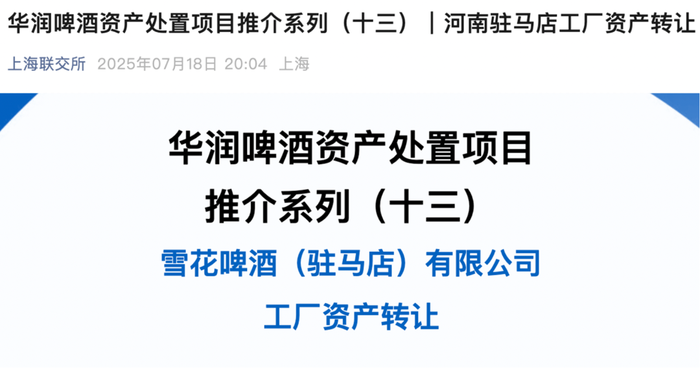
挥别华润,这位老将又要“勇闯天涯”?
阿尔法工场研究院· 2025-07-02 11:03
Core Viewpoint - The resignation of Chairman Hou Xiaohai coincides with the first revenue decline for China Resources Beer in five years, raising concerns about the continuity of the company's strategic direction as it approaches a critical year in its "3+3+3" strategy for 2025 [1][3]. Group 1: Leadership Change - Hou Xiaohai announced his resignation effective immediately, having served 24 years in the beer industry, where he played a pivotal role in transforming China Resources Beer into a major player [3][5]. - His departure follows significant stock sell-offs, interpreted by the market as a farewell signal, and he has expressed intentions to focus on personal endeavors post-resignation [3][4]. - The transition occurs at a crucial time, as the company faces its first revenue drop in five years, leading to doubts about the future of its strategic initiatives [3][21]. Group 2: Strategic Developments - Hou Xiaohai's tenure saw the implementation of the "3+3+3" strategic plan aimed at capturing the high-end beer market by 2025, which included closing inefficient breweries and focusing on premiumization [7][21]. - The company successfully increased its gross margin from 33.71% in 2016 to 42.36% in 2024, while net profit rose from 629 million to 4.739 billion yuan during the same period [7][13]. - However, the ambitious expansion into the white liquor sector has not yielded the expected results, with significant losses reported from acquisitions, leading to a decline in overall revenue [10][12]. Group 3: Financial Performance - In 2024, China Resources Beer reported a revenue decline of 0.76% to 38.64 billion yuan, with operating profit down 6.34% to 6.634 billion yuan, and net profit decreasing by 8.03% to 4.739 billion yuan [13][14]. - The beer segment remains the core of the business, contributing 94.43% of total revenue, but also experienced a 1.03% decline in sales volume [14][20]. - The white liquor business has not significantly contributed to the company's revenue, accounting for less than 6% of total sales, and has faced ongoing financial challenges [10][12]. Group 4: Future Challenges - The new leadership under Zhao Chunwu will need to address the dual challenges of intensifying competition in the high-end beer market and the underperformance of the white liquor segment [19][20]. - Analysts express skepticism about the company's ability to maintain its strategic focus on high-end beer and the synergy between beer and white liquor operations [20][21]. - The market is awaiting clarity on whether the new leadership will continue to pursue the ambitious "啤白双赋能" strategy and how they will navigate the current challenges [21].
华润啤酒:维持“买入”评级,目标价34港元-20250611
Morgan Stanley· 2025-06-11 09:40
Investment Rating - The report maintains a "Buy" rating for China Resources Beer (00291) with a target price of HKD 34 [1] Core Insights - China Resources Beer achieved positive sales growth in April and May, consistent with the sales trend from January to May 2025, benefiting from favorable raw material factors that helped increase gross margin by over 1 percentage point [1] - The company is implementing "Three Precision" initiatives to further reduce operating costs [1] - The management anticipates pressure on the white liquor business revenue this year due to weak demand and high base effects, aiming to avoid losses and impairments [1] Sales Performance by Product - Heineken continues to perform strongly with sales growth exceeding 20% year-on-year - Super X's year-to-date sales have increased by approximately 10% year-on-year - Sales of Old Snow and Amstel have seen over 50% year-on-year growth - Snow Beer Pure Draft experienced a slight single-digit decline in sales year-on-year [1] Sales Performance by Region - The company highlighted strong sales momentum in Guangdong, particularly around the Shenzhen area - It is expected that East China and South China will become key drivers of sales growth in 2025 [1] Sales Performance by Channel - The management noted that demand in the ready-to-drink channel remains weak, although there was a slight improvement in some dining markets in East and South China in May - The company has gained some market share in the nightlife channel - The proportion of ready-to-drink channel sales remains stable, consistent with the end of 2024 levels, at approximately 38-39% [1] Capital Expenditure Plans - Due to strong Heineken sales, the company plans to expand Heineken production capacity in Fujian - In 2025, further investments are planned in maintenance, production line transformation, and the white liquor business - Future capital expenditures are expected to gradually decrease [2] Financial Assumptions - The report uses a discounted cash flow method with a weighted average cost of capital (WACC) of 11.3%, derived from a 3% risk-free rate and a 9.1% risk premium, and a terminal growth rate of 3% [2]