
雷克萨斯LM

Search documents
再看魏牌抄袭路虎揽运及魏建军道歉
YOUNG财经 漾财经· 2026-03-12 16:02
Core Viewpoint - The article discusses the recent plagiarism incident involving Weipai, a brand under Great Wall Motors, where its promotional material for the V9X model closely resembled an advertisement for the Land Rover Range Rover Sport. The founder, Wei Jianjun, publicly apologized, which garnered mixed reactions from the public, raising questions about the brand's marketing integrity and originality [4][6][9]. Group 1: Incident Overview - On March 5, Wei Jianjun's promotional poster for the Weipai V9X was accused of pixel-level plagiarism of the Land Rover advertisement, leading to a public apology from Wei Jianjun on March 6, where he admitted to the wrongdoing [4][6]. - The incident sparked significant online discussion, with many praising Wei Jianjun's sincere apology and willingness to take responsibility [6][7]. - The Weipai brand has a history of similar incidents, having previously been accused of copying promotional materials from other brands, including a video for the Blue Mountain MPV that mirrored the Lexus LM [9][11]. Group 2: Marketing Strategy and Brand Positioning - Weipai is positioned as a high-end electric vehicle brand under Great Wall Motors, with plans to enhance its market presence through direct sales and a rebranding strategy [8]. - The V9X model is built on the "Guiyuan" platform, designed to accommodate various powertrains, including electric and hybrid options, indicating a focus on versatility and innovation in the product lineup [8]. - The brand's marketing approach has been criticized as lacking originality, with the recent plagiarism incident highlighting potential weaknesses in its creative processes [15][20]. Group 3: Public and Industry Reactions - The public's response to the apology was largely positive, with many appreciating Wei Jianjun's straightforwardness and accountability [6][7]. - However, the incident raised concerns about the brand's marketing practices and the potential for it to be perceived as a calculated publicity stunt rather than a genuine mistake [16][19]. - Industry experts and creatives involved in the original Land Rover advertisement expressed skepticism about the likelihood of such a blatant copy occurring without internal knowledge within Weipai [19][20].


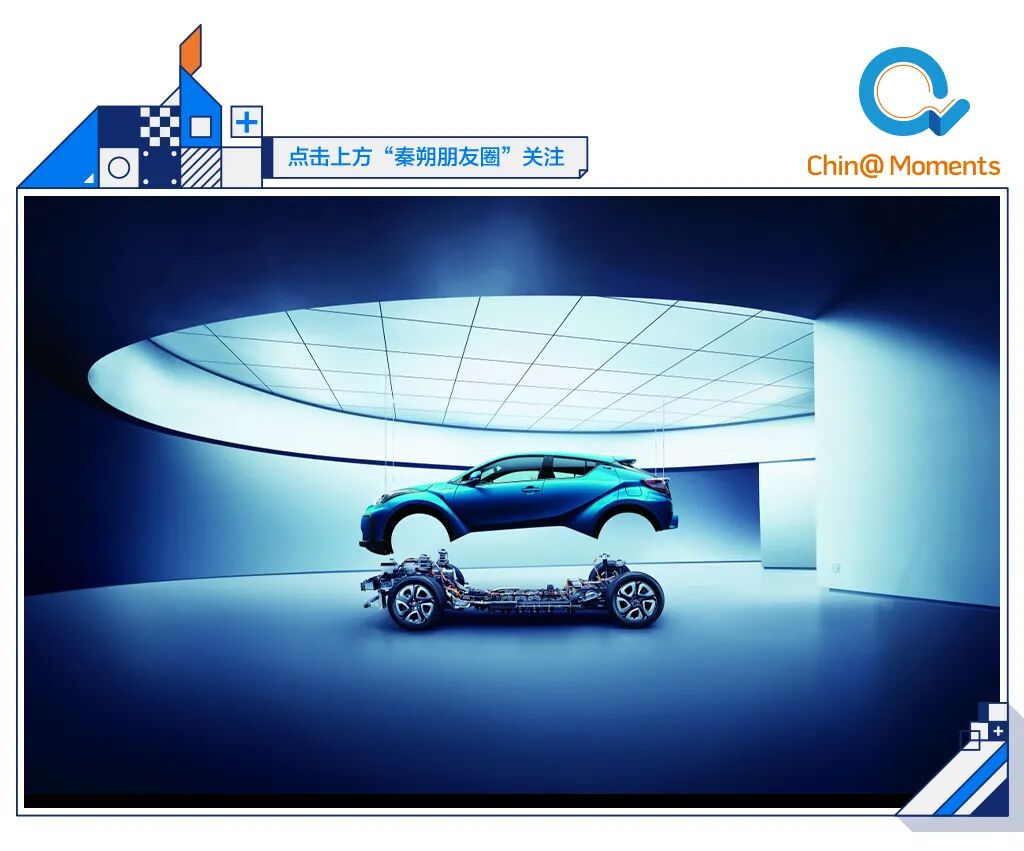
丰田为何没有变成另一个诺基亚?
Xin Lang Cai Jing· 2026-02-25 16:57
Core Viewpoint - Despite the rise of new electric vehicle (EV) manufacturers in China, Toyota remains the global leader in the automotive industry, with significant sales figures that have not been diminished by the competition from EVs [2][4]. Group 1: Sales Performance - In 2025, Toyota's global vehicle sales reached 11.32 million units, significantly surpassing Volkswagen's 8.98 million units, marking Toyota's sixth consecutive year as the world's top seller [2]. - In the U.S. market, Toyota sold 2.518 million vehicles in 2025, an 8% increase from the previous year, with its luxury Lexus brand achieving sales of 370,000 units, up 7.1% [4]. - In China, Toyota sold 1.78 million vehicles in 2025, maintaining its position as the only Japanese brand not to experience a sales decline [6]. Group 2: Market Challenges and Strategies - The U.S. trade war initiated by Trump led to a 25% tariff on Japanese products, which Toyota managed by absorbing most of the costs, resulting in a modest price increase of $280 for U.S. consumers [4]. - Toyota's strategy of not fully transitioning to EVs but continuing to sell gasoline and hybrid vehicles has allowed it to maintain market share despite the rise of EVs [6][10]. Group 3: Consumer Behavior and Preferences - The automotive market differs fundamentally from the smartphone market; cars are high-value, durable goods with long usage cycles, leading consumers to prioritize reliability and safety over new technology [7][8]. - Many consumers are hesitant to switch to EVs due to concerns about reliability, charging infrastructure, and the high cost of ownership, which favors established brands like Toyota [8][10]. Group 4: Global Market Dynamics - The rapid adoption of EVs in China is supported by government subsidies and infrastructure, which are not easily replicable in other markets, limiting the global applicability of China's EV success [10]. - The shift in climate policies in developed countries has created challenges for traditional automakers, but Toyota's focus on hybrid technology positions it well to adapt to these changes [13][15]. Group 5: Product Diversity and Brand Loyalty - Toyota's extensive range of vehicles caters to diverse consumer preferences across different markets, enhancing brand loyalty and reducing the threat from new entrants in the EV space [16]. - The company's ability to innovate and introduce popular models has created a strong customer base, further solidifying its market position against emerging competitors [16].

丰田汽车(中国)投资有限公司、一汽丰田 汽车(成都)有限公司、广汽丰田汽车有限 公司、一汽丰田汽车有限公司召回部分进口及国产汽车
Cai Jing Wang· 2025-12-15 09:11
Core Viewpoint - Toyota and its subsidiaries in China have initiated a recall of various vehicle models due to safety concerns related to the panoramic monitoring system, which may affect the driver's judgment of the vehicle's surroundings [1] Group 1: Recall Details - Toyota (China) Investment Co., Ltd. is recalling a total of 54,618 vehicles, including 161 imported vehicles from the production period of June 20, 2023, to September 23, 2025, and 19,082 imported Lexus models produced from March 31, 2021, to September 12, 2025 [2] - FAW Toyota Motor (Chengdu) Co., Ltd. is recalling 28,654 domestic Prado vehicles produced from July 16, 2024, to September 27, 2025 [3] - GAC Toyota Motor Co., Ltd. is recalling 1,363 domestic Corolla vehicles produced from March 30, 2023, to August 29, 2025, and 1,566 domestic bZ4X vehicles produced from November 15, 2022, to August 22, 2023 [4] - FAW Toyota Motor Co., Ltd. is recalling 2,417 domestic bZ4X vehicles produced from September 7, 2022, to February 24, 2023, and 1 domestic Asian Lion vehicle produced on September 14, 2023 [5] Group 2: Safety Concerns - The recall is due to a design flaw in the panoramic monitoring system control program, which may cause the panoramic image to misalign, freeze momentarily, or fail to display when the driver attempts to reverse immediately after starting the vehicle, posing a safety risk [5] - Toyota and its subsidiaries will provide free upgrades to the panoramic monitoring system control program for the recalled vehicles to eliminate the safety hazard [5]
全景监控系统控制程序设计不当,丰田召回93882辆进口及国产汽车
Xin Lang Cai Jing· 2025-12-15 04:33
Group 1 - Toyota Motor (China) Investment Co., Ltd. and its subsidiaries have filed a recall plan with the State Administration for Market Regulation due to safety concerns related to the panoramic monitoring system control program [1][4] - The recall includes a total of 54,000 vehicles across various models, including 161 imported vehicles, 19,082 Lexus vehicles, and 36,275 Toyota vehicles [1][4] - The affected vehicles may experience issues such as misalignment, temporary stuttering, or failure to display the panoramic image, which could impact the driver's judgment of the vehicle's surroundings [4] Group 2 - FAW Toyota Motor (Chengdu) Co., Ltd. is recalling 28,654 domestic Prado vehicles produced between July 16, 2024, and September 27, 2025 [2] - GAC Toyota Motor Co., Ltd. is recalling 1,363 domestic Corolla vehicles, 1,566 domestic bZ4X vehicles, and 3,302 domestic Platinum 4X vehicles produced between March 30, 2023, and August 29, 2025 [3] - FAW Toyota Motor Co., Ltd. is recalling 2,417 domestic bZ4X vehicles, 1,061 domestic Corolla vehicles, and 1 domestic Asian Lion vehicle produced between September 7, 2022, and February 24, 2023 [4] Group 3 - The companies will provide free upgrades to the panoramic monitoring system control program for the recalled vehicles to eliminate safety hazards [4] - Customers will be notified of the recall through registered mail and can contact customer service centers for more information [5] - Additional information can be found on the State Administration for Market Regulation's recall center website and its WeChat public account [5]
丰田召回部分进口及国产汽车
Ge Long Hui· 2025-12-15 04:07
Core Viewpoint - Toyota Motor (China) Investment Co., Ltd. and its subsidiaries have announced a recall plan for various models due to safety concerns related to the panoramic monitoring system control program [1] Group 1: Recall Details - Toyota Motor (China) Investment Co., Ltd. will recall a total of 19,161 imported Lexus vehicles and 36,275 imported Toyota vehicles produced between March 31, 2021, and September 12, 2025 [1] - FAW Toyota Motor (Chengdu) Co., Ltd. will recall 28,654 domestic Prado vehicles produced between July 16, 2024, and September 27, 2025 [1] - GAC Toyota Motor Co., Ltd. will recall 1,363 domestic Corolla vehicles, 1,566 domestic bZ4X vehicles, and 3,302 domestic Platinum 4X vehicles produced between March 30, 2023, and August 29, 2025 [1] - FAW Toyota Motor Co., Ltd. will recall 2,417 domestic bZ4X vehicles, 1,061 domestic Corolla vehicles, and 1 domestic Asian Lion vehicle produced between September 7, 2022, and February 27, 2025 [1] Group 2: Safety Concerns - The recall is initiated due to a design flaw in the panoramic monitoring system control program, which may cause the panoramic image to misalign, freeze momentarily, or fail to display when the driver attempts to reverse immediately after starting the vehicle [1] - This issue poses a safety risk as it affects the driver's ability to judge the surrounding environment [1] Group 3: Remedial Actions - Toyota and its subsidiaries will provide free upgrades to the panoramic monitoring system control program for the recalled vehicles to eliminate the safety hazard [1]
你的车门安全吗?工信部出手破解隐藏式车门把手隐患
Bei Ke Cai Jing· 2025-05-09 11:42
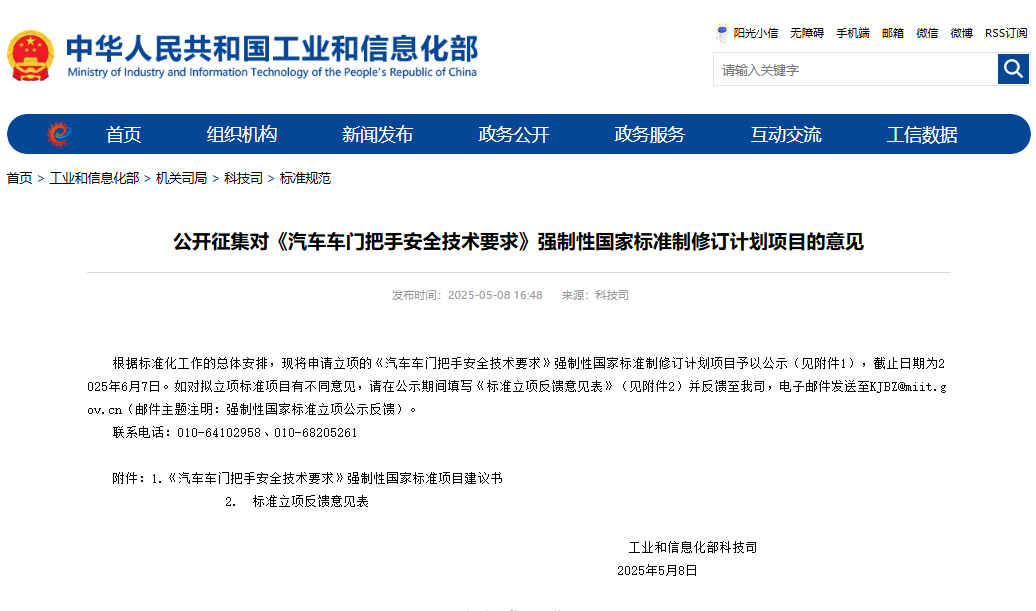
Core Viewpoint - The Ministry of Industry and Information Technology (MIIT) is initiating a revision of the national standard for automotive door handles due to safety concerns associated with hidden door handles widely used in electric vehicles. The proposed standards aim to enhance safety features, ensuring that door systems can be opened in emergencies such as power failure or collisions [1][4][17]. Group 1: Safety Concerns - Hidden door handles have been linked to various safety issues, including insufficient strength, potential control logic risks, and difficulties in operation due to lack of visible markings, which can hinder escape during emergencies [4][9][16]. - Incidents have occurred where hidden door handles contributed to rescue difficulties, such as a serious accident involving a Wanjie M7 Plus, where the door handle failed to operate after a high-speed collision, complicating rescue efforts [4][5][6]. - The MIIT's proposed standards will include requirements for mechanical or power failure protection to ensure door systems remain operable during accidents, thereby facilitating rescue and escape [8][9][17]. Group 2: Industry Response - The automotive industry is recognizing the need to shift from a focus on aesthetic and technological appeal of hidden door handles to prioritizing safety. Companies like BYD and Great Wall Motors are actively participating in the development of safety standards [16][17]. - There have been calls from industry leaders to improve the design of hidden door handles to enhance usability in various conditions, including extreme weather [16][17]. - The trend towards hidden door handles has been driven by their sleek design and perceived technological advantages, but the recent focus on safety may lead to a reevaluation of their design priorities [10][11][14].



都市车界|工信部出手整顿隐藏式车门把手 新势力车企参与起草安全标准
Qi Lu Wan Bao· 2025-05-09 04:12
Core Viewpoint - The Ministry of Industry and Information Technology of China has initiated a public consultation for revising the mandatory national standard for automotive door handles, focusing on safety issues related to hidden door handles in extreme scenarios [1][5]. Group 1: New Regulations - The new regulations emphasize the need for enhanced safety redundancy designs, ensuring that doors can still be manually opened in accidents, thereby reducing rescue difficulties [2]. - The regulations cover M1 (passenger vehicles), N1 (cargo vehicles), and multipurpose trucks, establishing a comprehensive safety standard across the industry [2]. - Key technical directions include mandatory mechanical or power failure protection devices, standardized visibility and structure strength of safety markings, dynamic strength testing, and improved control logic to prevent accidental operations [2]. Group 2: Industry Response - Multiple accidents have highlighted the safety risks associated with hidden door handles, prompting the need for regulatory reform [3]. - New energy vehicle manufacturers are actively participating in the drafting of these standards, indicating a shift towards prioritizing safety over merely technological appeal [4]. - Companies like XPeng Motors and Great Wall Motors are developing more reliable door handle designs and emphasizing safety in their vehicle offerings [4]. Group 3: Market Implications - The implementation of these standards is expected to reshape consumer preferences, with a growing focus on the reliability of door handles, potentially leading to a resurgence of traditional mechanical handles [4]. - The new regulations will create pressure for manufacturers lacking safety redundancy designs to make necessary adjustments, which may lead to a reshaping of the supply chain [4]. - The industry is moving towards a balance between safety and technology, with the potential for innovative designs that combine aesthetics with safety features [4][5].