饲用小麦粉

Search documents
2026年春节假期中欧班列(长沙)开行量同比增长127%
Zhong Guo Xin Wen Wang· 2026-02-24 13:56
Core Insights - The China-Europe Railway Express (Changsha) experienced a significant increase in operational volume during the 2026 Spring Festival holiday, with a total of 34 trains dispatched, marking a year-on-year growth of 127% [1] Export and Import Performance - During the Spring Festival period, 20 export trains were dispatched, carrying products such as construction machinery, automobiles and parts, and household appliances [1] - A total of 14 import trains were recorded, which included products like feed-grade wheat flour [1] - From January 1 to February 23, 193 trains were dispatched, reflecting a year-on-year increase of 101.04%, with exports at 128 trains (up 70.6%) and imports at 66 trains (up 220.38%) [1] Operational Efficiency - The efficient operation of the Spring Festival trains was supported by the Tongjiang port, which has seen a continuous increase in dispatch volume since the first train from Changsha in 2023 [1] - Hunan Central South International Land Port Co., Ltd. established an operational guarantee mechanism focusing on efficient vehicle transfer, rapid customs inspection, and emergency response for port anomalies, significantly improving port turnover efficiency [1]
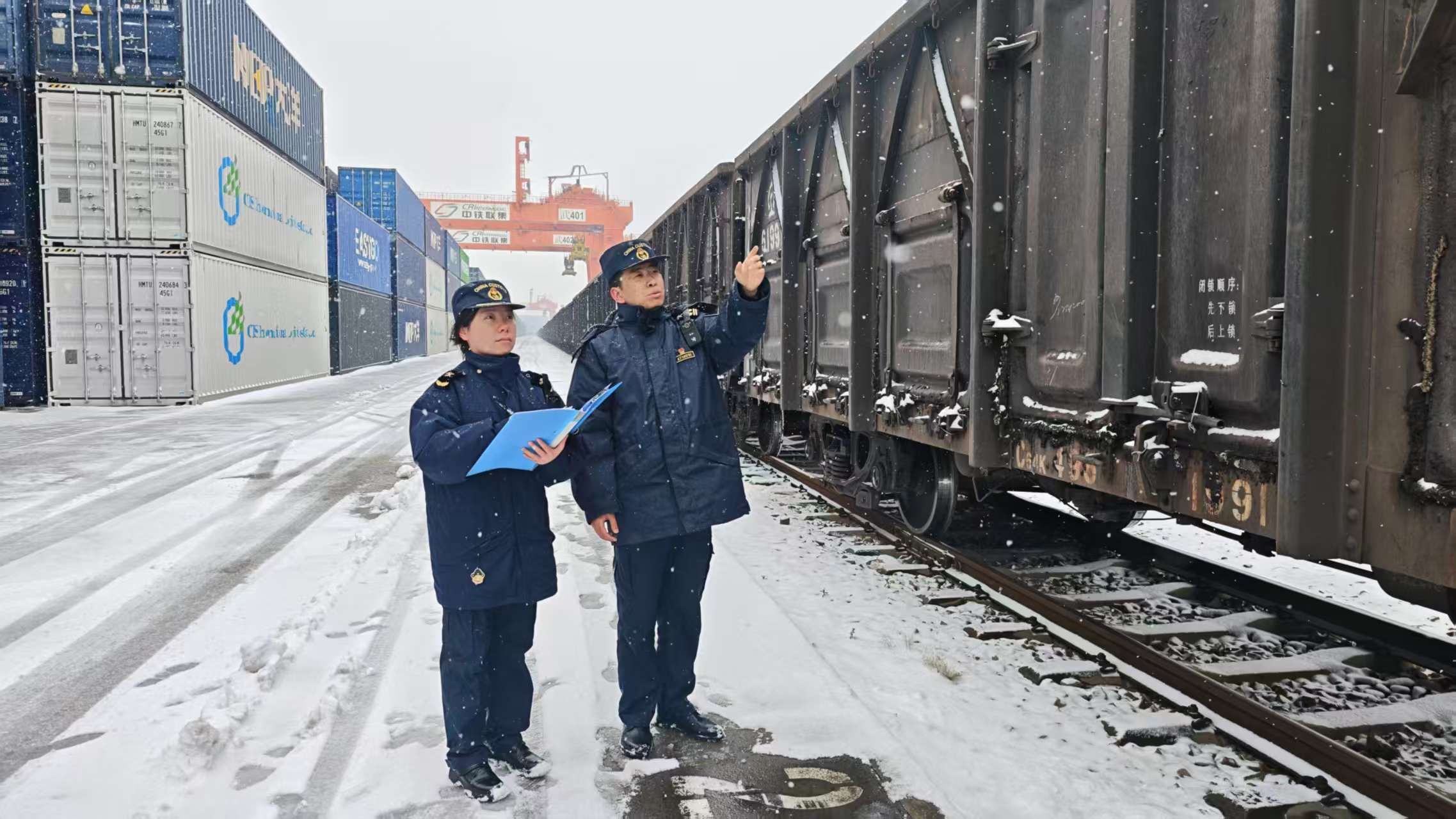
2025年海关监管中欧班列(武汉)开行超900列创新高
Chang Jiang Ri Bao· 2026-01-27 06:53
Core Insights - The China-Europe Railway Express from Wuhan has achieved record highs in both the number of trains and containers in 2025, with 902 trains and 96,582 containers, marking increases of 19.31% and 17.15% year-on-year respectively [1] - Wuhan serves as a crucial logistics hub for the central region, facilitating trade between Europe and Asia, with a stable operation of 10 scheduled trains per week and 60 cross-border transport routes [4] Group 1 - The record of 11 trains departing on a single day on December 26, 2025, highlights the operational efficiency and growing demand for the service [4] - The railway has become a vital "golden channel" for high-quality agricultural products, with 110,000 tons imported in 2025, significantly reducing costs for businesses [5] - The total value of goods transported by the railway in 2025 reached 18.809 billion yuan, with 518 outbound and 384 inbound trains, both figures representing historical highs [5] Group 2 - The increasing frequency of train services reflects the rising demand for timely customs clearance, with companies seeking faster and more cost-effective logistics solutions [5] - The establishment of tailored logistics solutions for specific products, such as Kazakhstani feed wheat, demonstrates the adaptability and responsiveness of the customs authority [5] - The railway's operations are integral to the stability of the "Belt and Road" initiative's supply chain, enhancing trade connectivity in the region [5]

铁陆联动提升物流效能
Jing Ji Ri Bao· 2026-01-22 00:02
Core Viewpoint - The article highlights the development of the SCO Demonstration Zone's logistics capabilities, focusing on the expansion of the China-Europe Railway Express and international road transport, aiming to enhance cross-border trade efficiency and connectivity [1][2][3][4]. Group 1: China-Europe Railway Express - Two trains of the "Japan-Korea Land-Sea Express" have departed from the SCO Demonstration Zone, with plans to increase the number of China-Europe Railway Express trains to 1,225 by 2025, achieving over 20% growth in both train frequency and cargo volume [1]. - The expected import and export cargo volume is projected to reach 840,000 tons by 2025, marking a historical high for the region [1]. - The SCO Demonstration Zone aims to integrate sea and rail transport schedules to provide comprehensive logistics solutions for businesses [2]. Group 2: International Road Transport - The TIR (International Road Transport) volume is expected to maintain its national leading position, with 435 shipments planned for the year, reflecting a 53.7% year-on-year increase [1]. - The region has established four international road transport routes since September 2023, creating a regional hub for international road transport [3]. - The introduction of a streamlined process for international road transport, including "one declaration, one certificate, and one vehicle direct delivery," enhances efficiency and flexibility, attracting more customers [3]. Group 3: Infrastructure Development - The construction of the China-Europe Railway Express (Jinan-Qingdao) National Gathering Center is expected to provide new opportunities for high-quality development in the SCO Demonstration Zone [3]. - The center has implemented an integrated model of "train transport + park warehousing + international trade," successfully handling over 38,000 tons of specific goods [3]. - The SCO Demonstration Zone is focused on enhancing operational efficiency and service quality while exploring new international road transport routes targeting SCO member states [4].
高效国际贸易通道赋能产业竞争新优势
Xin Lang Cai Jing· 2026-01-08 23:08
Core Viewpoint - The article highlights the successful launch of a direct freight train service from Kazakhstan to Zigong, China, aimed at enhancing international logistics and trade efficiency, particularly for the local feed industry [1] Group 1: International Logistics Development - The first freight train from Kazakhstan carrying 1,643 tons of feed wheat flour has established a direct link to Zigong, significantly reducing logistics time to 11 days compared to traditional sea transport [1] - The new logistics channel is expected to lower transportation costs and improve the competitiveness of local feed enterprises, with prices for feed wheat flour decreasing by approximately 50 yuan per ton [1] Group 2: Regional Economic Impact - The establishment of this freight route is part of a broader strategy to enhance Zigong's role as a regional logistics hub, facilitating better integration into global supply chains [1] - Local companies are planning to invest in feed processing facilities in Zigong and expand imports of wheat and barley from Central Asia, as well as other products from Southeast Asia [1] Group 3: Future Prospects and Challenges - The company aims to normalize the operation of the "Zigong-Central Asia" freight service and explore export opportunities for local products, including chemicals and agricultural goods, to Central Asia and Europe [1] - Challenges remain in stabilizing bidirectional cargo flows and developing competitive export sources, necessitating improvements in logistics infrastructure and coordination with railway ports [1]

以创新之笔绘就高质量发展答卷 宁夏银川“新”潮澎湃
Zhong Guo Xin Wen Wang· 2025-11-03 17:03
Core Viewpoint - Ningxia Yinchuan is advancing high-quality development through continuous reform and innovation, achieving significant economic milestones and establishing itself as a leading city in China [2]. Group 1: Economic Performance - In 2024, Yinchuan's GDP reached 293.95 billion yuan, with per capita GDP exceeding 100,000 yuan, marking a significant economic achievement [2]. - The economic primacy index of Yinchuan reached 53.4%, ranking first among provincial capital cities in China [2]. Group 2: Reform Initiatives - Yinchuan has planned 130 special reforms and implemented 165 reform policies during the 14th Five-Year Plan, establishing a comprehensive task list of 375 items [3]. - The "Six Rights" reform in resource and environmental sectors has led to innovative mechanisms, including a trading channel for recycled water and industrial water, with transaction volumes nearing 4.3 billion yuan [3]. Group 3: Technological Innovation - Yinchuan has established key technological innovation platforms, including the Yinchuan (Shenzhen) New Quality Productivity Innovation Center, enhancing its status as an innovation hub in Northwest China [4]. - The city is focusing on transforming traditional industries and promoting emerging industries, with the digital economy exceeding 120 billion yuan [4]. Group 4: Open Economy - Yinchuan Comprehensive Bonded Zone is transitioning from a "channel economy" to an "industrial economy," fostering growth in various sectors such as oilseed processing and deep processing of vegetables [5]. - The city has established a modern commercial circulation system, with its "one order system" covering 27 countries and regions, achieving a total cargo value of 125 million USD [5].
【西安】中欧班列(西安)跑出丝路合作“加速度”
Shan Xi Ri Bao· 2025-07-09 23:29
Core Insights - The frequency of the China-Europe Railway Express (Xi'an) has increased, with a train departing every 80 minutes, a reduction of 20 minutes compared to last year [1][2] - Key performance indicators for the China-Europe Railway Express (Xi'an) have shown significant growth, with a 41.5% year-on-year increase in the number of trains operated and a 52.3% increase in total cargo weight [2] Group 1: Operational Efficiency - The China-Europe Railway Express (Xi'an) has established 18 international main lines and 26 "+West Europe" collection routes, enhancing trade connections across Eurasia [4] - The operational efficiency of companies like Konka Group has improved due to proximity to the railway, allowing for reduced storage and transportation costs by one-third [3][6] Group 2: Trade and Economic Impact - The export of Konka Group's home appliances has significantly increased, with 60% of orders being shipped overseas via the railway, totaling 229,000 units by June 26 [3] - Xi'an's total import and export value reached 190.96 billion yuan in the first five months of the year, with a year-on-year growth of 11.5%, outpacing the national average [8] Group 3: Infrastructure Development - The newly opened China-Xi'an Kazakhstan terminal is expected to enhance the efficiency of agricultural product transportation from Kazakhstan to China, increasing monthly imports by two-thirds [6][7] - The new terminal will facilitate a "door-to-door" transportation model, improving logistics and reducing costs for agricultural products [5][7] Group 4: Future Prospects - The expansion of international cooperation is evident, with discussions ongoing with railway companies from Germany, Russia, and other countries to enhance the international network of the China-Europe Railway Express [8][9] - The Xi'an International Port aims to strengthen its role as a key platform for opening up to the west, promoting deeper cooperation with countries involved in the Belt and Road Initiative [9]
河南中亚班列开行7年多 钢铁驼队的新“西行漫记”
He Nan Ri Bao· 2025-06-17 23:12
Core Insights - The Central Asia freight trains from Henan have seen significant growth in operations, with 76 outbound and 213 return trains dispatched this year alone [1] - Since the first train launched in May 2018, over 2000 trains have been operated, expanding destinations to cities like Almaty in Kazakhstan [1][2] - The range of goods transported has evolved from basic products like grains and cotton yarn to high-value items such as machinery, engineering equipment, and consumer electronics [2] Group 1 - The Zhengzhou International Land Port is a key hub for international freight trains, facilitating trade between Central China and Central Asia [1] - The logistics network has been enhanced with the opening of new routes, including the "China-Kyrgyzstan-Uzbekistan" rail-road intermodal transport line [3] - The TIR international road transport routes have become increasingly dense, allowing for more efficient logistics between Henan and Central Asia [3] Group 2 - The cooperation between Central China and the five Central Asian countries is being strengthened, with various products being exported, including agricultural machinery and construction materials [3] - The types of goods transported on the outbound trains primarily serve the industrial and trade needs of Henan and surrounding regions [2] - The return trains mainly carry bulk commodities such as cotton yarn, mung beans, and ores [2]
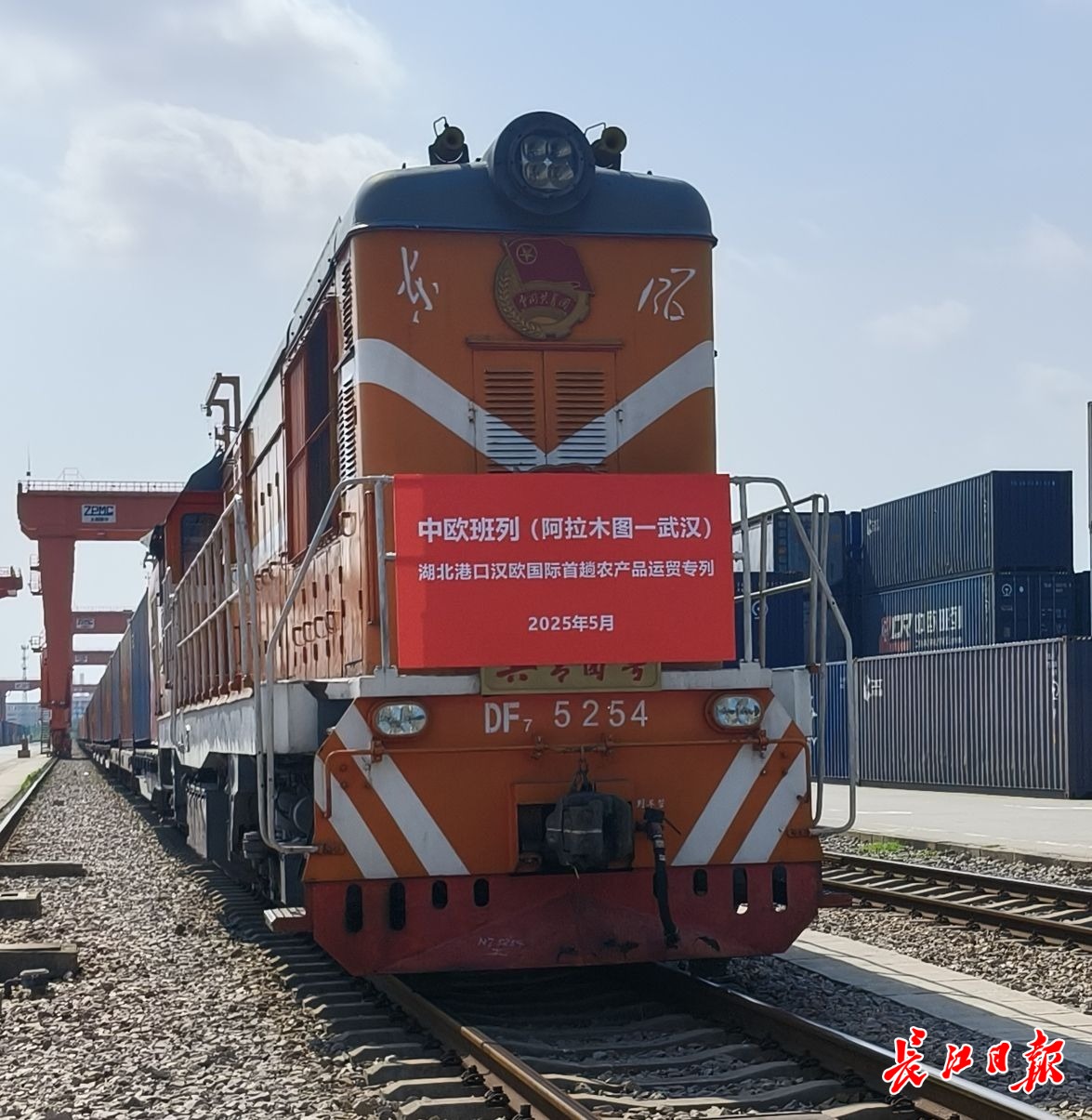
产地直采优质粮源 中亚农产品运贸专列抵汉
Chang Jiang Ri Bao· 2025-05-28 00:31
Core Viewpoint - A special train carrying 1,610 tons of feed wheat flour from Kazakhstan successfully arrived at the China Railway Wuhan Central Station, marking the first Central Asian agricultural product trade train to Hubei province, which will supply local feed processing enterprises [1] Group 1: Agricultural Trade and Logistics - Kazakhstan is a significant wheat producer in Central Asia, providing high-quality wheat, while Hubei, despite being an agricultural province, still relies on some imports for feed grains [1] - The establishment of a "one-stop" logistics model integrating "overseas direct procurement + international trains + rail-water combined transport + local distribution" is expected to exceed an annual import volume of 500,000 tons [2] - The special train's arrival is part of a broader effort to balance the outbound and inbound logistics, with Hubei's textiles, electronics, and vehicles being sent to Central Asia [1][2] Group 2: Transportation and Infrastructure - Wuhan serves as a crucial transportation hub, facilitating rapid distribution of goods across the country through various transport modes, enhancing logistics efficiency and reducing costs [2] - By 2025, the Wujiashan Station of Wuhan Railway has operated 293 China-Europe freight trains, with a year-on-year increase of 6% in outbound trains and 10% in inbound trains [2] - The development of the "train +" new business model aims to improve the quality and efficiency of freight trains and strengthen trade connections between Hubei and Central Asia [2]

湖北首趟中亚农产品运贸专列抵汉
Chang Jiang Shang Bao· 2025-05-21 23:41
Core Insights - The first China-Europe freight train carrying imported agricultural products arrived in Wuhan, marking a significant step in enhancing trade between Central Asia and Hubei province [1][2] - The train transported approximately 1,610 tons of feed wheat flour from Kazakhstan, highlighting the importance of Kazakhstan as a key wheat producer in Central Asia [1] Group 1: Trade and Logistics - The train service is part of a broader strategy to establish a comprehensive supply chain system that includes "overseas procurement + international freight trains + rail-water intermodal transport + local distribution," aiming for an annual import volume exceeding 500,000 tons [2] - The establishment of a logistics center in Hubei by the Turkistan region of Kazakhstan provides a solid logistics channel and storage support for trade cooperation [1][2] Group 2: Future Developments - The company plans to expand into high-value agricultural products and mineral trade, enhancing raw material support and ensuring food processing needs are met [2] - A strategic cooperation agreement was signed with Asia Agricultural Export Co., aiming to strengthen logistics and international trade collaboration, promoting mutually beneficial development between Hubei and Central Asia [2] Group 3: Operational Metrics - The China-Europe freight train (Wuhan) currently operates 57 stable cross-border transport routes, covering 40 countries and 119 cities in Eurasia [2] - As of 2025, the Wujiashan station has dispatched 293 trains, with a year-on-year increase of 6% for outbound trains and 10% for inbound trains [2] - Since the regular operation of the China-Europe freight train (Wuhan) began in 2014, a total of 5,166 trains have been dispatched, carrying goods valued over 110 billion yuan [2]
直接去产地拉回“黄金粮源”,湖北首趟中亚农产品运贸专列抵汉
Chang Jiang Ri Bao· 2025-05-21 03:45
Core Insights - A special train carrying 1,610 tons of feed wheat flour from Kazakhstan arrived in Wuhan, marking the first import of agricultural products from Central Asia to Hubei [1][2] - Kazakhstan is a significant wheat producer in Central Asia, and Hubei, despite being an agricultural province, still relies on some imports for feed grains [2] - The establishment of a logistics center in Hubei by Kazakhstan's Turkestan region aims to facilitate the storage and distribution of these agricultural products [2][3] Group 1 - The special train represents the first agricultural product trade train from Central Asia to Hubei, with plans for two more similar shipments within the month [1][2] - The train service is part of a broader initiative to balance import and export activities, with Hubei exporting textiles, electronics, and vehicles to Central Asia [2] - The "fast customs clearance" process implemented by Wuhan Customs has streamlined the import of these goods, enhancing efficiency [2] Group 2 - The annual import volume of agricultural products through this new trade route is expected to exceed 500,000 tons, which will help reduce logistics costs and meet grain processing demands [2][3] - Wuhan's strategic position as a transportation hub allows for efficient distribution of goods via multiple transport modes, enhancing overall logistics efficiency [3] - The Central European train service from Wuhan has seen a 6% increase in outbound trains and a 10% increase in inbound trains compared to the previous year, indicating growth in trade activities [3]