香辣鸭脖

Search documents
36岁女婿接班 上海卤味巨头陷风波
2 1 Shi Ji Jing Ji Bao Dao· 2025-12-27 06:04
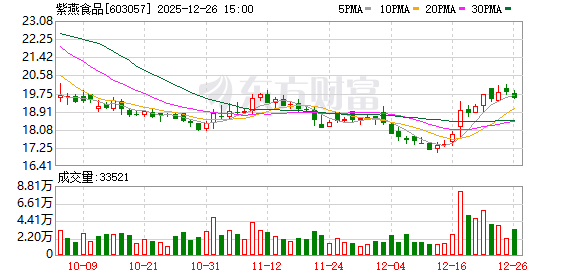
Core Viewpoint - The company, Ziyan Food, is facing a significant trust crisis following a scandal involving improper behavior by staff at one of its franchise stores, leading to operational and reputational challenges [2][4]. Group 1: Incident and Response - Ziyan Food issued an apology acknowledging inappropriate actions by staff at a franchise location, which violated company management protocols [2]. - The management, led by CEO Ge Wuchao, has decided to close the affected store for rectification, terminate the involved employees, and issue a nationwide alert to all stores [2]. - The company has offered a tenfold cash compensation to the affected customer and a 1,000 yuan gift card as goodwill [2]. Group 2: Historical Context and Leadership - Ziyan Food, established in 1989, is a well-known player in the domestic marinated food industry, originally founded as "Zhongji Oil Scald Duck" [5]. - The company is family-controlled, with the Zhong family holding over 70% of the shares, and the founder's son-in-law, Ge Wuchao, took over as chairman in 2023 [5]. - Ge Wuchao faces significant challenges since taking over, including a decline in store numbers and financial performance [6]. Group 3: Business Performance and Challenges - The number of Ziyan stores has decreased from 6,308 to 5,144 within a year and a half, indicating a loss of over 1,100 stores [7][8]. - For the first nine months of the year, Ziyan reported revenue of approximately 2.514 billion yuan, with a net profit of about 194 million yuan, reflecting a 44.37% decrease [9]. - The company is attempting to rejuvenate its brand by targeting younger consumers and expanding internationally, although overseas revenue remains minimal, contributing only 0.45% to total income [9]. Group 4: Market Position and Stock Performance - As of December 26, Ziyan's stock price was 19.53 yuan per share, down 1.41%, with a market capitalization of approximately 8 billion yuan [9]. - The ongoing negative events are impacting the company's reputation and consumer trust, which is a more immediate concern than recovering financial performance [9].

热搜爆了!店员偷牛肉被拍,紫燕百味鸡又“翻”车了
Feng Huang Wang Cai Jing· 2025-12-25 12:44
Core Viewpoint - The incident involving a staff member at a Ziyuan Food store stealing beef has sparked significant public outrage, highlighting ongoing issues with food safety and customer trust within the company [1][4][6]. Group 1: Incident Details - A video surfaced showing a staff member at a Ziyuan Food store secretly taking beef from a customer's order, leading to widespread complaints from customers who felt they were receiving less meat than paid for [1][2][3]. - Ziyuan Food responded by forming a special task force to investigate the incident, confirming the misconduct and taking immediate actions such as closing the store, firing the employee, and offering compensation to affected customers [4][6]. Group 2: Food Safety Issues - This incident is not isolated; Ziyuan Food has faced multiple food safety controversies, including previous violations where products failed microbiological tests, with some samples exceeding safety limits by up to 290 times [6][9]. - The company has a history of food safety complaints, with over 600 complaints recorded, including issues of missing weight and contamination [14]. Group 3: Business Model and Management Challenges - Ziyuan Food primarily operates through a distribution model, with 79.32% of its revenue coming from distributors, which limits direct control over franchise operations and contributes to management challenges [15][16]. - The company's reliance on distributors has led to insufficient oversight, as evidenced by recurring food safety issues and customer complaints [16][18]. Group 4: Financial Performance - In the first three quarters of 2025, Ziyuan Food reported a revenue of 2.514 billion yuan, a decline of 6.43% year-on-year, with net profit dropping by 44.37% to 194 million yuan [21][22]. - The company's financial health is deteriorating, with a 39.23% decrease in net cash flow from operating activities and an increase in debt, leading to a rise in the debt-to-asset ratio to 49.31% [24][25]. Group 5: Strategic Transition - Facing a crisis, Ziyuan Food is attempting to transform its business model through strategies focused on youth engagement, globalization, and digitalization, although these efforts have led to increased upfront costs without immediate financial returns [26][27]. - The new management team, which has recently taken over, faces the dual challenge of addressing immediate operational crises while pursuing long-term strategic goals [27][28].


热搜爆了!店员偷牛肉被拍,紫燕百味鸡又“翻”车了
凤凰网财经· 2025-12-25 12:25
Core Viewpoint - The article highlights ongoing issues with food safety and customer trust at Ziyan Food, particularly following a recent incident where an employee was caught stealing meat, raising questions about management practices and operational integrity [1][5][36]. Group 1: Incident and Response - A video surfaced showing an employee at Ziyan Food's store in Jiangsu secretly taking beef from a customer's order, leading to public outrage and suspicions about the store's practices [1][2][4]. - In response, Ziyan Food established a special task force to investigate the incident, confirmed the misconduct, and took immediate actions including closing the store, firing the employee, and offering compensation to affected customers [5]. Group 2: Food Safety Issues - Ziyan Food has a history of food safety problems, with previous incidents including microbial contamination in products, where five items failed safety tests, with one sample exceeding the safe limit by 290 times [8][10]. - The company has faced multiple complaints regarding food safety, including issues of underweight products and reports of foreign objects in food [20][22]. Group 3: Business Model and Management Challenges - Ziyan Food operates primarily through a distribution model, with 79.32% of revenue coming from distributors, which limits direct control over franchise operations and contributes to management challenges [24][28]. - The company has acknowledged risks associated with its sales channel management, noting that as the number of franchise stores increases, maintaining oversight becomes more difficult [28]. Group 4: Financial Performance - For the first three quarters of 2025, Ziyan Food reported a revenue of 2.514 billion yuan, a decline of 6.43% year-on-year, with net profit dropping by 44.37% to 194 million yuan [36]. - The company's cash flow from operating activities decreased by 39.23%, and its debt ratio rose to 49.31%, indicating financial strain and challenges in sustaining growth [38]. Group 5: Strategic Transition and Leadership - Ziyan Food is undergoing a strategic transformation focusing on youth engagement, globalization, and digitalization, but faces significant upfront costs and cash flow challenges [40]. - The company has recently transitioned to a new management team, which must balance immediate operational crises with long-term strategic goals, amidst increasing competition and market pressures [42].

全球“空箱党”中国扫货:疯狂“反向海淘”背后的文化出口
3 6 Ke· 2025-08-21 01:33
Core Insights - The number of tax refund stores in China has exceeded 7,200, with a 186% year-on-year increase in the number of people enjoying tax refunds, and a 94.6% and 93.2% increase in sales and tax refund amounts respectively [1] - The trend of international tourists traveling to China with empty suitcases for shopping has gained popularity, with many foreign netizens expressing excitement about this phenomenon [1] - China's shopping paradise status is reinforced by a wide range of products available, from traditional crafts to the latest electronics, attracting more foreign tourists [1] Group 1: Policy and Economic Impact - China has been expanding its visa-free entry policies and improving shopping tax refund policies, significantly boosting international travelers' shopping enthusiasm [2] - As of July, China has implemented comprehensive visa exemptions with 29 countries, unilateral visa exemptions for 46 countries, and 240-hour transit visa exemptions for 55 countries, facilitating easier access for foreign tourists [2] - The optimization of tax refund policies includes lowering the minimum spending threshold, increasing cash refund limits, and allowing immediate VAT refund applications at retail locations [3] Group 2: Consumer Behavior and Trends - The shopping preferences of foreign tourists have shifted from traditional items like silk and tea to high-value products such as drones and smart wearable devices [5] - The convenience of China's digital payment systems allows foreign tourists to easily link their overseas bank cards, enhancing their shopping experience [5] - The implementation of technology in tax refund processes has improved efficiency, with a 40% increase in processing speed for tax refunds [5] Group 3: Tourism Growth and Market Positioning - The influx of foreign tourists has stimulated demand in various sectors, including retail, hospitality, and tourism services, contributing to overall economic growth [6] - The number of inbound travelers has increased significantly, with 38.05 million foreign visitors recorded in the first half of the year, a 30.2% year-on-year increase [8] - The rise in ticket bookings for less popular cities indicates a diversification in tourist destinations, with a notable increase in interest from countries like Vietnam and Indonesia [9]