
高油酸花生

Search documents
“一县一品”特色产业助振兴
Xin Lang Cai Jing· 2026-02-14 00:57
Group 1 - The core viewpoint of the articles emphasizes the sustainable development path of Daming County through the promotion of characteristic industries, focusing on high oleic peanuts, small mill sesame oil, and strong gluten wheat as key sectors [1][2] - Daming County has invested a total of 1.517 billion yuan in the development of characteristic industries, with over half directed towards industrial projects, establishing a four-level support system for industrial development [1] - The county has built over 100,000 acres of high oleic peanut breeding base with an annual seed supply capacity of 30 million kilograms, enhancing the foundation of seed industry [1] Group 2 - The planting area of high oleic peanuts in Daming County has reached 250,000 acres, with the total industrial chain output value approaching 1 billion yuan [2] - An investment of over 80 million yuan has been made to construct a shared factory for small mill sesame oil, transitioning the industry from "small production" to "large market" [2] - The county has implemented innovative mechanisms to ensure that industrial benefits reach the community, with thousands of households benefiting from dividends and stable employment opportunities created, particularly in the peanut industry chain [2]
三餐四季|一颗“国民坚果”的进化——花生“生花”
Ren Min Ri Bao· 2026-01-30 06:49
Core Insights - The peanut industry in China is evolving from a traditional crop to a high-tech sector, focusing on innovations such as high oleic peanuts and plant-based products, which are gaining popularity among consumers [1][2][4] - The average annual planting area for peanuts in China remains stable at over 70 million acres, with a total production exceeding 19 million tons, making it the only oilseed crop that achieves self-sufficiency [1][3] - The industry is experiencing a transformation driven by seed innovation, processing advancements, and consumption upgrades, positioning peanuts as a key player in food security and health [1][5] Seed Innovation - High oleic peanuts, with an oil content exceeding 75%, are being promoted for their health benefits, including lowering bad cholesterol levels [2][3] - The "Yuhua 37" variety has become the most widely planted peanut variety in China, with an annual promotion area exceeding 3.65 million acres [4] - Genetic breakthroughs have reduced the breeding cycle for high oleic peanuts from 10 years to 5 years, enhancing their market competitiveness [3][4] Processing Advancements - The peanut processing sector is shifting from traditional oil extraction to value-added products, with a focus on utilizing by-products like peanut meal, which has a protein content of over 50% [5][6] - Innovative techniques such as high moisture extrusion are being used to create plant-based meat alternatives from peanut protein, potentially generating over 50 billion yuan in value [5][6] - The quality of peanut oil is improving, with the non-compliance rate for aflatoxin B1 decreasing significantly from 3.33% in 2021 to 0.76% in 2025 [5][6] Consumption Trends - The consumption of peanuts is diversifying, with snack foods now accounting for approximately 40% of total peanut consumption, driven by new flavors and health-oriented products [8][9] - E-commerce platforms are seeing a surge in innovative peanut products, with companies leveraging data analytics to cater to younger consumers [8][9] - The peanut industry is expanding its boundaries, integrating cultural tourism and experiential marketing, which is attracting significant visitor numbers [9] Future Outlook - The peanut planting area in China is projected to increase to 80 million acres by the end of the 14th Five-Year Plan, with total production expected to reach 22 million tons [9]
一份保单,让特色种植有保障
Xin Lang Cai Jing· 2026-01-09 00:11
Core Insights - The article highlights the transition of meteorological services in Julu County from merely "weather forecasting" to "supporting industries" through innovative agricultural insurance solutions [1][2] Group 1: Agricultural Insurance and Support - Julu County has introduced meteorological index insurance for specialty crops such as honeysuckle, fresh apricots, and high oleic peanuts, providing farmers with financial protection against extreme weather conditions [1][2] - Since the implementation of this insurance, the insured area for these specialty crops has reached 78,000 acres, with total compensation exceeding 13 million yuan [2] Group 2: Technological Advancements in Meteorology - The county has established a comprehensive meteorological service system that includes disaster prevention, response, and insurance, enhancing the risk management framework for local agriculture [2] - New meteorological monitoring stations and advanced technologies, such as laser wind radar, have improved the precision of disaster monitoring, with a station density of 4.3 kilometers [3] Group 3: Standardization and Branding - Julu County has developed the first local standard for honeysuckle cultivation meteorological services, providing detailed guidelines for farmers throughout the growth cycle [3] - The unique climatic conditions have led to the recognition of Julu honeysuckle as a "China Climate Good Product," which has been utilized by local businesses to enhance product branding [3] Group 4: Community Engagement and Future Plans - The county has integrated meteorological public services and disaster prevention into the legal responsibilities of townships, promoting a grassroots disaster management model [3] - Future initiatives include the construction of microclimate stations and the continuation of the "Observation as Service" concept to further benefit farmers [3]
山东潍坊峡山区:国企民企牵手协作,共建精品粮油示范区
Qi Lu Wan Bao Wang· 2025-10-27 04:40
Core Viewpoint - The strategic cooperation signing ceremony for the high oleic peanut project in Xiashan District, Weifang City, Shandong Province aims to integrate resources to establish a large-scale, standardized, and customized high oleic peanut planting base, promoting agricultural quality improvement and farmers' income increase, thereby injecting new momentum into rural revitalization [1][3]. Group 1 - The signing ceremony was attended by representatives from various parties, including Gao Sheng, the director of the Finance and Financial Bureau of Xiashan District, and Sun Dongfeng, the executive vice president of Shandong Luhua Group [3]. - The project aligns with the development plan of Weifang Water Group, aiming to enhance the strategic layout of state-owned enterprises in agriculture, cultivate new economic growth points, and accelerate the market-oriented transformation of state-owned enterprises [3]. - The project is expected to expand the planting area of regional economic crops, optimize the agricultural planting structure, and promote the construction of demonstration zones for specialty agricultural products, thus significantly advancing the rural revitalization process [3]. Group 2 - Shandong Luhua Group's vice president, Li Zhe, emphasized that Xiashan District has a strong agricultural industry foundation and favorable natural ecological resources, providing ideal conditions for the large-scale promotion of high oleic peanuts [3]. - The successful signing of the strategic cooperation agreement presents new development opportunities for all parties involved and establishes an effective platform for deep collaboration between government and enterprises, as well as between state-owned and private enterprises [3][4]. - Future cooperation will expand into modern efficient agriculture, deep integration of agriculture and cultural tourism, and high-level agricultural technology achievement transformation, contributing to the acceleration of agricultural and rural modernization [4].

(走进中国乡村)河北滦州小花生种出“新天地”
Zhong Guo Xin Wen Wang· 2025-09-26 07:04
Core Insights - The article highlights the successful cultivation and commercialization of high oleic peanuts in Luanzhou, Hebei Province, which has significantly improved the livelihoods of local farmers [1][2] - The demand for high oleic peanuts is increasing both domestically and internationally, leading to a shift from reliance on imports to local production [2] Group 1: Industry Overview - Luanzhou is recognized as "China's Peanut Hometown" with a peanut planting history of over a century, covering an area of 227,900 acres for peanut harvest this season, including approximately 120,000 acres of high oleic peanuts [1] - The introduction of high oleic peanut varieties since 2014 has led to the selection and promotion of varieties such as "Jihua 16," "Jihua 11," and "Jihua 18" [1][2] Group 2: Economic Impact - Farmers like Niu Yuemeng have reported significant income increases from high oleic peanut cultivation, enabling them to improve their living conditions [1] - The cooperative has established a national-level seed expansion base with an annual seed supply of 800 tons, selling at a premium of 1,000 RMB per ton compared to regular peanuts [2] Group 3: Value Addition and Processing - The cooperative is focusing on deep processing of agricultural products to enhance value, including the development of low-temperature cold-pressed peanut oil and peanut protein powder [2] - Collaborations with major companies like Shandong Luhua and Mars, Inc. have resulted in long-term contracts, contributing to an annual revenue of 120 million RMB for the cooperative [2]
耕地安全利用率100%,威海积极构建现代农业发展新格局
Qi Lu Wan Bao Wang· 2025-09-22 07:14
Core Viewpoint - Weihai City is committed to implementing green development strategies in agriculture and rural areas, focusing on sustainable practices and resource conservation to achieve significant progress by 2025 [3][4]. Group 1: Agricultural Development - The quality of arable land has steadily improved, with 830,000 acres of high-standard farmland constructed since 2019 and a 100% safety utilization rate of arable land for five consecutive years [4]. - The area of arable land reached 2.503 million acres, an increase of approximately 70,000 acres compared to 2021, with the quality rating improving by 0.2 levels [4]. - The proportion of large-scale planting of major grain crops increased by 35 percentage points to 48% compared to 2021 [4]. Group 2: Waste Utilization - The comprehensive utilization rate of straw remains above 96%, with multiple methods employed for its recycling [5]. - The city promotes the scientific use and recovery of agricultural film, with 80,000 acres utilizing high-strength and fully biodegradable films [5]. - The resource utilization of livestock manure has improved significantly, positioning Weihai among the top in the province [5]. Group 3: Quality Agricultural Products - The number of certified agricultural products reached 249, with 34 organic food certifications, ranking first in the province [6]. - A comprehensive quality safety monitoring system from farm to table has been established, maintaining a monitoring pass rate of over 98.5% for several years [6]. - New crop varieties have been introduced, including 52 new species of apples, sweet potatoes, potatoes, peanuts, and corn [6]. Group 4: Rural Environment Improvement - A village cleaning campaign mobilized 59,000 participants, resulting in the removal of 4,163 tons of waste and cleaning 1,684 kilometers of village ditches [7]. - The city has built 12 centralized treatment stations for rural toilet waste resource utilization [7]. - A total of 195 provincial and 600 municipal beautiful villages have been created, focusing on the integration of production, life, and ecology [7]. Group 5: New Agricultural Productivity - Policies supporting rural revitalization have been implemented, promoting facility agriculture, smart agriculture, and ecological circular agriculture [8]. - More than 10 modern facility agricultural bases have been established, with over 5,000 acres of facility apples and 300 acres of facility vegetables [8]. - The growth rate of modern high-efficiency agriculture is projected to reach 7.2% in 2024, ranking sixth in the province [8].
用好花生期货让农民的汗水更有价值
Qi Huo Ri Bao Wang· 2025-09-04 01:16
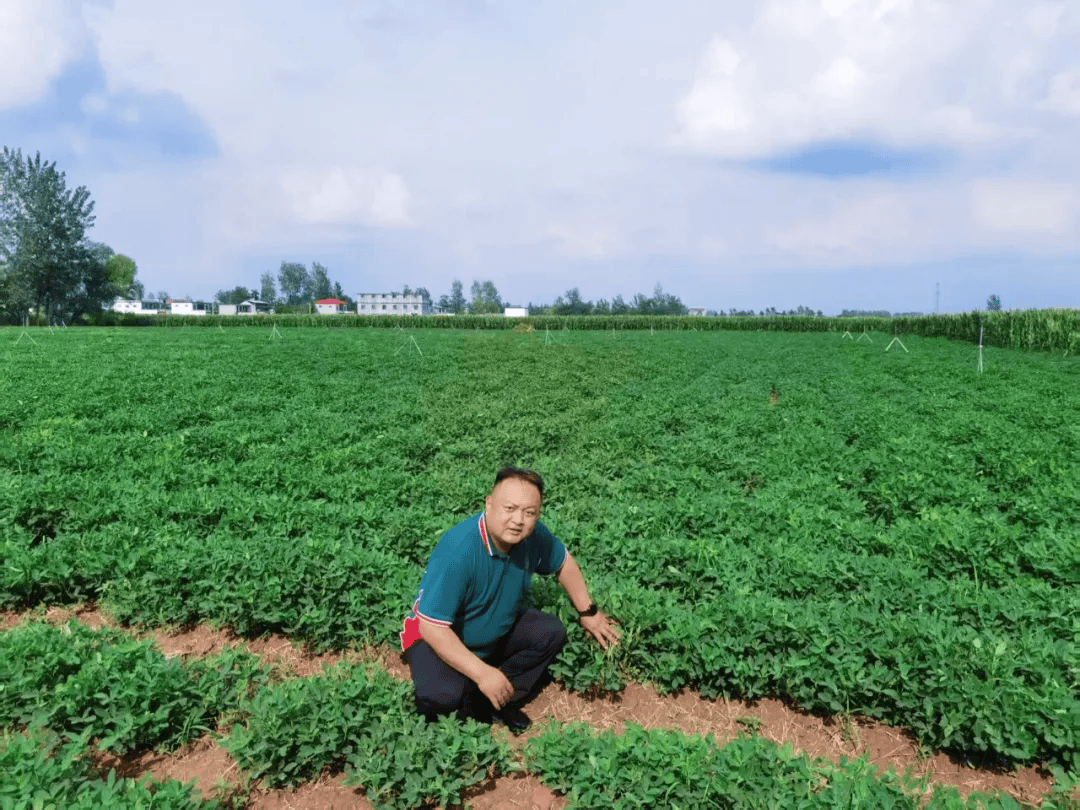
Core Insights - The peanut futures market plays a crucial role in helping farmers manage risks associated with price fluctuations and adverse weather conditions, particularly in Henan province where drought has impacted peanut yields and prices [1][2][4] Group 1: Market Dynamics - In August 2023, the price of spring peanuts in Henan dropped from 5.3 yuan per jin to 4.3 yuan per jin, a decline of 1 yuan per jin, causing concern among farmers [1] - The introduction of the "insurance + futures" project by the Zhengzhou Commodity Exchange aims to provide price guarantees for peanut farmers, helping them mitigate the impact of market volatility [2][4] Group 2: Financial Tools and Support - Financial service models such as "company + farmer + order + futures" have been developed to assist farmers in stabilizing their income and managing market risks effectively [2] - Training programs are being implemented to enhance farmers' understanding of futures trading, thereby improving their risk management capabilities [3] Group 3: Industry Transformation - The use of futures tools is expected to facilitate the transformation and upgrading of the peanut industry in Henan, allowing farmers to adjust planting structures based on price signals [3][4] - The expansion of high oleic peanut cultivation and the use of futures contracts for profit locking are anticipated to enhance the overall quality and competitiveness of Henan's peanut market [3]
乡合:高油酸花生“链”动增收新图景,亩产效益跃升近千元!
Sou Hu Wang· 2025-08-29 01:28
Core Insights - The article highlights the shift from traditional corn and wheat farming to high oleic peanuts in the Henan province, particularly in Shenqiu and Linquan, as a means to increase farmers' income significantly [1][3][5]. Group 1: Economic Impact - The transition to high oleic peanuts has resulted in an increase in net income per acre by nearly 1,000 yuan compared to corn [1][10]. - The average yield for high oleic peanuts is approximately 800-850 jin per acre, with a purchase price of 2.5-3 yuan per jin, leading to total income of about 2,000-2,550 yuan per acre [9]. - In contrast, traditional summer corn yields about 1,000-1,200 jin per acre, with a market price of 0.9-1.1 yuan per jin, resulting in total income of approximately 900-1,320 yuan per acre [9][10]. Group 2: Agricultural Innovation - The "order agriculture + full-service" model has been implemented to support farmers, providing risk mitigation and expanding the deep processing industry chain [1][5]. - The introduction of high oleic peanuts is part of a broader initiative emphasized in the 2025 Central Document No. 1, which aims to enhance the production of oil crops like peanuts [5]. Group 3: Support and Services - The company provides comprehensive support, including technical guidance, equipment provision, and a guaranteed purchase model to alleviate farmers' concerns about new planting methods [12][15]. - The use of specialized peanut planting machines has improved efficiency and reduced labor intensity, contributing to higher production standards [15]. Group 4: Future Prospects - The potential for deep processing of high oleic peanuts is being explored, with plans to introduce projects such as peanut roasting and oil extraction, which could significantly increase local profits [19][21]. - The successful model in Linquan serves as a benchmark for Shenqiu, encouraging local farmers to adopt this new crop and enhance their income [7][24].
期现携手服务全国统一大市场
Qi Huo Ri Bao Wang· 2025-06-25 16:58
Group 1 - The introduction of gray jujube from Henan to Xinjiang has led to its emergence as the highest yielding jujube variety in China, with significant contributions to the local economy [1] - The launch of jujube futures by Zhengzhou Commodity Exchange in 2019 has facilitated price discovery and risk management, while also promoting quality improvement and industry transformation [1][2] - The lack of unified standards previously hindered the economic benefits of the jujube industry, but the futures market has helped establish clear product standards, enhancing market liquidity and efficiency [1][2] Group 2 - Zhengzhou Commodity Exchange has focused on practical market needs in developing jujube futures delivery standards, converting subjective descriptions into specific quantitative indicators to enhance industry efficiency [2] - The establishment of a unified national market is a significant decision by the central government aimed at promoting high-quality development, with Henan leveraging its local industry advantages to support this initiative [2][4] - The futures market has played a crucial role in standardizing the jujube industry, leading to improved quality and competitive pricing, which benefits both producers and traders [1][4] Group 3 - Henan is a leading province in peanut production, with over 500,000 acres dedicated to high oleic peanuts, supporting the development of peanut futures and contributing to industry upgrades [3] - The introduction of peanut futures has led to a unified quality standard and diverse pricing models, addressing market information asymmetries and promoting large-scale, standardized production [3][4] - Henan hosts the majority of standardized production bases for green food raw materials (peanuts) in China, enhancing the overall quality and safety of peanut products [3][4] Group 4 - "Henan standards" are becoming a benchmark for the national peanut market, with Zhengzhou Commodity Exchange actively supporting the establishment of unified standards across various agricultural sectors [4] - The integration of spot and futures markets in Henan is contributing to the establishment of a unified national market for agricultural products like peanuts and jujubes, promoting modernization and efficiency [4]