高端服饰

Search documents
海外看中国:高端消费复苏启示录
HTSC· 2026-02-24 09:18
Investment Rating - The report maintains an "Overweight" rating for the consumer discretionary sector [2] Core Insights - The high-end consumption market in China is showing signs of recovery, with a notable shift from material possession to experience-oriented consumption. The luxury goods market is expected to grow significantly, with a projected market size of approximately 360 billion RMB in 2025, reflecting a decline of only 3-5% compared to previous years [4][12] - The recovery is driven by multiple factors, including consumer confidence restoration, policy support, and narrowing price differentials between domestic and international luxury goods [5][19] - Local brands are expected to gain market share due to their understanding of consumer preferences and the emphasis on value-for-money products [6] Summary by Sections Market Overview - The luxury goods market in China is experiencing a structural recovery, with a significant reduction in the decline rate to 3-5% in 2025, compared to a decline of 17-19% in 2024. The market still holds over 50% growth compared to 2019 levels, indicating long-term resilience [12][19] - The recovery is characterized by a J-shaped pattern, with demand expected to improve in the second half of 2025 due to enhanced consumer confidence and wealth effects [12][19] Category Observations - The shift in consumer focus from material goods to experiential services is evident, with high-end service sectors like luxury hotels and travel showing robust growth. In contrast, traditional luxury goods such as watches and leather goods are under pressure, with declines of 14-17% and 8-11% respectively [4][21] - Beauty and personal care products are leading the recovery, with a projected growth of 4-7% in 2025, while apparel and accessories are experiencing declines of 5-8% [21][26] Consumer Behavior - High-net-worth individuals are expected to maintain cautious spending, with an anticipated decrease in average luxury spending from 146,800 RMB to 141,500 RMB in 2025, reflecting a shift towards value-driven purchases [20][24] - The report highlights a growing preference for experiential spending, with significant increases in planned expenditures for health and wellness, travel, and entertainment among high-net-worth individuals [30][31] Investment Recommendations - The report suggests focusing on three main investment themes: high-quality domestic brands with strong value propositions, emotional consumption brands, and service leaders that leverage unique Chinese experiences [6][30] - Specific companies recommended for investment include brands like Old Puhuang, Mao Ge Ping, Lin Qing Xuan, and An Ta Sports, which are well-positioned to benefit from the ongoing market dynamics [6][30]
从“国际物流村”看中国制造出海新气象
Xin Lang Cai Jing· 2026-02-20 13:31
Core Insights - The logistics industry in Shenzhen's Fuwei community has transformed from simple courier services to a comprehensive ecosystem with over 4,300 logistics companies, processing over one million cross-border packages daily, with a revenue exceeding 10 billion yuan since 2025 [2][5] Group 1: Industry Transformation - The logistics sector has evolved significantly since the 1990s, moving from basic package handling to sophisticated logistics solutions that cater to high-end products and original Chinese brands [2][4] - The average daily processing volume for logistics companies like Baiwei International is around 800 to 1,000 tons, with an annual handling capacity of approximately 300,000 tons [3] - The growth in order volume to regions like Russia, Southeast Asia, and Europe has increased by 20% year-on-year since 2025, reflecting a shift towards higher-value goods [2][5] Group 2: Technological Advancements - Companies are leveraging smart technologies, such as automated forklifts and integrated management systems, to enhance operational efficiency and improve customs clearance processes [2][4] - The logistics firms have developed dedicated routes that can deliver packages to major countries in Europe and America within 5 to 7 days, at prices 30% lower than leading international courier companies [4] Group 3: Government and Policy Support - The local government has established a collaborative platform involving customs and logistics companies to streamline operations and reduce costs for nearly 200 businesses, including major players like Amazon [5] - Shenzhen's foreign trade is projected to reach 4.55 trillion yuan by 2025, with a 1.4% year-on-year growth, driven by strong exports in high-tech products such as new energy vehicles and consumer drones [5]
新春走基层 |从“国际物流村”看中国制造出海新气象
Xin Hua She· 2026-02-15 05:42
Core Insights - The article highlights the vibrant activity in Shenzhen's "International Logistics Village," showcasing its transformation from a simple logistics hub to a comprehensive ecosystem supporting high-value exports and innovative Chinese brands [2][4]. Group 1: Industry Overview - The "International Logistics Village" in Shenzhen's Fuwei community spans 4.4 square kilometers and houses over 4,300 logistics companies, processing more than one million cross-border packages daily [2][3]. - Since 2025, the order volume for shipments to regions like Russia, Southeast Asia, and Europe has increased by 20%, with revenue surpassing 100 billion yuan [2][3]. - The logistics sector has evolved from handling low-cost goods to focusing on high-end products, with companies adapting to the diverse and sophisticated demands of Chinese manufacturing [4][5]. Group 2: Company Innovations - Shenzhen Yidai International Logistics Group has shifted its focus from low-cost items to original Chinese brands, with a significant increase in demand for high-end apparel and smart hardware [2][4]. - The company processes approximately 30,000 tons of cargo annually, with daily throughput ranging from 800 to 1,000 tons, and has optimized its logistics routes to cater to the "new three samples" export trend [3][4]. - The logistics model has transitioned from merely transporting goods to providing comprehensive supply chain solutions, including customs clearance and overseas warehousing [4][5]. Group 3: Government Support - The local government has implemented a one-stop service platform to facilitate logistics operations, reducing costs and streamlining customs processes for nearly 200 companies, including major players like Amazon [6]. - Shenzhen's foreign trade is projected to reach 4.55 trillion yuan by 2025, with a 1.4% year-on-year growth, driven by strong exports of high-tech products such as new energy vehicles and consumer drones [6].
2026年新春联谊会举行
Xin Lang Cai Jing· 2026-02-04 22:38
Core Viewpoint - The 2026 New Year gathering in Chengdu highlighted the city's commitment to high-level openness and international cooperation, showcasing its development as a significant window for China's modernization [1][2]. Group 1: Event Overview - The New Year gathering took place on February 4, 2026, with participation from consuls and representatives from 20 countries, including Austria, France, and the UK [1]. - Chengdu's Mayor Chen Shuping expressed gratitude to international friends for their support in the city's development [1]. Group 2: Strategic Initiatives - Chengdu is seizing major opportunities from initiatives like the Belt and Road, the new era of western development, and the Chengdu-Chongqing economic circle [2]. - The city is implementing a development strategy focused on innovation, openness, and integration of science and industry to advance modernization [2]. Group 3: Cultural Exchange - The event featured traditional Chinese cultural activities such as writing Spring Festival couplets and tea tasting, allowing international guests to experience the rich cultural heritage of the Spring Festival [2]. - A display area showcased Chengdu's internationally competitive products in sectors like healthcare, robotics, and clean energy, promoting further collaboration [2].
泰国涨30%关税、菲律宾查处32个香烟柜,东南亚电商清扫持久战!
Sou Hu Cai Jing· 2026-01-10 00:44
Core Insights - The Southeast Asian e-commerce market is facing increased compliance pressures, highlighted by significant law enforcement actions against smuggling, indicating a shift towards stricter regulations [1] - The era of growth driven by "low-price duty-free" strategies is coming to an end, with compliance and localization becoming essential for survival and growth in 2026 [1][3] Group 1: Regulatory Changes - The global compliance wave is accelerating the transformation of tax systems in Southeast Asia towards transparency and standardization, presenting both challenges and opportunities for cross-border merchants [3] - Starting January 1, 2026, China will implement electronic verification for export goods regarding tax compliance, making it essential for cross-border sellers to ensure business compliance and complete documentation [4] Group 2: Taxation and Pricing Strategies - In Thailand, approximately 97% of import goods will have taxes included in the final pricing, leading to increased costs across various product categories, with clothing expected to rise by 20%-30% and electronics by 10% [5] - Vietnam's e-commerce platforms are adopting a model of withholding and remitting taxes for individual sellers, requiring accurate account information to avoid compliance issues [7] - Indonesia is planning to optimize its tax system, which will further standardize the tax environment, necessitating urgent adjustments in supply chains and product structures for sellers relying on low-price models [7] Group 3: Strategic Recommendations - For high-value, seasonal products, sellers should prioritize air freight and local warehousing to enhance delivery speed and user experience while recalculating total costs to ensure profitability [9] - For low-value, everyday items, transitioning to local shipping through bulk sea freight can mitigate logistics costs and improve customer experience, marking a strategic shift from cross-border to local sales [11] - For popular consumer goods, a mixed logistics strategy of air freight for urgent needs and sea freight for stable inventory can help manage cash flow and meet demand fluctuations [12] Group 4: Long-term Market Positioning - The Southeast Asian e-commerce landscape is evolving into a competitive arena where compliance capabilities, localized operations, and brand strength are critical for success [17] - Companies must embrace compliance proactively, adjust strategies, and deepen local operations to secure a foothold in the market and capitalize on long-term growth opportunities [17]


比音勒芬:2025年上半年净利润4.14亿元
Sou Hu Cai Jing· 2025-08-31 11:53
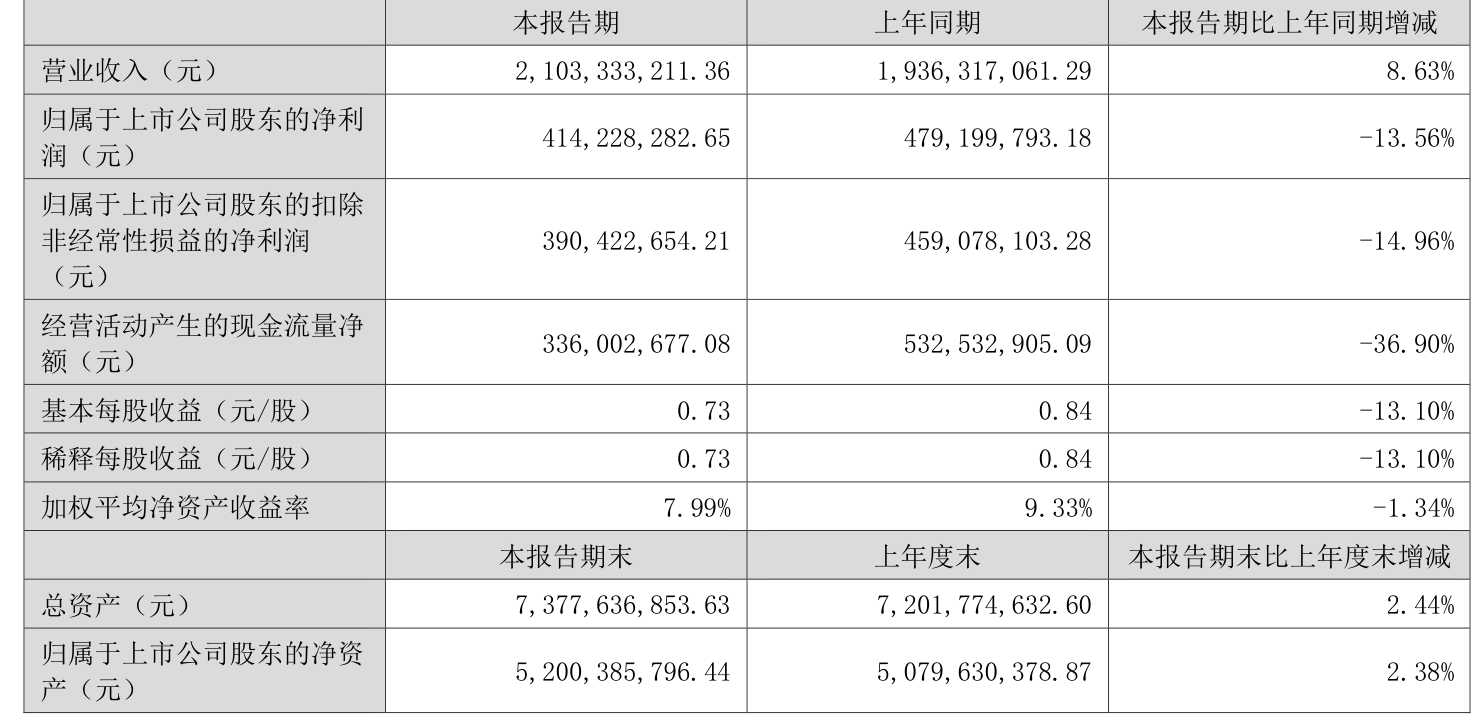
Financial Performance - The company's operating revenue for the first half of 2025 was approximately 2.10 billion yuan, an increase from 1.94 billion yuan in the same period last year, representing a growth of about 8.63% [1] - The net profit attributable to shareholders was approximately 414.23 million yuan, down from 479.20 million yuan year-on-year, indicating a decline of about 13.59% [1] - The net profit after deducting non-recurring gains and losses was approximately 390.42 million yuan, compared to 459.08 million yuan in the previous year, reflecting a decrease of about 15% [1] - The basic and diluted earnings per share were both 0.73 yuan, down from 0.84 yuan in the previous year [1] - The weighted average return on equity was 7.99%, a decrease of 1.34 percentage points from 9.33% in the previous year [1][20] Cash Flow Analysis - The net cash flow from operating activities was approximately 336.00 million yuan, a significant decrease of 36.9% compared to 532.53 million yuan in the same period last year [1][22] - The net cash flow from financing activities was -1.20 million yuan, an increase of 4663.39 million yuan year-on-year [22] - The net cash flow from investing activities was -430 million yuan, improving from -1.15 billion yuan in the previous year [22] Asset and Liability Changes - Total assets at the end of the reporting period were approximately 7.38 billion yuan, up from 7.20 billion yuan at the end of the previous year [1] - The company's cash and cash equivalents decreased by 8.5%, while trading financial assets increased by 16.29% [34] - Other payables increased by 185.18%, while accounts payable decreased by 39.91% [37] Shareholder Structure - New shareholders include various investment funds, replacing some of the previous major shareholders [47] - The top ten circulating shareholders saw changes in their holdings, with some increasing and others decreasing their stakes [48] Valuation Metrics - As of August 26, the company's price-to-earnings (P/E) ratio was approximately 13.24 times, the price-to-book (P/B) ratio was about 1.82 times, and the price-to-sales (P/S) ratio was around 2.27 times [1]