
鲑鱼

Search documents
布拉:去年中国鲑鱼进口量增长63%,市场潜力巨大
Feng Huang Wang Cai Jing· 2025-12-09 11:39
Core Insights - The CEO of Seneka Investment Group, Piotr Bura, stated that last year China imported 5,000 tons of salmon, and this figure is expected to at least double, indicating significant market potential [1] Group 1 - The current import volume of salmon by China stands at 5,000 tons [1] - The anticipated growth in salmon imports is projected to be at least double the current figure [1] - The statement highlights the substantial market potential for salmon in China [1]
智利政企代表团赴印度推动全面经济伙伴关系协定
Shang Wu Bu Wang Zhan· 2025-11-29 15:20
Core Points - A Chilean delegation led by the Deputy Minister of International Economic Relations, Sanuessa, will visit India for the fourth round of Comprehensive Economic Partnership Agreement (CEPA) negotiations [1] - The delegation includes representatives from the Chilean Manufacturing Promotion Association, Chilean Fruit Exporters Association, and Salmon Committee [1] - Despite India's evident agricultural protectionism, Chilean negotiators are optimistic about the market prospects for salmon and nuts [1] Trade Goals - The industry aims to reduce India's current wine tariff of up to 150% and increase bilateral trade from $2.8 billion to $6 billion [1] - There is an expectation to double fruit exports to reach a volume of 100,000 tons [1] Negotiation Status - Three rounds of negotiations have been completed, resulting in a preliminary draft, but further discussions are needed on key issues such as tariff reductions and quota limitations [1]
失去中国市场后,日本水产品找不到替补
Di Yi Cai Jing· 2025-11-20 07:35
Core Viewpoint - China has suspended imports of Japanese seafood due to Japan's failure to provide promised technical materials regarding product safety, exacerbated by political tensions and public outrage in China following Japan's controversial statements on Taiwan [2][3]. Group 1: Impact on Japanese Seafood Exports - Japan's seafood exports to China have drastically declined, with the export value dropping from 871 billion yen (approximately 43 billion RMB) in 2022 to 320 billion yen in 2023, marking the largest decline since 1998 [3]. - The export of key seafood products such as crabs, salmon, and bonito has seen significant reductions, with declines of 90%, 88%, and 77% respectively [3]. - In 2024, the export value of Japanese seafood to China is projected to fall to approximately 61 billion yen, representing a decline of over 90% compared to 2022 [3]. Group 2: Market Diversification Efforts - Following the loss of its largest export market, Japan is actively seeking new markets in regions such as the U.S., Mexico, the Middle East, and Eastern Europe, as well as Southeast Asian countries like Thailand and Vietnam [4]. - Despite these efforts, the overall export of Japanese seafood is expected to decline by about 7.5% in 2024, from 3,901 billion yen in 2023 to approximately 3,609 billion yen [4]. Group 3: Challenges to Future Growth - The Japanese government had previously set ambitious export targets of 2 trillion yen by 2025 and 5 trillion yen by 2030 for the agricultural and seafood sectors, but these goals are now under significant threat [5]. - The imposition of a 15% tariff by the Trump administration on Japanese seafood has further complicated the situation, leading potential international buyers to reconsider their purchasing plans and seek alternatives from countries with lower or no tariffs [5].

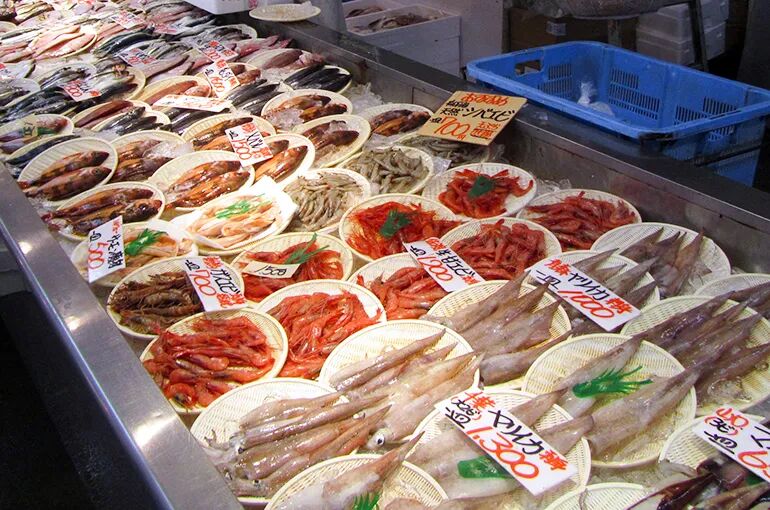
找不到有效替补市场!日本水产品有多依赖中国市场?
Di Yi Cai Jing· 2025-11-20 04:39
Core Insights - Japan's seafood exports to China have drastically declined due to the suspension of imports following the Fukushima nuclear wastewater discharge, with exports dropping from 871 billion yen in 2022 to 320 billion yen in 2023, marking the largest decline since 1998 [3] - The Japanese government is struggling to find alternative markets to replace China, which was previously the largest market for Japanese agricultural and seafood products, contributing significantly to export growth [4][5] - The introduction of a 15% tariff by the Trump administration has further complicated Japan's seafood export situation, diminishing its competitive pricing in international markets [5][6] Export Performance - In 2022, Japan's agricultural and seafood exports reached 1.4 trillion yen, with China accounting for 278.3 billion yen, a 25.2% increase from the previous year [2] - The export value of Japanese seafood to China fell to approximately 61 billion yen in 2024, a decline of over 90% compared to 2022 [3] - The overall export value of Japanese seafood is projected to decrease by about 7.5% in 2024, from 3.901 trillion yen in 2023 to approximately 3.609 trillion yen [4] Market Challenges - Japan's seafood producers are actively seeking new markets in regions such as the U.S., Mexico, and Southeast Asia, but have yet to find reliable buyers to fill the gap left by China [4] - The Japanese government had set ambitious export targets of 2 trillion yen by 2025 and 5 trillion yen by 2030, but these goals are increasingly challenged by the loss of the Chinese market [5] - The competitive landscape for Japanese seafood is intensifying, with many international buyers reconsidering their procurement plans due to increased tariffs, leading them to seek alternatives from countries with lower or no tariffs [6]
人民日报海外版关注丨越来越多西藏青年投身直播电商——“让更多西藏特色产品走出高原”
Ren Min Ri Bao Hai Wai Ban· 2025-11-14 13:38
Core Insights - The article highlights the success of local products from Tibet being promoted through live streaming, particularly by a villager named Mima Cangjue, who has leveraged the internet to expand the market for these products [4][6]. Group 1: Local Product Promotion - Mima Cangjue showcases various local agricultural products from Tibet, such as barley and quinoa, through live streaming, which has significantly increased sales and market reach beyond local consumers [4][6]. - The participation in a trade fair in Shanghai led to positive feedback on local products, motivating Mima to promote more local goods outside Tibet [6]. Group 2: Support from Shanghai - The Shanghai Aid Tibet Cadre Liaison Group has been instrumental in supporting local entrepreneurs, facilitating events like the "Zhu Feng·Shen Qing" shopping festival to promote Tibetan products in Shanghai [6][7]. - The establishment of "V Gathering Place" in Yangpu, Shanghai, provides training for Tibetan bloggers and business leaders, enhancing their skills in internet marketing and product sales [6][7]. Group 3: Future Initiatives - Plans are in place to collaborate with Bilibili for themed activities in Tibet and to work with universities to improve product packaging and storytelling for Tibetan goods [7]. - The goal is to cultivate more young e-commerce entrepreneurs like Mima Cangjue, thereby increasing the income of local communities through the sale of unique Tibetan products [7].
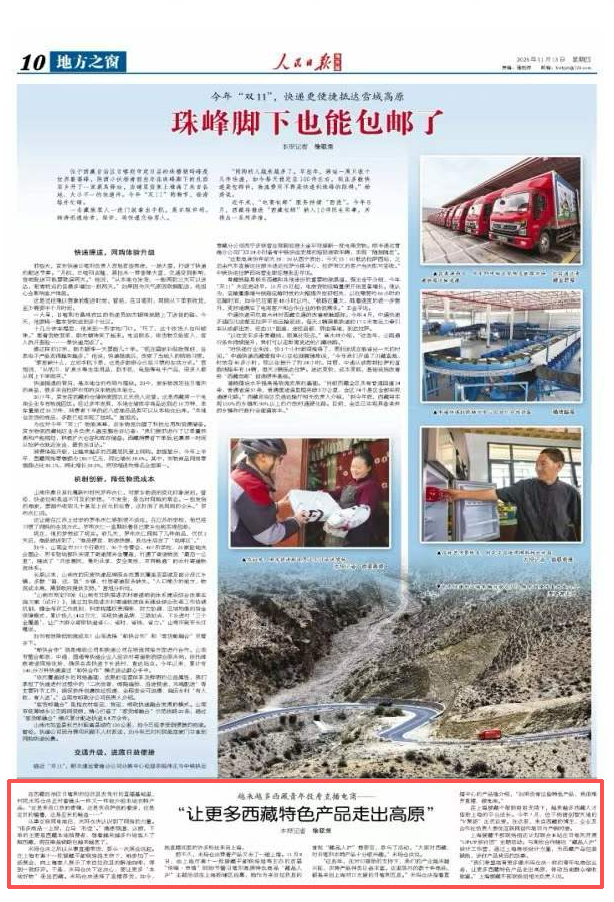
“让更多西藏特色产品走出高原”
Ren Min Ri Bao Hai Wai Ban· 2025-11-13 02:09
Core Insights - The article highlights the growing success of local agricultural products from Tibet, particularly through the use of live streaming and e-commerce platforms, which have expanded their market reach beyond local consumers to include customers from other regions, such as Shanghai [1][2] - The support from the Shanghai aid team has been instrumental in enhancing the local industry, leading to a richer variety of agricultural products and the establishment of training programs for local entrepreneurs [2] Group 1 - The live streaming initiative by local entrepreneur Mima Cangjue has significantly increased the visibility and sales of Tibetan agricultural products, with many items selling out quickly [1] - The first "Zhu Feng·Shen Qing" shopping festival in Shanghai showcased highland specialty products from Tibet, indicating a growing interest in these goods among consumers in urban areas [1] - The collaboration between the Shanghai aid team and local entrepreneurs aims to cultivate more youth e-commerce entrepreneurs, thereby driving local economic growth [2] Group 2 - The establishment of the "V Gathering Place" in Yangpu has provided a platform for Tibetan bloggers and business leaders to receive training in internet content creation and sales [2] - Future initiatives include partnerships with Bilibili for themed activities and collaborations with universities to enhance product packaging and storytelling for Tibetan goods [2] - The overall goal is to promote the unique products of Tibet and improve the income of local communities through increased market access [2]
让更多西藏特色产品走出高原
Ren Min Ri Bao· 2025-11-12 20:50
Core Viewpoint - The article highlights the growing success of local agricultural products from Tibet, particularly through the use of live streaming and e-commerce platforms, driven by support from Shanghai's aid programs [1][2] Group 1: E-commerce and Live Streaming - The local villager, Mima Cangjue, has successfully utilized live streaming to promote and sell local agricultural products, experiencing high demand and rapid sales [1] - Initially, the customer base was primarily local, but now there is an increasing interest from outside consumers, particularly from Shanghai [1] Group 2: Support from Shanghai - The Shanghai aid program has significantly contributed to the development of local industries and the diversification of agricultural products in the Shigatse region [2] - Initiatives such as the "V聚场" in Yangpu provide training for local talents in internet content creation and sales connections [2] - Future plans include collaborations with Bilibili for themed activities and partnerships with universities to enhance product packaging and storytelling for Tibetan products [2]