3D NAND闪存芯片

Search documents
有人开价4000亿估值买长江存储老股了
投中网· 2026-03-25 07:33
Core Viewpoint - The article discusses the rising interest and valuation of Yangtze Memory Technologies Co., Ltd. (YMTC) in the market, driven by its strong financial performance, upcoming IPO plans, and technological advancements in the NAND flash memory sector [4][10]. Group 1: Company Performance and Valuation - YMTC's post-investment valuation in 2023 was 160 billion yuan, which has now surged to 400 billion yuan as buyers show interest in acquiring shares [3][6]. - The company reported a net profit of several billion yuan in 2024, significantly ahead of expectations, with a 20% year-on-year increase in the first half of 2025 [6][10]. - The anticipated IPO is expected to be one of the largest in China's tech sector, with a projected valuation between 160 billion and 300 billion yuan [8][10]. Group 2: Market Dynamics and Trends - The demand for YMTC's shares has intensified since mid-2025, with reports of shares being traded at inflated valuations [7][10]. - The company is positioned to benefit from a "super cycle" in the global storage chip market, driven by AI computing needs, with NAND prices expected to rise significantly [17][18]. - The successful IPO of another storage chip company, Changxin Technology, is seen as a potential positive influence on YMTC's market performance [18]. Group 3: Technological Advancements - YMTC has established itself as the largest domestic manufacturer of 3D NAND flash memory, achieving significant technological milestones since its inception [12][13]. - The company has consistently improved its product offerings, with the latest being the 267-layer 3D NAND TLC chip, which was mass-produced in September 2025 [12][13]. - YMTC's market share in NAND flash memory reached 10% in Q1 2025 and increased to 13% by Q3 2025, marking a substantial growth in its competitive position [13].

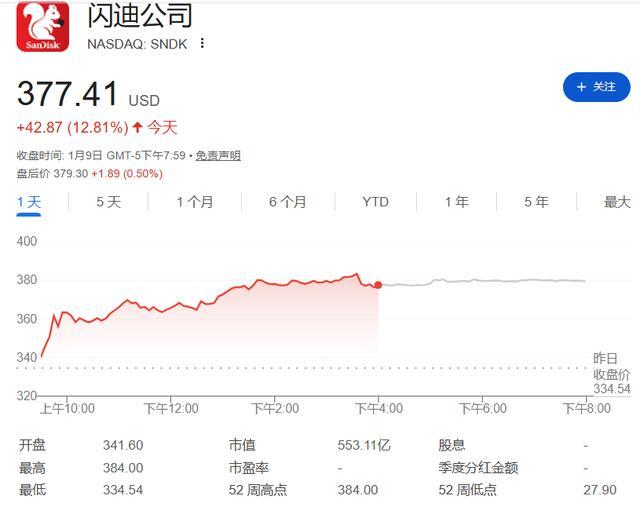
闪迪:涨价,且必须全款!
美股IPO· 2026-01-11 01:23
Core Viewpoint - The storage market is entering a severe shortage phase driven by the explosive demand for AI servers and manufacturers' capacity shifts, leading to unprecedented contract terms and price increases [1][4]. Group 1: Market Dynamics - SanDisk plans to raise enterprise-grade NAND prices by over 100% month-on-month in March, breaking industry norms by requiring 100% cash prepayment from customers to secure long-term supply contracts [1][2]. - The demand for storage devices is rigid due to AI infrastructure development, prompting some cloud service providers to consider accepting stringent contract terms to avoid supply disruptions [2][6]. - The storage chip market is experiencing a supply-side transformation driven by AI, resulting in a strong seller's market where buyers must accept unprecedented terms [4][6]. Group 2: Price Trends - The price of enterprise-grade NAND is expected to rise sharply, with reports indicating a potential increase of over 100% in March for SSDs [2][7]. - The demand for enterprise storage is significantly influenced by NVIDIA's inference context memory storage platform, which requires substantial amounts of 3D NAND [7]. - There is uncertainty regarding how the doubling of enterprise-grade product prices will affect consumer-grade markets, but typically, consumer prices follow enterprise price trends due to shared production facilities [7]. Group 3: Supply Chain Challenges - Major storage manufacturers (Samsung, SK Hynix, Micron) have shifted their capacity allocation towards higher-margin HBM for AI applications, significantly reducing the production capacity for standard DDR4/DDR5 and NAND [8]. - This structural shortage has led to chaos in the supply chain, with tech giants like Google and Meta restructuring their procurement teams to secure supplies [9]. - Companies are stockpiling inventory to avoid price hikes and shortages, with some PC brands like Lenovo pre-ordering for 2026 [9].
闪迪:涨价,且必须全款
Hua Er Jie Jian Wen· 2026-01-10 23:37
Group 1 - The storage chip market is undergoing a significant transformation driven by AI, leading to a strong seller's market where buyers must accept unprecedented terms [1][3] - SanDisk has introduced a "100% cash prepayment" contract model, requiring clients to pay in full upfront to secure supply quotas for 1 to 3 years, breaking industry norms [3][4] - The demand for storage devices is being fueled by AI infrastructure development, prompting some cloud service providers to consider these stringent terms to avoid supply shortages [1][3] Group 2 - Prices for enterprise-level storage are surging, with SanDisk planning to increase prices for high-capacity 3D NAND flash chips used in enterprise SSDs by over 100% in March [1][4] - The demand for enterprise storage is significantly influenced by NVIDIA's ICMS platform, which requires substantial amounts of 3D NAND, potentially leading to increased consumption [4] - The production capacity of major storage manufacturers has shifted towards higher-margin HBM for AI applications, resulting in a reduction of capacity for standard DDR4/DDR5 and NAND production [4][5] Group 3 - The current supply crisis has led to chaos in the supply chain, with tech giants like Google and Meta seeking additional capacity and hiring specialized procurement managers [5] - Companies are stockpiling inventory to avoid price hikes and shortages, with Lenovo pre-ordering for 2026 to secure future demand [5] - The market is experiencing irregularities, including reports of bribery investigations at Samsung, highlighting unethical profit-seeking behaviors amid severe shortages [5]
闪迪(SNDK.US):涨价,且必须全款!
智通财经网· 2026-01-10 13:18
Core Viewpoint - The storage chip market is undergoing a significant transformation driven by AI demand, leading to a seller's market where buyers face unprecedented contract terms and price increases [1][4]. Group 1: Contractual Changes - SanDisk has introduced a "100% cash prepayment" requirement for customers to secure supply quotas for 1 to 3 years, breaking industry norms [1][4]. - This unconventional contract form poses significant cash flow challenges for buyers, as traditional payment methods typically involve installment payments or credit terms [4]. Group 2: Price Increases - SanDisk plans to raise prices for enterprise-grade SSDs by over 100% month-on-month in March, driven by short-term supply shortages and increasing mid-term demand from the AI sector [1][5]. - The demand for enterprise storage is significantly influenced by NVIDIA's inference context memory storage platform, which requires substantial amounts of 3D NAND [5]. Group 3: Supply Chain Dynamics - Major storage manufacturers (Samsung, SK Hynix, Micron) have shifted their production capacity towards higher-margin HBM for AI applications, leading to a structural shortage in standard DDR4/DDR5 and NAND production [6]. - Tech giants like Google and Meta are actively seeking additional capacity and hiring specialized procurement managers to strengthen their supply chain relationships [6]. - Panic buying is prevalent, with companies like Lenovo stockpiling inventory and placing orders for future needs to avoid price hikes and shortages [6].
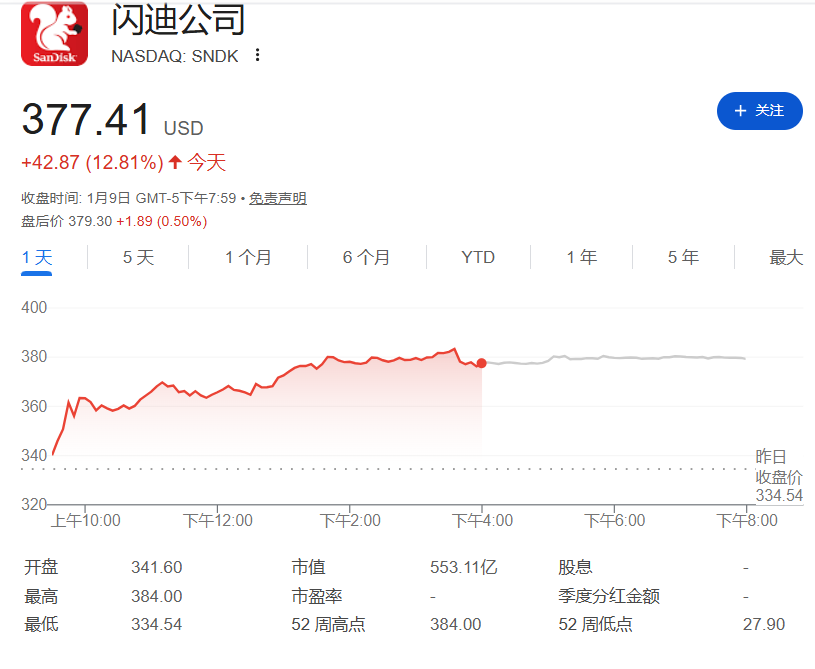
闪迪:涨价,且必须全款!
Hua Er Jie Jian Wen· 2026-01-10 12:09
Core Insights - The storage chip market is undergoing a significant transformation driven by AI, leading to a seller's market where buyers face unprecedented terms [1] - SanDisk has introduced a "100% cash prepayment" contract model to secure supply for 1 to 3 years, which is a departure from traditional payment methods [3][4] - The price of enterprise-grade SSDs is expected to rise dramatically, with SanDisk planning a price increase of over 100% for high-capacity 3D NAND flash memory chips in March [5] Group 1: Contract Changes - SanDisk's new contract requiring full cash prepayment has disrupted industry norms, posing challenges to buyers' cash flow [3] - The demand for AI infrastructure is forcing some cloud service providers to consider accepting these stringent terms to avoid supply shortages [4] Group 2: Price Increases - The enterprise-grade storage segment is experiencing the most aggressive price hikes, with SanDisk's NAND prices projected to increase significantly [5] - NVIDIA's ICMS platform is identified as a key driver of enterprise storage demand, necessitating substantial 3D NAND consumption [5] Group 3: Supply Chain Dynamics - Major storage manufacturers are reallocating production capacity towards higher-margin HBM for AI applications, leading to a structural shortage in standard DDR4/DDR5 and NAND production [6] - This shift has caused chaos in the supply chain, with buyers increasingly willing to accept short contracts and high prices, even adopting a "buy at any price" mentality [6] Group 4: Market Behavior - Tech giants like Google and Meta are actively seeking additional storage capacity and are restructuring their procurement teams to strengthen ties with manufacturers [8] - Companies like Lenovo are stockpiling inventory and placing early orders to mitigate the impact of price increases and shortages [8]
武汉振翅!“未来之鹰”引领中部突围,竞逐产业“无人区”
2 1 Shi Ji Jing Ji Bao Dao· 2025-09-15 09:44
Core Insights - Wuhan is embracing future industries with a focus on advanced semiconductor, quantum technology, artificial intelligence, and humanoid robots, as evidenced by the recent announcement of the first batch of "Future Eagles" enterprises [1][2] - The government has initiated a strategic shift towards future industries, aiming to establish a growth mechanism for investment in sectors like biomanufacturing and quantum technology, positioning Wuhan as a key player in the central region of China [1][3] - By 2027, Wuhan aims to create over five future industry clusters with revenues exceeding 100 billion yuan, contributing to a total future industry revenue of over 1 trillion yuan [1] Industry Development - The global landscape is witnessing a significant shift towards future industries, with countries like the US, EU, and Japan investing heavily in sectors such as AI and biotechnology [3] - China's Ministry of Industry and Information Technology has outlined a plan to promote future industries, aligning with Wuhan's local strategies in quantum technology and artificial intelligence [3][4] - Wuhan's robust industrial system and innovative ecosystem are pivotal in driving the city towards a critical point of future industry explosion, contributing to a balanced development across regions [4] Innovation and Technology - Wuhan has established a modern industrial system focusing on six major directions, including future manufacturing and future health, with a clear roadmap for development [5] - The city has built a comprehensive national-level technology innovation platform, integrating various innovation resources to support industry development [5][6] - Wuhan's mid-test platforms are crucial for technology transfer, providing essential services for small-batch production and process optimization across various sectors [6] Notable Companies and Achievements - Companies like Faerland Technology and Lingjiu Microelectronics are leading innovations in robotics and high-end chips, respectively, showcasing the city's commitment to overcoming technological challenges [11][12] - Feiling Optoelectronics has achieved breakthroughs in non-metallic element doping technology, disrupting long-standing foreign monopolies in the optical fiber industry [12][13] - Kaideweisi Biotechnology focuses on gynecological cancer prevention and has developed several globally innovative products, demonstrating the integration of medical research and industry [14] Investment and Funding - Wuhan is addressing the challenges faced by tech startups by introducing government-backed funds to support technology transfer and innovation, with plans to create a 300 billion yuan fund cluster [7][10] - The city is also promoting equity investment institutions, reflecting strong growth in private equity investments, ranking second nationally in growth rates [8] Application of AI and Technology - AI applications are being integrated into various sectors, including education and healthcare, with notable projects underway in collaboration with local institutions [8][9] - The city is actively promoting AI-enabled solutions in manufacturing, with successful implementations in major automotive companies [9]