
A20和A20 Pro芯片

Search documents
智能手机2026:变局中的挑战与曙光
3 6 Ke· 2026-02-01 06:26
Core Insights - The smartphone industry is experiencing a significant downturn in expected shipments for 2026, with major manufacturers like Xiaomi and OPPO reducing their forecasts by over 20% [1][2] - The decline in shipments is primarily attributed to rising storage chip prices and supply shortages, leading to a strategic shift towards higher-value products [2][6] Group 1: Industry Dynamics - In 2025, the global smartphone shipment reached 1.26 billion units, with a 1.9% year-on-year growth, while China's market saw a slight decline of 0.6% [3] - Huawei regained its position as the leading smartphone manufacturer in China with a shipment of 46.7 million units, capturing a market share of 16.4% [3] - Apple and Vivo closely followed Huawei, with shipments of 46.2 million and 46.1 million units, respectively, indicating a highly competitive landscape [3][4] Group 2: Market Challenges - The price of storage chips is expected to rise significantly, with a projected increase of 40% to 50% in Q1 2026, further impacting manufacturers' cost structures [6][8] - The cost increase is particularly pronounced in low-end models, which may deter price-sensitive consumers from upgrading their devices [7][8] Group 3: Future Trends - The integration of AI into smartphones is anticipated to be a major trend, with new AI-enabled smartphone shipments expected to reach 147 million units in China, accounting for over 50% of the market [9] - The development and application of 2nm chips are also on the horizon, promising enhanced performance and efficiency for future smartphones [10]



手机芯片,大战开打
半导体行业观察· 2026-01-21 01:23
Core Insights - TSMC's 2nm process is in high demand, with estimated tape-out volumes 1.5 times that of the 3nm process, attracting companies like Apple, Qualcomm, and MediaTek to secure supply for competitive advantage this year [1] - Despite the advancements in chip technology, consumer interest in smaller process nodes is waning, leading companies to pivot towards architecture improvements and increased memory cache as key strategies [1][2] - Apple has reportedly secured over half of TSMC's initial 2nm capacity, while Qualcomm and MediaTek are also vying for the enhanced 2nm "N2P" process to gain an edge in wafer shipments and CPU frequency [1][4] Group 1 - TSMC is expected to cancel Apple's priority status as its largest customer due to the rise of AI, with TSMC's revenue increasingly coming from different sectors [3][4] - Analysts note that while flagship devices drive industry growth, consumers are now more focused on actual user experience rather than just annual specification upgrades [2] - TSMC is facing supply constraints for 2nm wafers, leading to price increases for advanced process technologies starting in 2026, with the estimated price for Apple's A20 SoC being $280 [6] Group 2 - Apple's A19 Pro chip showcased significant architecture improvements, achieving a performance increase of 29% with minimal power consumption [2] - The competitive landscape is shifting, with companies like MediaTek's Dimensity 9500s surpassing Snapdragon 8 Gen 5 by utilizing a 19MB CPU cache [2] - TSMC's CEO has reportedly informed Apple of a significant price increase, marking the largest in recent years, indicating a shift in the dynamics of their partnership [4]


芯片制程“破2进1” “1.4纳米”2027年或试产
Xin Lang Cai Jing· 2026-01-09 19:44
Core Insights - TSMC has officially announced the mass production of its 2nm process in Q4 2025 and has begun research and development on the next-generation 1.4nm process, with risk trial production expected to start in 2027 [3][4][5] - TSMC's advancements solidify its dominant position in the semiconductor foundry market, marking the industry's transition into the 1nm era, with competitors like Samsung and Intel striving to catch up [3][4][7] TSMC's 2nm and 1.4nm Processes - The 2nm process (N2) utilizes the first-generation nanosheet transistor architecture, showing significant improvements over the previous 3nm process, including a 10%-15% performance increase at the same power consumption and a 25%-30% reduction in power consumption for the same performance [5][6] - TSMC's CEO stated that the 2nm process is expected to ramp up production significantly by 2026, driven by demand from smartphones and AI/HPC [5][6] - The 1.4nm process is seen as a strategic continuation of TSMC's "incremental smaller nodes" approach, with plans to optimize the N2 process while preparing for the next generation [5][6] Competitive Landscape - Samsung and Intel are TSMC's main competitors, with Samsung having achieved 3nm GAA process mass production and planning to launch its 1.4nm process around 2027 [7][8] - Intel aims to regain its manufacturing leadership with its 18A and 14A processes, leveraging significant investments to expand domestic production capacity [9][10] Market Potential and Applications - The transition to 1.4nm is expected to drive growth in the semiconductor industry, particularly in AI chips, smart driving, and high-end consumer electronics [10][11] - The global advanced process foundry market is projected to exceed $120 billion by 2030, with 1.4nm and below nodes expected to account for over 40% of high-end logic chip value [10][11] Pricing and Profitability - Initial foundry prices for the 1.4nm process are expected to be approximately 50% higher than those for the 3nm process, indicating high R&D costs but potentially significant long-term profits [11][12] - TSMC's ability to quickly improve yield rates and secure major clients could further enhance its competitive advantage in the high-end market [11][12] Chinese Market Dynamics - Chinese companies, represented by SMIC, are increasing their production capacity in mature processes while investing in advanced technology R&D, with projections suggesting that China could hold 30% of global wafer foundry capacity by 2030 [12]
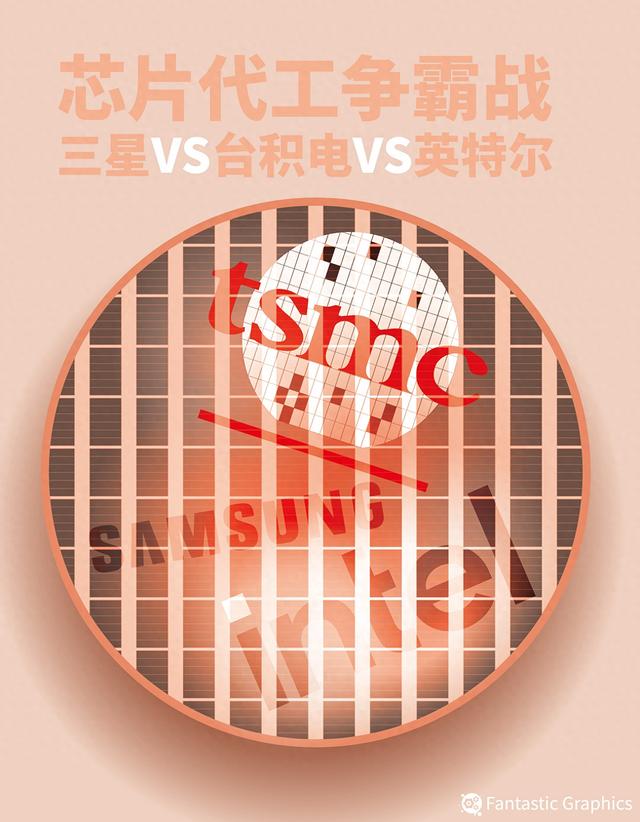
芯片三巨头的2nm之争:安卓阵营押注台积电N2P制程反超苹果
Hua Er Jie Jian Wen· 2025-11-03 11:33
Core Insights - Qualcomm and MediaTek are preparing to adopt TSMC's advanced 2nm N2P process node in their next-generation chip designs, aiming to surpass Apple in process technology [1] - Apple plans to launch its A20 and A20 Pro chips on TSMC's initial 2nm N2 process, while Qualcomm's Snapdragon 8 Elite Gen 6 and MediaTek's Dimensity 9600 will leap directly to the improved N2P node [1][2] - TSMC's 2nm process is expected to become a scarce resource, with monthly production capacity projected to be only 15,000 to 20,000 wafers by the end of 2025 [1][3] Industry Competition - The competition in process technology is intensifying, with Apple holding a significant technological advantage [2] - Qualcomm's Snapdragon 8 Elite Gen 6 is expected to support LPDDR6 memory and UFS 5.0 storage standards, while MediaTek plans to release the Dimensity 9600 on the N2P node [2] - Apple's experience in developing custom CPU and GPU cores has led to a notable performance improvement of up to 29% in the efficiency core of the A19 Pro without increasing power consumption [2] Capacity Constraints - Apple has reportedly secured over half of the initial 2nm capacity supply, a strategy aimed at maintaining its competitive edge [3] - In response to capacity limitations, Qualcomm and MediaTek's shift to the N2P process may provide a viable option for securing sufficient wafer supply [3] - Analysts expect TSMC's 2nm process to become a scarce resource next year, making the choice of N2P process potentially beneficial for Android chip manufacturers seeking stable capacity [3]
