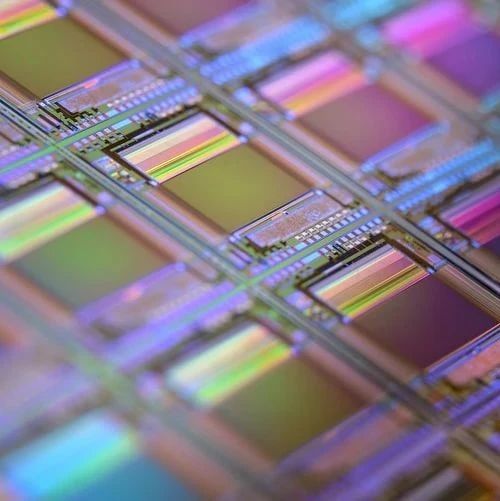
GAA架构

Search documents
未知机构:我们美国半导体团队的同事在近期4QCY2-20260224
未知机构· 2026-02-24 02:25
Summary of Conference Call Notes Industry Overview - The conference call focused on the semiconductor industry, particularly the European semiconductor companies ASML, ASMI, and BESI, in light of strong spending on advanced logic, foundry, and memory chips [1][2]. Key Points and Arguments Semiconductor Spending Forecasts - The U.S. semiconductor team revised their forecasts for wafer fabrication equipment (WFE) spending for 2026, 2027, and 2028 to $124 billion, $132 billion, and $144 billion, respectively, reflecting year-on-year growth of +20%, +21%, and +9% [1]. - DRAM WFE spending is projected to grow by +25%, +18%, and +5% for the same years, with revised estimates of $38 billion and $40 billion [2]. - Foundry WFE spending is expected to increase by +28%, +25%, and +10%, with new estimates of $45 billion, $51 billion, and $59 billion [2]. ASML Insights - ASML is positioned to benefit from strong demand in advanced storage applications, with a 4Q25 order volume of approximately €1.3 billion, primarily driven by storage orders [3]. - The company is expected to receive additional orders from TSMC as they ramp up capacity for their N2 node, leveraging ASML's EUV tools [3]. - The transition to more complex architectures will enhance ASML's benefits in both logic and storage applications [3]. ASMI Insights - ASMI is seen as a beneficiary of strong demand in advanced logic and foundry, particularly with TSMC's N2 node capacity expansion [4]. - The company’s single-wafer ALD tools are critical for the GAA transition, which is expected to provide incremental benefits starting in 2026 [4]. - ASMI is also recognized for its reliable AI opportunities in the storage sector, particularly with its high-k metal gate tools for HBM devices [4]. BESI Insights - BESI is viewed positively due to the strong capital expenditure data in advanced logic and foundry, supplying HB tools to TSMC and Intel [5]. - The shift towards chiplet-based designs among AI accelerator manufacturers positions BESI as a key beneficiary, as their HB tools offer cost-effective and precise packaging solutions [5]. - The strong spending outlook for advanced storage, such as HBM, is also favorable for BESI's HB and TCB tools [5]. Ratings and Price Targets - ASML: Buy rating with a 12-month target price based on a 37x CY27 P/E ratio; risks include EUV delays and adverse market share changes [6]. - ASMI: Buy rating with a 12-month target price based on a 25x EV/EBITDA multiple for 2H CY26 and 1H CY27; risks include semiconductor cycle deterioration and high customer concentration [7]. - BESI: Buy rating with a 12-month target price based on a 28x EV/EBITDA multiple for CY27; risks include customer spending cyclicality and increased competition [8].
芯片制程“破2进1” “1.4纳米”2027年或试产
Xin Lang Cai Jing· 2026-01-09 19:44
Core Insights - TSMC has officially announced the mass production of its 2nm process in Q4 2025 and has begun research and development on the next-generation 1.4nm process, with risk trial production expected to start in 2027 [3][4][5] - TSMC's advancements solidify its dominant position in the semiconductor foundry market, marking the industry's transition into the 1nm era, with competitors like Samsung and Intel striving to catch up [3][4][7] TSMC's 2nm and 1.4nm Processes - The 2nm process (N2) utilizes the first-generation nanosheet transistor architecture, showing significant improvements over the previous 3nm process, including a 10%-15% performance increase at the same power consumption and a 25%-30% reduction in power consumption for the same performance [5][6] - TSMC's CEO stated that the 2nm process is expected to ramp up production significantly by 2026, driven by demand from smartphones and AI/HPC [5][6] - The 1.4nm process is seen as a strategic continuation of TSMC's "incremental smaller nodes" approach, with plans to optimize the N2 process while preparing for the next generation [5][6] Competitive Landscape - Samsung and Intel are TSMC's main competitors, with Samsung having achieved 3nm GAA process mass production and planning to launch its 1.4nm process around 2027 [7][8] - Intel aims to regain its manufacturing leadership with its 18A and 14A processes, leveraging significant investments to expand domestic production capacity [9][10] Market Potential and Applications - The transition to 1.4nm is expected to drive growth in the semiconductor industry, particularly in AI chips, smart driving, and high-end consumer electronics [10][11] - The global advanced process foundry market is projected to exceed $120 billion by 2030, with 1.4nm and below nodes expected to account for over 40% of high-end logic chip value [10][11] Pricing and Profitability - Initial foundry prices for the 1.4nm process are expected to be approximately 50% higher than those for the 3nm process, indicating high R&D costs but potentially significant long-term profits [11][12] - TSMC's ability to quickly improve yield rates and secure major clients could further enhance its competitive advantage in the high-end market [11][12] Chinese Market Dynamics - Chinese companies, represented by SMIC, are increasing their production capacity in mature processes while investing in advanced technology R&D, with projections suggesting that China could hold 30% of global wafer foundry capacity by 2030 [12]


台积电真正的瓶颈显现
半导体行业观察· 2025-12-18 01:02
Group 1 - The core viewpoint of the article emphasizes TSMC's acceleration in capacity optimization and process reconfiguration to meet the substantial demand for AI GPUs and custom ASICs as they enter mass production [1] - TSMC is implementing strategies such as optimizing existing production lines and transitioning older nodes (7nm and 5nm) to 3nm processes to enhance capital efficiency [1][4] - The 3nm process is identified as the real bottleneck for the upcoming year, with TSMC's advanced packaging solution, CoWoS, expected to remain the mainstream packaging method for AI chips [1][2] Group 2 - The semiconductor industry is witnessing a decrease in the number of effective chips per wafer due to the introduction of more computational units and I/O designs in AI GPUs and ASICs, leading to increased demand for advanced process wafers [2] - TSMC plans to establish a CoPoS RD experimental line in Q2 of next year, with mass production expected by 2028, focusing on improving the efficiency of chip packaging [2] - TSMC's 2nm process is set to begin next year, with capacity already booked until the end of 2026, driven by the GAA architecture which offers significant performance and efficiency improvements over FinFET technology [4][5] Group 3 - Major clients for TSMC's 2nm process include Qualcomm, MediaTek, Apple, and AMD, with Apple reportedly reserving over half of the initial capacity to suppress competitors [5] - TSMC aims to increase its monthly output of 2nm chips to 100,000 by the end of 2026, positioning this cutting-edge technology as a key growth driver for the company [5]
2nm芯片,价格飙升
半导体芯闻· 2025-08-05 10:10
Core Viewpoint - TSMC is advancing its 2nm production with plans for four factories to operate at full capacity, despite high costs for customers due to increased pricing per wafer [2] Group 1: 2nm Production Progress - TSMC is set to have four 2nm factories operational next year, with a total monthly output of 60,000 wafers [2] - The current yield rate for 2nm in the trial production phase has reached 60%, indicating readiness for stable mass production [2] - Major clients like Apple, Qualcomm, and MediaTek are expected to be the first to adopt the new technology [2] Group 2: Cost Implications - The price per wafer for the 2nm process is projected to be around $30,000, which is 50% higher than the 3nm process [2] - To help clients manage costs, TSMC has initiated a shared trial production service called "CyberShuttle," allowing multiple clients to share a single test wafer for design validation [2] Group 3: Competitive Landscape - There is potential pricing pressure on TSMC if competitors like Samsung successfully launch their first 2nm GAA architecture chip, Exynos 2600, with improved yield rates [2]