AI专用芯片

Search documents
中国芯崛起之路2026武汉国际芯片及半导体产业展览会抢先看
Sou Hu Cai Jing· 2026-02-25 05:03
Core Insights - The 2026 Wuhan International Chip and Semiconductor Industry Exhibition is set to showcase cutting-edge technologies and signify a major shift in the global chip industry landscape [1][3][7] Industry Trends - The chip industry is undergoing a critical transformation characterized by three main trends: a surge in demand for high-performance chips driven by 5G technology, explosive growth in IoT devices leading to innovations in chip power consumption and integration, and an accelerated shift towards smart manufacturing due to semiconductor material replacements [3][5] - The exhibition will serve as an excellent window to observe the industry's direction amidst these changes [3] Exhibition Highlights - The exhibition will feature seven thematic areas covering the entire industry chain, including an IC design and manufacturing zone, a photonic devices section, and an innovation technology forum [3][5] - A dedicated area for industry-academia-research collaboration will facilitate the transformation of research outcomes into practical applications, highlighting the event's diverse layout [3][5] Technological Innovations - Several groundbreaking technologies will be unveiled during the exhibition, including a 3nm AI-specific chip with a 40% improvement in energy efficiency compared to its predecessor, new heterogeneous integration solutions enhancing the efficiency of storage and computing units, and breakthroughs in the application of new two-dimensional semiconductor materials [5][6] - These innovations not only demonstrate the industry's technical prowess but also indicate the development trajectory for the next decade [5] Regional Development - Wuhan is positioning itself as a new global semiconductor hub, with government plans to establish a national-level semiconductor industry base by 2025 [6] - The exhibition's location in Wuhan is strategic, leveraging the city's robust industrial chain and growth momentum, while also hosting investment matchmaking events to attract domestic and international capital [6] Future Outlook - The Chinese semiconductor industry is pursuing a path of independent innovation, with local companies showcasing high-end chip products that meet international standards [6] - The exhibition will also feature a green manufacturing zone, emphasizing the integration of eco-friendly materials and energy-saving processes into industry upgrades, which may become a mainstream direction for future development [6]

先进封装解芯片难题-封装摩尔时代的突破
Zhong Guo Neng Yuan Wang· 2026-01-07 02:47
Core Insights - The report from Jinyuan Securities highlights the exponential growth in costs associated with advanced processes in the semiconductor industry, particularly noting that the design cost of a 2nm chip is approximately $725 million, which is 25 times that of a 65nm chip [1][2] - Capital expenditures (CapEx) for building semiconductor manufacturing facilities also reflect this trend, with the investment required for a 5nm chip factory being five times that of a 20nm factory [1][2] Advanced Packaging Trends - The shift towards advanced packaging is driven by the combination of chiplets and high-end advanced packaging, which allows for mixed processes, reduced time to market, reusability, and improved yield [2] - Chiplets can utilize different processes based on demand, such as using 3nm technology for CPUs while employing mature processes for I/O or analog circuits, thus shortening R&D cycles and design costs [2] - The performance per watt per dollar (Perf/Watt/Dollar) indicates that large chips combined with 3D stacking are more suitable for medium and small systems, while complex systems benefit from the "small die with better yield" approach [2] AI Chip Performance - In terms of raw computational performance, AI-specific chips (ASICs) are weaker than AI GPUs, and even large language models like GPT-4 cannot run on a single chip [3] - To match the performance of AI GPUs, ASICs require larger clusters of dedicated chips, and advanced packaging through chiplets and heterogeneous integration is key to maximizing performance while controlling costs [3] Technological Evolution in Advanced Packaging - The core of technological evolution in advanced packaging is the continuous increase in interconnect I/O count and bandwidth density, transitioning from high-density electronic interconnects to incorporating optical interconnects [4] - The second generation of packaging aims to support higher interconnect I/O demands in the AI era, addressing bandwidth and power consumption bottlenecks [4] 2.5D Packaging Technology - Silicon bridge packaging technology serves as a 2.5D solution, integrating one or more silicon bridges within a specific packaging substrate to ensure interconnectivity between multiple chips [5] - The main factors limiting 2.5D interconnect density include solder bridging risks, intermetallic compounds, and underfill process challenges [5] - Direct bonding and hybrid bonding techniques are crucial for enhancing interconnect density by eliminating solder layers and achieving closer interconnect spacing [5] Advanced Packaging Market Outlook - The advanced packaging market in China is projected to reach approximately 96.7 billion yuan in 2024, accounting for 30.95% of the global market, with expectations to grow to 188.8 billion yuan by 2029, reflecting a compound annual growth rate (CAGR) of 14.30% [7] - By 2029, China's advanced packaging and testing market is anticipated to represent 36% of the global market size [7] - The unit packaging cost is higher due to the complexity of processes and the use of silicon interposers and embedded silicon bridge technology [7] Related Companies - Equipment manufacturers include Tuojing Technology (688072.SH), Zhongwei Company (688012.SH), Shengmei Shanghai (688082.SH), Guangli Technology (300480.SZ), Beifang Huachuang (002371.SZ), and Zhongke Feimiao (688361.SH) [7] - Material suppliers include Dinglong Co., Ltd. (300054.SZ), Anji Technology (688019.SH), and Feikai Materials (300398.SZ) [7] - OSAT companies include Shenghe Jingwei (unlisted), Changdian Technology (600584.SH), and Shenzhen Technology (000021.SZ) [7]
沐曦上市,他们投出四个千亿新贵
投资界· 2025-12-21 07:39
Core Viewpoint - The article highlights the emergence of a "computing power landscape" in China, marked by significant IPOs and the rise of key players in the AI chip sector, particularly focusing on the investments made by Lenovo Ventures in companies like Cambricon, Haiguang Information, Moer Technology, and Muxi, collectively valued over 1.6 trillion yuan [2][4]. Investment Strategy - Lenovo Ventures has uniquely positioned itself by investing in four major companies in the computing power sector, which is a rare achievement among investment firms [4]. - The firm began its investments in the computing power space in 2017, recognizing the potential for exponential growth in computing demand driven by AI applications [5][6]. Key Investments - Cambricon was identified as a pioneer in AI-specific chip design, leading to Lenovo Ventures' participation in all four rounds of its funding, resulting in a peak market valuation of over 600 billion yuan [6]. - Haiguang Information was another strategic investment, noted for its dual capabilities in high-end CPU and GPU development, with its stock price increasing over sevenfold since its IPO [6][7]. - In 2021, Lenovo Ventures invested in Moer Technology and Muxi, both of which were in the early stages of GPU development, anticipating a surge in demand for computing power [7][9]. Ecosystem Development - Lenovo Ventures has created a complementary technology matrix among its portfolio companies, with each focusing on different aspects of computing power: Cambricon on AI chips, Haiguang on x86 compatibility, Moer on full-function GPUs, and Muxi on data center GPUs [10]. - The firm emphasizes a research-driven investment approach, conducting extensive industry research annually to identify emerging trends and opportunities [10]. Future Directions - Lenovo Ventures is exploring further investments in cutting-edge technologies such as quantum computing, RISC-V, and brain-like computing, which are seen as pivotal for the next wave of technological advancement [14][16]. - The firm believes that the integration of advanced computing architectures and AI terminals will reshape industry dynamics and societal structures [14][15].



AI算力赛道迎「上市潮」,联想创投是唯一一家同时投中四家的投资机构
IPO早知道· 2025-12-19 01:28
Core Insights - The article discusses the recent IPOs of domestic GPU companies, Moer Thread and Muxi, highlighting the investment strategy of Lenovo Capital in the AI computing sector [2][3]. Group 1: Investment Strategy - Lenovo Capital has strategically invested in four key AI computing companies: Cambricon, Haiguang, Moer Thread, and Muxi, becoming the only investment institution to hold stakes in all four [3]. - The firm began its investment in the AI computing space around 2016, well before it became a hot topic, by backing Cambricon in its Series A round and continuing to invest through its IPO [2][4]. Group 2: Technology and Market Trends - The four companies complement each other in terms of technology paths and product positioning, aligning with the diversified demand for AI computing [5]. - Lenovo Capital's approach reflects a systematic coverage of the AI computing landscape, moving from centralized and generalized computing to diversified, specialized, and ubiquitous computing [5]. Group 3: Ecosystem Development - The role of capital in China's semiconductor industry is evolving from merely providing financial support to becoming a co-builder of ecosystems, as exemplified by Lenovo Capital [6]. - Lenovo Capital is also investing in next-generation computing paradigms, including integrated storage and computing, quantum computing, RISC-V, and brain-like computing technologies [6].

英伟达暴增的“钞能力”:手握近千亿美元,疯狂投资客户、回购股票
Xin Lang Cai Jing· 2025-11-24 00:30
Core Insights - Nvidia is experiencing unprecedented cash accumulation due to explosive growth in AI chip demand, with free cash flow projected to soar from $3.8 billion in FY2023 to $96.5 billion in the current fiscal year, marking a staggering increase [2] - The company's AI-specific chip business is witnessing a compound annual growth rate (CAGR) of 194%, contributing significantly to this cash flow surge [2] - Nvidia's revenue for Q3 FY2026 is expected to grow by 62% year-over-year, and it is projected to generate approximately $850 billion in cash over the next four years, even if actual amounts are only half of expectations [5][8] Financial Performance - Nvidia's free cash flow has seen a historic increase, unmatched by any tech company since 1990, with only Apple in 2001 coming close after the iPod launch [5] - The company’s total cash flow from FY2020 to FY2023 was $21 billion, which is significantly lower than the anticipated cash flow for the upcoming years [8] Strategic Investments - Nvidia has announced strategic investments, including $10 billion into Anthropic and a commitment of $100 billion to OpenAI, raising speculation about whether these investments are aimed at stimulating downstream demand [11] - The company is also investing in emerging cloud service providers like CoreWeave, which are key customers for its chips, and is engaging in innovative partnerships to strengthen ecosystem ties [11] Cash Management Strategy - Nvidia's CEO, Jensen Huang, indicated a focus on using cash to drive business growth, with $36 billion in stock buybacks planned for the first three quarters of FY2026, a significant increase from $10 billion in FY2023 [11] - The company is concentrating on its core business through strategic investments, contrasting with other tech giants that are diversifying into various sectors [12] Market Impact - Nvidia's increasing cash reserves and investment strategies are expected to significantly influence the global AI industry landscape, with the balance between short-term returns and long-term strategy being crucial for maintaining its leadership in the AI era [12]


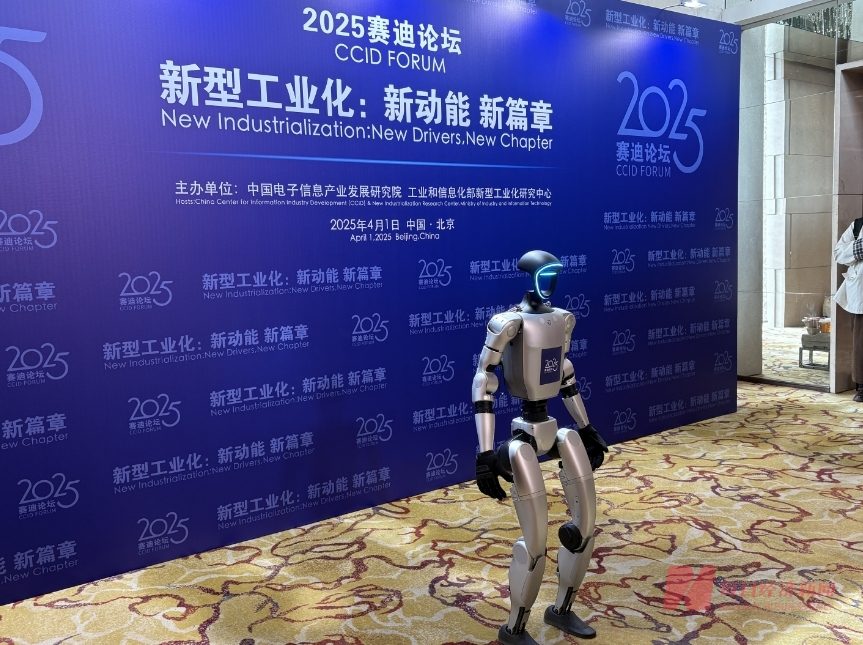
赛迪研究院:软体机器人技术的发展将为具身智能带来新的机遇
Mei Ri Jing Ji Xin Wen· 2025-04-02 11:38
Core Viewpoint - The forum highlighted the rapid development of China's artificial intelligence (AI) industry, with significant growth projections for the AI large model market, which is expected to reach 16.5 billion yuan in 2024 and 62.4 billion yuan by 2028, reflecting a compound annual growth rate of 40% [2]. Group 1: Industry Growth and Trends - The AI industry in China is experiencing robust growth, with the large model market projected to expand significantly in the coming years [2]. - The Chinese government is adopting a cautious yet inclusive approach towards the large model industry, with a surge in related policies expected from 2024 [2]. - Breakthroughs in AI-specific chips and quantum computing are anticipated to enhance computing hardware, leading to more efficient, low-power, and environmentally friendly solutions [2]. Group 2: Technological Innovations - Innovations in embodied intelligence perception and control technologies are emerging, particularly in sensor technology, which is expected to see advancements in high-resolution, low-power, and multi-modal capabilities [2]. - The development of soft robotics is poised to create new opportunities in various fields, including medical rehabilitation and disaster rescue, driven by new soft material research and applications [2]. Group 3: Challenges Facing the Industry - The AI industry faces significant challenges, including bottlenecks in data, algorithms, and computing power [3][5]. - There is a lack of high-quality professional datasets, difficulties in data sharing, and an inadequate data governance framework [5]. - Ethical and safety concerns regarding large models present global governance challenges, alongside a growing talent supply-demand imbalance due to increasing application scenarios [3][5].