AIoT

Search documents
小米集团:2025 年第四季度业绩符合预期;AI 将通过生态与具身智能创造价值增量,核心业务利润将抵御手机 电动车利润率波动;维持买入评级
2026-03-26 13:20
更多资料加入知识星球:水木调研纪要 关注公众号:水木纪要 We highlight key investor focuses and our thoughts around: 1) AI strategy and investments: With continued AI outcomes YTD, management sees Xiaomi's AI capabilities key to empower ecosystem (e.g. MiClaw as the prototype for the future AIOS which may provide superior security and experience vs. third-party solutions) and enable embodied AI in the physical world (i.e. autonomous driving and humanoid robotics) and does not prioritize third-party monetization at the moment. Xiaomi an ...

小米:智能手机与AIoT面临挑战
citic securities· 2026-03-25 12:18
本文是由投资/产品专员而非分析师撰写的文章汇编。 它不构成研究报告,也不应被解释为研究报告,也不旨在提供 专业、投资或任何其他类型的建议或推荐。 CSIWM 个股点评 小米 1810 HK 本文内容由 Ryan Lee (李昊谦) 提供 中信证券财富管理(香港) 中国互联网行业 电话:(852) 2237 9250 / 电邮:wminvestmentsolutions@citics.com.hk 智能手机与 AIoT 面临挑战 摘要 中信证券财富管理与中信里昂研究观点一致。根据中信里昂研究在 2026 年 3 月 25 日发布的题为《Smartphone & AIoT face challenges》的报告,小米 2025 年四季度业绩符合预期,总收入同比增长 7.3%至 1,169 亿元,调整后核 心息税前利润(剔除其他收入)同比下降 32%至 46 亿元。智能手机与 AIoT 业务表现疲软,但电动汽车业务持续亮 眼。分析预计智能手机与 AIoT 业务在 2026 年上半年将面临更多挑战,包括中国国家补贴减少、存储器价格大幅上 涨及中东冲突影响。预计 2026 年一季度电动汽车销售将放缓,但凭借新车型的推出 ...
小米集团-W(01810):小米集团(1810HK)
BOCOM International· 2026-03-12 06:21
Investment Rating - The report assigns a "Neutral" rating to Xiaomi Group (1810 HK) with a target price of HKD 37.00, indicating a potential upside of 10.1% from the current price of HKD 33.62 [1][18]. Core Insights - The report highlights that rising supply chain costs, particularly in the smartphone segment, may pressure future performance, leading to a downgrade in the investment rating to Neutral [2]. - The forecast for Xiaomi's smartphone revenue for 2025 and 2026 has been reduced to RMB 182.2 billion and RMB 166.7 billion, respectively, down from previous estimates of RMB 193.5 billion and RMB 197.7 billion [7]. - The report anticipates a decline in global smartphone shipments by 11% in 2026, projecting a total of 1.13 billion units [7]. - The automotive business is expected to face increased competition, with projected sales of 559,000 vehicles in 2026 [7]. - The AIoT segment is expected to see revenue growth driven by national subsidies and overseas expansion, with projected revenues of RMB 120.2 billion and RMB 133.6 billion for 2025 and 2026, respectively [7]. Financial Overview - Revenue projections for Xiaomi are as follows: RMB 270.97 billion in 2023, RMB 365.91 billion in 2024, RMB 452.33 billion in 2025, RMB 492.47 billion in 2026, and RMB 548.83 billion in 2027, with growth rates of -3.2%, 35.0%, 23.6%, 8.9%, and 11.4% respectively [3][19]. - Net profit is forecasted to be RMB 17.48 billion in 2023, RMB 23.66 billion in 2024, RMB 39.99 billion in 2025, RMB 33.73 billion in 2026, and RMB 41.29 billion in 2027, with significant growth in the earlier years followed by a decline in 2026 [3][19]. - The adjusted EPS for 2025 and 2026 is projected to be RMB 1.49 and RMB 1.53, respectively, down from previous estimates of RMB 1.66 and RMB 1.74 [7][14]. Valuation Metrics - The report employs a sum-of-the-parts (SOTP) valuation method, estimating a target price of HKD 37 based on a P/E ratio of 22.0x for the smartphone and AIoT segments and a P/S ratio of 1.4x for the automotive and AI segments [7][15]. - The overall P/E ratio for 2026 is adjusted to 21.7x, reflecting the revised revenue and profit forecasts [7][15].

闻泰科技最新声明!
券商中国· 2026-02-12 01:20
Core Viewpoint - The company expresses strong disappointment and dissatisfaction with the recent ruling by the Dutch Enterprise Court regarding the case of Nexperia, which did not revoke previous erroneous decisions and failed to restore the company's legitimate control as a shareholder of Nexperia [1][2] Group 1: Court Ruling and Its Implications - The Enterprise Court has maintained temporary measures against the company and an individual, which are causing irreversible damage to a previously successful global semiconductor leader, affecting over 10,000 employees and more than 25,000 customers [2] - The court's decision to initiate an investigation while simultaneously upholding these temporary measures is seen as contradictory and illogical, as it allows the current management to continue detrimental actions against the company [2] Group 2: Company's Stance on Investigation - The company welcomes a fair and transparent investigation, believing that the truth will ultimately support its position that all actions taken were legal, compliant, and in the best interest of all stakeholders [3] - The court has expanded the investigation to include the current temporary management of Nexperia, confirming several claims made by the company regarding the dispute [3] Group 3: Future Actions and Business Overview - The company will continue to pursue all legal avenues to restore its full legitimate control and governance over Nexperia, viewing this as the only correct path to stabilize the semiconductor industry [4] - The company operates two main business segments: semiconductor and product integration, providing semiconductor power devices, analog chips, and manufacturing services for various end products [4]


闻泰科技:极为失望、强烈不满
Xin Jing Bao· 2026-02-12 00:57
Core Viewpoint - The company expresses strong disappointment and dissatisfaction with the recent ruling by the Dutch Enterprise Court regarding the case of Nexperia, which did not revoke previous temporary measures against the company and did not restore its legitimate control rights as a shareholder of Nexperia [1][2]. Group 1: Court Ruling and Its Implications - The Enterprise Court has maintained erroneous temporary measures since October 2025, which are causing irreversible damage to a previously successful global semiconductor leader, affecting over 10,000 employees and more than 25,000 customers [2]. - The court's decision to initiate an investigation while simultaneously upholding these temporary measures is seen as contradictory and illogical, as it allows the current management to continue actions that harm the company's operations and global supply chain stability [2]. Group 2: Company's Stance on Investigation - The company welcomes a fair and transparent investigation, believing that any objective and professional inquiry will confirm that its actions regarding Nexperia have been legal, compliant, and in the best interests of all stakeholders [3]. - The court has expanded the investigation to include the current temporary management of Nexperia, acknowledging several claims made by the company regarding the dispute [3]. Group 3: Future Actions and Business Overview - The company will continue to pursue all legal avenues to restore its full legitimate control and governance rights over Nexperia, viewing this as the only correct path to stabilize the semiconductor industry and protect stakeholder interests [4]. - The company operates two main business segments: semiconductor and product integration, providing semiconductor power devices, analog chips, wafer manufacturing, and packaging testing, as well as R&D and manufacturing services for various end products [4].
华勤技术:2025年整体经营双双实现高速增长
Zheng Quan Ri Bao· 2026-02-03 13:14
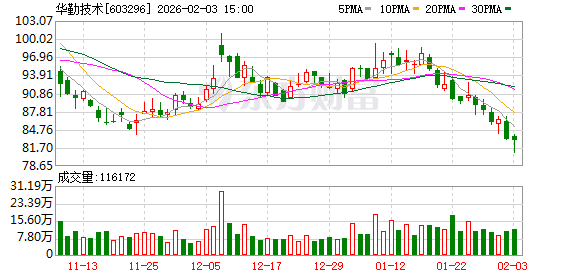
Core Viewpoint - The company, Huqin Technology, anticipates significant growth in overall operations by 2025, driven by its 3+N+3 strategic layout and balanced development across multiple business segments [2] Business Performance - By 2025, the revenue structure across various business segments is expected to be relatively balanced, with a healthy customer structure where the top 5 customers account for just over 50% and the top customer represents around 15% [2] - The data center business is projected to see revenue nearly double year-on-year, while mobile, wearable, and AIoT segments are expected to exceed 50% year-on-year growth; the PC business is also anticipated to grow over 20% year-on-year [2] Profitability - Despite slight variations in gross margin levels due to industry factors, the net profit margins across different business segments are expected to be very close, showing no significant differences [2]

拟最高25亿港元回购股份,小米集团再“护盘”
Huan Qiu Lao Hu Cai Jing· 2026-01-23 03:46
Group 1 - Xiaomi Group announced a share buyback plan not exceeding HKD 2.5 billion, targeting Class B ordinary shares, with all repurchased shares to be canceled [1] - The buyback plan is set to start on January 23, 2026, and will end on the earliest of the day before the 2026 annual general meeting, when the total buyback cost reaches the HKD 2.5 billion cap, or if terminated early [1] - Following the announcement, Xiaomi's stock price rose over 3% at the opening on January 23, closing at HKD 36.02 per share, a 2.21% increase from the previous day, with a total market capitalization of HKD 775.8 billion [1] Group 2 - Since the beginning of 2026, Xiaomi has conducted 13 share buybacks, totaling approximately 60.56 million shares, which is 0.23% of the total share capital, with a cumulative investment of about HKD 2.25 billion, representing 30% of the total buyback amount for 2025 [2] - Xiaomi's co-founder and vice chairman, Lin Bin, announced a long-term plan to sell up to USD 5 billion of Class B ordinary shares annually starting December 2026, with a total cap of USD 20 billion, primarily to establish an investment fund [2] - Xiaomi's core business spans four major sectors: smartphones, AIoT, internet services, and new energy vehicles, establishing the largest consumer-grade AIoT platform globally [2] Group 3 - In the first three quarters of 2025, Xiaomi achieved a revenue of CNY 340.37 billion, a year-on-year increase of 32.49%, and a net profit attributable to shareholders of CNY 35.1 billion, surpassing the total for 2024, with a year-on-year growth of 139.87% [3]
甬矽电子:AIoT营收占比接近70%
Zheng Quan Ri Bao Wang· 2026-01-21 12:15
Core Viewpoint - The company, Yongxi Electronics, reports that AIoT revenue accounts for nearly 70% of its total revenue, indicating a strong focus on innovation-driven growth in this sector [1] Group 1: Revenue Breakdown - AIoT revenue constitutes approximately 70% of total revenue, with expectations for continued growth driven by increased penetration of new application scenarios under AI [1] - PA revenue accounts for about 10%, with future focus on PAMiF and PAMiD module products [1] - Security revenue also represents around 10%, showing stable overall growth [1] - Revenue from computing and automotive-grade products combined accounts for about 10%, with anticipated rapid growth in these areas due to the development of domestic automotive design companies and localization strategies of overseas automotive giants [1]

“造船远航”时代已来,解码京企“出海”逻辑
Xin Jing Bao· 2025-12-31 06:10
Core Insights - Chinese enterprises are accelerating their globalization efforts, transitioning in foreign trade towards quality, efficiency, and innovation-driven models [1] - Beijing is emerging as an international technology innovation center, enhancing competitiveness in smart technology, green trade, and digital services through institutional innovation and reform [1][2] - The number of unicorn companies in China has reached 409, accounting for nearly 30% of the global total, with Beijing housing 115 of these, valued at $594.9 billion [1] Group 1: Globalization Strategies - Beijing enterprises are shifting from "product output" to "ecosystem output," exemplified by Xiaomi's integration of hardware, software, and services in overseas markets [1] - JD Group is exporting its mature supply chain and logistics solutions to assist in the digital transformation of local businesses in Southeast Asia, showcasing the global empowerment value of the "Chinese supply chain ecosystem" [1] - Liard has expanded its overseas business significantly, with a 40% year-on-year growth in its overseas smart display business in the first half of 2022 [5][6] Group 2: Ecosystem Development - Liard's global strategy has evolved from "China screen" to "world window," with a focus on project, brand, and ecosystem exports [6] - Kunlun Wanwei has successfully entered overseas markets through a matrix of gaming and social applications, now focusing on artificial intelligence to build a global AI ecosystem [6] - Fourth Paradigm is establishing an industry AI application ecosystem globally, following a path of technology validation and benchmark establishment [7] Group 3: Policy and Future Outlook - The Beijing Municipal Economic and Information Bureau aims to establish a comprehensive service system for enterprises going abroad by 2028, linking over 100 international organizations and establishing 20 overseas service stations [9] - The dual drive of policy support and platform ecosystem will enable Beijing enterprises to expand into global markets more robustly and efficiently, enhancing both the quantity and quality of outbound enterprises [10] - The evolution of Beijing enterprises' globalization strategies reflects a transition from "borrowing boats to go to sea" to "building ships for long voyages," embedding technology standards and business models into the global value chain [10]

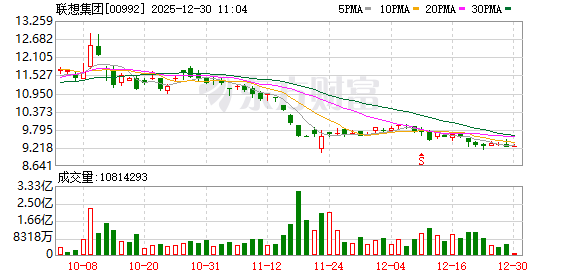
联想集团中国首席战略官:个人AI是下一个阶段创新和普惠的关键方向
Xin Hua Cai Jing· 2025-12-30 03:04
Core Insights - Personal AI is identified as a key direction for innovation and inclusivity, requiring collaboration across the entire industry chain for scalable, trustworthy, and sustainable evolution [2][3] - The current AI product and service architecture is primarily based on cloud-based large models, which lack capabilities for continuous perception, long-term memory, and autonomous decision-making, thus failing to create a truly personalized service loop [2] - The white paper released by Lenovo and IDC defines the current AI form as "Public AI," which significantly lowers the usage threshold and enhances efficiency, but still provides average services rather than personalized support [2] Industry Trends - Personal AI will adopt a hybrid architecture of edge and cloud to address user trust, cost control, response speed, and continuous companionship issues [3] - The rise of personal AI is reshaping the industry structure into a distributed three-layer architecture centered around individuals, consisting of integration, service, and capability layers [3] - Major companies like Intel, AMD, Qualcomm, MediaTek, Apple, and NVIDIA are launching next-generation chips optimized for AI inference, providing the necessary computational power for multimodal, continuous memory, and personalized services [3] Company Developments - Lenovo is actively developing and iterating its Tianxi personal super intelligent system (Tianxi AI) and various smart terminals embedded with Tianxi AI to enhance user experience [4] - The Tianxi AI has been upgraded to version 3.5 and is rapidly iterating, contributing to significant growth in Lenovo's AI mobile phones and tablets, with growth rates exceeding 90% and 100% respectively [4] - The AIoT product line is expanding with new categories such as AI glasses, AI headphones, and AI home products being introduced [4]