Agent Runtime

Search documents
怎么看亚马逊和阿里云涨价
2026-01-26 15:54
Summary of Conference Call on Cloud Services Price Trends Industry Overview - The conference call discusses the recent price increases in cloud services, particularly focusing on Amazon Web Services (AWS) and Alibaba Cloud, with a specific emphasis on AI and GPU-related services [1][2]. Key Points and Arguments Price Increases - AWS has raised prices for GPU-related cloud services by approximately 15%, with specific instances increasing from $30.34 to $39 per hour, breaking a trend of price reductions since 2020 [2]. - Alibaba Cloud has followed suit, increasing prices for AI computing services while basic cloud services like CPU instances and object storage are still in a price reduction cycle, with some overseas ECS instances seeing price drops of 10%-12% [2]. Scope of Price Increases - Price hikes are not limited to GPU services but also include AI-related PaaS offerings such as virtualization and containerization, with expected increases of 5%-8% in the future [1][5]. - Current AI infrastructure, including GPU, CPU, and storage devices, has already seen price increases, while PaaS and SaaS layers have not yet shown clear price hike expectations [3][13]. Supply Chain and Market Dynamics - A shortage of storage chips is a primary driver of price increases, with expectations that supply issues will persist until mid-2027 [8]. - The shift in demand from training to inference in AI workloads is causing a non-linear increase in task volume, contributing to the upward price trend [7][8]. Technological Changes - The cloud computing architecture is evolving towards intelligent computing centers, with significant changes in network architecture, business applications, storage technology, and energy management [9][11]. - New technologies such as SAD QLC storage and HAMR are being introduced to enhance performance and cost-effectiveness in AI databases and training tasks [12]. Competitive Landscape - The domestic cloud computing market has transitioned from a three-player model to a multi-modal structure, including traditional giants, telecom operators, emerging AI computing companies, and vertical private cloud enterprises [16]. Additional Important Insights - The price increases are partly due to the need for companies to balance operational costs and recovery periods, especially in the AI computing sector, where high operational costs can lead to prolonged periods of loss [18]. - The profit margins for companies have improved post-price hikes, emphasizing the importance of ensuring that investments in AI capabilities yield profitability [19]. - Small and medium-sized customers are sensitive to price increases and may consider building their own data centers if costs become prohibitive, potentially shifting demand away from major cloud providers [21]. Conclusion - The overall trend indicates a sustained increase in prices for AI and GPU-related cloud services, driven by supply chain constraints and evolving market dynamics, while basic services may continue to see competitive pricing to attract smaller clients.

AI版街边游戏,重塑中国烟火气
3 6 Ke· 2025-12-17 03:30
Core Insights - AI is transforming street vendors in China, introducing practical applications such as AI perfume, AI bracelets, AI chess, AI billiards, and AI haircuts, adding a unique charm to street life [1][2][4] Group 1: AI Applications in Street Markets - AI perfume is gaining popularity at markets, where customers can create personalized scents by inputting their names and MBTI types into a small program powered by a large AI model [2][4] - In Beijing's Panjiayuan antique market, AI bracelets are being sold, which utilize NFC technology to provide daily fortune updates based on user input [5][6] - AI billiards and AI chess are emerging as new attractions, with AI billiards using projection technology to guide players, while AI chess allows users to play against a robotic opponent [8][9] Group 2: Business Models for AI Street Vendors - The first business model involves AI product franchise, requiring an investment starting from hundreds of thousands, leveraging existing large AI models for new ventures [11][12] - The second model is hardware purchase and retail, where AI chess robots are sold online, allowing low-cost entry for street vendors [13][15] - The third model is self-development using user-friendly AI development tools, significantly lowering the cost and complexity of creating AI applications for street vendors [16][17] Group 3: Infrastructure and Agent Development - The rise of AI street vendors is supported by advancements in AI infrastructure, particularly the development of Agent Infrastructure (Agent Infra) that enhances the stability and efficiency of AI applications [20][22] - Various intelligent agents collaborate behind the scenes to facilitate the rapid development of AI applications without the need for professional developers [20][21] - The success of AI-enabled street vendors relies on the seamless integration of technology into everyday experiences, rather than overtly high-tech solutions [23]


AI路边摊,下一个市民经济风口
创业邦· 2025-12-08 03:24
Core Viewpoint - The article discusses how AI is transforming street vendor businesses in China, introducing innovative applications such as AI perfume customization, AI bracelet design, AI billiards, and AI chess, which enhance customer engagement and personalization [5][6][13]. Group 1: AI Applications in Street Vendors - AI perfume customization allows customers to generate personalized fragrance recipes by inputting their names and MBTI personality types, creating a unique shopping experience [7][9]. - AI bracelets equipped with NFC technology are being sold, which provide daily fortune updates based on user interactions, showcasing the integration of technology into traditional crafts [10][14]. - AI billiards and chess are emerging as new entertainment options, with AI systems providing guidance and interaction for players, making these activities more accessible [12][14]. Group 2: Business Models and Costs - The article outlines three business models for AI street vendor startups: 1. AI product franchise model with startup costs starting from hundreds of thousands [14][17]. 2. Hardware purchase and retail model with costs under ten thousand, making it a low-entry barrier for entrepreneurs [16][17]. 3. Self-development model using user-friendly AI development tools, significantly reducing initial investment [17][18]. Group 3: Infrastructure and Stability - The rapid development of AI infrastructure in China has enabled the proliferation of AI applications in street vending, marking a new phase in AI technology [20][21]. - The stability and reliability of AI systems are crucial for customer experience, as issues like erratic behavior or system failures could undermine the business [20][21]. - Companies are investing in Agent Infrastructure to ensure smooth operation of AI applications, which is essential for the success of AI-enabled street vendor businesses [21].

腾讯出牌 全面开放AI能力,适配国产芯片
2 1 Shi Ji Jing Ji Bao Dao· 2025-09-16 23:10
Core Insights - Tencent is fully opening its AI capabilities, viewing it as a core engine for driving industrial efficiency transformation [1] - The company aims to shift from scale expansion to efficiency competition amid rising costs and profit pressures [1] - Tencent's strategy includes leveraging its vast internal business as a testing ground for AI applications before offering them externally through Tencent Cloud [2] AI Implementation Acceleration - Tencent is accelerating the transition of AI from a technical concept to a practical productivity tool, focusing on internal large-scale scenarios for validation [2] - The company has launched the "Agent Runtime" solution, which supports rapid deployment and high concurrency for AI applications [2] - Tencent's heterogeneous computing platform is now compatible with mainstream domestic chips, providing cost-effective AI computing power [2] Shift in AI Demand - The industry is witnessing a shift from AI training to inference, with 2025 seen as a pivotal year for this transition [3] - There is a significant increase in demand for AI inference computing power, reflecting a broader range of application scenarios and cost sensitivity [3] - Tencent's AI-native application "Tencent IMA" saw its monthly active users increase 80 times in six months, indicating a surge in AI application usage [3] Model and Platform Development - Tencent's self-developed "Hunyuan" model has upgraded its modeling accuracy by three times [4] - The intelligent agent development platform (ADP) has undergone nearly 600 feature iterations in three months to meet enterprise needs [4] - Over 90% of Tencent's engineers use the AI programming tool CodeBuddy, which has reduced coding time by over 40% [4] Global Expansion Efforts - Tencent is accelerating its internationalization process to support Chinese enterprises going global [6] - The company plans to invest $150 million in building its first data center in Saudi Arabia and a third data center in Osaka, Japan [6] - Tencent Cloud successfully migrated multiple services of Indonesia's GoTo Group from other cloud platforms, marking a significant achievement in its migration capabilities [6][7] Performance in Overseas Markets - Tencent Cloud's overseas business has seen remarkable growth, with the number of overseas clients doubling in the past year [7] - More than 90% of leading outbound internet companies and 95% of top outbound gaming companies have chosen Tencent Cloud [7]

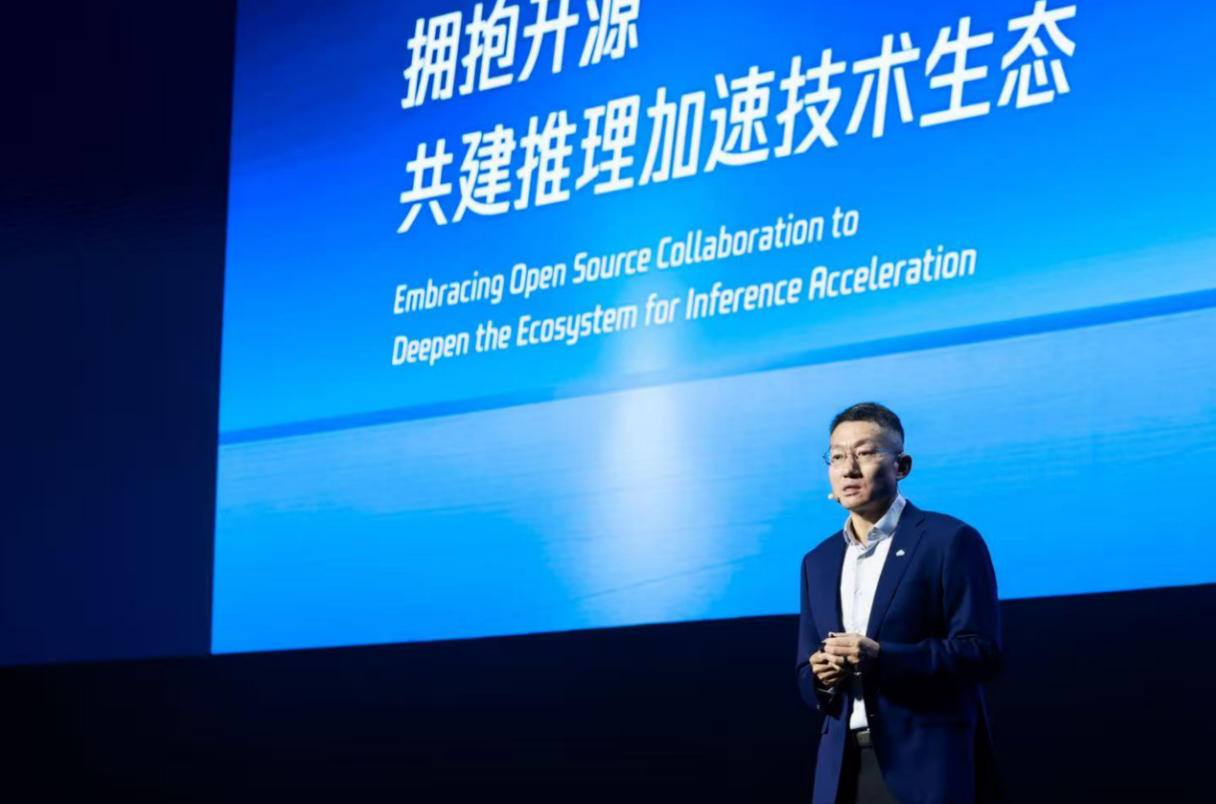
腾讯邱跃鹏:推理需求爆发,云基础设施也要同步升级
Hua Er Jie Jian Wen· 2025-09-16 08:04
Core Insights - The demand for AI inference is surging as the industry shifts focus from training to inference, coinciding with the anticipated explosion of AI applications in 2025 and the emergence of the Agent era [3][4] Group 1: Infrastructure Upgrades - Cloud service providers are actively upgrading their cloud infrastructure to meet the rising demand for AI inference and Agent deployment [4] - Tencent Cloud has made significant advancements in inference acceleration, Agent infrastructure, and international expansion [4][5] - The company has contributed multiple optimization technologies to open-source communities and developed the FlexKV multi-level caching technology to reduce memory bottlenecks, achieving a 70% reduction in first-byte latency [4] Group 2: AI Computing Capabilities - Tencent Cloud's heterogeneous computing platform integrates various chip resources to offer cost-effective AI computing power, fully compatible with mainstream domestic chips [5][6] - The long-term strategy of Tencent Cloud focuses on software capabilities for full-stack optimization, enhancing the performance of different chip types [6] Group 3: Agent Solutions - Tencent Cloud introduced the Agent Runtime solution, which includes five key capabilities: execution engine, cloud sandbox, context services, gateway, and security observability services, with a cloud sandbox startup time of just 100 milliseconds [6] - The Cloud Mate service, composed of various sub-Agents, aims to assist clients in managing their cloud journeys more effectively, visualizing cloud architecture, intercepting risks, and significantly improving issue resolution efficiency [6][7] - Internally, Cloud Mate has achieved a 95% interception rate for risky SQL queries and reduced troubleshooting time from 30 hours to as fast as 3 minutes [7] Group 4: Competitive Landscape - The arrival of the Agent era has intensified competition among cloud service providers, who are gearing up for this technological arms race [8]
腾讯:AI能力全面开放,全面适配主流国产芯片
硬AI· 2025-09-16 06:52
Core Viewpoint - Tencent is fully opening its artificial intelligence capabilities to transform AI from a concept into productivity, aiming to enhance industry efficiency and global revenue scale [2][3][4]. Group 1: AI Strategy and Product Development - Tencent announced the "Tencent Cloud Intelligent Agent Strategic Overview," which includes a comprehensive release of its development platform, application scenarios, infrastructure, and model capabilities [3][6]. - The company launched several new products, including the Mixed Yuan 3D 3.0 model and the Intelligent Agent Development Platform (ADP) 3.0, to accelerate the implementation of practical AI across various industries [3][6][7]. - The latest Mixed Yuan 3D 3.0 model boasts a threefold increase in modeling accuracy and a geometric resolution of 1536³, emphasizing a user-centric approach to AI [7]. Group 2: AI Performance and Business Impact - In Q2 2025, Tencent's To B business revenue reached 55.5 billion yuan, reflecting double-digit growth, indicating that AI has become a new revenue growth engine for the company [4][11]. - AI applications have shown significant results, with the daily active users of the AI-native application "Tencent Yuanbao" ranking among the top three in China, and the AI features in Tencent Meeting seeing a 150% year-on-year increase in user numbers [11]. Group 3: Globalization Strategy - Tencent is enhancing its international strategy by upgrading its infrastructure, technical products, and service capabilities, with overseas customer numbers doubling over the past three years [13]. - The company plans to invest $150 million in building its first data center in the Middle East and has already established multiple data centers in Japan [13].