火箭回收技术

Search documents
长征十号箭体,降落细节披露
财联社· 2026-02-12 04:57
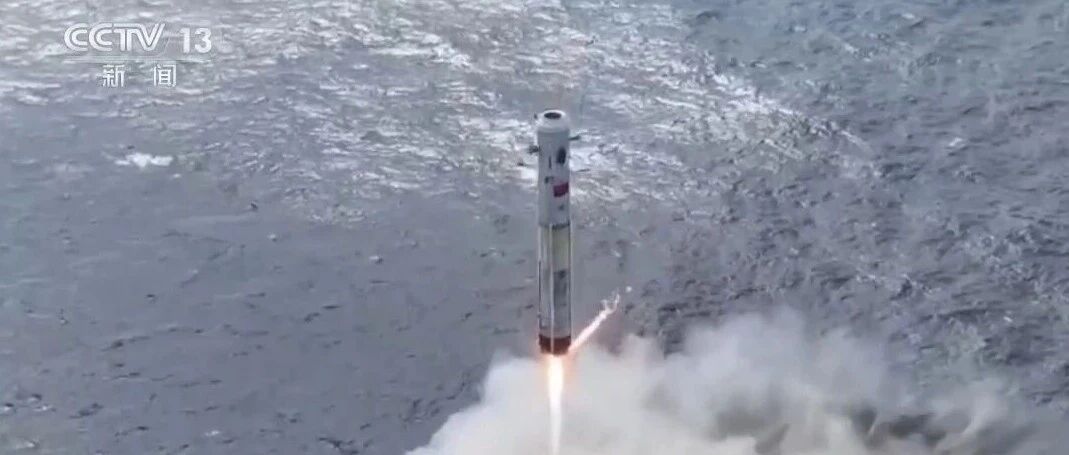
Core Viewpoint - The successful test of the Long March 10 rocket system and the Dream Boat manned spacecraft marks a significant breakthrough in China's lunar exploration program, particularly in validating rocket recovery technology [1][10]. Group 1: Test Overview - The test was conducted at the Wenchang Space Launch Site, where the Long March 10 rocket was prepared for two critical actions: sending the Dream Boat spacecraft to the maximum dynamic pressure zone for escape and verifying the recovery capability of the rocket's first stage [1]. - Approximately 65 seconds after launch, the spacecraft successfully escaped, leading to applause from the team [4]. - After about 470 seconds of flight, the rocket's first stage accurately splashed down in the designated sea area, resulting in cheers and applause within the command center [6]. Group 2: Team Reactions and Future Implications - Team members expressed pride and a sense of achievement following the successful test, highlighting the significance of the results [10]. - The successful test indicates a major breakthrough in the key technology for reusable rockets, which is crucial for China's future endeavors in space exploration [10].


470秒!中国火箭成功回收
Yang Shi Xin Wen Ke Hu Duan· 2026-02-12 03:32
Core Insights - The successful test of the Long March 10 rocket system marks a significant milestone in China's manned lunar exploration program, validating key technologies for rocket recovery and escape flight of the Mengzhou spacecraft [1][9]. Group 1: Test Details - The test was conducted at the Wenchang Space Launch Site, where the Long March 10 rocket was prepared for two critical actions: sending the Mengzhou spacecraft to the maximum dynamic pressure zone for escape and verifying the recovery capability of the rocket's first stage [1]. - Approximately 65 seconds after launch, the spacecraft successfully escaped, leading to applause from the team [3]. - After about 470 seconds of flight, the rocket's first stage accurately splashed down in the designated sea area, resulting in cheers and applause within the command center [5]. Group 2: Company Statements - Representatives from China Aerospace Science and Technology Corporation expressed pride and a sense of achievement following the successful test, highlighting the challenges ahead in the development of reusable rocket technology [9][11]. - The team emphasized the importance of this success in the context of international advancements in space technology, noting the complexity and difficulty of the task [11].
长征十号火箭落歪了?内部人士回应
Xin Jing Bao· 2026-02-12 02:32
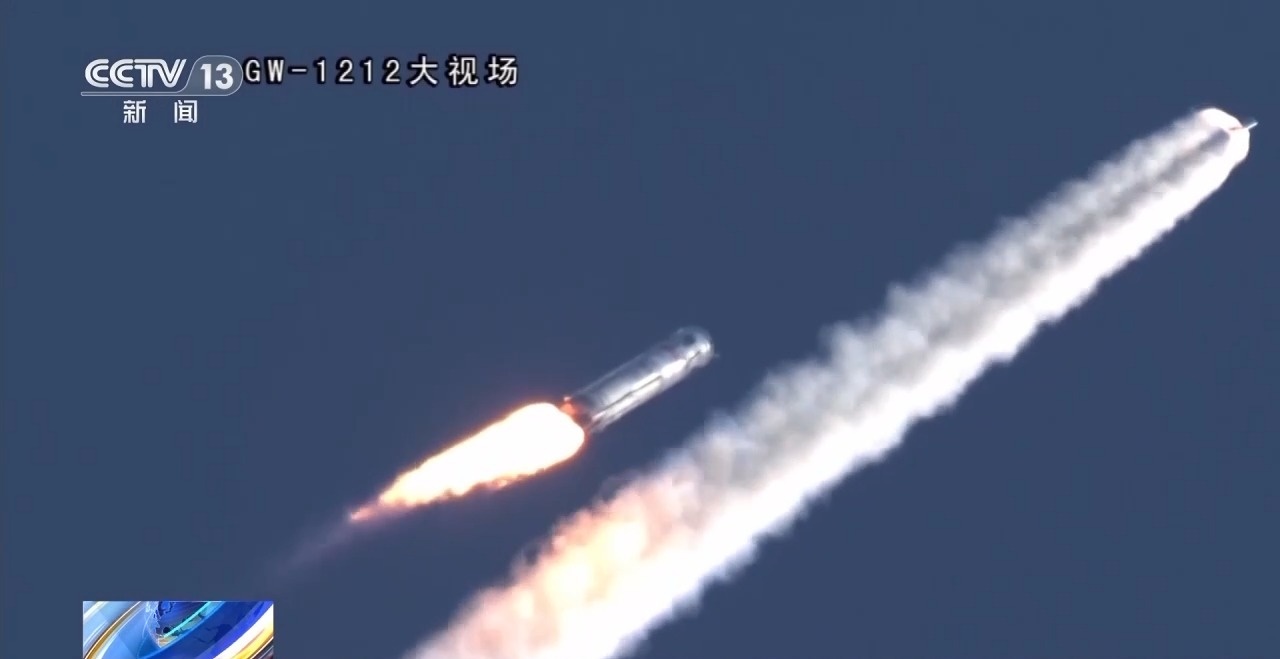
Core Viewpoint - The successful demonstration of the Long March 10 rocket system and the maximum dynamic pressure escape flight test of the Dream Boat manned spacecraft indicates advancements in China's aerospace recovery technology, despite initial perceptions of failure due to the rocket's landing location [1] Group 1: Launch Details - On February 11, a successful test was conducted at the Wenchang Space Launch Site involving the Long March 10 rocket system [1] - The first stage of the Long March 10 rocket did not land on the designated recovery platform but splashed down in the nearby sea [1] Group 2: Internal Insights - Internal sources clarified that the predetermined theoretical landing point was not the platform, but rather designed to be near it, considering recovery costs and other factors [1] - This test showcases the precision of China's recovery technology, suggesting future capabilities for accurate control of rocket body landing points [1]
专家谈长十火箭低空飞试验:“低空”不低 挑战空前
Xin Lang Cai Jing· 2026-02-11 08:24
Core Viewpoint - The Long March 10 rocket's low-altitude flight test is a significant milestone in China's space exploration efforts, showcasing unprecedented technical challenges and risks despite being labeled as a "low-altitude" test [1][2]. Group 1: Long March 10 Rocket Overview - The Long March 10 series is designed for manned lunar exploration, featuring high reliability and large payload capacity, including the Long March 10 and Long March 10A configurations [1][2]. - The Long March 10 rocket is a three-stage rocket with a diameter of 5 meters and a maximum height of 92.5 meters, equipped with two boosters for manned lunar missions [1]. - The Long March 10A rocket is a two-stage rocket, also with a diameter of 5 meters, and a maximum height of 67 meters, featuring a reusable first stage for space station applications [2]. Group 2: Technical Aspects of the Low-Altitude Flight Test - The low-altitude flight test is part of a four-step implementation plan, which includes engine testing, tethered ignition, low-altitude flight, and technical verification [3]. - The core technical challenge of the test involves maintaining stable flight after the escape of the crewed spacecraft at a maximum dynamic pressure point at approximately 11 kilometers altitude [3][4]. - The recovery of the rocket is an additional challenge, utilizing a step-by-step verification strategy and simulating recovery actions based on telemetry data [4].
中科宇航公布新专利,可降低火箭回收难度
Qi Cha Cha· 2026-02-11 06:36
Core Viewpoint - Beijing Zhongke Aerospace Technology Co., Ltd. has applied for a patent for a system featuring a robust landing auxiliary support structure for rocket recovery, indicating advancements in aerospace recovery technology [1] Group 1: Patent Details - The patent pertains to the field of rocket recovery and robust landing auxiliary technology [1] - It includes components such as a conical capture frame and an external support connection [1] - The conical capture frame consists of a large conical capture frame and a single-leg support mechanism, designed to facilitate the recovery of rockets [1] Group 2: Technical Features - The large conical capture frame is structured as a through-going cone, which aids in the recovery process [1] - The system utilizes the interaction between the conical capture frame and the external support connection to achieve stable rocket recovery [1] - The funnel-shaped structure increases the landing position range for rockets, thereby reducing recovery difficulty [1]
中国火箭新玩法!“渔网式”回收兜火箭,完爆马斯克“筷子夹”
Xin Lang Cai Jing· 2026-02-06 14:25
Core Viewpoint - China's new rocket recovery method, described as a "fishing net" style, is positioned to outperform SpaceX's "chopstick" approach, showcasing advancements in aerospace technology [2] Group 1: Technology Innovation - The "fishing net" recovery system is designed to enhance the efficiency of rocket landings and reusability, potentially reducing costs associated with space missions [2] - This innovative approach contrasts with SpaceX's current method, indicating a competitive edge for Chinese aerospace technology in the global market [2] Group 2: Industry Impact - The development of this technology could lead to increased investment and interest in China's space industry, further establishing its position as a leader in aerospace innovation [2] - The success of this recovery method may influence future designs and strategies within the global aerospace sector, prompting other companies to explore similar technologies [2]
海南商业航天发射场计划逾2亿元采购三年内发射所需液氧液氮、氦气以及液态甲烷
Xin Lang Cai Jing· 2026-01-27 06:05
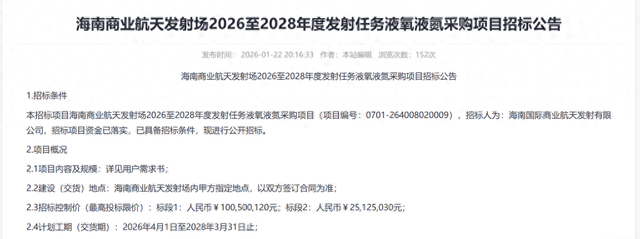
Core Insights - Hainan International Commercial Launch Company is planning to procure liquid oxygen, liquid nitrogen, helium, and liquid methane for its launch operations from 2026 to 2028, with a total budget of approximately 247 million yuan [1] - The Hainan commercial launch site has successfully completed 12 launch missions to date, contributing to China's commercial space industry, which is experiencing rapid growth and is projected to reach a scale of 2.5 to 2.8 trillion yuan [3] - The site aims to complete over 20 launch missions in 2026 and is advancing its second phase of construction while initiating the third phase of planning [4] Group 1 - The procurement project includes a budget of 126 million yuan for liquid oxygen and liquid nitrogen, 76.67 million yuan for helium, and 44.41 million yuan for liquid methane, with a service period from April 1, 2026, to March 31, 2028 [1] - In 2026, the launch site successfully completed two missions using Long March 8 and Long March 12 rockets, successfully placing 37 low-orbit satellites into their designated orbits [2] - The commercial space industry in China is projected to achieve an annual compound growth rate of over 20%, with more than 600 commercial space companies operating [3] Group 2 - The Hainan commercial launch site has been operational for 878 days, benefiting from its location in Wenchang, which enhances rocket launch efficiency due to its low latitude [3] - The second phase of the launch site construction is over 50% complete, focusing on the construction of launch pads 3 and 4 [6] - The development of reusable rocket technology is seen as a key driver for reducing launch costs and enhancing the commercial viability of the space industry [6]
商业航天行业研究:商业火箭产业链梳理——基于一二级产业的视角
SINOLINK SECURITIES· 2026-01-23 00:24
Investment Rating - The report suggests a positive investment outlook for the commercial rocket industry, particularly focusing on the upcoming key validation window in 2026-2027 for Chinese commercial rocket companies [1][12]. Core Insights - The commercial aerospace industry is experiencing a global resonance, with multiple medium and large rocket launches expected in China by 2026, leading to a dense launch schedule and large-scale satellite networking by 2027 [1][11]. - The success rate of rocket launches and corresponding payload capacity are critical indicators of a company's competitive edge in future commercial operations [1][12]. - The report emphasizes the importance of engine design capabilities, thrust, and parallel capabilities as core focus areas for rocket engines, with a shift towards full-flow staged combustion liquid oxygen-methane engines anticipated [2][17]. Summary by Sections 1. Commercial Rocket Launch Status and Outlook - 2026-2027 is identified as a critical validation window for Chinese commercial rocket companies, with many planning to launch liquid rockets and conduct recovery tests [12][13]. - Successful completion of high payload or reusable flights will provide companies with reliability and cost advantages, potentially securing contracts with leading satellite companies [12][13]. 2. Engine Development - The majority of Chinese commercial rocket companies utilize gas generator cycle engines, with future developments expected to focus on full-flow staged combustion engines and nuclear-powered engines [2][17]. - The report highlights that successful launches of liquid rocket engines have primarily been sourced from state-owned enterprises, with only a few private companies achieving launch success [2][28]. 3. 3D Printing Technology - 3D printing is recognized as a key technology for reducing costs and shortening production times in commercial aerospace, with significant applications in manufacturing lightweight and complex components [3][30]. - The Chinese 3D printing market is projected to reach approximately 41.5 billion yuan in 2024, with the aerospace sector accounting for about 16.7% of this market [31][34]. 4. Structural Components - Structural components account for approximately 25%-30% of commercial rocket costs, with tank costs exceeding 60% of this value [36][37]. - The report anticipates a trend towards larger structural components as engine thrust increases, with a shift from aluminum alloys to higher strength, lower cost stainless steel materials [36][37]. 5. Control Systems - The flight control software is described as the "brain" of the rocket, primarily developed in-house by rocket companies, with servo systems representing 6%-10% of the rocket's value [4][39]. - The report notes a transition from electric servos to electromechanical hydraulic servos in commercial aerospace [4]. 6. Investment Recommendations - The report recommends focusing on listed companies within the system and those closely collaborating with leading private rocket companies, particularly in high-value segments such as 3D printing, tanks, servos, and materials [5].
火箭回收,卫星量产:中国商业航天的“降本增效”之战
材料汇· 2026-01-16 15:41
Group 1: Launch Vehicles - The main types of launch vehicles include solid rockets, liquid rockets, and hybrid rockets, classified by their propulsion systems [4][5][6] - Launch vehicles can also be categorized by payload capacity: small (less than 2 tons), medium (2-20 tons), large (20-100 tons), and heavy (over 100 tons) [5][6] - The structure of a launch vehicle generally consists of three main parts: the airframe, propulsion system, and control system [6] Group 2: Cost Reduction in Commercial Rockets - The hardware costs of first and second stage rockets are significant, with engines accounting for over 50% of total costs in some cases, indicating that reusability could be a key to cost reduction [19][21] - SpaceX's Falcon 9 rocket has demonstrated substantial cost savings through reusability, with the total cost for a new rocket at $50 million, while reused rockets can significantly lower costs per launch [25][24] - The cost structure of Falcon 9 shows that hardware costs dominate, making up approximately 60% of the total launch cost, while operational costs can be reduced through effective reuse strategies [21][24] Group 3: Development of China's Space Industry - China's launch frequency has rapidly increased, with the number of launches rising from 39 in 2018 to 68 in 2024, positioning China as a leader in global launch activities [32][34] - In 2024, the China Aerospace Science and Technology Corporation conducted 51 launches, accounting for 75% of the total, while private companies contributed 12 launches, indicating a growing role for the private sector [41][42] - The proportion of commercial launches in China has surged, with 43 commercial launches in 2024, representing 63.2% of total launches, a significant increase from previous years [45] Group 4: SpaceX Starlink Program - The Starlink project aims to deploy 42,000 satellites in low Earth orbit to provide global high-speed internet services and support future Mars missions [47][48] - Starlink has undergone multiple iterations, with advancements in satellite technology, including the introduction of inter-satellite laser links and improved ground terminals [59][60] - The deployment of Starlink satellites is structured in phases, with the first phase involving 1,584 satellites for initial coverage, followed by additional satellites to complete global coverage [54][57]
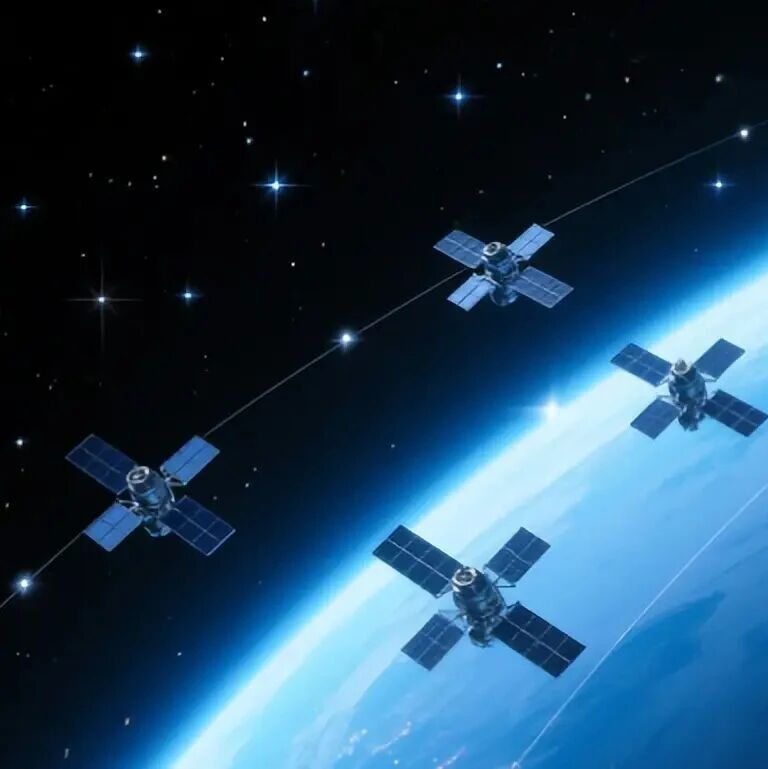
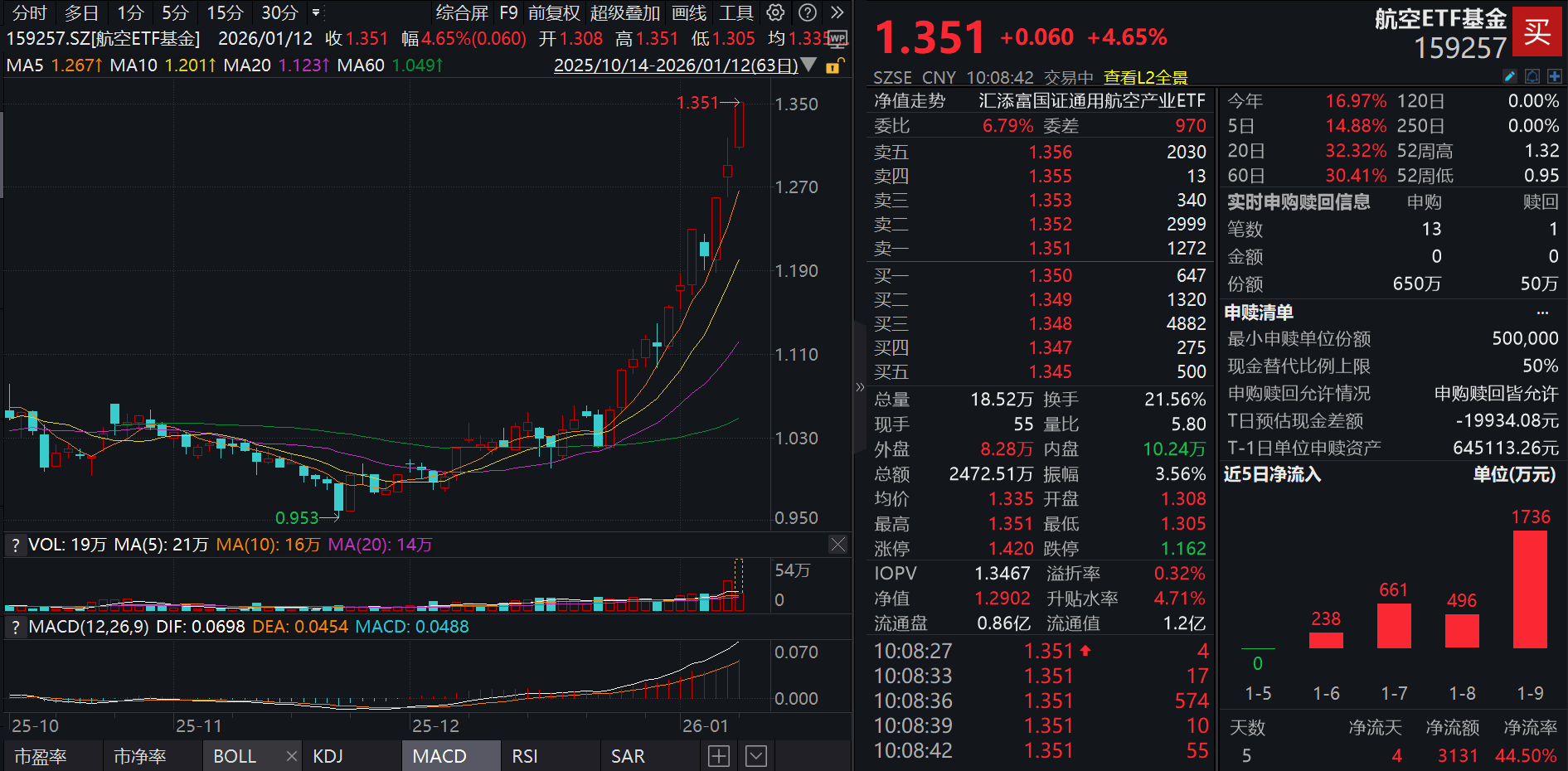
新增20万颗卫星申请!商业航天再爆发,航空ETF基金(159257)涨5%再创新高,连续5日吸金近4000万元!奔赴星辰大海,商业航天迈向黄金时代?
Sou Hu Cai Jing· 2026-01-12 02:27
Core Viewpoint - The A-share market shows a mixed trend, with the aviation ETF fund (159257) experiencing significant growth, driven by strong inflows and a booming commercial aerospace theme [1][5]. Group 1: Market Performance - The aviation ETF fund (159257) rose nearly 5% and reached a new high, marking its third consecutive day of gains, with over 800 million yuan in inflows on the day and nearly 4 billion yuan over the past five days [1]. - Key component stocks of the aviation ETF fund saw substantial increases, with Tianyin Electric and China Satellite hitting the daily limit, and Aerospace Electronics rising over 9% [3]. Group 2: Industry Developments - China submitted an application to the International Telecommunication Union (ITU) for an additional 203,000 satellites, indicating a strong push in the satellite industry, particularly with the CTC-1 and CTC-2 constellations [5]. - By 2025, China is expected to achieve multiple breakthroughs in manned spaceflight, deep space exploration, and commercial aerospace, with a projected 92 launches, a 30% increase from 2024 [6]. Group 3: Investment Opportunities - The commercial aerospace sector is transitioning from a state-led model to a private-led, cost-focused model, which is expected to drive innovation and reduce costs significantly [7]. - The industry is anticipated to enter a high-quality development phase, with a focus on rocket manufacturing, satellite applications, and terminal services, aiming for a market size of over one trillion yuan [8]. Group 4: Technological Advancements - The development of reusable rocket technology is expected to significantly lower satellite launch costs, with potential reductions from approximately $67 million to between $2 million and $5 million per launch [9]. - The successful implementation of this technology is crucial for meeting the high-frequency launch demands of satellite constellations [10]. Group 5: ETF Fund Composition - The aviation ETF fund (159257) has a significant focus on the defense and military industry, which constitutes 61.6% of its index, along with notable weights in low-altitude economy and commercial aerospace sectors [10][12]. - The fund's top ten component stocks include several low-altitude economy concept stocks, indicating a strong alignment with emerging market opportunities [12][14].