
DRAM/NAND

Search documents
韩国股市,想说冷静不容易
远川投资评论· 2026-03-12 07:05
Core Viewpoint - The recent volatility in the South Korean stock market, particularly the KOSPI index, has been marked by extreme fluctuations, with significant drops and recoveries driven by geopolitical tensions and market reactions to external factors [2][6][25]. Market Performance - The KOSPI index experienced a remarkable rise of over 160% from 2025 to February 2026, making it one of the best-performing markets globally [6][10]. - On March 3, 2026, the KOSPI fell over 12% in a single day, marking its largest drop in history, followed by a recovery of 9.63% the next day after a government intervention of 100 trillion KRW (approximately 68 billion USD) [2][10]. - The index's volatility continued, with fluctuations of nearly 6% in a single day, reflecting the market's erratic behavior [2][3]. Investor Behavior - Local retail investors have been net buyers during the recent market turmoil, while foreign investors have been net sellers, reminiscent of patterns observed during the 2020 pandemic [3][18]. - In February 2026, foreign investors sold a record 21.1 trillion KRW (approximately 998 million RMB) worth of stocks, indicating a significant shift in investment sentiment [14]. Economic Context - The KOSPI's rise was fueled by the semiconductor sector, particularly the dominance of Samsung and SK Hynix, which together account for about one-third of the market's value [10][13]. - The demand for high-bandwidth memory (HBM) and DRAM/NAND products surged due to the AI boom, positioning these companies as key players in the market [13][21]. Structural Issues - The South Korean stock market has historically faced a "Korea discount," with a price-to-book ratio hovering around 1, reflecting investor skepticism towards corporate governance and transparency [21][22]. - Recent reforms initiated by President Lee Jae-myung aim to address these governance issues and improve market attractiveness, with a focus on enhancing shareholder rights and corporate accountability [23][24]. Geopolitical Impact - The geopolitical tensions in the Middle East have significantly impacted the South Korean market, shifting investor focus from long-term growth narratives to immediate concerns about inflation and resource availability [25][27]. - The crisis has highlighted the vulnerabilities of South Korea's economy, which is heavily reliant on energy imports, particularly from the Middle East [25].


每日市场观察-20260305
Caida Securities· 2026-03-05 03:02
Market Performance - On March 4, the Shanghai Composite Index fell by 0.98%, the Shenzhen Component Index decreased by 0.75%, and the ChiNext Index dropped by 1.41%[3] - The total trading volume in the Shanghai and Shenzhen markets was less than 2.4 trillion yuan, a decrease of nearly 800 billion yuan compared to the previous day[1] Industry Insights - The storage industry is entering a high prosperity cycle, driven by AI computing power and domestic production, with DRAM/NAND prices continuing to rise due to supply shortages[1] - Major storage manufacturers have announced price increases of up to 30% for urgent and long-term orders since January 12, 2026[1] Global Market Context - The U.S. stock market experienced significant declines, with major indices like the Dow Jones, Nasdaq, and S&P 500 dropping over 2%[1] - Despite global market volatility, A-shares showed resilience, remaining in a consolidation phase[1] Fund Flow - On March 4, net inflows into the Shanghai Stock Exchange were 6.087 billion yuan, while the Shenzhen Stock Exchange saw net inflows of 19.359 billion yuan[4] Economic Indicators - The manufacturing PMI for February was reported at 49.0%, indicating a slight decline of 0.3 percentage points from the previous month, suggesting a slowdown in manufacturing activity[6] - The non-manufacturing business activity index rose to 49.5%, reflecting a slight improvement in the non-manufacturing sector[6] Investment Climate - China is positioned as an ideal investment destination for foreign investors, supported by a robust manufacturing system and a large consumer market[5] - The number of private equity firms with over 10 billion yuan in assets has reached 125, an increase of 13 firms since the beginning of the year[13]
A股存储龙头,前2月净利预计超2025全年
财联社· 2026-03-03 15:16
Core Viewpoint - The company Bawei Storage is expected to achieve significant revenue growth in early 2026, driven by a booming storage industry and increased demand for AI computing power, leading to a substantial rise in DRAM/NAND prices [1] Group 1: Revenue and Profit Forecast - Bawei Storage anticipates revenue of 4 billion to 4.5 billion yuan in January to February 2026, representing a year-on-year growth of 340% to 395% [1] - The net profit attributable to shareholders is projected to be between 1.5 billion to 1.8 billion yuan, indicating a turnaround from losses to profitability [1] Group 2: Industry Trends and Company Strategy - The storage industry is entering a highly prosperous cycle in 2026, with AI computing power and domestic substitution driving continuous price increases in DRAM/NAND, resulting in a supply-demand imbalance [1] - To enhance its market competitiveness in the AI era, the company is increasing investments in chip design, solutions, advanced packaging, and testing equipment [1] Group 3: Previous Year Performance - In 2025, Bawei Storage reported revenue of 11.296 billion yuan, a year-on-year increase of 68.72%, and a net profit of 867 million yuan, reflecting a significant growth of 437.56% [1] - The net profit for the first two months of 2026 is expected to exceed the total net profit for the entire previous year [1]

算力为王:AI数据中心万亿赛道的产业链争霸与投资风暴
QYResearch· 2026-02-13 09:30
Core Insights - The article emphasizes the accelerated global construction of AI-driven data centers, highlighting significant investments from major tech companies like Meta and Mistral AI, which reflect the strategic importance of AI computing power deployment [2][3] - Data centers are not only foundational for AI applications but also serve as critical support for profit growth and technological competition across the industry [4] Market Size and Policy Environment by Region - North America: Projected market size of approximately $95-100 billion by 2026 and $300-350 billion by 2030, with a CAGR of ~28%. The region benefits from supportive AI innovation policies and strict data privacy regulations [6] - Europe: Expected market size of around $40-45 billion by 2026 and $120-150 billion by 2030, with a CAGR of ~25%. The region faces strict GDPR compliance and has a strong demand for localized data centers [6] - China: Anticipated market size of about $50-55 billion by 2026 and $160-200 billion by 2030, with a CAGR of ~27%. The government encourages AI and computing infrastructure development [6] - South Korea: Estimated market size of $5-6 billion by 2026 and $20-25 billion by 2030, with a CAGR of ~30%. The government promotes AI strategies and local semiconductor advantages [6] - Japan: Projected market size of $6-7 billion by 2026 and $18-22 billion by 2030, with a CAGR of ~23%. The region's stable demand comes from high-end manufacturing and finance sectors [6] - India: Expected market size of $3-4 billion by 2026 and $12-15 billion by 2030, with a CAGR of ~28-30%. The region shows rapid growth in cloud computing and AI applications [6] Key Industry Chain and Leading Companies - AI Chips/Accelerators: Key players include NVIDIA, AMD, Intel, and Google, focusing on high-performance AI training and inference [8] - Data Center Infrastructure: Major operators like Equinix and Digital Realty, along with self-built centers from Meta, AWS, and Microsoft, dominate the market [8] - Cloud Services/AI Platforms: AWS, Microsoft Azure, and Google Cloud are leading providers of AI services and solutions [8] - Storage/Memory: Companies like Samsung and SK Hynix are crucial for high-speed storage demands [9] - Network Equipment: Cisco and Arista Networks are essential for data center connectivity [9] - Energy and Cooling: Schneider Electric and Vertiv lead in providing reliable power and cooling solutions [9] - Data Center Software: VMware and HashiCorp/Red Hat offer critical management tools for data centers [9] Investment Opportunities - Upstream Chips: Investment in GPU/TPU/accelerators offers high margins and long-term contracts [10] - Data Center Operations: Focus on self-built or managed centers in high-demand regions like North America, China, and South Korea for stable rental income [10] - Cloud Service Platforms: High-growth subscription revenue opportunities in AI SaaS/IaaS [10] - Storage/Memory: Long-term supply agreements with major operators for HBM/SSD [10] - Network Equipment: Targeting AI-optimized and low-latency products for mid to long-term replacement [10] - Energy/Cooling: Building green data centers to leverage policy benefits [10] - Software/Operations: Providing intelligent operation and monitoring services for high profit margins [10] Conclusion and Strategic Recommendations - AI data centers are positioned as the core hub of the global tech industry over the next decade, with understanding technology trends and market opportunities being crucial for competitive advantage and long-term returns [12][14] - Regional market differences indicate that North America and China have large, stable markets, while South Korea and Southeast Asia show rapid growth [14] - Investment strategies should focus on leveraging these regional insights for optimal positioning in the evolving landscape [14]






星星之火,全面燎原!芯片涨价潮蔓延,半导体设备ETF(561980)盘中拉涨1.61%!
Sou Hu Cai Jing· 2026-01-28 02:35
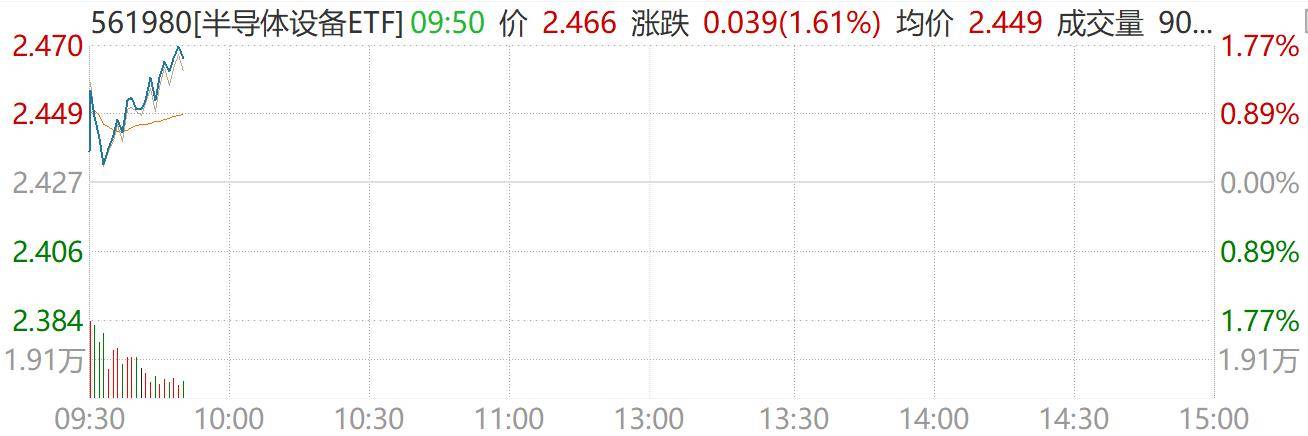
Core Viewpoint - The semiconductor equipment sector is experiencing a strong rally due to a price increase across the supply chain, with significant gains in related stocks and ETFs, indicating robust demand and investment opportunities in the semiconductor industry [1][2]. Group 1: Market Performance - The semiconductor equipment ETF (561980) saw a 1.61% increase, with key stocks like Zhongwei Company and SMIC rising over 2%, and Tuojing Technology increasing over 5% [1]. - In the last 10 trading days, the semiconductor equipment ETF has attracted over 460 million yuan in net inflows, bringing its total size to over 3.6 billion yuan [1]. - The index tracking the semiconductor equipment sector has recorded a maximum increase of over 112% since 2025, outperforming similar indices in the technology sector [2]. Group 2: Price Increases and Cost Pressures - Multiple chip design companies have issued price increase notices, confirming that the positive sentiment in the semiconductor industry is spreading throughout the supply chain [1]. - Zhongwei Semiconductor announced a price increase of 15%-50% for products like MCU and Nor Flash due to rising packaging costs and extended delivery cycles [1]. - Guokewai announced a price increase of 40%-80% for KGD products, highlighting the dual pressures of rising storage chip prices and increased advanced packaging costs [1]. Group 3: Industry Dynamics - The current chip price increase cycle was initiated by a surge in AI demand, leading to tight supply and rising prices for storage chips like DRAM and NAND [2]. - The price adjustments from chip design companies confirm a key industry logic: the prosperity of the storage chip sector is translating into demand for upstream equipment and materials [2]. - To meet strong demand and manage costs, chip manufacturers and packaging firms must expand capital expenditures and upgrade or add production capacity, which will ultimately lead to increased orders for semiconductor equipment across the entire supply chain [2]. Group 4: ETF Composition - The semiconductor equipment ETF (561980) tracks the CSI Semiconductor Index, heavily weighted towards leading companies like Zhongwei Company and Northern Huachuang, with the top ten holdings accounting for approximately 75% of the index [2]. - The ETF's focus on leading companies and comprehensive coverage of equipment, materials, and design sectors provides it with higher elasticity compared to similar indices [2].




东方财富策略陈果团队:产业主题与涨价链共舞下的春季行情
Xin Lang Cai Jing· 2026-01-25 12:06
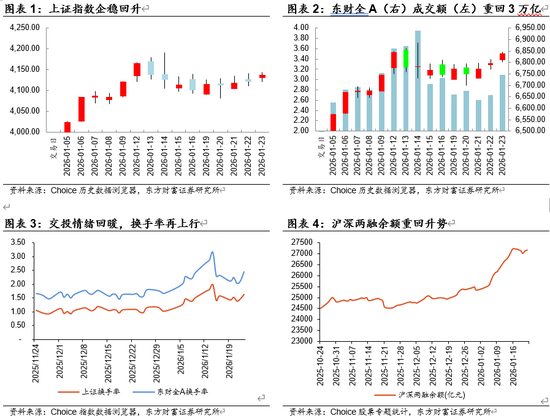
Core Viewpoint - The A-share market has shown a rebound in trading activity, with transaction volume exceeding 3 trillion yuan, indicating strong internal confidence and capital inflow amidst domestic asset scarcity and expectations of RMB appreciation [1][29]. Market Structure and Trends - The market structure has shifted compared to late last year and early this year, with increased activity in the real estate chain, resource products, and price increase chains, reflecting the inflow of medium to low-risk preference capital [1][6][39]. - Recent signals of expanding domestic demand policies have emerged, with expectations of policy enhancements, particularly in real estate prices, infrastructure investment, and service consumption, which are key areas of focus for medium to low-risk preference capital [1][39]. - The expansion of cyclical stocks indicates rising market confidence in re-inflation, with performance spreading from non-ferrous metals to chemicals, building materials, and coal, suggesting strong confidence in the PPI recovery trend this year [1][11][42]. Sector Performance - The small-cap stocks have outperformed large-cap stocks, with indices like the CSI 500 and CSI 1000 showing significant gains of 4.34% and 4.04% respectively, indicating increased participation and liquidity support for small-cap stocks [5][35]. - The real estate chain and cyclical resource products have benefited from warming policy expectations and re-inflation, with recent policy announcements aimed at reversing funding dilemmas in the real estate sector [39][42]. - The communication sector has faced declines, raising concerns about the sustainability of previously favored stocks, as institutional holdings in this sector have not consistently yielded excess returns [19][44]. Investment Focus - Key sectors to watch include semiconductors, non-ferrous metals, computing, media, chemicals, and military industries, with themes such as commercial aerospace, AI applications, robotics, controllable nuclear fusion, intelligent driving, and innovative pharmaceuticals being highlighted [31][37]. - The price increase chain remains a significant investment focus, particularly in areas experiencing supply-demand mismatches, such as AI hardware and upstream raw materials like lithium carbonate and PTA [20][21][23].

午评:创业板指涨0.76% 人形机器人产业链相关股整体涨幅靠前
Xin Hua Cai Jing· 2025-12-04 05:36
Market Performance - The Shanghai and Shenzhen stock markets opened slightly higher on December 4, with the ChiNext index showing a significant rebound after an adjustment, while the Shenzhen Component and Shanghai Composite indices followed suit [1] - By the midday close, the Shanghai Composite Index was at 3879.52 points, up 0.04%, with a trading volume of approximately 408.1 billion yuan; the Shenzhen Component Index was at 13000.88 points, up 0.35%, with a trading volume of about 624 billion yuan; the ChiNext Index was at 3059.76 points, up 0.76%, with a trading volume of around 280 billion yuan [1] Sector Performance - At the opening, sectors such as non-ferrous metals, engineering machinery, and PEEK materials were among the top gainers, while communication equipment, cultivated diamonds, and Hainan Free Trade Zone sectors faced declines [1] - By midday, the humanoid robot industry chain stocks showed significant gains, with other sectors like reducers, exoskeleton robots, PEEK materials, and industrial mother machines also experiencing notable increases [1] Investment Insights - CITIC Securities indicates that the market has entered a "seller's market" by Q4 2025, with a steep upward trend expected in mainstream storage DRAM/NAND and niche storage prices, anticipating a supply-demand imbalance to persist until the end of 2026 [2] - China International Capital Corporation highlights the inclusion of controllable nuclear fusion in the national future industrial system, marking a shift towards strategic technological breakthroughs, with a focus on superconducting cables, lasers, and monitoring systems as investment opportunities [2] - CITIC Construction Investment notes a significant increase in storage investment enthusiasm, with planned projects in Inner Mongolia expected to double compared to this year, driven by high load growth and the ongoing development of renewable energy [2] Industry Developments - The unveiling of the Songjiang Satellite Internet Industry Cluster on December 4 aims to establish Shanghai as a global hub for satellite internet, with over 50 upstream and downstream enterprises gathered, projecting an industry scale exceeding 20 billion yuan by 2024 [3] - The International Atomic Energy Agency held its first AI and Nuclear Energy seminar, discussing how nuclear energy can meet the growing power demands of AI data centers and the integration of AI in nuclear technology development [4]

中信证券:26H1存储合约价仍有望保持快速上涨,看好景气至少持续至2026年底
Mei Ri Jing Ji Xin Wen· 2025-12-04 00:44
Core Viewpoint - The report from CITIC Securities indicates that since Q2 2025, the mainstream storage prices have experienced significant absolute increases due to "supply optimization and AI-driven demand" [1] Group 1: Market Conditions - The market has fully transitioned into a "seller's market" by Q4 2025, with steep price increases observed [1] - Despite the current seller's market, the industry is still in the early stages of a super cycle, suggesting continued growth potential [1] Group 2: Future Outlook - High visibility of shortages is expected over the next six months, supporting a positive outlook for mainstream storage DRAM/NAND and niche storage prices in the first half of 2026 [1] - Contract prices are anticipated to rise rapidly, aiming to catch up with the increases in spot prices, indicating sustained demand exceeding supply at least until the end of 2026 [1]

中信证券:存储行业景气至少持续至2026年底
Xin Lang Cai Jing· 2025-12-04 00:37
Core Viewpoint - The report from CITIC Securities indicates that despite entering a "seller's market" in Q4 2025, the industry is still in the early stages of a super cycle, with high visibility of shortages in the next six months [1] Group 1: Market Conditions - The main storage segments, including DRAM and NAND, are expected to see price increases in the first half of 2026 [1] - Contract prices are anticipated to rise rapidly, catching up with the increases in spot prices [1] - The industry is expected to experience a supply-demand imbalance that will last at least until the end of 2026 [1] Group 2: Industry Outlook - The current cycle's prosperity is viewed optimistically, suggesting a sustained period of growth in the storage market [1]