EagleX

Search documents
深圳创新四姐妹,2025年三大关键词
21世纪经济报道· 2025-12-31 12:50
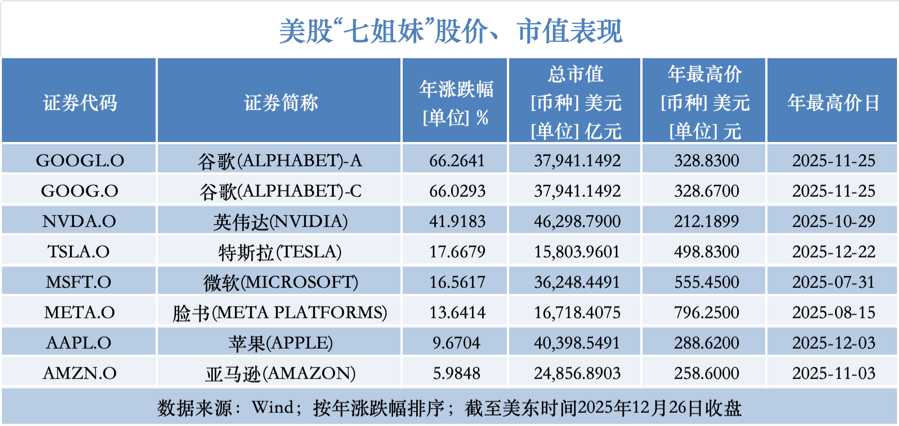
Core Viewpoint - The rapid development of artificial intelligence (AI) is prompting a revaluation of technology assets globally, with Shenzhen emerging as a focal point for investors seeking opportunities in China. The city has produced several tech giants, referred to as the "Four Sisters" of innovation: Huawei, Tencent, China Ping An, and BYD, all of which have market capitalizations exceeding 1 trillion yuan and revenues above 600 billion yuan, with Ping An's revenue surpassing 1 trillion yuan in 2024 [1][2]. Group 1: Characteristics of the "Four Sisters" - The "Four Sisters" have experienced a collective revaluation, with stock prices and market capitalizations reaching new highs. Except for Huawei, which is not publicly listed, Tencent, Ping An, and BYD have all seen significant stock price increases this year, benefiting from the narrative of asset revaluation in China [3][4]. - The average stock price increase for the "Four Sisters" is 44.87% year-to-date, outperforming the average increase of 27.95% for the "Magnificent Seven" in the U.S. [4][5]. - Each of the "Four Sisters" has achieved record market capitalizations this year, with Tencent reaching a peak of 683 HKD per share and a market cap of 5.45 trillion HKD, while Ping An's market cap is around 1.3 trillion HKD [6][7]. Group 2: AI Investment and Strategy - The "Four Sisters" are heavily investing in AI, engaging in a talent acquisition race and increasing R&D expenditures. For instance, Huawei's R&D spending reached 96.95 billion yuan in the first half of the year, accounting for 22.7% of its revenue [8][9]. - Each company has a differentiated AI strategy: Huawei focuses on foundational technologies, Tencent integrates AI into its social applications, Ping An emphasizes AI in financial and healthcare services, and BYD incorporates AI into smart transportation solutions [12][13]. Group 3: Global Expansion and Influence - The global influence of the "Four Sisters" is on the rise, as evidenced by their improved rankings in the 2025 Fortune Global 500 and Kantar BrandZ lists. Ping An ranks 13th, Huawei 24th, BYD 27th, and Tencent 32nd [13][14]. - BYD has surpassed Tesla in global electric vehicle sales, exporting 878,000 units from January to November, a 144% increase year-on-year. Huawei operates in over 170 countries, while Tencent's international gaming revenue grew by 43% [14][15].


“深圳创新四姐妹”年终三重奏:价值重估、AI突围、全球拓局
2 1 Shi Ji Jing Ji Bao Dao· 2025-12-31 11:27
Core Viewpoint - The rapid development of artificial intelligence (AI) is prompting a revaluation of technology assets globally, with Shenzhen emerging as a focal point for investors seeking opportunities in China. The city has produced several leading tech giants, referred to as the "Shenzhen Innovation Four Sisters," including Huawei, Tencent, China Ping An, and BYD, all of which have market capitalizations exceeding 1 trillion yuan and revenues above 600 billion yuan [1][2]. Group 1: Performance and Market Trends - The "Shenzhen Innovation Four Sisters" have experienced significant stock price and market capitalization increases, benefiting from a narrative of asset revaluation in China. Notably, Tencent, Ping An, and BYD have all reached new highs in stock prices and market values this year [1][4]. - The average annual stock price increase for the "Four Sisters" is 44.87%, outperforming the average increase of 27.95% for the "Magnificent Seven" in the U.S. stock market [4][6]. - As of December 29, 2025, China Ping An's stock price increased by 52.25%, Tencent by 44.29%, and BYD by 10.47%, with Ping An leading the group [4][6]. Group 2: AI Development and Talent Acquisition - The "Four Sisters" are heavily investing in AI, with each company focusing on different aspects of AI technology to gain competitive advantages. They are engaged in a talent acquisition race to attract top AI professionals [9][10]. - Huawei's R&D expenditure reached 96.95 billion yuan in the first half of the year, accounting for 22.7% of its revenue, while Tencent's R&D spending in Q3 was 22.82 billion yuan, marking a 28% year-on-year increase [10][11]. - The companies are implementing differentiated AI strategies: Huawei focuses on foundational technologies, Tencent aims to reshape consumer services, Ping An emphasizes specialized AI services, and BYD integrates AI into smart mobility solutions [12][11]. Group 3: Global Expansion and Influence - The global influence of the "Four Sisters" is on the rise, as evidenced by their improved rankings in the 2025 Fortune Global 500 and Kantar BrandZ lists. China Ping An ranks 13th, Huawei 24th, BYD 27th, and Tencent 32nd in the Fortune list [12][13]. - BYD has surpassed Tesla to become the top seller of electric vehicles globally, with exports reaching 878,000 units from January to November, a 144% increase year-on-year [13][14]. - Tencent's international gaming revenue grew by 43% to 20.8 billion yuan in Q3, while Huawei's wearable device shipments exceeded 200 million units globally, maintaining a leading position in the market [13][14].
Xscape Photonics and Tower Semiconductor Unveil the Industry's First Optically Pumped On-Chip Multi-Wavelength Laser Platform for AI Datacenter Fabrics
Globenewswire· 2025-08-25 10:00
Core Insights - Tower Semiconductor and Xscape Photonics have developed the first on-chip, optically pumped, multi-wavelength laser source, enhancing AI datacenter connectivity [1][3] - The optical interconnect market for AI datacenters is projected to grow significantly, with sales expected to exceed $10 billion in 2026, doubling from 2024, and reaching $20 billion by 2030 [2] Company Developments - The new laser solution is built on Tower's PH18 Silicon Photonics platform, supporting CWDM and DWDM wavelength grids, crucial for AI datacenter fabrics [1][3] - Xscape Photonics' ChromX platform allows for easy integration of high-performance laser sources, reducing packaging complexity and component count [4][9] - Tower Semiconductor's technology ecosystem supports rapid prototyping and high-volume production for AI and data-driven markets [5] Market Trends - The demand for high-speed, low-latency connectivity in hyperscale AI deployments is driving growth in the optical interconnect market [2] - The collaboration between Tower Semiconductor and Xscape Photonics aims to transform AI fabric architecture by simplifying design and reducing latency [4][5]


平安“鹰眼”15年蝶变:从自然灾害预警工具,到全球风险管理平台
Zheng Quan Shi Bao Wang· 2025-08-12 05:27
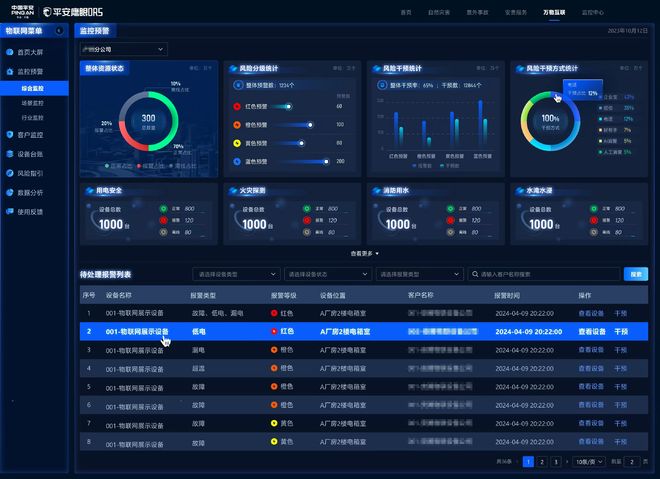
Core Insights - The article highlights the evolution and significance of the "Eagle Eye" system developed by Ping An Insurance, which has transformed from a natural disaster warning tool into a comprehensive global risk management platform over the past 15 years [1][3][4] - The launch of the overseas version, EagleX, marks a significant step in expanding Ping An's risk reduction services globally, contributing to the Belt and Road Initiative [1][7] Group 1: Eagle Eye System Development - The "Eagle Eye" system has undergone significant upgrades, with version 3.0 introducing IoT security technology and expanding its capabilities to manage accidental risks, creating a comprehensive risk management system [4][6] - The system can now identify 24 types of natural disaster risks and has implemented 7x24 hour monitoring and risk intervention for various safety scenarios [4][6] - In 2025, the system helped mitigate disaster losses by 20 million yuan and improved response times by 25% during emergencies [6][8] Group 2: Technological Integration - The integration of AI and IoT technologies into the "Eagle Eye" system allows for proactive risk management, shifting from passive claims to active prevention [8][10] - The system utilizes advanced algorithms and data processing capabilities to enhance disaster prediction and risk assessment, including a new feature for real-time flood forecasting with a spatial accuracy of 30 meters [9][10] - Ping An's technology center has developed a standardized natural disaster risk data system, supporting rapid processing and response to various disaster scenarios [8][9] Group 3: Strategic Vision and Market Expansion - Ping An aims to transition from traditional insurance models focused on post-incident compensation to a comprehensive risk reduction approach, enhancing the value chain for clients [11] - The risk reduction services have expanded beyond traditional markets to include agriculture, liability, and catastrophe insurance, aiming for full lifecycle coverage [11] - The company emphasizes a customer-centric approach, leveraging technology to create tailored risk reduction solutions and contributing to high-quality economic development [11]

平安“鹰眼”上线十五周年: 深度应用AI技术,发布“EagleX”全球风险管理平台
Zhong Jin Zai Xian· 2025-08-12 00:36
Core Insights - Ping An launched the Eagle Eye system, a risk reduction intelligent service platform, showcasing innovations in AI, big data, and meteorological disaster models [1][2] - The Eagle Eye system has issued 42.6 billion warning messages and provided on-site services over 100,000 times in the first half of 2025, covering 64 million clients [1][3] - The overseas version, EagleX, was introduced to support global risk management, featuring risk mapping, disaster warnings, and satellite monitoring [1][4] Group 1: Eagle Eye System Development - The Eagle Eye system has evolved from a natural disaster warning tool to a global risk management platform over 15 years, with multiple version upgrades [2][3] - The system can identify 24 types of natural disaster risks and has implemented proactive risk interventions [3][6] - In 2025, the system helped mitigate disaster losses by 20 million yuan and improved disaster response times by 25% [3][6] Group 2: Technological Integration - The system integrates AI, big data, and IoT technologies to enhance risk monitoring and management capabilities [5][7] - It has developed a standardized natural disaster risk data system and can provide real-time flood forecasts with a spatial accuracy of 30 meters [6][7] - The AI-driven model optimizes risk inspection strategies and automates claims processing, significantly improving service efficiency [7][8] Group 3: Global Expansion and Strategic Goals - EagleX aims to extend risk reduction services globally, supporting initiatives like the Belt and Road Initiative [1][4] - The platform utilizes satellite remote sensing and InSAR technology for real-time monitoring of construction sites in high-risk areas [4] - Ping An is committed to enhancing its technological capabilities to create a comprehensive risk reduction service system, contributing to high-quality economic development [8]
平安“鹰眼”上线十五周年:深度应用AI技术 发布“EagleX”全球风险管理平台
Zheng Quan Ri Bao Wang· 2025-08-07 09:49
Core Insights - China Ping An has launched the EagleX platform, an overseas version of its risk reduction service, aimed at global risk management and supporting the Belt and Road Initiative [1][4] Group 1: Eagle Eye System Overview - The Eagle Eye system has issued 25.9 million natural disaster warnings and sent 4.26 billion alerts in the first half of 2025, serving over 64 million clients [1] - The system has evolved through three versions, enhancing its capabilities from a natural disaster warning tool to a comprehensive global risk management platform [2] - The latest version, Eagle Eye 3.0, can identify 24 types of natural disaster risks and integrates IoT technology for real-time monitoring and intervention [3] Group 2: Technological Innovations - The Eagle Eye system utilizes AI, big data, satellite monitoring, and other advanced technologies to improve risk management efficiency [5] - A new feature for real-time flood forecasting has been introduced, achieving a spatial accuracy of 30 meters and allowing for up to 10 days of advance warning [6] - The system's IoT platform enables 24/7 monitoring and intervention for various risks, including gas leaks in restaurants, enhancing safety for small businesses [3][7] Group 3: Global Expansion and Applications - The EagleX platform aims to extend risk reduction services globally, with applications in high-risk areas like Pakistan, utilizing satellite technology for real-time monitoring [4] - The platform provides a full lifecycle risk management service, including risk assessment, disaster warning, and claims support for international clients [1][4] Group 4: AI-Driven Enhancements - The integration of AI has transformed risk management from a manual process to an automated one, improving service efficiency and standardization [5][8] - The PingAnGPT model has enabled automation in claims processing, significantly reducing the time required for settlement [7][8] - The company is advancing its "intelligent agent project" to enhance marketing and operational efficiency through AI-generated content [8]
保险科技“出海”!中国平安推EagleX全球风险管理平台
Nan Fang Du Shi Bao· 2025-08-06 14:39
Core Insights - The article discusses the increasing focus on risk prevention in the insurance industry, particularly in light of natural disasters and the use of technology such as AI to enhance risk management [1][3]. Group 1: Risk Management Innovations - China Ping An introduced its self-developed risk reduction intelligent service platform, the "Eagle Eye System," which has evolved from a natural disaster warning tool to a global risk management platform over 15 years [3][5]. - In the first half of 2025, the Eagle Eye System issued warnings for 259,000 natural disasters and sent out 4.26 billion warning messages, providing on-site services over 100,000 times and covering 64 million enterprises and individual clients [3][5]. Group 2: Technological Integration - The Eagle Eye System 3.0 can identify 24 types of natural disaster risks and offers real-time monitoring and intervention for accidental risks through IoT security devices [5][7]. - The system incorporates AI, spatiotemporal big data engines, meteorological disaster models, and satellite/radar monitoring to enhance risk management capabilities [7]. Group 3: Global Expansion and Applications - The Eagle Eye System's overseas version, EagleX, was launched to support Chinese enterprises in the "Belt and Road" initiative, providing global risk reduction services [7][8]. - EagleX features risk mapping, disaster warnings, and satellite monitoring, aiming to offer comprehensive risk management services to international clients [8].
中国平安深度应用AI技术 发布“EagleX”全球风险管理平台
Zheng Quan Ri Bao Wang· 2025-08-06 13:45
Core Insights - China Ping An Insurance (Group) Co., Ltd. introduced its self-developed risk reduction intelligent service platform, the "Eagle Eye System," showcasing various innovative technologies such as artificial intelligence and big data engines [1][2] - The Eagle Eye System has issued 42.6 billion warning messages and provided on-site services over 100,000 times in the first half of 2025, covering 64 million enterprises and individual clients [1] - The overseas version of the Eagle Eye System, named EagleX, was launched to provide global risk management services, including risk assessment and disaster warning, aimed at supporting the Belt and Road Initiative [1][3] Risk Management Capabilities - The Eagle Eye System has evolved from a natural disaster warning tool to a global risk management platform over 15 years, with capabilities to identify 24 types of natural disaster risks [2] - In June 2025, the system successfully sent out over 5.7 million disaster warning messages before Typhoon "Butterfly" made landfall, covering over 3.1 million clients across various insurance sectors [2] Technological Innovations - The Eagle Eye System integrates advanced technologies such as AI, satellite remote sensing, and meteorological disaster models to enhance risk management efficiency [3] - The system has published two professional conference papers, obtained three software copyrights, and filed over 30 patent applications [3] AI Applications - Ping An Insurance utilizes AI technology in marketing and claims processes, achieving full automation in health insurance claims, significantly reducing processing time to minutes [4] - The company is advancing its "Smart Agent Project" to enhance intelligent marketing, operations, services, and management through AI [4]
Ping An's EagleX Risk Mitigation Platform Provides Early Warning of Beijing Hailstorm, Company Streamlines Claims Settlement
Prnewswire· 2025-05-21 11:42
Core Insights - A severe hailstorm hit Beijing on May 13, prompting Ping An P&C to activate its emergency response plan and mobilize over 2,000 personnel for disaster relief [1][2][9] - The company received 31,000 claims reports and settled 10,400 cases, paying out RMB62.15 million in compensation as of May 19 [2] Group 1: Emergency Response and Claims Management - Ping An P&C coordinated resources across various departments, dispatching 43 claims experts from multiple provinces to assist in Beijing [1] - The company ensured that reporting channels remained open 24/7, with over 90% of affected customers receiving callbacks on the same day [5] - Streamlined claims settlement was introduced, waiving the need for proof of accident or weather event, and allowing for claims under RMB10,000 to be settled with photo or video evidence [6] Group 2: Risk Mitigation Technology - The EagleX platform, developed by Ping An P&C, issued alerts two hours before the storm, helping to minimize potential losses for 3.17 million individual customers and over 20,000 corporate clients [3][4][9] - EagleX integrates big data, satellite remote sensing, and machine learning to monitor and provide early alerts for various natural disasters [4] Group 3: Future Plans and Objectives - Ping An P&C aims to enhance pre-disaster alerts, emergency responses, and post-disaster claims settlements through the continued advancement of EagleX [7] - The company is focused on helping customers reduce losses and improve risk management capabilities [7]