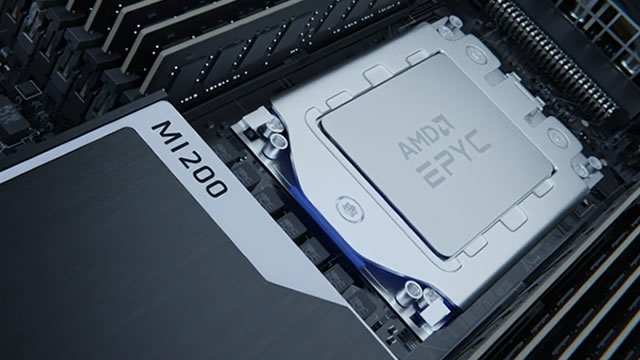
GB200 GPU

Search documents
AI巨头的“无限流”订单,还能玩多久?
3 6 Ke· 2025-10-15 01:51
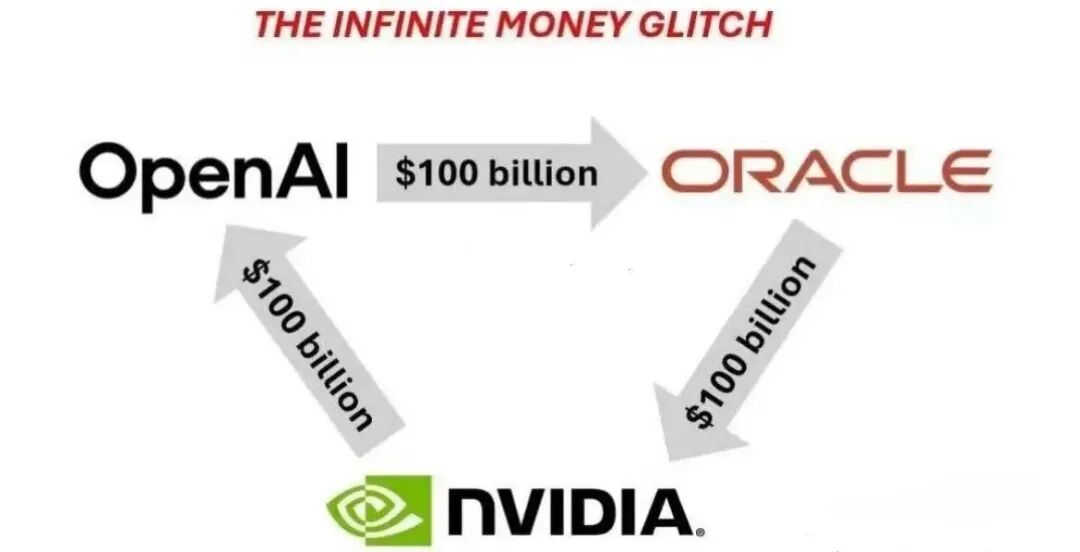
Core Insights - The article discusses the unprecedented capital frenzy driven by the soaring stock prices of tech giants and the valuations of AI startups, highlighting a complex capital loop rather than genuine market demand [1][6] - A triangular capital loop involving OpenAI, Oracle, and Nvidia exemplifies this internal capital cycle, where investments and contracts create a self-reinforcing ecosystem [2][5] Capital Loop Dynamics - Nvidia plans to invest up to $100 billion in OpenAI, which will be disbursed as OpenAI deploys its data centers [2] - OpenAI commits to paying Oracle $300 billion over five years for cloud services necessary for projects like "Project Stargate" [1] - Oracle, in turn, places orders worth hundreds of billions with Nvidia to meet OpenAI's computing needs, creating a closed-loop system where funds circulate among the three entities [2][5] Financial Commitments and Strategic Goals - The total commitments for AI infrastructure and chip supply from OpenAI and its partners exceed $1 trillion, indicating a massive internal capital cycle [5][6] - Key projects include "Project Stargate" with a commitment of up to $500 billion and chip supply agreements exceeding $200 billion [7] Growth Logic - The growth cycle begins with substantial capital injections from major players like Microsoft, Google, and Nvidia into leading AI companies [8] - AI startups utilize these investments to pay for expensive cloud services and hardware, which in turn boosts the revenues of cloud giants [9] - This results in rising valuations for AI companies and reinforces the narrative of an "AI revolution," attracting more capital into the market [10][11] Potential Challenges - There is a disconnect between computing supply and actual market demand, raising questions about the sustainability of the massive investments [13] - Regulatory scrutiny from bodies like the FTC and CMA may challenge the bundled investment and contract model, potentially stifling innovation [14] - Macroeconomic factors, such as high interest rates, could dampen investment appetite, putting pressure on AI startups reliant on external funding [15] Future Scenarios - The article outlines three potential outcomes for the current capital cycle: a "soft landing" with the emergence of profitable AI applications, a "hard landing" with market corrections, or "regulatory reshaping" that alters the competitive landscape [22][26] - Key indicators to monitor include the actual growth rates of cloud providers after removing internal cycle effects, adoption rates of AI applications, and developments in antitrust investigations [28][30]


曦智科技沈亦晨:3D CPO有望在五年内实现
Zhong Guo Jing Ying Bao· 2025-07-30 18:08
Core Insights - NVIDIA has introduced two silicon photonics CPO switches at the GTC conference to enhance the interconnect speed and energy efficiency of GPU clusters, making CPO a focal point in the industry [1] - The evolution of optical interconnect technology is crucial, with a roadmap from pluggable optical modules to 3D CPO, significantly increasing single-chip bandwidth [1][3] - The demand for computing power is growing globally, necessitating advancements in optical interconnect products to address this challenge [1][2] Group 1: Optical Interconnect Technology - The transition from traditional network interconnects to NVIDIA's GB200 NVL72 supernode can increase throughput by over three times compared to conventional methods [2] - Domestic AI chip and server manufacturers are increasingly adopting the supernode concept, indicating a shift in industry trends [2] - The two main paths for expanding supernode scale are using high-density cabinets or multiple cabinets with direct optical interconnect capabilities [2][3] Group 2: Challenges and Solutions - Current solutions face bandwidth and resource wastage issues, leading to network congestion, highlighting the need for revolutionary interconnect systems [3] - The proposed evolution of optical interconnect technology includes a shift towards 3D co-packaged optics, which could enhance interconnect bandwidth by 1-2 orders of magnitude within five years [3] - The complexity of connecting multiple GPUs necessitates advanced scheduling systems for efficient network management [3] Group 3: Innovations and Developments - At the 2025 WAIC, the company launched the LightSphere X distributed OCS all-optical interconnect chip and supernode solution, demonstrating its application with partners [4] - LightSphere X is recognized as the first domestic solution for optical interconnect and GPU supernodes, winning the SAIL Award for its innovation [4][5] - The technology allows for flexible scaling of supernodes, reducing deployment costs and enabling dynamic adjustments based on computing needs [5] - Performance metrics indicate that the unit interconnect cost is only 31% of that of the NVL72, with a significant increase in model computing efficiency [5]
星际之门的烂尾危机:盟友分歧、融资困局与工程死结
3 6 Ke· 2025-07-29 03:30
Group 1 - The "Stargate" project, announced by Trump with a $500 billion investment, has made little progress in six months, with its goals significantly reduced [3][15][16] - The project aims to build a nationwide AI infrastructure in the U.S., involving major players like OpenAI, SoftBank, Oracle, and the UAE's MGX fund [7][8][31] - OpenAI has signed a $30 billion data center agreement with Oracle, bypassing SoftBank, highlighting internal conflicts within the "Stargate" initiative [18][24] Group 2 - Trump's AI policies have reversed many of Biden's regulations, emphasizing the importance of AI as a national strategy [8][10][11] - The "Stargate" plan is compared to the 19th-century U.S. railroad construction, aiming to establish a comprehensive data center network across the country [13][20] - The project faces significant funding challenges, with SoftBank and OpenAI's combined investments only covering a fraction of the total required [20][24][25] Group 3 - The engineering challenges include securing sufficient power and resources for the proposed data centers, which require massive amounts of electricity [27][28] - SoftBank's founder, Masayoshi Son, has heavily invested in the project, betting his fortune on its success despite past failures [23][30] - The overall AI capital expenditure among major tech companies has surged, indicating a broader trend of investment in AI infrastructure [33]


新亚电子早盘涨停 近期联合推出高速铜缆制造新技术
Zheng Quan Shi Bao Wang· 2025-07-03 06:06
Group 1 - New Asia Electronics (605277) has seen a strong performance in the stock market, reaching a limit-up price of 18.46 yuan per share [1] - The company has developed a new high-speed copper cable manufacturing technology called "lotus core high-speed wire" in collaboration with Amphenol, which has received patent authorization and is now in mass production [1][2] - The lotus core structure technology allows for the production of high-quality, high-performance high-speed copper cables without the need for imported fluoropolymer foaming equipment, addressing limitations in the current manufacturing process [1][2] Group 2 - The demand for high-speed copper cables is increasing rapidly due to the growth of data centers, and the lotus core structure is expected to become a mainstream technology solution beyond traditional foaming methods [2] - New Asia Electronics was established in 1987 and focuses on the research and manufacturing of electronic cables, with a diverse product range including precision electronics, communication optical cables, and cables for electric vehicles [3] - The company has obtained a total of 31 authorized invention patents and 164 utility model patents, serving well-known clients such as Hisense, Gree, Midea, BYD, Dell, and HP [3]

Prediction: Nvidia Stock Is Going to Hit $200 in 2025
The Motley Fool· 2025-06-12 08:55
Core Insights - Nvidia's stock has surged by 870% since the beginning of 2023, leading to a market capitalization of $3.5 trillion, driven by high demand for its GPUs in data centers [1] - CEO Jensen Huang predicts that spending on data centers will reach $1 trillion annually by 2028 due to the increasing need for computing capacity for new AI reasoning models [2][9] - Nvidia is set for a record year, with its latest GPU architectures outperforming competitors, and the stock is projected to reach $200 by the end of the year [3][14] Company Performance - Nvidia's Hopper architecture underpins the H100 GPU, which was the top-selling AI data center chip in 2023, now succeeded by the Blackwell architecture, offering up to 40 times more performance in specific configurations [5] - The demand for inference workloads is rising, driven by advanced reasoning models like OpenAI's GPT-3 and GPT-4, which require significantly more computing power [6][7] - Nvidia's Blackwell Ultra offers a 50-fold performance improvement over Hopper, but further advancements will not be available until the Rubin architecture launches in 2026, which could be 3.3 times faster than Blackwell Ultra [8][9] Financial Projections - Wall Street estimates Nvidia could achieve a record $200 billion in revenue for fiscal year 2026, with the data center segment contributing approximately 89% of that revenue [10] - Nvidia's earnings per share (EPS) over the last four quarters is $3.19, resulting in a price-to-earnings (P/E) ratio of 46, which is below its 10-year average of 59.9, indicating potential undervaluation [11] - To maintain its current P/E ratio, Nvidia's stock would need to increase by 38% over the next nine months, and a 79% increase would align it with its historical average P/E ratio [13] Market Outlook - Investors are likely to start pricing in future earnings, suggesting Nvidia's stock may exceed $200 before the end of 2025, especially if positive updates on the Rubin GPUs are provided [14] - Long-term focus is essential, as the anticipated $1 trillion annual spending on AI infrastructure by 2028 could make current stock prices appear undervalued in hindsight [15]
英伟达市值重新“登顶”,5G通信ETF、创业板人工智能ETF直线冲高涨超1%
Mei Ri Jing Ji Xin Wen· 2025-06-04 02:05
Group 1 - The core viewpoint of the articles highlights the strong performance of the A-share market, particularly in sectors related to optical modules, rare metals, and 6G technology, driven by significant investments in AI and related infrastructure [1] - The U.S. stock market saw all three major indices rise, with Nvidia's stock increasing by 2.8%, leading to a market capitalization of $3.45 trillion, making it the highest valued company globally [1] - Recent reports indicate that Oracle plans to invest approximately $40 billion in Nvidia's GB200 GPUs to support the "Star Gate" project in Abilene, Texas, while xAI aims to expand its GPU card inventory to 1 million units, indicating a growing demand for high-speed optical modules [1] Group 2 - In the past five trading days, the 5G Communication ETF (515050) experienced a net inflow of 75.21 million yuan, while the AI-focused ETF (159381) saw a net inflow of 5.18 million yuan over the last ten trading days [2] - The 5G Communication ETF (515050) tracks the CSI 5G Communication Theme Index and is the largest ETF in the market focused on 5G, AI computing power, and the Nvidia supply chain, covering various leading companies in AI computing, 6G, consumer electronics, and optical modules [2] - The AI-focused ETF (159381) tracks the AI index of the ChiNext board, selecting companies primarily engaged in AI, with significant exposure to optical modules and IT services, including leading firms like New Yisheng, Zhongji Xuchuang, and Tianfu Communication among its top ten holdings [2]
Should You Buy Advanced Micro Devices (AMD) Stock After Its 51% Drop?
The Motley Fool· 2025-03-12 08:58
Core Viewpoint - The stock market is experiencing a sell-off, with Advanced Micro Devices (AMD) stock down 51% from its peak, presenting a potential buying opportunity for investors as the company prepares for significant growth in its data center business, particularly in AI-related applications [1][3][18] Company Performance - AMD's data center business achieved record revenue of $12.6 billion in 2024, reflecting a remarkable growth of 94% year-over-year, although it still lags behind Nvidia's $115.1 billion in the same segment [10] - Total revenue for AMD in 2024 was $25.8 billion, marking a 14% increase from the previous year, with significant contributions from the data center and client segments [9][10] - The client segment generated $7 billion in revenue, a 52% increase from the prior year, indicating strong growth potential [11] Product Development - AMD's MI300X GPU has attracted major AI customers like Meta, Oracle, and Microsoft, but the upcoming MI350 GPU, based on the new CDNA 4 architecture, is expected to significantly enhance performance, potentially outperforming Nvidia's GB200 [4][6][8] - The MI350 is currently being sampled to customers, with production expected to ramp up mid-year, although it faces competition from Nvidia's already deployed GPUs [5][6] Market Outlook - Major tech companies, including Meta, Microsoft, Alphabet, and Amazon, are projected to spend over $300 billion on data center infrastructure and chips in 2025, creating a substantial market opportunity for AMD [8] - AMD's gaming revenue fell by 58% in 2024 due to delays in product releases, but the recent launch of the Radeon 9070 gaming GPU may help recover this segment [13] - The embedded segment saw a revenue decline of 33% last year, but AMD anticipates growth in this area for 2025 [14] Valuation and Investment Opportunity - AMD's stock is currently trading at a P/E ratio of 30.3, which is a 19% discount compared to Nvidia's P/E ratio of 37.7, suggesting it may be undervalued [15] - Wall Street estimates indicate AMD's EPS could grow to $4.70 in 2025, implying a forward P/E ratio of 21.3, necessitating a stock price increase of over 40% to maintain its current valuation [16] - The significant hardware spending anticipated from major tech firms positions AMD for another record year in its data center business, alongside expected recovery in its gaming and embedded segments [17]