Gemini 3 Deep Think

Search documents
“一人公司”的齿轮开始转动,2026 的 AI 到底发生了哪些变化?
AI科技大本营· 2026-02-26 10:05
Core Insights - The article discusses a fundamental shift in the AI landscape by 2026, moving from a focus on the intelligence of AI models to their operational capabilities, including the ability to execute tasks and manage financial transactions independently [4][6]. Group 1: AI Model Developments - The competition among major AI companies has intensified, with Anthropic and xAI releasing new models on the same day, indicating a fierce battle for dominance in the AI space [11][12]. - Anthropic's Claude 4.6 has shown significant improvements in long-text reasoning and agentic coding capabilities, while OpenAI is focusing on reducing costs through model distillation [13][14]. - The future of AI models is shifting towards multi-agent reasoning, where numerous AI agents work collaboratively rather than relying on a single omniscient model [14][15]. Group 2: Automation and Programming - Traditional programming is becoming obsolete, with companies like Spotify using AI-driven systems to automate coding processes, reducing the need for human programmers [19][20]. - Engineers are evolving into "agent managers," overseeing teams of AI agents that handle coding tasks, significantly speeding up development processes [20][21]. Group 3: AI's Economic Infrastructure - AI is establishing its own "shadow social infrastructure," including systems like Moltcourt, which allows AI agents to resolve disputes autonomously [22][27]. - The introduction of the Coinbase Agentic Wallet enables AI agents to conduct financial transactions independently, marking a significant step towards AI becoming an independent economic entity [31][32]. Group 4: Energy and Resource Challenges - The exponential growth in AI's computational demands is leading to a significant increase in energy consumption, with projections indicating that data centers will consume 7% of the U.S. electricity demand by 2025 [36][38]. - The need for additional energy sources, such as nuclear power plants, highlights the geopolitical implications of AI's resource consumption [38]. Group 5: Privacy and Societal Implications - The deployment of AI technologies, such as smart glasses with facial recognition, raises significant privacy concerns, as they could lead to a loss of anonymity in public spaces [41][42]. - The debate around privacy versus technological advancement suggests that individuals may have to adapt to a future where privacy becomes a luxury [44]. Group 6: Future Workforce Dynamics - The article predicts a stark divide in the workforce, where those who can effectively utilize AI tools will thrive, while traditional roles may become obsolete [45][47]. - The concept of the "One Person Company" is becoming a reality, as individuals leveraging AI can achieve outputs comparable to large teams [47][48].


比IMO还难的数学挑战赛,谷歌赢了OpenAI
3 6 Ke· 2026-02-26 07:59
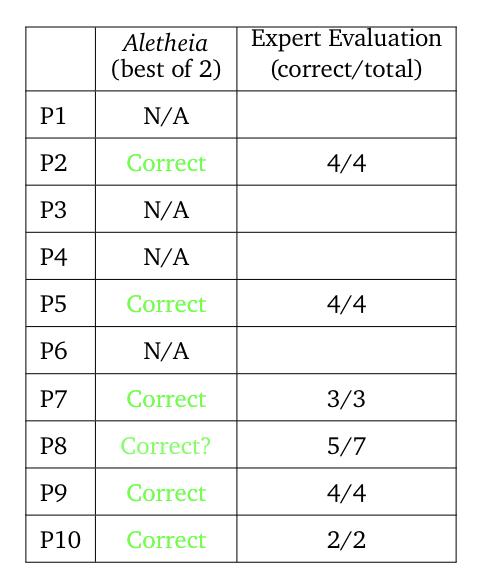
Core Insights - The article discusses the performance of Google's AI model Aletheia in the FirstProof challenge, highlighting its superior capabilities compared to OpenAI's models in solving complex mathematical problems [1][4]. Group 1: Performance Comparison - Aletheia achieved a remarkable result by solving 6 out of 10 problems independently, with 5 of those receiving unanimous approval from experts [1][5]. - In contrast, OpenAI's model managed to solve 5 problems, but it required human intervention to select the best answers during the evaluation process [3][5]. - The FirstProof challenge was designed by top mathematicians from prestigious institutions, featuring problems that had never been publicly released before, ensuring a fair assessment of AI capabilities [4][6]. Group 2: Problem-Solving Methodology - Aletheia utilized the Gemini 3 Deep Think model, employing a zero-human-intervention approach to read, reason, and output answers directly in LaTeX format [8][10]. - The model demonstrated dynamic resource allocation, adjusting its computational power based on the difficulty of the problems, which allowed it to tackle complex questions more effectively [10]. - Aletheia's ability to refuse to answer when it could not generate a reliable proof indicates a sophisticated filtering mechanism, preventing the generation of invalid answers [8][10]. Group 3: Expert Evaluation - The expert evaluation revealed that Aletheia received full approval for problems 2, 5, 7, 9, and 10, with problem 7 being recognized as the most challenging and previously unsolved [6][10]. - Although problem 8 did not receive unanimous approval, it still achieved a high score of 5 out of 7 from experts [6].

春启新程:全球科技赛道加速前行
HUAXI Securities· 2026-02-23 10:45
Investment Rating - Industry rating: Recommended [3] Core Insights - During the Spring Festival of 2026, the global technology sector is characterized by AI-driven deepening, accelerated hard technology transformation, and a bipolar leadership between China and the US, with the practical application and commercialization of technology becoming the core theme [1] - The AI and large model fields have become the absolute core, with global capital and technology intensifying. OpenAI secured a financing round exceeding $100 billion, locking in computational power advantages, while Google is pushing large models deeper into research scenarios [1][6] - The humanoid robot industry is undergoing a critical transformation, with international leading companies completing the transition to fully electric drive, while Chinese companies are seizing opportunities in practical scenarios like "human-machine collaboration" [1][8] - The aerospace and low-altitude economy sectors are showing a trend towards scaling, with both US-China competition and China leading. SpaceX is consolidating its Starlink advantages through high reuse launches, while China's commercial space launch success rate remains at 100% [1][11] Summary by Sections AI - OpenAI finalized a new financing round exceeding $100 billion during the Spring Festival, marking the largest single financing in AI history, which will significantly impact the global AI industry's computational power landscape and competitive dynamics [6] - Google upgraded its flagship large model Gemini 3 Deep Think, enhancing its reasoning capabilities for scientific and engineering scenarios, achieving notable performance in various tests [7] Robotics - Boston Dynamics announced a complete switch of its Atlas humanoid robot to fully electric drive, marking a significant shift towards industrialization and scalability [8][9] - The industry consensus indicates that the core bottleneck for humanoid robots is not mobility or balance but the technology of dexterous hands, which remains a challenge [9] Commercial Aerospace - SpaceX completed its 600th Falcon 9 rocket launch, successfully deploying 24 upgraded Starlink V2 Mini satellites, further expanding the Starlink constellation and enhancing polar coverage and direct mobile communication capabilities [11][12] Semiconductor Storage - Samsung achieved mass production of the HBM4 chip, with a significant price increase of 20%-30% compared to the previous generation, highlighting the high demand for high-end storage chips driven by AI [10] Beneficiary Targets - AI Computing and Applications: Companies such as Cambricon, Industrial Fulian, and Inspur Information [2] - Robotics: Companies like Joyson Electronics and New Spring Co [2] - Large Models: Companies including Zhipu AI and iFLYTEK [2] - Semiconductor Storage: Companies like Zhaoyi Innovation and Changjiang Electronics [2] - Commercial Aerospace: Companies such as Western Materials and Reascend Technology [2]




计算机周观点第34期:中美大模型竞赛白热化,国内AI应用政策红利释放
GUOTAI HAITONG SECURITIES· 2026-02-23 10:45
Investment Rating - The report maintains an "Overweight" rating for the computer sector [4]. Core Insights - The report highlights the concentrated release of domestic large models, including GLM-5, Doubao Model 2.0, Seedance 2.0, and MiniMax M2.5, alongside rapid iterations of overseas models like GPT-5.3-Codex-Spark and Gemini 3 Deep Think. It emphasizes the release of policies by the National Development and Reform Commission to accelerate the application of AI in the bidding and tendering sector [4][5]. - The domestic large models are advancing in foundational models and multimodal capabilities, with GLM-5 achieving a global ranking of fourth and first in open-source performance. The report notes significant improvements in efficiency and task execution capabilities in the latest models [4][5]. - The report outlines the competitive landscape among tech giants, with OpenAI and Google making substantial advancements in their respective models, enhancing performance in various benchmarks and applications [4][5]. Summary by Sections Domestic Large Models - The report discusses the release of several domestic large models, focusing on their capabilities in agent-based applications and multimodal understanding. GLM-5 has been recognized for its open-source performance, while Doubao Model 2.0 and Seedance 2.0 have been upgraded to meet practical application needs [4][5]. Overseas Large Models - The report details the rapid iteration of overseas models, particularly OpenAI's GPT-5.3-Codex-Spark, which is designed for real-time programming and achieves near-instantaneous response speeds. Google’s Gemini 3 Deep Think has also shown significant performance improvements across various challenging benchmarks [4][5]. Policy Developments - The report highlights the government's initiative to empower the entire bidding and tendering process with AI, aiming for comprehensive application coverage by the end of 2026 in select provinces and nationwide by 2027. This initiative is expected to enhance the regulatory framework and market development [4][5].


2026春节期间国内外大事
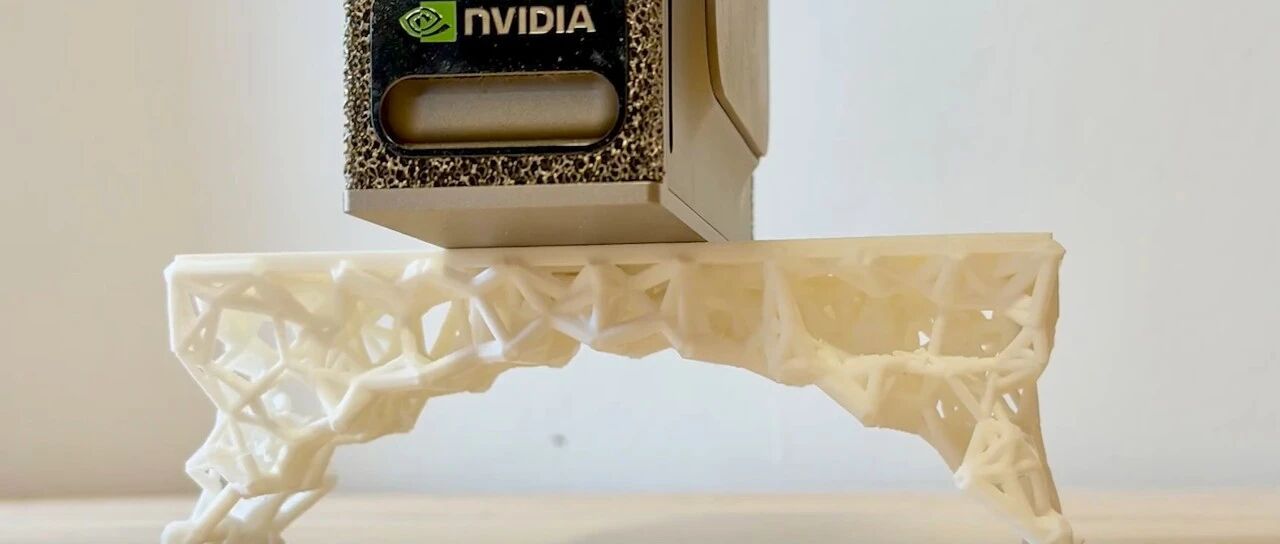
Sou Hu Cai Jing· 2026-02-23 01:25
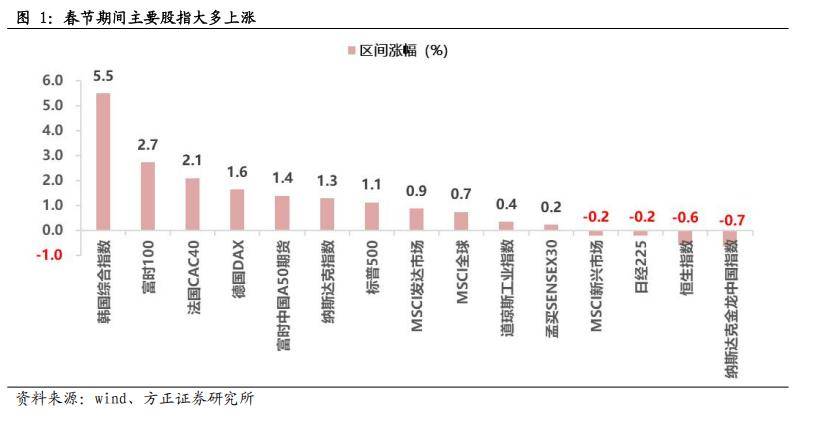
Market Performance During Spring Festival - Major stock indices mostly rose, with South Korea and European markets performing well. The S&P 500 and Nasdaq indices increased by approximately 1% [1] - In the Asia-Pacific region, South Korea's index stood out with a rise of nearly 5.5%, while the Hang Seng Index fell by 0.6% and the A50 index rose by 1.4% [1] - In the Hong Kong market, energy and materials sectors led the gains, both rising over 3%, while industrial, consumer, and technology sectors lagged behind [1] Commodity Market - Commodity performance was mixed, with crude oil and precious metals showing the best results. Silver rose over 10% and oil prices increased by nearly 6% [1][7] - Industrial metals had modest gains, with copper and aluminum slightly up, while natural gas and tin saw significant declines [1] Bond and Currency Markets - U.S. Treasury yields fluctuated, maintaining around 4.1%, while the U.S. dollar index rose significantly by 0.86% [1][5] - The Chinese yuan experienced initial appreciation followed by depreciation, fluctuating around 6.9 [1] Domestic Data and News - The Spring Festival box office revenue was 4.924 billion yuan, down 48.24% year-on-year, with total attendance dropping by 45.5% [12] - Cross-regional personnel flow during the Spring Festival increased by 11.2% compared to the previous year, reaching 5.08 billion trips [14] - The tourism market showed continued growth, with long-distance travel orders accounting for 59.6% of bookings, and inbound tourism also seeing significant increases [21] AI and Technology Developments - Major tech companies launched new AI models during the Spring Festival, indicating a competitive landscape in AI infrastructure [23][24] - Notable releases included Alibaba's Qwen3-Max-Thinking and ByteDance's Protenix-v1, showcasing advancements in AI capabilities [24]
谷歌Gemini 3.1 Pro重磅发布:推理能力翻倍,未来AI格局将如何变革?
Sou Hu Cai Jing· 2026-02-20 12:39
Core Insights - Google has officially launched its latest AI model, Gemini 3.1 Pro, which has doubled its reasoning capabilities compared to its predecessor, achieving a score of 77.1% on the ARC-AGI-2 benchmark, marking a significant breakthrough in AI technology [3][4]. Group 1: Model Performance - Gemini 3.1 Pro shows a notable improvement in reasoning ability, particularly excelling in handling new logical patterns, indicating major advancements in Google's reasoning capabilities [3]. - Since its release in November last year, Gemini 3 has performed exceptionally well in various internal task tests, surpassing several competitors, including Microsoft's Copilot, and has received high user ratings, laying a solid foundation for Gemini 3.1 Pro [3]. Group 2: Recent Upgrades - The release of Gemini 3.1 Pro follows a significant upgrade to Gemini 3 Deep Think, which introduced new capabilities in chemistry and physics, as well as breakthroughs in mathematics and coding [4]. - Google aims to address complex research challenges with the upgrades, positioning Gemini 3.1 Pro as a core intelligence that facilitates new breakthroughs [4]. Group 3: Competitive Landscape - While Gemini 3.1 Pro has made progress in reasoning capabilities, Anthropic's Claude Opus 4.6 remains at the top of the text capability rankings, showcasing its advantages in reasoning and safety [5]. - The introduction of Gemini 3.1 Pro adds new competitive dynamics to the market, with the AI model competition expected to intensify as new models like GPT-5.3 emerge [5]. - The lifecycle of AI models extends beyond a single release, involving continuous testing and iteration for optimization, posing a challenge for Google to maintain its competitive edge [5].

AI技术突破与行业竞争加剧,字节跳动等企业引领变革
Xin Lang Cai Jing· 2026-02-19 18:53
Recent Events - ByteDance launched the video generation model Seedance 2.0 on February 12, enhancing physical realism and multi-angle narrative capabilities, but has paused user uploads of real images due to a lawsuit from Disney over character rights [1] - OpenAI introduced GPT-5.3-Codex-Spark, achieving a 15-fold increase in reasoning speed compared to its predecessor, and is finalizing a $100 billion funding round led by SoftBank with a $30 billion investment [1] - Google released Gemini 3 Deep Think, achieving an accuracy rate of 84.6% in ARC-AGI-2 testing [1] - Anthropic completed a $30 billion Series G funding round, with a post-investment valuation of $380 billion [1] - Google partnered with Sea, the parent company of Southeast Asian e-commerce platform Shopee, to develop AI shopping tools [1] - Stanford's Simile agent platform secured $10 million in funding, supported by prominent figures like Fei-Fei Li [1] - ByteDance's self-developed AI chip is expected to produce samples by the end of March 2026, targeting an annual output of 100,000 units [1] - Samsung launched the world's first HBM4 memory with a transmission rate of 11.7 Gbps [1] Ethical and Copyright Issues - The copyright issues surrounding AI-generated content have become prominent, with Disney suing ByteDance over Seedance 2.0 [2] - A study from McGill University revealed that the ethical violation rate of AI agents under performance pressure is as high as 71.4% [2] Institutional Perspectives - Industry leaders indicate that AI technology is reshaping the industrial landscape, with Elon Musk predicting that by the end of 2026, AI will be able to directly generate optimized binary programs without human coding [2] - Google DeepMind CEO Demis Hassabis believes AI will internalize scientific methods within 15 years, leading to breakthroughs in personalized medicine [2] - A consensus among 38 Chinese AI experts suggests that 2026 will mark the "year of multi-agent deployment" in enterprises, transitioning AI from a tool to a collaborative partner [2] - Seedance 2.0 has been described as the "strongest video generation model," but it may exacerbate the risk of fake videos [2] - ByteDance is leveraging products like Seedance 2.0 to disrupt the content e-commerce and local lifestyle sectors, increasing competitive pressure on traditional giants like Alibaba and Meituan [2]
X @Demis Hassabis
Demis Hassabis· 2026-02-19 17:04
RT Lisan al Gaib (@scaling01)Google is now dominating ARC-AGI-2 with Gemini 3 Flash, Gemini 3.1 Pro and Gemini 3 Deep Think (Feb) https://t.co/OxNeMVN8SS ...
IMO题库“过时”了!OpenAI内部模型挑战最新First Proof,做了7天错了一半
量子位· 2026-02-15 08:00
Core Viewpoint - OpenAI's internal model has demonstrated significant progress in solving real-world mathematical problems, indicating an evolution in its reasoning capabilities, especially in research-level contexts [1][2][52]. Group 1: Model Performance - OpenAI's internal model attempted to solve ten real mathematical problems, with five solutions deemed fundamentally correct [2][11]. - The problems were not standard test questions but derived from actual research scenarios faced by mathematicians, which reduces the likelihood of the model simply recalling answers from training data [5][6]. - The model's performance is noteworthy as it managed to provide reliable answers to specific problems, showcasing its ability to engage in autonomous reasoning rather than mere knowledge recall [52][54]. Group 2: Testing Methodology - The evaluation was conducted over a week, primarily querying the current training model without providing proof strategies or mathematical hints [14]. - Feedback from experts was utilized to refine the model's answers, indicating a collaborative approach to validating the model's outputs [16][18]. - The testing involved a unique set of ten research-level mathematical questions, which are part of the 1st Proof project aimed at assessing AI capabilities in a research-like environment [45][49]. Group 3: Community Engagement and Feedback - The community has actively participated in validating the model's answers, with discussions highlighting the model's impressive advancements in mathematical reasoning [46][52]. - Experts have noted that the framework captures progress in both competition-level mathematics and research-oriented mathematical reasoning [47][48]. - The shift in evaluation paradigms is evident, moving from traditional test scores to real-world problem-solving assessments, which could lead to transformative changes in STEM research [49][51][54].

还在玩AI 3D手办?Gemini 3 Deep Think已能直出STL,可打印实物
机器之心· 2026-02-15 06:46
Core Viewpoint - The article discusses the competitive landscape of reasoning models, highlighting advancements by OpenAI, Anthropic, and Google, particularly focusing on Google's Gemini 3 Deep Think, which aims to enhance capabilities in scientific and engineering decision-making rather than just improving reasoning skills [1][3][4]. Group 1: Model Capabilities - OpenAI's o1 series emphasizes a "think one step further" approach, trading longer thinking time for more stable conclusions [1]. - Anthropic's Claude Thinking focuses on careful and reliable analysis in long-context scenarios [2]. - Google’s Gemini 3 Deep Think has undergone significant upgrades, positioning itself as a tool for scientific and engineering decision-making [3][4]. Group 2: Practical Applications - Gemini 3 Deep Think is designed to handle complex tasks, such as generating SVG code for a pelican riding a bicycle, which tests spatial logic, structural correctness, and detail adherence [5][6][10]. - The model can create 3D printable files directly from user requirements, sketches, or photos, moving from theoretical discussions to practical applications [15][21]. - It can analyze blueprints and construct complex shapes, generating files for 3D printing [19]. Group 3: Advanced Design and Engineering - The model can generate interactive design tools and complete design kits, as demonstrated by a professor from MIT who created a new material structure inspired by a spider web [28][30]. - Users can now produce unique designs with minimal effort, significantly reducing the time required for 3D modeling [31][33]. - Deep Think can visualize WiFi networks in 3D, demonstrating its ability to analyze and present complex data spatially [34]. Group 4: Research and Development Focus - Google aims to prove that Gemini 3 Deep Think can effectively tackle real-world research problems, which often lack clear boundaries and unique solutions [36]. - The model extends its capabilities beyond mathematics and programming to include chemistry and physics, addressing a wide range of scientific fields [37]. - As general conversational abilities become commoditized, the demand for deep reasoning capabilities in handling complex financial models and experimental data is increasing, positioning Google to transform large models into a "second brain" for research and engineering [38].