Hypershell X Ultra

Search documents
从医疗到登山,外骨骼进入“万元时代”前夜
机器人大讲堂· 2026-03-05 09:14
Core Viewpoint - The exoskeleton industry is experiencing significant growth, highlighted by the recent B+ round financing of Cheng Tian Technology, which indicates a shift towards consumer-grade applications and market expansion [1][2]. Group 1: Financing and Market Trends - Cheng Tian Technology completed a significant financing round of over 100 million yuan, marking its second round of funding within a year [1]. - The funding will be directed towards expanding the consumer-grade exoskeleton market, developing embodied intelligent exoskeleton technology, and registering new brain-machine interface products [2]. - The exoskeleton industry is entering a phase of accelerated commercialization, driven by advancements in technology, payment models, and diversified applications [2][4]. Group 2: Supply Chain and Cost Dynamics - The supply chain for exoskeletons is maturing, with previously hesitant suppliers now entering the market due to increased demand [4]. - If the exoskeleton market reaches a scale of 10 million units, the corresponding market space for components like motors and sensors could reach 32 billion yuan, 120 billion yuan, and 40 billion yuan respectively [4]. - The transition from high-cost medical devices to more affordable consumer electronics is being facilitated by economies of scale [4]. Group 3: Application Scenarios and Market Demand - Exoskeletons are expanding their application scenarios beyond medical rehabilitation to include industrial and consumer markets, with significant demand growth expected [6]. - The demand for exoskeleton robots in China is projected to grow by 31.6% year-on-year in 2026, with the market size expected to increase by 28.7% [6]. Group 4: Technical Challenges - The industry faces several technical challenges, including the need for improved user experience, better human-machine collaboration, battery life, and the transition from passive to active assistance [8][10]. - Current exoskeletons struggle with user comfort, adaptability to individual movement patterns, and battery performance, which are critical for user acceptance [10]. Group 5: Standardization and Regulation - The lack of a standardized framework for consumer-grade exoskeletons is a significant barrier to large-scale development [11]. - A national standard for exoskeletons is in the process of being established, which aims to create a comprehensive safety risk assessment framework for human-machine interaction [11]. Group 6: Competitive Landscape - The exoskeleton market features a diverse competitive landscape, with companies focusing on either medical or consumer applications [12][14]. - Cheng Tian Technology has a dual strategy, maintaining a strong presence in the medical sector while also exploring consumer markets, which may provide a stable cash flow and growth potential [14]. Group 7: Future Outlook - The recent financing of Cheng Tian Technology is seen as a preparatory move for scaling in the consumer market, but achieving widespread adoption will require addressing key challenges in technology and user experience [16]. - The exoskeleton industry is expected to undergo a competitive shakeout as companies strive to meet the evolving needs of consumers and the market [16].


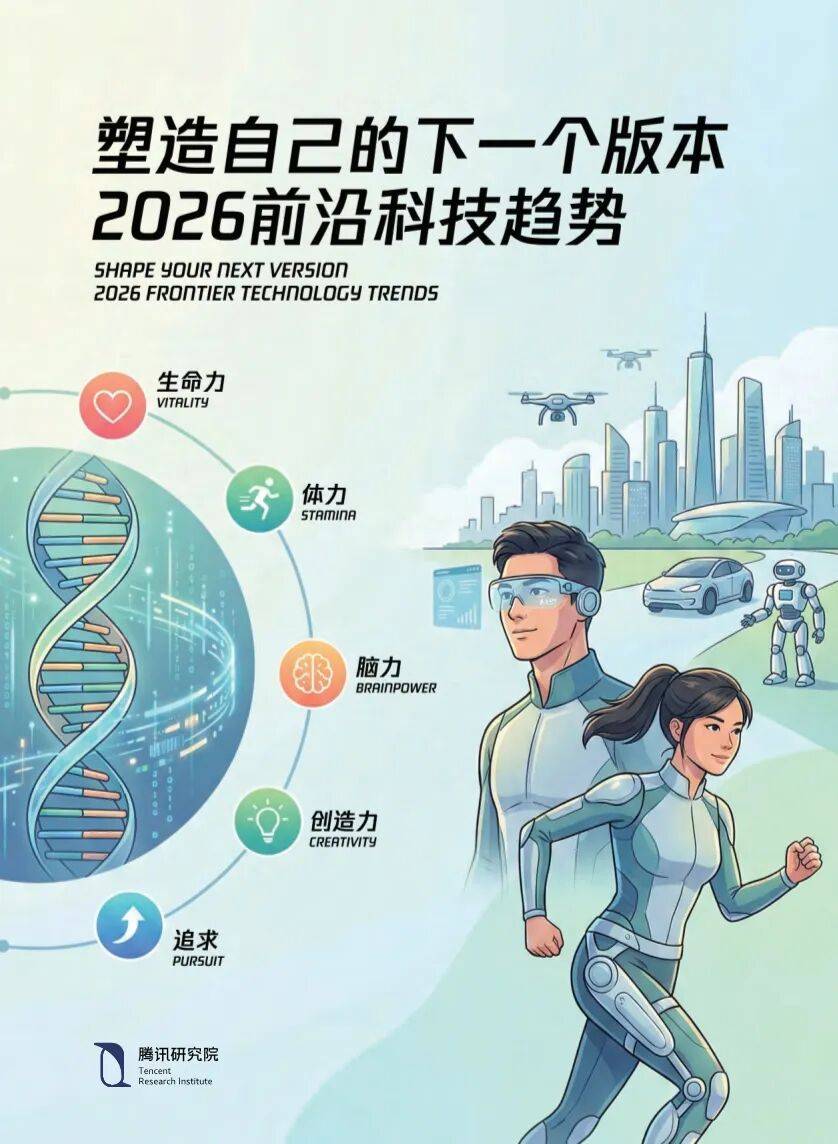
塑造自己的下一个版本2026前沿科技趋势报告解读(40页附下载)
Sou Hu Cai Jing· 2026-02-23 09:39
Group 1: Vitality 2030 - The report highlights a significant shift in human life expectancy, indicating that while life expectancy has doubled over the past century, the growth rate has drastically slowed down, with some regions experiencing stagnation or decline [2][29]. - A new paradigm is emerging, focusing on "healthspan" rather than just lifespan, emphasizing the quality of life without severe chronic diseases, which could generate a global economic value of up to $38 trillion if healthspan is extended by just one year [2][30]. - Key technological advancements include CRISPR technology entering its 2.0 phase, with potential breakthroughs in gene therapy for cardiovascular diseases and personalized treatments for metabolic disorders [2][34][35]. Group 2: Stamina 2030 - Exoskeleton technology is evolving from medical applications to industrial and personal use, significantly enhancing human physical capabilities [3][54]. - In the medical field, exoskeletons are transitioning from mobility aids to intelligent devices that promote neurological rehabilitation, with Medicare's reimbursement policy marking a significant milestone [3][54]. - Industrial applications are showing promising results, with companies like German Bionic reporting a 75% reduction in workplace injuries after implementing exoskeleton technology [3][54]. Group 3: Brainpower 2030 - The report discusses the evolution of artificial intelligence (AI) towards general intelligence (AGI), highlighting advancements in reasoning models that can self-correct and learn from experience [6][7]. - AI is expected to enhance medical practices by significantly reducing drug development timelines from 10-15 years to just a few months, with AI-driven drug candidates already entering clinical trials [6][44]. - Brain-computer interfaces (BCIs) are advancing, with both invasive and non-invasive technologies showing promise in restoring sensory functions and translating brain activity into coherent language [9][10]. Group 4: Creativity 2030 - The integration of AI with personal creativity tools is expected to redefine individual and team productivity, with AI assistants capable of generating complex outputs like presentations and creative content [11][12]. - The emergence of "super individuals" who can independently manage product development and marketing using AI tools is reshaping the concept of team dynamics and company structures [13][14]. - Large organizations are facing challenges in adapting to the AI era, necessitating a complete overhaul of human resource practices to focus on skills and collaborative partnerships rather than traditional employment models [14][15]. Group 5: Pursuit 2030 - The report raises critical questions about individual uniqueness and decision-making in an AI-driven world, emphasizing the importance of maintaining personal judgment and growth opportunities [16][17]. - It suggests that technology amplifies not only capabilities but also choices and values, urging individuals to reflect on their direction in a rapidly evolving landscape [16][17]. - The overarching theme is the need to balance technological advancements with the preservation of human dignity and quality of life, aiming for a future where health and vitality are prioritized over mere longevity [18][51].
外骨骼机器人「卷土重来」:面向消费级玩家,四大技术难点仍需攻克
3 6 Ke· 2026-01-23 03:28
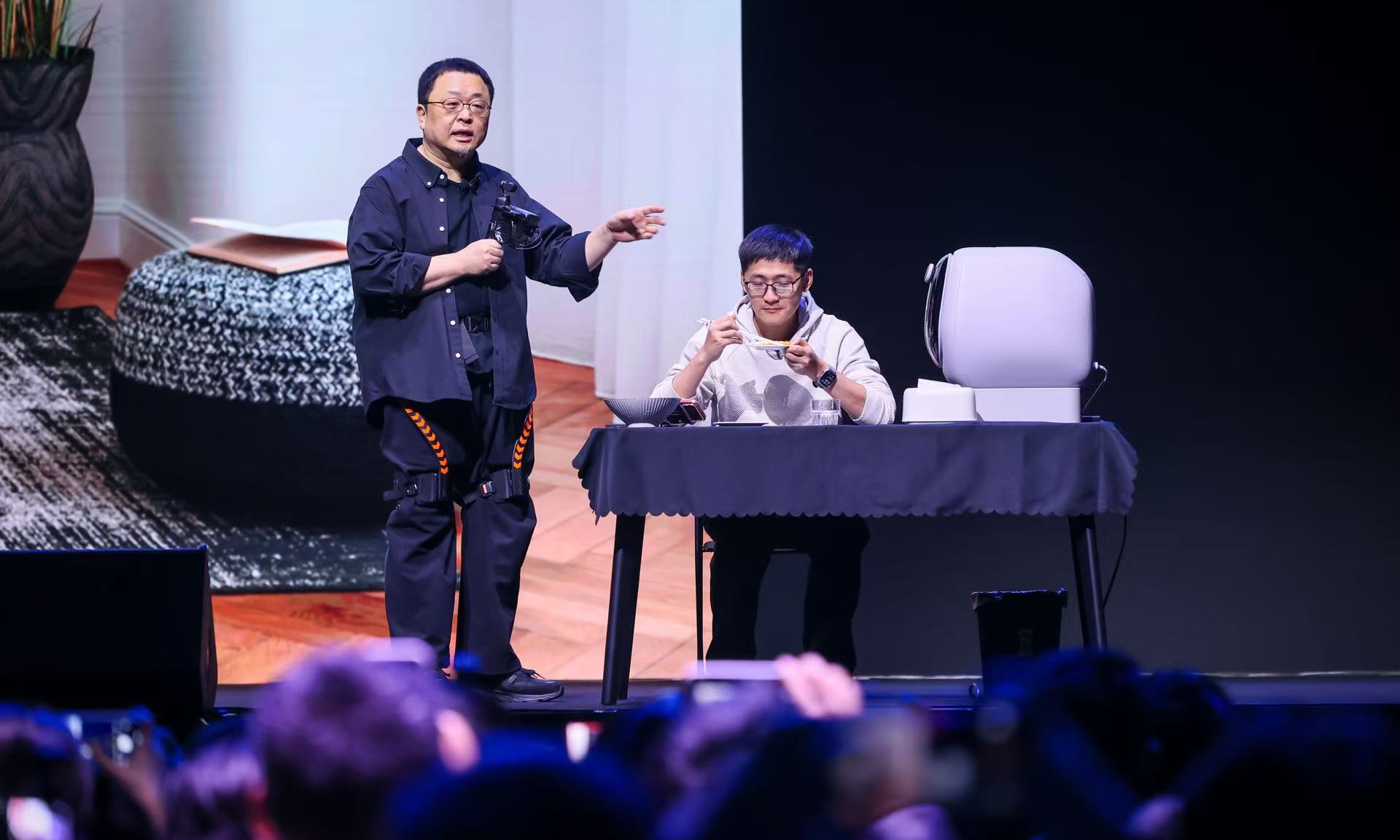
Core Insights - The exoskeleton robot industry is experiencing a resurgence, driven by advancements in robotics and AI technology, with a focus on consumer-grade applications and outdoor activities [4][5][7] - Companies like Hypershell, ULS, DNSYS, and ChengTian are emerging as key players in the Chinese exoskeleton market, showcasing their products at major events like CES 2026 [3][4] - Hypershell has positioned itself as a leader in the consumer exoskeleton segment, achieving significant milestones in funding and product delivery [11][13] Industry Overview - Exoskeletons are wearable devices designed to enhance human movement capabilities, with applications primarily in medical rehabilitation and industrial settings [4][5] - The market for consumer-grade exoskeletons is still niche but is gaining traction, particularly among individuals seeking rehabilitation and enhanced mobility [8][11] Technological Developments - Hypershell has introduced innovative products, such as the Hypershell X Ultra, which features advanced AI algorithms and improved battery life, achieving a weight of 1.8 kg and a range of 30 km per battery [13][16] - The industry faces several technical challenges, including the need for better user experience, improved battery life, and the transition from passive to active assistance in exoskeleton functionality [24][26] Market Dynamics - The consumer exoskeleton market is characterized by a lack of standardized regulations, which poses challenges for widespread adoption and market growth [7][8] - Companies are exploring diverse applications for exoskeletons, including outdoor sports, urban commuting, and emergency services, to broaden their market appeal [16][19] Competitive Landscape - Key players in the market include Hypershell, ULS, DNSYS, and ChengTian, each focusing on different aspects of exoskeleton technology, from rehabilitation to outdoor sports [17][21] - The competition is intensifying as new startups enter the market, aiming to innovate and capture consumer interest [5][19]

偏科极客、死亡焦虑,第一个消费级外骨骼的诞生
晚点LatePost· 2025-12-24 13:41
Core Viewpoint - The article discusses the journey of a startup, Hypershell, founded by Sun Kuan, focusing on the development of consumer-grade exoskeletons that enhance human capabilities rather than replace them. The narrative emphasizes the challenges faced in a field often deemed "impossible" and highlights the potential for innovation in this space [5][7][13]. Group 1: Company Background - Sun Kuan, the founder of Hypershell, has a background in creating complex hardware, having developed a 3D printer during his university years, which instilled in him the belief that "nothing is impossible" if one is willing to think and solve problems [5][12][13]. - Hypershell aims to redefine exoskeletons from being viewed as medical devices for the disabled to being seen as desirable tools for enhancing human performance, targeting outdoor enthusiasts and active individuals [6][7][27]. Group 2: Development Challenges - The development of the first consumer-grade exoskeleton took 40 months, during which the company faced significant financial difficulties, including a point where only 200,000 yuan remained in the account [29][48]. - The first product prototype received poor user feedback, scoring below 50 out of 100, leading to a complete redesign to improve comfort and functionality [35][40]. Group 3: Market Position and Strategy - Hypershell has secured $70 million in funding and has achieved a shipment volume of several thousand units, capturing over 90% of the consumer-grade exoskeleton market [7][29]. - The company focuses on creating a product that is not only functional but also visually appealing, aiming to integrate seamlessly with the user's body and lifestyle [31][32]. Group 4: Future Outlook - The company recognizes the need for continuous innovation and adaptation to market demands, with plans to explore lower-priced versions of their products to reach a broader audience [64][65]. - The long-term vision includes establishing a community around exoskeletons similar to the evolution seen in the 3D printing market, where user-generated content and experiences can drive mainstream adoption [66][67].

清华系AI黑马融资5亿! | 融资周报(2025年第44期)
Sou Hu Cai Jing· 2025-12-02 07:23
Financing Overview - A total of 27 financing events occurred in Shanghai this week, with 13 disclosing amounts totaling approximately 1.753 billion yuan [5][10] - The majority of financing events took place in the Pudong New Area, with 12 events, followed by Minhang District with 5 events [5] - The most common financing round was Series A, with 11 occurrences, followed by angel rounds with 8 [7] Company Dynamics - Weike Bio's patent for a detection method based on exogenous DNA insertion mutations was approved on November 5 [3] - DeYin Technology showcased at the Hong Kong Elderly Technology Expo on November 20 [3] - Hejian Technology and CAE Network partnered to establish a PCB design and digital chip simulation collaboration on December 1 [3] Hot Industry Focus - The National Medical Products Administration approved a disposable pressure monitoring cardiac pulsed electric field ablation catheter from Shanghai MicroPort on November 24 [4] - Novartis' innovative drug, Ripretinib tablets, received approval from the National Medical Products Administration on November 26 [4] - Anke Bio's Shanghai Innovation Research Institute and Shanghai Anke Huaze Pharmaceutical officially opened in Zhangjiang on November 27 [4][24] Notable Financing Events - Wunwen Qinqu completed nearly 500 million yuan in Series A+ financing on November 27, led by Zhuhai Technology Group and Futen Capital [13][14] - Hypershell completed 70 million USD in Pre-B and B round financing on November 27, with participation from various investors [16][17] - Kaisi Kedi completed 300 million yuan in Series B financing on November 28, led by Guotou Xiandao [18][19] - Aoyi Technology completed over 100 million yuan in B+++ round financing on November 28, exclusively invested by listed company Redik [20][21] - Kaiwuji completed a 100 million yuan angel round financing on November 26, led by IDG Capital and BlueRun Ventures [22][23] Policy and Regulatory Developments - The Shanghai government introduced 22 measures to support the high-quality development of the biopharmaceutical industry, focusing on innovation and regulatory reforms [25]

融资5亿,陆奇看好的90后:又连融两轮
3 6 Ke· 2025-12-01 00:20
Core Insights - Hypershell, a Chinese exoskeleton robotics company, has successfully completed Pre-B and B funding rounds, raising a total of $70 million (approximately 495 million RMB) with a post-investment valuation nearing $400 million [1][6] - The company focuses on consumer-grade exoskeletons designed to enhance physical capabilities, making them accessible for outdoor enthusiasts and professionals in various fields such as industrial handling and rehabilitation [1][9] - Hypershell is the first company globally to mass-produce and sell consumer-grade exoskeletons, targeting ordinary consumers rather than military or medical markets [1][11] Company Overview - Founded by Sun Kuan in 2021, Hypershell aims to create affordable and portable exoskeletons for everyday users, addressing the growing need for enhanced mobility in an increasingly sedentary society [2][3][4] - The initial team comprised experts from robotics, ergonomics, and AI, focusing on balancing weight, cost, and assistive performance in their product development [4][5] Product Development - The team developed the Omega architecture, featuring a single motor drive system, which significantly reduced the weight of the exoskeleton from the industry standard of over 10 kg to just 1.8 kg [5][6] - By utilizing self-developed core components, the overall cost of the exoskeleton was reduced to one-tenth of traditional models, paving the way for a target price point around $1,000 [6][9] - The first product, Hypershell Go, was launched in 2023, successfully raising $1.23 million through crowdfunding on Kickstarter, with 40% of backers from the U.S. [6][7] Market Potential - The global exoskeleton market is projected to reach $5.8 billion by 2028, with a compound annual growth rate (CAGR) of approximately 47.7% from 2025 to 2028; the Chinese market is expected to reach around 4.2 billion RMB by 2025, maintaining a growth rate of about 50% [10] - Despite rapid growth, the industry remains in its early stages, with low penetration rates, particularly in China, where the market has evolved from a few billion RMB to a more substantial scale [10][11] Competitive Landscape - The exoskeleton market features a mix of traditional manufacturers focused on medical and industrial applications and emerging startups targeting consumer-grade wearable technology [10][11] - Hypershell distinguishes itself by designing products specifically for ordinary consumers from the outset, focusing on comfort, weight, affordability, and ease of use [11] Technological Trends - Advancements in materials, sensors, and battery technology are driving the evolution of exoskeletons from specialized equipment to consumer products, with applications expanding into everyday activities [9][12] - Key technological developments include lighter and more efficient drive systems, improved human motion recognition algorithms, modular structures, safety systems, and specialized algorithms for specific activities [12][13][14]

极壳Hypershell完成两轮共7000万美元融资丨早起看早期
36氪· 2025-11-30 23:53
Core Insights - Hypershell, a consumer-grade exoskeleton brand, has completed a total of $70 million in Pre-B and B round financing, with a post-investment valuation nearing $400 million [4][8][16] - The company aims to enhance human mobility through innovative technology, addressing the decline in physical activity due to urbanization and aging [5][20] - Hypershell has developed the world's first single-motor driven exoskeleton system, significantly reducing costs and weight, making the product accessible at a consumer price point [8][9] Financing and Growth - The recent financing will be used for research and development, product design, supply chain production, global marketing, and talent acquisition [14][16] - Hypershell has established sales channels in over 70 countries, with cumulative shipments reaching tens of thousands [10][12] Market Strategy - The company follows a global market strategy, initially focusing on outdoor enthusiasts in mature markets before expanding into domestic channels [12][20] - The launch of the Hypershell Go on Kickstarter raised $1.23 million, becoming a bestseller, with 40% of backers from the U.S. [8][9] Competitive Landscape - As the consumer-grade exoskeleton market grows, competitors like Cheng Tian Technology and Skip are emerging, indicating a challenging future for Hypershell [18] - The key to success in this sector includes user interaction, lightweight design, supply chain management, and precise market positioning [18] Future Outlook - The potential for consumer-grade exoskeletons is significant, with applications in outdoor activities, elder assistance, and commuting [18][20] - Hypershell's mission is to enhance human capabilities rather than replace them, differentiating it from other robotics companies [20]

消费级外骨骼企业极壳Hypershell完成两轮共7000万美元融资
机器人圈· 2025-11-27 10:43
Core Insights - The article highlights the rapid integration of consumer-grade exoskeletons into everyday life, with Hypershell securing $70 million in Pre-B and B round financing, achieving a post-investment valuation of nearly $400 million, indicating strong market potential [3][4]. Financing and Investment - Hypershell's recent financing rounds show significant capital aggregation, with the B round led by Guanghe Venture Capital and Wuyuan Capital, and participation from Meituan Longzhu. The Pre-B round was led by Monolith, with continued investment from Wuyuan Capital [3][4]. - The company aims to utilize the $70 million funding for R&D, production, marketing, and talent acquisition, essential for scaling operations in the exoskeleton industry [5][6]. Company Overview - Founded in late 2021, Hypershell is the first startup to transition exoskeleton applications from medical and industrial fields to consumer markets. The founder, Sun Kuan, has a decade of experience in robotics and exoskeleton research [3][4]. - The company has developed a pioneering single-motor exoskeleton system, significantly reducing costs and weight, allowing for a consumer price point of around $1,000 [4][5]. Product Development and Market Strategy - Hypershell launched its first consumer-grade exoskeleton, Hypershell Go, on Kickstarter in March 2023, raising $1.23 million and gaining support from 2,638 global users, with 40% from the U.S. [4][5]. - The company plans to officially launch the Hypershell X series in China in August 2024, following a successful global rollout [5][6]. Competitive Landscape - The consumer-grade exoskeleton market is becoming competitive, with companies like Cheng Tian Technology and others entering the space. Hypershell's strong investor backing positions it well, but the industry faces uncertainties [6][7]. - The success of consumer-grade exoskeletons will depend on factors such as user interaction, product lightweighting, supply chain management, and precise scene definition [7][8]. Technological Innovation - Hypershell's MotionEngine, which incorporates AI capabilities, is a key competitive advantage, enabling the product to adapt to various user types and complex scenarios [7][8]. - The company’s advancements in AI motion intent recognition and human-machine interaction may provide a foundation for future developments in humanoid robotics [7][8].

极壳Hypershell获7000万美元Pre-B及B轮融资:消费级外骨骼的品类定义者
IPO早知道· 2025-11-27 02:53
Core Viewpoint - Hypershell has successfully completed a $70 million Pre-B and B round financing, achieving a post-financing valuation of nearly $400 million, positioning itself as a pioneer in the consumer-grade exoskeleton market [3][5]. Financing and Valuation - Hypershell raised $70 million in its Pre-B and B round financing, led by Guanghe Venture Capital and Wuyuan Capital, with participation from Meituan Longzhu and other existing investors [3]. - The company's post-financing valuation is approximately $400 million [3]. Product Development and Innovation - Hypershell is the first company globally to achieve large-scale production and commercialization of consumer-grade exoskeletons, overcoming skepticism in the industry [3][5]. - The Hypershell X series, the company's first mass-produced product, features a peak power motor of 800W, effectively reducing the user's physical burden by 30% [5]. - The product has a range of 15-17.5 kilometers in typical use cases, catering to long-distance walking or daily work needs [5]. - The latest release, Hypershell X Ultra, showcases significant advancements in its power system and AI algorithms, including a second-generation AI motion intent recognition algorithm that can adapt to 12 different postures [6][7]. Industry Recognition - Hypershell's products have received international accolades, including the "Best Innovation Product Award" at CES 2025 and IFA 2025, highlighting their industrial design and technological innovation [5][6]. - The Hypershell Ultra series is the first exoskeleton product to receive SGS certification, establishing a benchmark for performance parameters in a market often criticized for lack of standards [7]. Market Potential and Future Outlook - Investors express confidence in Hypershell's ability to lead the consumer-grade exoskeleton market, driven by its strong patent portfolio and innovative capabilities [9][10]. - The company is positioned to redefine the category of consumer-grade exoskeletons, with significant growth potential as the industry evolves with advancements in robotics and AI [9][10].

极壳Hypershell完成两轮共7000万美元融资
暗涌Waves· 2025-11-27 00:43
Core Viewpoint - The article discusses the emergence of Hypershell, a consumer-grade exoskeleton brand, which has recently completed $70 million in Pre-B and B round financing, achieving a post-investment valuation close to $400 million [2][5]. Group 1: Company Overview - Hypershell was founded at the end of 2021 and is the first company to bring exoskeleton products from medical and industrial fields to the consumer market [3]. - The founder, Sun Kuan, has a diverse background in robotics hardware management, exoskeleton academic research, and overseas hardware brand creation [3]. - The team consists of experts in robotics, ergonomics, and AI algorithms, with experience from leading hardware and robotics companies [3]. Group 2: Product Development and Innovation - In 2023, Hypershell invented the world's first single-motor-driven exoskeleton system, significantly reducing the cost and weight of exoskeletons by half [5]. - The company launched its first consumer-grade exoskeleton product, Hypershell Go, on Kickstarter, raising $1.23 million and attracting 2,638 supporters, with 40% from the U.S. [5][6]. - The latest product, Hypershell X Ultra, features a second-generation AI motion intention recognition algorithm, providing 2.5 times the battery life under the same capacity [6]. Group 3: Market Strategy and Expansion - Hypershell has established sales channels in over 70 countries, with a cumulative shipment of tens of thousands of units [7]. - The company adopts a global market strategy, initially focusing on outdoor enthusiasts in mature outdoor cultures in Europe and the U.S. before entering the domestic market [9]. - The recent launch of Hypershell X in China marks the company's entry into the domestic market, leveraging established infrastructure [9]. Group 4: Funding and Financial Outlook - The recent $70 million financing will be used for various business needs, including R&D, product design, supply chain production, marketing, and talent recruitment [10]. - Hypershell has gained significant attention in the primary market, being recognized as a star startup due to its innovative consumer-grade products and global strategy [11][12]. Group 5: Competitive Landscape and Future Challenges - As the consumer-grade exoskeleton market grows, competitors like Cheng Tian Technology and Skip are emerging, making the future path for Hypershell uncertain [15]. - Sun Kuan emphasizes the importance of excelling in multiple areas, including user interaction, lightweight design, supply chain management, and precise scene definition to maintain a competitive edge [15]. - The potential for consumer-grade exoskeletons to evolve from niche products to everyday necessities is highlighted as a key challenge for the industry [15][16].