
Llama系列大模型

Search documents
AI眼镜能把Meta从元宇宙的坑里拉出来吗?
虎嗅APP· 2026-02-02 14:19
Core Insights - Meta is shifting its focus from the metaverse to AI hardware, as evidenced by its recent announcement of the "AI Glasses Impact Grants" program, which aims to support over 30 organizations with nearly $2 million in funding to promote the application of AI glasses across various sectors [2] - The company's fourth-quarter financial results for FY2025 showed significant growth, with revenue reaching $598.93 billion, a 24% increase year-over-year, and net profit of $227.68 billion, up 9% [3][4] - Meta's advertising revenue remains a crucial pillar, with social media platforms generating $581.37 billion in ad revenue, accounting for 97.07% of total revenue, driven by user growth and enhanced AI capabilities [6][8] Financial Performance - In Q4 FY2025, Meta's active user count reached 3.58 billion, a 7% increase year-over-year, while average revenue per user (ARPU) rose to $16.73, up 16% [4] - The company expects Q1 FY2026 revenue to be between $53.5 billion and $56.5 billion, exceeding market expectations of $51.4 billion [4] - Meta's capital expenditures for FY2026 are projected to be between $135 billion and $150 billion, nearly double the previous year's figures, indicating strong investor confidence [5] AI and Advertising - Meta's advertising business is experiencing robust growth, with a 25% year-over-year increase in revenue from its suite of applications, including Instagram and Facebook [6] - AI investments have optimized ad targeting and recommendation systems, leading to an 18% increase in ad impressions and a 6% rise in average ad pricing [7][8] - The introduction of AI-driven models has improved ad conversion rates across platforms, positioning Meta as a leader in leveraging AI for advertising [8] Challenges in AI Development - Meta's flagship AI model, Llama4, faced criticism for alleged performance manipulation, leading to a decline in the company's standing in the AI community [9][11] - The company is undergoing a restructuring of its AI division, with significant R&D spending projected to reach $162 billion to $169 billion in FY2026 [11][12] Metaverse Business Struggles - The Reality Labs division, responsible for Meta's metaverse initiatives, reported a revenue decline of 12% in Q4 FY2025, with operating losses increasing to $6.02 billion [14][15] - Meta has acknowledged the need to pivot resources from the metaverse to AI and wearable technology, evidenced by recent layoffs and the closure of several VR game studios [16][17] - The company is focusing on the success of its AI-enabled smart glasses, which have reportedly seen a threefold increase in sales, indicating a strategic shift towards more profitable ventures [17]



华人团队AI公司8个月狂揽7亿,Meta豪掷数十亿美金,下一个时代来临!
格隆汇APP· 2025-12-31 10:35
Core Viewpoint - The acquisition of Manus by Meta for several billion dollars marks a significant milestone in the tech industry, highlighting the potential of AI agents and the shift towards practical AI applications that can generate substantial revenue [4][5][6]. Group 1: Acquisition Details - Manus was acquired by Meta on December 30, 2025, in a deal that ranks as Meta's third-largest acquisition since its inception, following WhatsApp and ScaleAI [4][5]. - The annual recurring revenue (ARR) of Manus skyrocketed to $100 million within just eight months of launching its core product, showcasing its rapid growth in a challenging market [6][12]. Group 2: Manus's Journey - Founded by Xiao Hong in Wuhan, Manus began as a company focused on AI solutions, gaining significant investment and recognition in a short period [10][11]. - The decision to reject a $30 million acquisition offer from ByteDance in 2024 demonstrated the team's confidence in their long-term vision and potential [10][11]. - The relocation of the company to Singapore was a pivotal move that allowed Manus to access global capital and markets, ultimately leading to a $500 million valuation in a Series B funding round [11][12]. Group 3: Manus's Technology - Manus is described as a General AI Agent capable of executing complex tasks autonomously, distinguishing itself from conversational AI models like ChatGPT [16][18]. - The platform democratizes powerful AI capabilities, making them accessible to users without programming skills, thus broadening its potential user base [18][19]. Group 4: Meta's Strategic Acquisition - Meta's acquisition of Manus addresses a critical gap in its product line by integrating a practical AI solution that can transition AI from theoretical models to actionable digital employees [21][22]. - The acquisition also provides Meta with a proven business model that generates cash flow, which is rare in the AI industry, thus offering a degree of certainty in a volatile market [22][23]. - By acquiring Manus, Meta positions itself at the forefront of the next generation of computing platforms, which are expected to redefine user interaction with digital environments [23]. Group 5: Implications for the Industry - Manus's success is expected to trigger increased interest and investment in AI agents, with other companies likely to become targets for acquisition by major tech players [25]. - The article identifies four categories of companies that may attract attention: general AI agents, specialized vertical AI players, Chinese teams going global, and foundational AI infrastructure providers [25][26][27][29][30][31]. - Manus's journey serves as an inspiration for Chinese entrepreneurs, demonstrating that innovative products and a global perspective can lead to success on the world stage [34][36].

国际资本的吃相,原来也如此难看
3 6 Ke· 2025-11-13 23:37
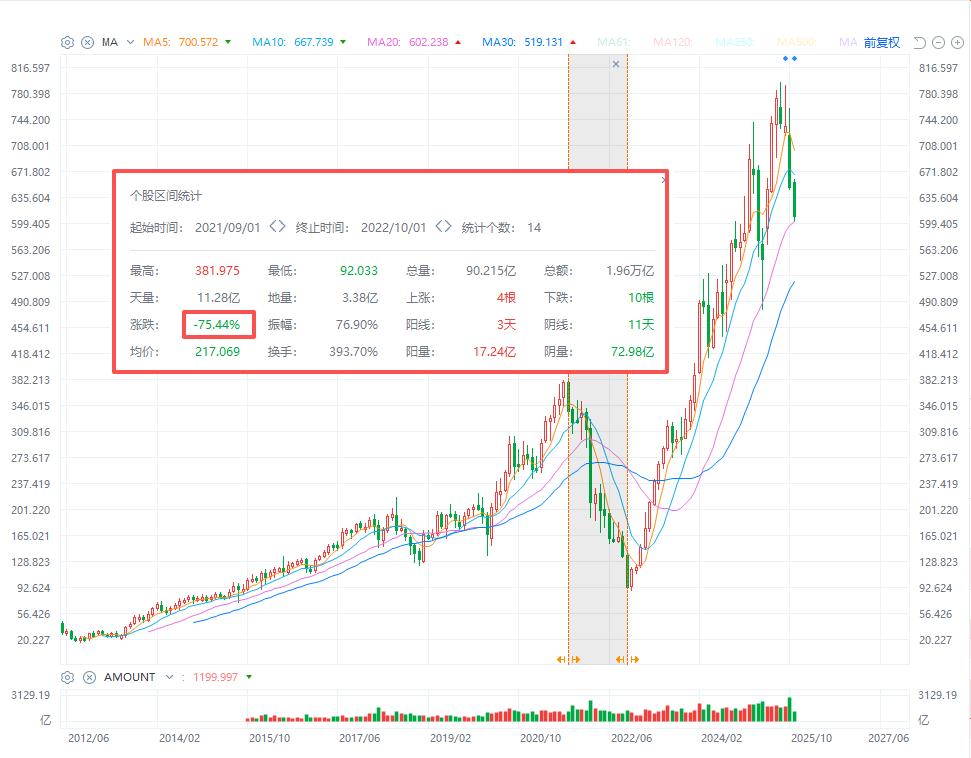
Core Viewpoint - Meta's stock price has experienced significant volatility, recently dropping nearly 20% within two months due to disappointing earnings reports and ongoing challenges in its transition to AI and the metaverse [1][19]. Financial Performance - In 2025, Meta's total revenue reached $164.5 billion, a year-on-year increase of 18%, with net profit at $62.36 billion, up 25% [16]. - The company's free cash flow was reported at $40 billion [16]. - In Q3 2025, Meta's net profit, excluding a one-time non-cash tax expense, was approximately $18.64 billion, close to historical highs, indicating strong core business profitability [24]. Strategic Shifts - Meta has shifted its focus from the metaverse to AI, with plans to invest between $66 billion and $72 billion in AI in 2025, emphasizing the importance of computational power in the competitive landscape [21][22]. - The introduction of AI-driven advertising tools has led to a 30% reduction in production costs for ads and an 18% increase in ad click-through rates [14]. Market Position and Competition - Meta's advertising revenue in Q2 2023 rebounded to $28.6 billion, with Reels advertising revenue surpassing $5 billion, showcasing the effectiveness of AI in driving growth [14]. - The launch of Threads, a social platform competing with Twitter, resulted in rapid user acquisition, further enhancing Meta's market position [15]. Challenges and Risks - Meta's stock faced a significant drop due to a combination of disappointing earnings, ongoing antitrust investigations, and high-profile executive departures, reminiscent of past challenges faced by the company [19][26]. - The company is also dealing with a substantial one-time non-cash tax expense of approximately $16 billion, which has impacted its financial statements but is expected to lead to future tax savings [25].
扎克伯格,也顶不住了
36氪· 2025-08-25 00:11
Core Viewpoint - Meta has shifted its strategy in the AI talent acquisition race, moving from aggressive hiring to a hiring freeze, indicating a need for organizational restructuring and cost control amidst rising concerns from Wall Street about the sustainability of its AI investments [4][5][21]. Group 1: Hiring Strategy - Meta's approach to AI talent acquisition in early 2025 can be summarized as fast, aggressive, and expensive, with offers reaching up to $300 million over four years for some researchers, and top candidates reportedly being offered as much as $1.5 billion [10][11]. - The company has employed a "reverse acquihire" strategy, targeting key talent from competitors without acquiring entire companies, exemplified by a $14 billion minority stake investment to bring in Scale AI's co-founder as Chief AI Officer [11][12]. - By mid-2025, Meta had successfully recruited at least 50 AI professionals from competitors, with 40% coming from OpenAI and 20% from Google [12]. Group 2: Organizational Changes - Following a series of internal restructuring, Meta has consolidated its AI operations into the "Meta Superintelligence Labs," which will be divided into four teams focusing on AGI research, AI products, infrastructure, and long-term exploration [16][18]. - The recent hiring freeze has been framed as a necessary step for foundational organizational planning, allowing Meta to solidify its new structure before further recruitment [4][17]. Group 3: Market Concerns - Wall Street analysts have raised alarms about the escalating costs associated with AI talent acquisition, questioning whether these investments will yield measurable returns or simply dilute shareholder value [21][22]. - The tech sector has experienced a collective stock price decline due to "AI spending anxiety," with concerns about the return on investment for the billions spent on AI initiatives [23]. - Meta's capital expenditure guidance for 2025 has been raised to a maximum of $72 billion, primarily directed towards AI infrastructure and talent, which has led to investor skepticism regarding profitability [23][24].

扎克伯格,也顶不住了
创业邦· 2025-08-24 10:09
Core Viewpoint - Meta has shifted its strategy in the AI talent acquisition race, initially aggressively hiring top talent but has recently paused recruitment to reassess its organizational structure and budget allocation [6][20][24] Group 1: Recruitment Strategy - Meta's approach to AI talent acquisition has been characterized by rapid and high-cost hiring, with some AI researchers receiving compensation packages worth up to $300 million over four years, and top candidates reportedly being offered as much as $1.5 billion [10][11] - The company has employed a "reverse acquihire" strategy, targeting key personnel from competitors rather than acquiring entire startups, exemplified by a $14 billion minority stake investment to bring in Alexandr Wang as Chief AI Officer [11][12] - By mid-2025, Meta had successfully recruited at least 50 AI talents from competitors, with 40% coming from OpenAI and 20% from Google [12][13] Group 2: Internal Challenges - The influx of new talent has raised concerns about internal conflicts, as existing employees may feel marginalized or threatened by the new hires, leading to potential morale issues and departures [7][17] - Meta's AI division has undergone multiple reorganizations, culminating in the establishment of the "Meta Superintelligence Labs," which consolidates various AI teams into four departments [17][18] Group 3: Market Reactions and Financial Implications - Wall Street analysts have expressed concerns over the escalating costs associated with AI talent acquisition, questioning whether the investments will yield measurable returns or simply dilute shareholder value [20][22] - Meta's capital expenditure guidance for 2025 has been raised to a maximum of $72 billion, primarily directed towards AI infrastructure and talent, which has led to increased scrutiny from investors [23] - The recent decision to freeze AI recruitment is seen as a signal to the market to control costs amidst rising expenditures and investor skepticism [20][24]

“天价挖角”踩刹车,刚建3个月的团队解散,28岁华人接管Meta AI,图灵奖大佬也向他汇报
3 6 Ke· 2025-08-21 11:05
Core Insights - Meta has paused recruitment for its newly established AI department and is undergoing a significant internal reorganization, marking a shift from aggressive talent acquisition to a focus on internal structure and efficiency [1][3][4] Group 1: Recruitment and Financial Moves - Meta previously offered up to $100 million in signing bonuses to attract top AI talent from competitors like OpenAI and Anthropic, and made a notable investment of $14.3 billion to acquire 49% of Scale AI [3][4] - The company is now in a phase characterized by "burning money," indicating a shift in strategy as it reassesses its AI investments and organizational structure [3][4] Group 2: Organizational Structure - The newly formed Meta Superintelligence Labs (MSL) will consist of four teams: Research, Training, Product, and Infrastructure, each with specific roles in advancing AI capabilities [6][8][9] - The Research team will include TBD Lab and FAIR, with FAIR transitioning from a basic research focus to an "innovation engine" that supports large-scale model training [7][8] - Alexandr Wang, the head of MSL, has consolidated leadership, with most team leaders reporting directly to him, indicating a streamlined decision-making process [9] Group 3: Team Dynamics and Internal Challenges - Internal tensions have arisen between new hires and existing employees over compensation disparities, leading to dissatisfaction and potential turnover [4][5] - The recent hiring freeze is framed by Meta as a necessary organizational planning step, but it raises questions about whether this is a natural adjustment or a sign of an impending investment bubble in AI [4][5] Group 4: Future Outlook and Market Reactions - Analysts express mixed views on the implications of Meta's restructuring, with some suggesting it is a tactical adjustment rather than a retreat from AI investment [5][11] - The ongoing reorganization is seen as a move to enhance efficiency and accelerate AI product development, although concerns about team stability and talent retention persist [11][12]

苹果“AI雄心壮志”再遭重锤! AI大模型掌舵者被Meta斥巨资挖走
智通财经网· 2025-07-08 00:08
Core Insights - Meta Platforms has successfully recruited Ruoming Pang, Apple's top AI model developer, which poses a significant setback for Apple in its AI ambitions and the development of its Siri AI voice assistant [1][2][7] - Meta's aggressive hiring strategy includes offering multi-million dollar compensation packages to attract top AI talent from competitors, including Apple and OpenAI [3][4] - The departure of key personnel from Apple's AI team, particularly in light of internal management changes and the exploration of third-party AI solutions, raises concerns about the future of Apple's AI initiatives [7][9] Group 1: Meta's AI Strategy - Meta has prioritized AI technology development, with CEO Mark Zuckerberg personally involved in recruiting top talent and restructuring the AI team towards "superintelligence" [4][5] - The company plans to invest hundreds of billions in AI-related infrastructure, including data centers and AI chip acquisitions, to enhance its competitive edge [4][5] - Meta's acquisition of a significant stake in Scale AI is expected to bolster its capabilities in data annotation and model evaluation, crucial for developing "killer" AI applications [5][6] Group 2: Apple's AI Challenges - Ruoming Pang's exit is part of a broader trend of talent loss within Apple's AI division, which has seen several key figures leave recently [1][9] - Apple's AI strategy is currently overseen by Craig Federighi and Mike Rockwell, with ongoing challenges in delivering new AI features and functionalities [10] - Internal morale within Apple's AI team has reportedly declined due to management changes and the potential shift towards third-party AI solutions for Siri [7][9]

Meta(META.US)疯狂砸钱AI的步伐停不下来 计划吞并AI语音初创公司PlayAI
智通财经网· 2025-06-27 03:34
Group 1 - Meta Platforms is in acquisition talks with AI startup PlayAI, focusing on high-quality AI voice generation technology [1] - The acquisition follows Meta's recent $15 billion investment in Scale AI, indicating a strong commitment to AI technology [1][2] - Meta aims to build a "superintelligence" team by recruiting top talent from competitors like Google and OpenAI [2] Group 2 - Analysts suggest that Meta's significant investment in AI could enhance its business exposure and potentially lead to a bullish stock trend [3] - The acquisition of Scale AI is seen as a strategic move to create a "killer" AI application, integrating data, computing power, and large models [3] - Meta's past successful acquisitions, such as Instagram and WhatsApp, bolster confidence in its ability to identify and invest in valuable targets [3]
Meta Platforms成功挖角OpenAI三名核心研究员
Sou Hu Cai Jing· 2025-06-26 08:02
Core Insights - Meta Platforms successfully recruited three prominent researchers from OpenAI, intensifying competition in the AI sector [1][3] - The recruited team includes Lucas Beyer, Alexander Kolesnikov, and Xiaohua Zhai, who have significant expertise in computer vision and multimodal AI [3] - This recruitment is part of Meta's "superintelligent" AI lab initiative, led by Mark Zuckerberg, aimed at developing AI systems that surpass human intelligence [3] Company Strategy - Meta is offering substantial salaries and equity incentives to attract top talent, with some signing bonuses reaching up to $100 million [3] - Zuckerberg emphasized the importance of talent in the AI era, likening it to "oil" [3] - The recruitment is seen as a critical move for Meta to achieve technological breakthroughs in multimodal AI and computer vision [3] Industry Context - Analysts suggest that Meta's aggressive hiring strategy reflects its anxiety in the AI field, especially as its Llama series models have underperformed and faced delays [4] - The global AI talent shortage is projected to reach 3 million by 2025, with fewer than 5,000 scientists capable of developing AGI [4] - Major tech companies like Meta, Google, and Microsoft are engaging in "lock-in hiring" to accumulate talent, which pressures startups to offer exorbitant salaries to survive [4] - Meta's ability to convert this recruitment into a technological advantage remains uncertain, as competition in AI relies on company culture, technological vision, and long-term strategy [4]

Meta巨额投资Scale AI引连锁反应:AI数据标注市场需求激增
智通财经网· 2025-06-19 07:39
Core Insights - Meta Platforms Inc has made a significant investment of $14.3 billion in Scale AI, acquiring a 49% stake and valuing the company at over $29 billion [2][3] - The investment has triggered increased demand for AI data labeling services from competitors like Labelbox and Turing, as clients express concerns over Meta's deeper insights into AI development processes [2][3][4] - OpenAI is gradually reducing its reliance on Scale AI for data labeling services, indicating a shift towards more specialized data service providers [5][8] Company Developments - Alexandr Wang, CEO of Scale AI, will join Meta's core R&D team to lead the new "superintelligence" division focused on general artificial intelligence [2][3] - Scale AI's revenue for 2024 is projected to be approximately $870 million, reflecting a 160% year-over-year growth, although it falls short of the $1 billion target [4][7] - Scale AI has been diversifying its services, including direct assistance in building customized AI applications and closer collaboration with the defense sector [9] Industry Impact - The investment by Meta is expected to reshape the competitive landscape of the AI data labeling sector, with competitors like Snorkel AI and Uber Technologies also vying for market share [3][4] - The transaction highlights the growing recognition of the importance of data labeling in training AI models, which has historically been overlooked [9] - Analysts suggest that Meta's investment in Scale AI could serve as a catalyst for long-term stock price growth, enhancing its exposure to AI-related business opportunities [10][11]