
MOPA脉冲光纤激光器

Search documents
深圳登顶全国“专精特新第一城”
2 1 Shi Ji Jing Ji Bao Dao· 2025-12-15 09:05
Group 1 - Shenzhen leads China with a total of 1,333 "specialized, refined, distinctive, and innovative" (专精特新) "little giant" enterprises, surpassing Beijing (1,210) and Shanghai (1,032) [2][3] - The growth of "little giant" enterprises in Shenzhen reflects a focus on key segments of the industrial chain, mastery of core technologies, and high market share, indicating a high level of development in China's manufacturing sector [3] - Shenzhen's proportion of newly added "little giants" has increased from 6.3% in 2022 to 8.4% in 2023, and is projected to reach 9.8% in 2024 and 9.9% in 2025, maintaining the top position in the country for three consecutive years [4] Group 2 - Notable "little giants" include Jieput's MOPA pulsed fiber laser, which holds over 70% of the domestic market and ranks first globally, and Guangyue Technology, which has developed world-leading high-power transmission cable series [4] - Shenzhen's "little giants" exhibit an average R&D intensity of 7.63%, with annual R&D expenditure averaging 33.39 million yuan, surpassing the national average for similar enterprises [4] - The city has established a comprehensive nurturing system for enterprises, with plans to support "gazelle" and "unicorn" companies through a structured service system aimed at fostering innovation and collaboration within the electronic manufacturing ecosystem [5]


超越北京上海,深圳登顶“专精特新第一城”!
3 6 Ke· 2025-11-04 00:07
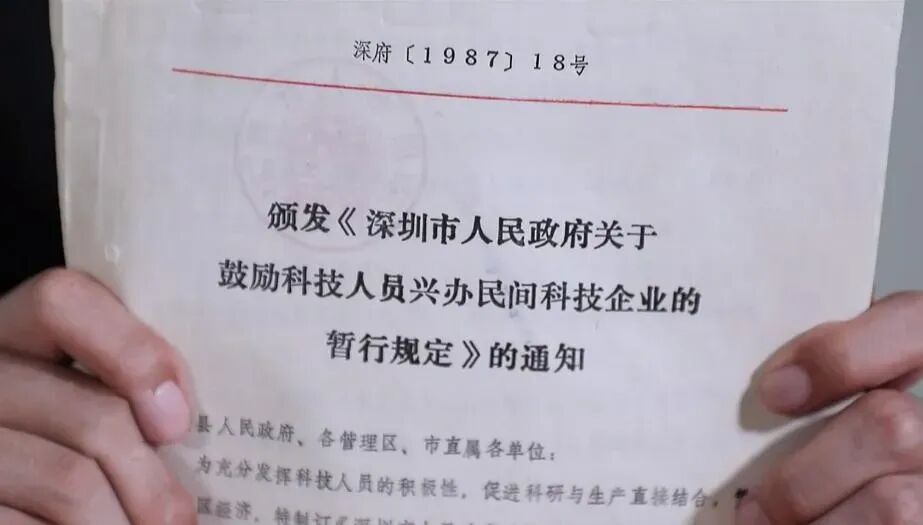
Core Insights - Shenzhen has emerged as the "first city of specialized, refined, unique, and innovative small giants" in China, surpassing other major cities in the number of national-level specialized small giant enterprises [1][7][21] - The city has a total of 1,025 national-level specialized small giant enterprises as of 2024, with a significant increase in the number of new enterprises each year [7][21] - Shenzhen's innovation model is market-driven, focusing on solving real-world problems rather than relying solely on academic research [8][12] Historical Context - In 1987, Shenzhen issued the "Document No. 18," encouraging the establishment of private technology enterprises and clarifying property rights, which laid the foundation for companies like Huawei [3][4] - The city faced a technological void in the 1980s, with minimal academic resources, but the introduction of supportive policies catalyzed the growth of the tech sector [3][4] Key Developments - The "specialized, refined, unique, and innovative small giant" enterprise cultivation plan was initiated by the Ministry of Industry and Information Technology in 2018, further promoting innovation among small and medium-sized enterprises [5][7] - Shenzhen's government has adopted a supportive role, creating an environment conducive to innovation rather than directly controlling it [14][21] Innovation Ecosystem - Shenzhen's innovation is characterized by a high density of high-tech enterprises, with over 25,000 national high-tech companies and an average of 12 companies per square kilometer [9][10] - The average R&D intensity of Shenzhen's small giant enterprises is 7.63%, with annual R&D funding averaging 33.39 million yuan, surpassing national averages [10] Government Support - The Shenzhen government has implemented various measures to support innovation, including opening application scenarios for new technologies and providing financial incentives for recognized enterprises [15][20] - The city has established investment platforms to support early-stage companies, significantly increasing their survival rates [19][20] Conclusion - Shenzhen's success in fostering innovation and entrepreneurship demonstrates that a city can thrive without relying solely on prestigious academic institutions or subsidies, emphasizing the importance of market freedom and trust in enterprises [21]


超越北京上海,深圳登顶“专精特新第一城”
3 6 Ke· 2025-10-31 02:48
Core Viewpoint - Shenzhen has emerged as China's "first city" for specialized and innovative small and medium enterprises (SMEs), with a significant increase in the number of national-level "specialized, refined, distinctive, and innovative" enterprises, surpassing other major cities like Beijing and Shanghai [2][15]. Group 1: Historical Development - In 1987, the issuance of the "18th Document" by Shenzhen encouraged the establishment of private technology enterprises, marking a pivotal moment for innovation in the region [5][9]. - The first year after the "18th Document" led to the creation of over 70 private technology companies, including Huawei [8]. - By 2000, Shenzhen shifted focus towards independent innovation, supporting leading tech companies with R&D funding, which laid the groundwork for companies like Huawei and BYD to challenge traditional markets [10][11]. Group 2: Current Achievements - As of 2023, Shenzhen has 1,025 national-level specialized and innovative SMEs, achieving the highest number of new entries in the country for two consecutive years [15][37]. - The average R&D intensity of Shenzhen's "small giant" enterprises is 7.63%, with an annual R&D expenditure of 33.39 million yuan, surpassing the national average [21][37]. - Shenzhen's "small giant" enterprises have an average of 152 patent applications, significantly higher than the national average of 1.7 per company [21]. Group 3: Innovation Ecosystem - Shenzhen's innovation is primarily driven by market demand rather than academic institutions, with companies innovating based on user feedback and market needs [16][18]. - The local government plays a supportive role by creating an environment conducive to innovation, rather than directly controlling it [24][25]. - Shenzhen has established itself as a testing ground for new technologies, such as drones and electric vehicles, with significant government support for infrastructure development [30][31]. Group 4: Future Outlook - The city aims to continue its trajectory of growth in specialized and innovative SMEs, with a target of reaching 600 national-level "small giant" enterprises by 2025, which has already been exceeded [15][37]. - The supportive policies and investment strategies employed by Shenzhen's government are expected to further enhance the survival and growth rates of innovative enterprises [32][36].


申万宏源证券晨会报告-20250724
Shenwan Hongyuan Securities· 2025-07-24 00:31
Group 1: Market Overview - The total scale of stock ETFs reached approximately 3 trillion yuan in Q2 2025, with a market value share of 3.7%, marking a historical high [9] - Active equity public funds saw a decline in market value share from a peak of 6.2% in 2021 to 3.0% in Q2 2025 [9] - Significant increases in ETF shares were noted in sectors such as banking, liquor, semiconductors, artificial intelligence, robotics, military industry, gold, and rare earths [9] Group 2: Investment Opportunities - The RWA (Real World Asset) market has seen rapid growth, with on-chain asset scale reaching 25.52 billion USD by July 16, 2025, and 310,573 asset holders [11][12] - The global market for consumer-grade 3D printers is projected to reach 7.1 billion USD by 2028, with a compound annual growth rate of 19.2% [14] - The Low Dk electronic cloth market is expected to have an annual average market space of around 10 billion yuan by 2028, driven by the demand for high-speed transmission [19] Group 3: Sector Analysis - In Q2 2025, active equity public funds increased their holdings in sectors such as telecommunications, media, agriculture, military, and finance, while reducing exposure to automotive, food and beverage, social services, electric equipment, and steel [9] - The electronic industry maintained a high holding of 18.8%, with semiconductors comprising half of this proportion, indicating a crowded sector [10] - The pharmaceutical sector showed significant internal structural differentiation, with chemical pharmaceuticals receiving substantial increases in holdings, while other areas like medical outsourcing and hospitals saw reductions [12] Group 4: Company-Specific Insights - The company Jin Tian Titanium Industry (688750) is positioned as a leader in high-end titanium alloy technology, with a focus on aerospace and marine applications [20][22] - The company Jieput (688025) reported an earnings forecast that exceeded expectations, indicating a growing demand in consumer-grade applications [21][22] - The company is expected to achieve a revenue of 8.08 billion yuan in 2024, with a net profit of 1.52 billion yuan, reflecting a year-on-year growth of 3.04% [20]
杰普特(688025):Q2业绩预告超预期,消费级应用打开需求空间
Shenwan Hongyuan Securities· 2025-07-23 10:11
Investment Rating - The report maintains a "Buy" rating for the company [2] Core Views - The company is expected to achieve a significant increase in revenue and net profit for the first half of 2025, with projected revenue between 840-920 million yuan, representing a year-on-year growth of 41.50%-54.98%. For Q2 2025, revenue is expected to be between 497-577 million yuan, with a year-on-year growth of 47.13%-70.81% [5] - The company's net profit attributable to shareholders for H1 2025 is projected to be between 86-100 million yuan, reflecting a year-on-year increase of 57.03%-82.60%. For Q2 2025, net profit is expected to be between 50-64 million yuan, with a year-on-year growth of 75.43%-124.59% [5] - The growth in revenue and profit is driven by strong demand in the precision processing of new energy power batteries and consumer-grade laser applications, as well as a recovery in demand for laser/optical intelligent equipment [8] Financial Data and Profit Forecast - The company forecasts total revenue of 2,083 million yuan for 2025, with a year-on-year growth rate of 43.3%. The net profit attributable to shareholders is expected to be 225 million yuan, with a year-on-year growth rate of 69.8% [7] - The earnings per share (EPS) for 2025 is projected to be 2.37 yuan, with a gross margin of 41.4% and a return on equity (ROE) of 10.1% [7] - The company has adjusted its profit forecast for 2025-2027, expecting net profits of 225 million, 304 million, and 389 million yuan respectively, with corresponding price-to-earnings ratios of 34, 26, and 20 [8]