
MagicOS 10

Search documents
荣耀斩获第十四届金融界“金智奖”消费者信赖产品,品质为基,服务为翼,责任为魂
Jin Rong Jie· 2025-12-26 11:06
Group 1 - The "Qihang 2025 Financial Summit" held in Beijing focused on themes of "New Starting Point, New Momentum, New Journey," gathering hundreds of guests from regulatory bodies, industry associations, financial institutions, listed companies, and media [1] - The 14th "Golden Intelligence Award" was announced, with Honor winning the "Consumer Trusted Product" award, highlighting its recognition in the smart terminal sector for product innovation, user experience, and social responsibility [1][3] Group 2 - The "Golden Intelligence Award" aims to set benchmarks for high-quality development, guiding companies to focus on their core business and innovate while fulfilling social responsibilities [3] - The award evaluation covered over 8,000 companies across A-shares, Hong Kong stocks, and Chinese concept stocks, ultimately recognizing nearly 200 companies based on financial data and public information [3] - The "Consumer Trusted Product" award emphasizes high-quality brands driven by user needs, assessing product innovation, safety, after-sales service quality, and brand social responsibility [3] Group 3 - Honor's Magic V5 foldable series features a thickness of 8.8mm and a weight of 217g, utilizing a 25% high-silicon battery with a capacity of 6100mAh for the 1TB version, achieving breakthroughs in lightweight design and battery life [4] - The series includes advanced materials and technologies, such as titanium alloy and a dual-protection system, enhancing durability and performance [4] - The Magic8 series, powered by MagicOS 10, offers an AI experience that covers over 3,000 scenarios, improving user interaction and health through innovative features [4] Group 4 - Honor integrates the "Technology for Good" philosophy into its development strategy, aiming for carbon neutrality in operations by 2040 and across the entire value chain by 2050 [5] - The company plans to reduce greenhouse gas emissions by approximately 1,497 tons in 2024 and has certified 150 products for environmental standards [5] - Honor's commitment to accessibility includes features like screen reading and AI subtitles, benefiting millions of users [5] Group 5 - Looking ahead, Honor will continue to adhere to its core strategy of "Innovation, Quality, Service," focusing on AI technology innovation and ecosystem collaboration to provide exceptional products and services [5] - The company aims to transform into a leading AI terminal ecosystem company, leveraging technological breakthroughs and ecosystem development to enhance human potential and drive high-quality growth in the smart terminal industry [5]


工程样机变“抢手货” 二手市场溢价上千元 “豆包AI手机”开启下一轮范式迁移?
Shen Zhen Shang Bao· 2025-12-03 23:01
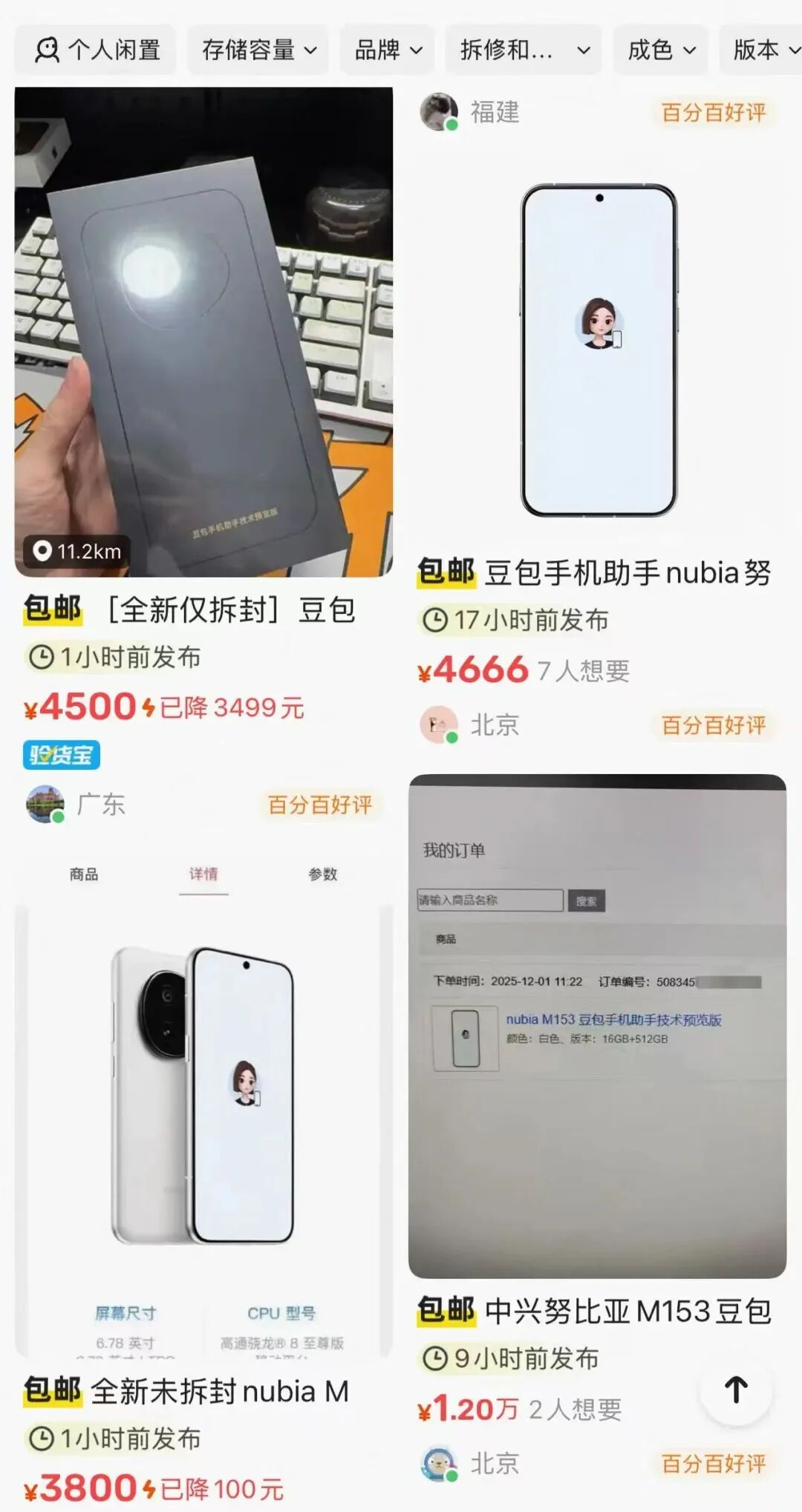
Core Insights - The Nubia M153, also known as the "Doubao AI Phone," has faced login issues with WeChat, prompting users to switch devices for access, and has temporarily disabled WeChat functionalities [1][3] - The phone was launched on December 1 and quickly sold out, with resale prices on second-hand platforms rising significantly, indicating high consumer interest despite being a technical preview model [2][3] - User feedback on the AI capabilities of the phone has been mixed, with some praising its intelligent features while others criticize its performance and express concerns over privacy [3][5] Group 1: Product Launch and Market Response - The Nubia M153 was officially released on December 1, quickly selling out on the ZTE mall, with a limited initial stock of 30,000 units [2] - The phone features a 6.78-inch screen and is powered by the Snapdragon 8 Gen 2 processor, with its standout feature being the integrated Doubao AI system [2] - The initial retail price was set at 3,499 yuan for the 16GB+512GB configuration, and it is marketed primarily to industry professionals rather than general consumers [2] Group 2: User Experience and Privacy Concerns - User experiences have varied, with some users impressed by the AI's capabilities, while others report slow performance and long processing times for tasks [3][5] - Privacy concerns have been raised, particularly regarding the AI's ability to capture user interactions, leading to questions about data security and user consent [3][5] - The Doubao team has responded to privacy concerns by stating that permissions are disclosed in their privacy policy and that user authorization is required for operations [3] Group 3: Industry Context and Future Implications - The challenges faced by the Doubao AI Phone reflect broader issues in the AI smartphone market, particularly regarding the integration of AI with existing app ecosystems [5][6] - Industry experts suggest that a lack of standardized protocols complicates the interaction between AI assistants and mobile applications, potentially leading to regulatory conflicts [5] - The collaboration between ByteDance and ZTE represents a strategic approach to creating an AI ecosystem rather than partnering with a single hardware manufacturer, aligning with emerging trends in the smartphone industry [5][6]

锚定“人工智能+”,荣耀Magic8系列以自进化AI破局终端新赛道
Huan Qiu Wang Zi Xun· 2025-12-03 04:37
Core Insights - The article highlights the launch of the Honor Magic8 series as the first "self-evolving AI native smartphone," marking a significant innovation in the consumer electronics industry [1][2] - Honor's approach integrates user co-creation, an open ecosystem, and hardware AI empowerment, aligning with China's "Artificial Intelligence +" initiative, which aims for over 70% application penetration of new intelligent terminals by 2027 [1][2] Industry Overview - By 2025, the AI smartphone market in China is projected to reach 118 million units, reflecting a year-on-year growth of 59.8%, with a market share of 40.7% [2] - The shift from "parameter competition" to "experience revolution" is driving leading manufacturers to innovate continuously in the smart terminal sector [2] Product Innovation - The Honor Magic8 series is positioned as an "8848 peak flagship," introducing a self-evolving concept that reshapes user perceptions of smart devices and offers new insights for the global AI terminal industry [2][3] - The series features the MagicOS 10 self-evolving AI intelligent operating system, with the AI agent YOYO capable of evolving through user interactions, expanding its supported scenarios from over 200 to 3,000 in just three months [3][4] AI Capabilities - YOYO demonstrates impressive scene understanding, enabling seamless user interactions such as automatic Wi-Fi connections and real-time price comparisons during shopping events [4][5] - Honor has invested in a dedicated AI R&D team of 2,600 members and collaborated with Qualcomm to enhance AI deployment efficiency, addressing industry pain points like high latency and privacy risks associated with cloud AI [5][6] Hardware Integration - The self-evolving capabilities of the Magic8 series are built on a "growth-capable" hardware foundation, achieving breakthroughs in imaging, performance, battery life, communication, and security [6][7] - The Magic8 Pro features a 200MP ultra-night telephoto camera and an upgraded AiMAGE imaging system, enhancing the hardware's capabilities with advanced AI algorithms for superior photography [6][7] Performance Enhancements - The entire Magic8 series is powered by the fifth-generation Snapdragon 8 processor, significantly improving CPU, GPU, and AI computing power compared to previous generations [7] - The series includes a 7000mAh battery with dual fast charging capabilities, addressing user concerns about battery life while optimizing power consumption through AI management [7][8] Security Features - The Magic8 Pro incorporates dual 3D security unlocking and advanced AI fraud detection capabilities, ensuring user privacy and financial security [8][9] Ecosystem Development - Honor aims to redefine lifestyles in the AI era through the "Honor Alpha Strategy," which includes a five-year plan to invest $10 billion in building a leading AI terminal ecosystem [9][10] - The strategy focuses on breaking down barriers between different operating systems and devices, enabling seamless interaction across various platforms, including HarmonyOS and iOS [10][11] Conclusion - The Honor Magic8 series exemplifies the "Artificial Intelligence +" initiative in the consumer electronics sector, creating a virtuous cycle of technology development, user co-creation, and open ecosystems [11]
“豆包AI手机”卖断货!深圳知名公司与字节跳动共同开发
Shen Zhen Shang Bao· 2025-12-02 23:17
Core Insights - The Nubia M153, equipped with the Doubao AI assistant, has sold out on ZTE's online store, indicating strong consumer interest despite being a technical preview model [1][4] - The phone's resale value on second-hand platforms has surged, with prices stabilizing around a premium of 1,000 yuan after initial fluctuations [1][7] - The collaboration between ZTE and ByteDance represents a shift in the smartphone industry towards integrating AI deeply into the operating system rather than as a standalone app [8][10] Product Features - The Doubao AI phone features a 6.78-inch display and is powered by the Snapdragon 8 Gen 2 processor, with a camera setup of three 5000W pixel sensors [2] - Key functionalities include system interaction, global memory, and intelligent operations, allowing users to perform tasks like price comparisons and online ordering through voice commands [2][3] - The phone is currently available only in a single configuration (16GB+512GB) priced at 3,499 yuan, with limited availability of 30,000 units [4] Market Dynamics - The second-hand market shows a range of premiums from 300 to several thousand yuan, but actual transaction volumes remain low, with many users still inquiring rather than purchasing [7] - The phone's purchase process requires an "F code," limiting access to a select group of users, which may contribute to the high resale prices [4][7] Industry Trends - The rise of AI-integrated smartphones is part of a broader trend, with major companies like Google, Apple, and Samsung also launching AI-focused devices [8] - The partnership between ZTE and ByteDance is indicative of a new ecosystem approach, where AI capabilities are embedded across various smartphone brands rather than being tied to a single manufacturer [8][10] - Future competition in the smartphone market is expected to center around the effectiveness of AI in understanding and executing user commands, potentially transforming the user experience [10]
手机厂商密集发布新品产业链公司将受益
Zhong Guo Zheng Quan Bao· 2025-11-12 20:18
Core Insights - The recent launch of flagship AI smartphones by companies like Apple, Xiaomi, OPPO, vivo, and Honor is expected to enhance user experience and accelerate the high-end smartphone market and replacement cycle [1][2][3] Group 1: Market Trends - The introduction of AI features has become a major selling point for flagship smartphones, with 80% of high-end smartphone sales in the first half of the year featuring generative AI capabilities [2] - The smartphone market is anticipated to see improved performance in Q4, driven by the concentrated release of annual flagship products [3] - The global high-end smartphone market is projected to grow significantly, with AI smartphone market share expected to rise from 16% in 2024 to 54% by 2028 [4] Group 2: Company Performance - Apple’s iPhone 17 series is performing well due to its competitive pricing and user upgrade demand, while Xiaomi's sales have surged thanks to the early release of its 17 series [4] - Leading companies in the smartphone industry are expected to benefit from the increasing penetration of AI smartphones, which will accelerate the replacement cycle [4][5] - Luxshare Precision, a key player in Apple's supply chain, anticipates a net profit of 16.518 billion to 17.186 billion yuan in 2025, reflecting a year-on-year growth of 23.59% to 28.59% [4]
标准版的存在感之战,「荣米OV」四大金刚标准版横评
3 6 Ke· 2025-11-10 07:56
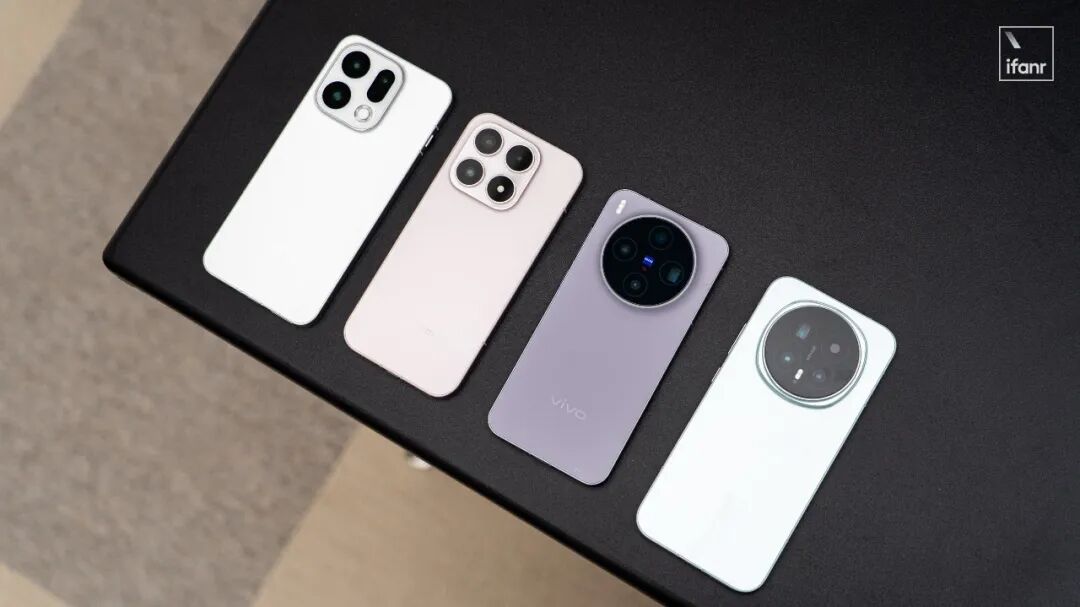
Core Insights - The article discusses the performance and features of the latest standard version smartphones from various brands, highlighting a collective lack of excitement compared to previous years [1] - The standard versions are priced around 4500 yuan, making careful selection essential for consumers [1] Group 1: Smartphone Comparisons - The four main standard models compared are Xiaomi 17, vivo X300, OPPO Find X9, and Honor Magic 8, each showcasing unique features and specifications [1][4] - Xiaomi 17 and Honor Magic 8 utilize the Qualcomm Snapdragon 8 Elite Gen 5 processor, while OPPO Find X9 and vivo X300 use MediaTek's Dimensity 9500 [4] - Performance benchmarks show that the Dimensity 9500 lags behind Snapdragon 8 Elite Gen 5 in CPU single-core and multi-core scores, but GPU capabilities are comparable [5] Group 2: Design and Usability - The smartphones are categorized into two size groups: 6.3-inch models (Xiaomi 17 and vivo X300) and 6.6-inch models (OPPO Find X9 and Honor Magic 8), with the smaller models offering better handling but compromising on battery life [4][11] - The design of vivo X300 has evolved positively, featuring a clever slope design that minimizes the camera module's visual impact [8][10] - Xiaomi 17 is noted for its excellent hand feel, weighing 191 grams and featuring a smooth transition in its design [11] Group 3: Battery and Performance - The battery capacity of vivo X300 is 6040mAh, the smallest among the four, while Xiaomi 17 boasts a 7000mAh battery, providing longer daily usage [11] - Both Xiaomi 17 and vivo X300 face challenges with screen brightness in outdoor conditions, affecting usability [12] Group 4: Software and AI Features - The software experience varies, with Xiaomi's 澎湃 OS 3 showing significant improvements in fluidity and animation compared to previous versions [24][26] - OPPO's ColorOS 16 is praised for its usability and fluidity, while Honor's MagicOS 10 has some usability issues that detract from the overall experience [30][31] Group 5: Camera and Imaging Capabilities - vivo X300 features a 200MP main camera, providing superior detail and image quality compared to its competitors [50] - OPPO Find X9 excels in low-light photography, balancing brightness and detail effectively [52] - Xiaomi 17's camera performance is described as decent but struggles with high dynamic range situations [73] Group 6: Market Positioning and Consumer Insights - The article suggests that the standard versions of smartphones should provide a flagship experience without being perceived as "cut-down" versions [87] - The target demographic for standard versions includes new university students and young professionals seeking value without excessive costs [87]

独立第五年,李健带荣耀走向新蓝海
Guan Cha Zhe Wang· 2025-11-06 12:40
Core Insights - Honor is celebrating its fifth anniversary and has successfully navigated its survival phase while finding a unique growth path in a highly competitive smartphone market [1] - The company is transitioning from a hardware manufacturer to an AI ecosystem leader under the leadership of CEO Zhao Jian, leveraging an "open ecosystem" strategy and "self-evolution capability" [1][3] Industry Context - The smartphone market is characterized by intense competition and significant product homogeneity, leading to shrinking profit margins. In Q3, the Chinese smartphone market saw a 3% year-on-year decline, indicating that growth through hardware upgrades has reached its limits [4][5] - Honor's strategic shift reflects a broader industry transformation from hardware-centric competition to ecosystem empowerment, as companies seek to create value through diverse revenue streams beyond device sales [7][8] Strategic Initiatives - Honor introduced the "1X3XN" ecosystem strategy and the AI operating system MagicOS 10, aiming to connect the upstream and downstream of the industry chain [3][5] - The strategy emphasizes collaboration and co-creation within the AI ecosystem, positioning Honor as not just a device manufacturer but also as an enabler and integrator of AI solutions across various sectors [7][10] Competitive Landscape - Honor's approach contrasts with the "walled garden" model of Apple and the fragmented model of early Android, opting for a balanced strategy that maintains system openness while ensuring user experience consistency through MagicOS 10 [9][10] - The company is establishing itself as a "chain master" in Shenzhen's AI terminal industry, leveraging local advantages to create a robust AI terminal industry cluster [17][18] Regional Advantages - Shenzhen's status as a "hardware Silicon Valley" provides Honor with unparalleled supply chain efficiency and innovation capabilities, allowing rapid product development [15][18] - The local government's proactive AI policies support Honor's growth, aiming to achieve an AI terminal industry scale of 800 billion yuan by 2026 [15][18] Future Outlook - Honor's open ecosystem strategy represents a significant shift in China's tech industry, moving from "point breakthroughs" to "system innovation" [19] - The company faces challenges in proving the commercial value and technological advantages of its open model amid increasing competition from global tech giants [19]
荣耀MagicOS 10定义AIOS新范式 “五维进化”重构终端生态价值
Zhong Guo Jing Ji Wang· 2025-10-30 04:52
Core Insights - Honor has officially launched the MagicOS 10 system, which is the world's first AI operating system with self-evolution capabilities, marking a significant technological leap from traditional operating systems to AI OS [1][5] - The CEO of Honor emphasized that a true AI OS must achieve a value transition centered around human needs, integrating user experience with ecosystem collaboration [1][5] Group 1: Five-Dimensional Evolution - MagicOS 10 introduces a "Five-Dimensional Evolution" path that addresses traditional OS ecosystem fragmentation by enhancing model capabilities, system kernel, collaborative boundaries, service efficiency, and multi-modal interaction [2][5] - The AI agent YOYO, powered by Honor's MagicGUI model, can autonomously predict user needs and execute tasks across over 3000 scenarios, transforming from a tool to a partner in user experience [2][3] Group 2: Proactive Services - YOYO offers proactive services by analyzing user behavior to anticipate needs, supporting over 200 proactive service scenarios, such as ticket reminders and navigation prompts [3] - During the Golden Week, over 13 million Honor users interacted with YOYO, showcasing its capabilities in travel planning and information retrieval [3] Group 3: Ecosystem Interconnectivity - MagicOS 10 breaks down barriers between data, devices, and services, enabling seamless communication across iOS, HarmonyOS, Android, and Windows platforms [4] - The system supports unique features like "one-touch screen sharing" with all brand smart TVs and collaborates with over 140 automotive brands for smart connectivity [4] Group 4: System Aesthetics and Security - MagicOS 10 introduces a "zero-gravity transparent design" for enhanced visual aesthetics while maintaining low power consumption [4] - The AI call fraud prevention feature utilizes large model recognition to protect users from scams, enhancing security during calls [4] Group 5: Continuous Evolution through Collaboration - Honor's strategy involves collaboration with users, industries, and developers to create a self-evolving ecosystem, collecting over 30,000 user suggestions for continuous feature iterations [6][7] - The "Honor Far Sailing Plan" aims to incentivize developers and foster innovation, with over 350,000 developers from more than 100 countries joining the ecosystem [7] Group 6: Industry Collaboration - Honor collaborates with industry partners like Alibaba and BYD to enhance smart services in navigation, tourism, and smart home applications, integrating AI technology into daily life [6][7] - The focus on an open ecosystem rather than zero-sum competition signifies a shift towards collaborative innovation in the AI terminal market [7]
智能体上场,手机厂商猛攻AI
2 1 Shi Ji Jing Ji Bao Dao· 2025-10-28 06:53
Core Insights - The smartphone industry is transitioning from "hardware competition" to "intelligent evolution" by 2025 [1] - AI and form innovation are the two core competitive directions for smartphone manufacturers, representing both technological innovation and brand differentiation [2] AI Development and Strategy - Domestic smartphone manufacturers are accelerating their AI strategies, with Honor being particularly aggressive, launching the Magic 8 and the first Honor AI Terminal Ecological Conference [4] - Honor's Magic 8 emphasizes "self-evolving AI native phone" with the upgraded MagicOS 10, featuring various AI agents supported by the MagicGUI model, which integrates multimodal data for task execution [6] - Honor's AI strategy includes the HONOR AI Connect platform and eight AI solutions, aiming to lower the entry barrier for ecosystem partners and promote collaboration across various industries [6][7] Competitive Landscape - Other major domestic manufacturers are also enhancing their AI capabilities, with Huawei launching HarmonyOS 6 and over 80 AI applications, OPPO introducing intelligent computing frameworks, and vivo integrating multimodal reasoning models [7] - The evolution of AI in smartphones is shifting from isolated features like voice assistants to system-level intelligent collaboration, with AI capabilities moving from cloud to edge computing [7] Consumer Insights and Market Trends - According to Omdia, Chinese consumers frequently use AI features such as AI tools, smart voice assistants, photo editing, enhanced search engines, and real-time translation [8] - There is a noted disconnect between the AI capabilities highlighted by manufacturers and the features most used by consumers, although significant improvements have been made in functionality and user experience over the past year [8][9] Future Directions - Manufacturers need to effectively communicate their AI development roadmap to consumers and partners, focusing on user pain points to enhance understanding and retention of AI features [9] - Form innovation is evolving alongside AI, with new designs like foldable and robotic phones being explored, indicating a shift towards embodied intelligence [9][10] - Honor views the AI Phone era as the next stage in smartphone evolution, following the feature phone and smartphone eras, with ongoing exploration into new hardware directions [10]
对话荣耀MagicOS 10核心高管:当手机系统学会思考,AI正重塑人机关系
Feng Huang Wang· 2025-10-28 04:57
Core Viewpoint - The release of Honor's MagicOS 10 signifies a major shift in the operating system landscape, moving from hardware specifications to AI-driven user experience and interaction [7] Group 1: AI and User Experience - Honor emphasizes that the future competition in smart operating systems will focus on functional experience rather than just performance metrics [2] - The goal of MagicOS 10 is to transform devices from "cold tools" into "partners" that actively perceive and simplify user interactions with the digital and physical worlds [2][3] Group 2: YOYO Intelligent Agent - The YOYO intelligent agent is designed to cover various aspects of daily life, supported by advanced technologies including visual models and multi-modal models [3] - YOYO features capabilities such as "YOYO sees," which allows it to recognize and automatically execute tasks based on user context, enhancing its utility [3] - The agent is being developed to create a personalized knowledge base for users, enabling it to provide tailored responses based on past interactions [3] Group 3: System Architecture and Aesthetics - MagicOS 10 incorporates a new "Hummingbird" architecture that enhances system fluidity through a comprehensive redesign at the motion, scheduling, and kernel levels [4] - The introduction of "AI trajectory real-time calculation technology" allows for personalized motion trajectories based on user interactions [4] - The "zero-gravity transparent UX design" aims to maintain consistent visual clarity across various backgrounds, addressing challenges in content visibility [4][5] Group 4: Strategic Direction and Market Positioning - Honor is breaking down barriers by enabling cross-brand connectivity, allowing users to share information seamlessly across different device brands [6] - The company is responding to user feedback by modernizing its design approach, aiming to attract younger demographics who previously found its designs outdated [6] - The strategic shift towards a more youthful and refined aesthetic is a direct response to the loss of users to competitors, particularly among younger and female demographics [6]