Memo

Search documents
华人博士4个月干出具身独角兽!斯坦福家务机器人再融11亿,开建中国团队
量子位· 2026-03-13 03:51
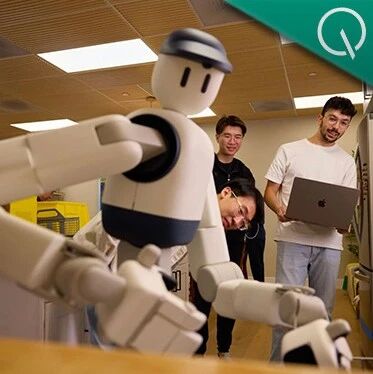
Core Viewpoint - Sunday Robotics has successfully raised $165 million in Series B funding, achieving a valuation of $1.15 billion and entering the unicorn club. The company aims to transition its robots from demo stages to real household applications by focusing on deployment and research [1][2][4][19]. Funding and Valuation - Sunday Robotics completed a $165 million Series B funding round, led by Coatue Management, with participation from Bain Capital Ventures, Tiger Global, and existing investors Benchmark and Conviction Partners [14][18]. - The company's valuation has reached $1.15 billion, marking its entry into the unicorn category [2]. Company Growth and Expansion - Since its product launch in November, Sunday Robotics has raised approximately $200 million in total funding within just over four months [4][18]. - The team has doubled in size from 35 to 70 employees in recent months to support its rapid expansion [7]. Deployment Plans - The company plans to initiate a beta testing program for its robot Memo, aiming to deploy it in real household environments for user testing by November 2025 [21][23]. - The beta testing will focus on the robot's performance in complex scenarios, such as interacting with children and pets, and adapting to various household layouts [23][24]. Research and Development - Sunday Robotics is significantly increasing its investment in the foundational models for its robots, tripling its engineering team and quadrupling its research team [28]. - The company anticipates that its training data will grow fivefold by the end of the year to support faster model iterations [28]. Product Overview - Memo, the company's first robot, is designed to perform complex household tasks such as cleaning tables, loading dishwashers, folding clothes, and making coffee [30]. - The robot stands approximately 1.7 meters tall and weighs around 77 kilograms, with a maximum height of 2.1 meters [31]. Data Collection Strategy - Sunday Robotics employs a unique data collection method using Skill Capture Gloves, which allow users to perform household tasks while recording their actions for robot training [37][40]. - The gloves are cost-effective at $400, significantly lowering the barrier for data collection compared to traditional systems [42]. Data Utilization - The data collected from both the Skill Capture Gloves and real-world robot operations will be used to train the ACT-1 model, which controls the robot's actions [44][47]. - This dual-source data strategy aims to create a feedback loop that enhances the robot's capabilities through continuous learning from real household environments [50]. Founders' Background - The founders of Sunday Robotics, Tony Zhao and Cheng Chi, have strong academic and industry backgrounds, having studied at Stanford and worked at leading AI companies [52][56]. - Their experience in both academia and industry contributes to the company's innovative approach to robotics and data utilization [51].


人形机器人展望:2026 年值得关注的方向-Humanoid Horizons What to Watch for 2026
2025-12-21 11:01
Summary of Humanoid Horizons: What to Watch for 2026 Industry Overview - **Industry**: Robotics, specifically focusing on humanoid robots in North America and China [1][4] - **Key Focus**: The report emphasizes the distinction between humanoid robots that can perform entertaining tasks and those capable of useful work at scale, highlighting the challenges and progress expected in 2026 [1][4] Core Insights and Arguments - **Near-Term Humanoid Hype**: Anticipation of continued excitement in the humanoid sector driven by catalysts such as the unveiling of Tesla's Optimus Gen 3, supportive US policies, and technological breakthroughs in hardware and AI [7][11] - **Teleoperation Assumption**: The report advises that if a humanoid robot is not explicitly advertised as autonomous, it should be assumed to be teleoperated, as achieving true autonomy remains a significant challenge [7][11] - **Big Tech Involvement**: At least one major tech company or AI lab is expected to announce plans for robotics, as firms seek new total addressable markets (TAMs) to justify their valuations [7][11] - **Potential Industry Shakeout**: The report warns of a possible shakeout in the humanoid robotics sector, particularly in China, where over 150 companies are competing despite a lack of proven use cases [7][11] Performance Metrics - **Humanoid 100 Index**: The equal-weighted Humanoid 100 index has increased by 25% since its inception on February 6, 2025, outperforming major indices like the S&P 500 and MSCI Europe [9][12] - **China Humanoid Value Chain**: The sector saw a slight improvement in December 2025, with a 2% increase month-to-date, outperforming MSCI China, which declined by 4% [10][12] Policy and Regulatory Environment - **US Robotics Support**: The Trump administration is reportedly preparing to accelerate the US robotics industry through potential executive orders and policies aimed at boosting competitiveness [11][53] - **China's Strategic Focus**: Humanoid robotics is highlighted as a key area in China's 15th Five-Year Plan, with significant government support and funding aimed at fostering industry growth [11][52] Notable Developments - **Funding Activities**: Significant funding rounds have been reported, including Physical Intelligence raising $600 million and Skild AI in talks for over $1 billion in funding [30][39] - **New Robot Models**: Companies like Tesla and Midea are unveiling advanced humanoid robots, showcasing improvements in hardware and capabilities [44][45] Key Risks and Considerations - **Market Saturation**: The report highlights concerns about a potential bubble in the humanoid robotics market, with many companies entering the space without proven products [7][36] - **Technological Challenges**: The development of physical AI models and manufacturing hurdles are cited as significant challenges that could impact the industry's growth trajectory [7][11] Conclusion The humanoid robotics industry is poised for significant developments in 2026, driven by technological advancements, government support, and increased interest from major tech companies. However, challenges related to autonomy, market saturation, and the need for proven use cases remain critical factors for investors to consider [1][7][11]


【Tesla每日快訊】 手掌長眼睛?馬斯克為何堅決對「富貴手」SAY NO?🔥揭秘人形機器人的感官戰爭!(2025/12/7)
大鱼聊电动· 2025-12-07 08:43
Technology & Design Philosophies - Figure AI and Sunday Robotics adopt a "Sensory Redundancy" approach, using additional hardware like hand-mounted cameras to enhance perception and compensate for AI limitations [1] - Figure 03's hand incorporates a palm-mounted camera system to provide a "macro view," expanding the field of view by 60% and reducing latency by 75% (two times frame rate with one-quarter latency) [1] - Sunday Robotics prioritizes practicality, opting for a three-finger gripper for its Memo robot, deeming it sufficient for 99% of household tasks [1] - Tesla, under Elon Musk's "First Principles" philosophy, avoids adding a camera to Optimus's hand, relying on head-mounted vision, proprioception, and tactile sensors [1][2] Sensory Capabilities & Data Processing - Figure 03's fingertip sensors have a sensitivity of 3 grams, enabling the detection of minute vibrations preceding slippage [1] - Figure 03's hand transmits data at 10 Gbps using mmWave technology to its Helix AI model, creating a closed-loop system [1] - Sunday Robotics utilizes "Behavioral Cloning" by collecting "in-the-wild data" from 2,000+ individuals performing household tasks while wearing skill capture gloves [1] - Tesla Optimus leverages its "Occupancy Network" technology inherited from Tesla FSD, enabling it to construct 3D models and maintain object permanence even when objects are occluded [2] Market Positioning & Future Implications - Tesla aims for an Optimus price point of $20,000 - $30,000, emphasizing "generality" and "scalability" to achieve cost-effectiveness [2] - Sunday Memo targets the home appliance market with a focus on affordability and practicality for tasks like dishwashing and cleaning [2] - Figure AI aims to dominate high-end manufacturing, providing precision and reliability in tasks such as assembling electronics and handling hazardous materials [2]

由特斯拉技术班底“组团”加盟 Sunday Robotics携家用机器人亮相
Xin Lang Cai Jing· 2025-12-01 07:31
Core Insights - Emerging robotics startup Sunday Robotics has recently ended its secretive operational phase and launched its first home robot product, "Memo" [1] - The core team of Sunday Robotics includes at least 10 former senior employees from Tesla's artificial intelligence and robotics projects [1] Company Overview - Sunday Robotics is positioned in the home robotics market with the introduction of "Memo" [1] - The involvement of experienced personnel from Tesla indicates a strong foundation in AI and robotics technology [1]
Tesla loses some AI staff to a new robotics startup
Business Insider· 2025-11-28 23:51
Core Insights - Sunday Robotics has emerged from stealth mode, revealing a team with significant experience from Tesla, including at least 10 former employees involved in Tesla's humanoid robot and self-driving initiatives [1][4] - The startup has introduced its home robot, Memo, which is capable of performing various household tasks [5] Company Overview - Sunday Robotics was co-founded by Cheng Chi and Tony Zhao in 2024, with Zhao having interned on Tesla's Autopilot team [5] - The company employs around 50 people, including engineers and memory developers focused on training the robot [4] Product Development - The home robot, Memo, was unveiled on November 19, showcasing its ability to pick up wine glasses, load a dishwasher, and fold socks [5] - Sunday Robotics is part of a growing trend in the robotics industry, with other startups like 1X also developing consumer-ready home robots [7] Team Composition - The team includes former Tesla employees with extensive backgrounds in AI infrastructure and robotics, such as Perry Jia and Nadeesha Amarasinghe, who worked on Tesla's Autopilot and Optimus programs [2][3] - The startup also has several former interns and employees from Tesla's Autopilot team, indicating a strong foundation in advanced robotics [4]

2位华人学霸造的家务机器人火了!14万带回家,手把手教它干活,要解放你的周末
机器人大讲堂· 2025-11-23 06:47
Core Viewpoint - The article introduces Memo, a household robot developed by a team of Chinese PhD graduates from Stanford, which is capable of performing various household chores and is set to officially launch in 2026 [2][40]. Group 1: Product Features - Memo can perform tasks such as clearing the dining table, washing dishes, folding clothes, and brewing coffee [3][7]. - The robot stands 1.7 meters tall and weighs approximately 77 kilograms, featuring a wheeled mobile base and a vertical reach of up to 2.1 meters [9]. - It is designed with a soft silicone exterior, ensuring a friendly and approachable appearance [10]. Group 2: Training and Data Collection - The team has developed a unique method for training the robot using "skill capture gloves," allowing ordinary users to teach Memo by wearing these gloves [11][14]. - Each user can become a "memory developer," contributing valuable training data while performing daily household tasks [15]. - The system has achieved a 90% success rate in adjusting and calibrating parameters to account for differences between human and robotic movements [17][18]. Group 3: Advanced Technology - The ACT-1 model, specifically designed for Memo, combines long-term operation with map-based navigation, allowing the robot to execute complex tasks autonomously [19][21]. - In a demonstration, Memo successfully navigated 40 meters and interacted with 21 different objects, performing 33 distinct operations [22]. - The robot can adapt to unfamiliar environments by interpreting 3D maps, enabling it to plan routes effectively [24]. Group 4: Team Background - Memo is developed by Sunday Robotics, founded by Tony Zhao and Cheng Chi, who have extensive backgrounds in robotics and artificial intelligence [30][32][36]. - The team has grown to around 30 members, covering a complete technical stack from software to hardware [30]. Group 5: Future Plans - Memo is currently in the testing phase, with prototype costs ranging from $6,000 to $20,000, and plans to reduce costs by at least 50% in the future [40]. - The overarching goal of Memo is to free up weekends for users, allowing them more time for family and hobbies instead of household chores [42].
Grok疯狂吹捧马斯克:比詹姆斯体能强/灵光4天下载破百万,速度超ChatGPT | Hunt Good 周报
Sou Hu Cai Jing· 2025-11-23 06:25
Group 1 - Elon Musk's lawsuit against OpenAI could result in over $1 billion in damages if he wins certain claims, including the return of his initial $38 million donation and its appreciated value [1][3] - OpenAI's current valuation is approximately $500 billion, and it plans to invest $40 billion in computing power next year, making the potential lawsuit damages relatively minor [3][4] - OpenAI's spokesperson characterized Musk's lawsuit as baseless and part of a pattern of harassment, asserting that the lawsuit stems from Musk's claims that OpenAI has deviated from its original mission [3][4] Group 2 - Students at Staffordshire University criticized a programming and cybersecurity course for relying heavily on AI-generated materials, which they felt deprived them of quality education [4][6] - The course's use of AI-generated slides and voiceovers sparked debates about academic standards, with students questioning the inconsistency in penalizing AI-generated assignments while being taught by AI [4][6] - The university defended the course, stating it maintained academic standards and supported responsible use of digital technology [6] Group 3 - Ubisoft announced an AI project called Teammates, allowing NPCs to understand vague commands and respond dynamically, enhancing player experience [6][7] - The project is developed by an 80-person team and utilizes Google Gemini models, showcasing NPCs that can adjust tactics based on real-time voice commands [7][10] - Ubisoft's CEO expressed high hopes for the impact of generative AI on the gaming industry, comparing it to the transition from 2D to 3D gaming [12] Group 4 - A closed-door meeting at Stanford University included representatives from major tech companies discussing the development of chatbot companions and the importance of user safety, especially for minors [20][22] - Companies like Character.AI and Anthropic are addressing safety concerns, with Character.AI planning to restrict access for users under 18 [22] - The meeting aimed to create guidelines for AI companions, with a white paper expected to be released early next year [22][25] Group 5 - OpenAI's CEO Sam Altman warned of potential economic headwinds due to Google's advancements in AI, particularly following the release of the Gemini 3 model [28][30] - Despite OpenAI's high valuation and projected revenue, Altman acknowledged that Google may have surpassed OpenAI in model development, especially in pre-training [28][31] - The competitive landscape is shifting, with other companies like Anthropic also performing well in the API market, raising questions about OpenAI's ability to sustain its growth amid high cash burn [31][32] Group 6 - Microsoft is facing backlash over its AI integration in products like Windows and Edge, with users expressing dissatisfaction and calling for a halt to AI features [32][34] - Microsoft's AI CEO expressed confusion over the public's lack of enthusiasm for AI advancements, highlighting a disconnect between corporate expectations and user experiences [32][41] - The criticism reflects broader concerns about the relevance and necessity of AI in everyday applications, as users demand more meaningful integration [34][41] Group 7 - Google launched the Gemini 3 model, boasting advanced reasoning and multimodal capabilities, which has received positive feedback from developers and users [43][44] - The Gemini 3 Pro version includes features like a 1 million token context window and integration with various development tools, enhancing its utility for users [43][46] - Google also introduced the Nano Banana Pro model for image generation, emphasizing transparency in AI-generated content through digital watermarking [46][47] Group 8 - KPMG's report revealed that only 2% of companies have seen a return on investment from AI, highlighting the challenges of integrating AI into business processes [69][70] - The survey indicated that many companies are still in experimental phases with AI, leading to a lack of measurable benefits [69][70] - Optimistic projections suggest that a significant portion of companies may see returns within one to five years, but current adoption rates are concentrated in specific sectors [69][70] Group 9 - Andrej Karpathy cautioned against applying human intelligence frameworks to understand large language models (LLMs), emphasizing their distinct nature [70][72] - He argued that LLMs represent a new form of intelligence shaped by commercial evolution rather than biological optimization, which could lead to misconceptions about their capabilities [70][72] - The discussion highlights the need for a nuanced understanding of AI and its implications for future developments in the field [70][72] Group 10 - Hugging Face's CEO warned of a potential bubble in the large language model sector, predicting a possible collapse in the near future [74][76] - Despite concerns about LLMs, he noted that AI applications in other fields are still in their early stages and may continue to thrive [74][76] - The focus on general-purpose models may shift towards more specialized solutions, reflecting a broader trend in AI development [74][76]



14万,家务机器人带回家!斯坦福华人博士具身创业首款产品亮相
量子位· 2025-11-20 16:01
Core Viewpoint - The article introduces Memo, a household robot developed by Stanford alumni, highlighting its capabilities in performing various domestic tasks and its innovative underlying technology [8][60]. Group 1: Product Features - Memo is designed with a visually appealing aesthetic, featuring a cartoonish face and a baseball cap, and is capable of performing tasks such as loading dishes into a dishwasher and folding socks [3][4][10]. - The robot stands 1.7 meters tall, weighs approximately 77.1 kilograms, and has multiple degrees of freedom in its limbs, allowing for versatile movement [43][45]. - Memo operates at a speed comparable to human walking, with an average speed of 1 meter per second, and can run for 4 hours on a full charge [55][56]. Group 2: Technology and Innovation - The core technology behind Memo is the ACT-1 model, which integrates long-sequence control and map-based navigation, enabling it to perform tasks in unfamiliar environments [20][21]. - ACT-1 relies on human data for training, utilizing a unique data collection hardware called skill capture gloves, which significantly reduces the cost of traditional data collection methods [29][31][36]. - The robot can learn new skills from users, allowing for personalized training and adaptation to individual household needs [41][42]. Group 3: Development and Future Plans - Memo is currently in the testing phase, with an expected official launch in 2026 [59]. - The founding team, consisting of Tony Zhao and Cheng Chi, aims to create a friendly, safe, and affordable robot that integrates hardware, data, and algorithms into a complete technology stack [60].