MiniMax M2模型

Search documents
硬科技漫卷A股港股
Bei Jing Shang Bao· 2026-02-08 06:34
Group 1 - Yushu Technology is preparing for its IPO while also focusing on the Spring Festival Gala program, having been announced as a partner for the 2026 event [1] - The company clarified rumors regarding the suspension of the IPO green channel, stating that its listing process is progressing normally [1] - Yushu Technology completed its IPO counseling in November 2025 and aims to apply for a domestic IPO, positioning itself as one of the faster capitalized companies in the robotics sector [1] Group 2 - The chip sector, particularly represented by GPUs, is experiencing rapid activity, with companies like Moer Thread and Muxi Co. achieving significant IPO milestones [2] - In January 2026, 13 new companies were listed on the Hong Kong Stock Exchange, a 63% increase from the previous year, with hard tech firms dominating the listings [3] - Companies in the storage chip sector, such as Changxin Technology, are also advancing their IPO processes, indicating a broader trend of capitalizing on the semiconductor market [10] Group 3 - Domestic GPU leaders like Biran Technology and Tensu Zhixin have rapidly progressed to listing on the Hong Kong Stock Exchange [6] - The capital market has seen a swift construction of a tiered structure among leading GPU companies, with significant fundraising efforts aimed at enhancing R&D capabilities [7] - Biran Technology has invested over 3.3 billion yuan in R&D over the past three years, emphasizing the importance of continuous investment in technology [8] Group 4 - The commercialization of large models is gaining momentum, with companies like Zhipu AI and MiniMax leading the way in the AI model sector [12] - Zhipu AI has established a strong presence in the ToB market, serving over 8,000 institutional clients and achieving a market share of 6.6% in China [13] - MiniMax focuses on consumer-oriented AI products, with a significant portion of its revenue coming from subscriptions, highlighting different business models within the AI sector [14] Group 5 - Blue Arrow Aerospace's IPO application has been accepted, aiming to raise 7.5 billion yuan for reusable rocket technology [16] - The commercial aerospace sector is gradually moving towards IPOs, with several companies in the industry preparing for listings [20] - The commercial aerospace index has seen significant growth, indicating strong investor interest in this sector [18] Group 6 - The A-share and Hong Kong markets provide different advantages for hard tech companies, influencing their listing choices [22] - The Hong Kong market is more flexible, accommodating various corporate structures and supporting emerging hard tech sectors [23] - Companies are increasingly considering dual listings in both markets to optimize their capital-raising strategies [25] Group 7 - The hard tech IPO wave is driven by national strategies promoting domestic alternatives and the urgent need for industrial upgrades [27] - The demand for AI and computing power is at a critical juncture, with companies poised for significant growth through IPOs [27] - The outlook for new listings in Hong Kong is optimistic, with expectations of continued growth in the number of IPOs [28]


稀宇科技:打造“用得起”的算力支持
Xin Lang Cai Jing· 2026-01-27 21:04
Core Insights - The artificial intelligence industry in China is transitioning from "model competition" to "industrial implementation" as exemplified by MiniMax's successful IPO, reflecting the resilience of Chinese tech companies in the AGI sector [1][7] Group 1: Technological Innovation - MiniMax has adopted a sustainable technical route by implementing the MoE (Mixture of Experts) architecture, which significantly reduces computational consumption while maintaining high performance [2] - The M2 model, released in October 2025, is designed for coding and agent workflows, achieving a "small model, big capability" effect through architectural optimization [2] - The latest version of the M2 model has shown a significant increase in inference speed for complex programming tasks while drastically lowering usage costs, establishing a competitive edge in the international market [2] Group 2: Commercialization Strategy - MiniMax focuses on commercializing its technology, particularly in "programming assistance" and "multimodal generation," which have strong user demand and willingness to pay [3] - The company has seen steady growth in daily usage since launching its commercial products, indicating substantial recognition of its product value among developers and enterprise clients [3] - MiniMax aims to convert one-time trials into long-term subscriptions by minimizing "invisible costs" associated with engineering implementation and service responsiveness [4] Group 3: Organizational Efficiency - MiniMax promotes a culture of "efficiency," emphasizing a pragmatic engineering approach and a flat organizational structure to enhance collaboration and resource allocation [6] - The company integrates AI agents into various internal processes to free employees from repetitive tasks, allowing them to focus on higher-value work [6] - With a team of approximately 400, predominantly technical staff, MiniMax is preparing for future scalability while continuing to evolve its organizational structure post-IPO [6] Group 4: Industry Outlook - The AI industry in China is projected to exceed 900 billion yuan in core industry scale by 2024, with a growth rate of 24%, and is expected to surpass 1.2 trillion yuan by 2025 [7] - MiniMax's IPO provides it with broader development opportunities and positions it as a key player in exploring the commercialization of large models in China [7] - The company plans to continue focusing on technological foundations and efficiency to build a prosperous AI application ecosystem for users globally [7]
暴涨超90%,AI应用概念“起飞”
Xin Lang Cai Jing· 2026-01-09 10:26
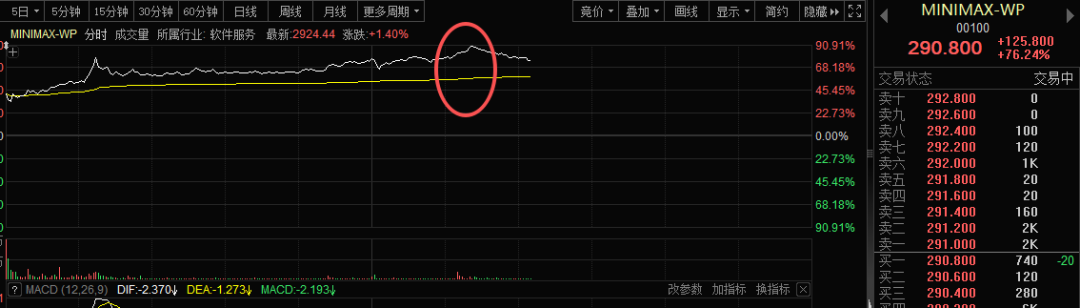
Core Viewpoint - The AI application sector experienced a significant surge on January 9, driven primarily by the listing of MiniMax, which saw its stock price increase by over 90% shortly after its debut, indicating a strong market interest in AI technologies and applications [1][3]. Group 1: MiniMax's Impact - MiniMax, a leading global company in multimodal and consumer-facing applications, was listed at a price of 165 HKD per share and saw its market capitalization exceed 90 billion HKD after a peak price of over 300 HKD per share [1]. - Analysts attribute the explosive growth in the AI application sector to MiniMax's successful listing, suggesting that the company exemplifies the potential of AI technologies in various applications [3]. Group 2: Market Trends and Predictions - The AI application sector saw over 60 stocks reaching their daily limit up or increasing by more than 10%, with eight stocks in the A-share market hitting a 20% limit up [3]. - Analysts predict that by the second half of 2024, competition in the large model technology space will shift from finding the right path to improving efficiency on mainstream paths, as companies like OpenAI and Google Gemini begin to generate substantial revenue [3]. - The current low penetration rate of large models indicates that the development of AI applications is still in its early stages, with significant growth potential as the industry begins to industrialize [4]. Group 3: Broader AI Developments - Recent announcements in the AI sector include the release of new models by Qwen, aimed at enhancing multimodal information retrieval and understanding, which reflects ongoing innovation in the field [4]. - The overall sentiment in the technology sector is optimistic, with expectations of increased investment and development in AI applications, as evidenced by various companies ramping up their efforts in 2026 [4].
刚刚,暴涨超90%!人工智能重磅来袭!
天天基金网· 2026-01-09 08:04
Core Viewpoint - The recent surge in AI applications is significantly driven by the successful IPO of MiniMax, which saw its stock price increase by over 90% on its first trading day, indicating strong market interest in AI technologies [2][3][5]. Group 1: MiniMax's Impact - MiniMax, a leading company in multimodal and consumer-facing applications, went public at a price of 165 HKD per share and reached a market capitalization exceeding 90 billion HKD shortly after listing [3]. - The listing of MiniMax is viewed as a catalyst for the broader AI application sector, with many stocks in the AI space experiencing significant gains, including 60 stocks hitting the daily limit or rising over 10% [2][4]. Group 2: Market Trends and Predictions - Analysts predict that by 2026, AI will penetrate various industry segments, driven by advancements in AI infrastructure tools and data governance [2][5]. - The competitive landscape for large models is expected to shift from exploring new paths to optimizing efficiency on established paths, with major players like OpenAI and Google already generating substantial revenue [5][6]. Group 3: Technological Advancements - MiniMax's M2 model incorporates innovative techniques such as forced interleaved thinking, which enhances efficiency by reducing ineffective token consumption, showcasing its technological edge [6]. - The recent developments in large models, including new releases from various companies, indicate a robust growth trajectory for AI applications, with significant investments and innovations expected in the coming years [7]. Group 4: Industry Fundamentals - The computer sector has shown signs of recovery in revenue and profit since the second half of last year, with institutional holdings at a multi-year low, creating favorable conditions for a rebound [8]. - The latest "14th Five-Year Plan" emphasizes accelerating innovation in AI and related technologies, indicating strong governmental support for the sector [8].

刚刚,暴涨超90%!人工智能,重磅来袭!
券商中国· 2026-01-09 07:10
Core Insights - The article highlights a significant surge in AI applications, driven primarily by the successful IPO of MiniMax, which saw its stock price increase by over 90% on its debut, indicating strong market interest in AI technologies [1][2]. Group 1: AI Market Dynamics - The AI application sector experienced a notable rally, with 60 stocks hitting the daily limit up or rising over 10%, reflecting a robust investor sentiment towards AI technologies [1][2]. - MiniMax's IPO is identified as a catalyst for this surge, with analysts suggesting that the company’s advanced capabilities in multi-modal and consumer applications position it as a leader in the AI space [2][3]. - The competitive landscape for large models is expected to shift in the second half of 2024, focusing on efficiency within established paths rather than exploring new ones, as major players like OpenAI and Google have begun generating substantial revenues [2][3]. Group 2: Technological Advancements - MiniMax's M2 model incorporates innovative features such as MoE and Full Attention, which enhance its performance and efficiency, showcasing the company's technological edge [2]. - The recent release of new models by other companies, such as Qwen's multi-modal models, indicates a growing emphasis on cross-modal understanding and retrieval, further driving advancements in AI applications [3]. Group 3: Market Fundamentals - The computer sector has shown signs of recovery in revenue and profit since the second half of last year, with institutional holdings at a multi-year low, creating favorable conditions for a rebound [4]. - The latest government plans emphasize accelerating AI and digital technology innovations, which are expected to empower various industries and enhance the supply of computing power, algorithms, and data [4].

95后天团创奇迹!385人4年IPO,MiniMax以1%花销叫板OpenAI
Xin Lang Cai Jing· 2025-12-21 13:27
Core Insights - The AGI sector is experiencing a dichotomy, with smaller players facing challenges while leading companies see soaring valuations, exemplified by MiniMax's upcoming IPO and OpenAI's significant funding round [1][4] - MiniMax aims to become the fastest AI company to go public, potentially marking a milestone as the first pure AGI-focused company listed on the global capital market [1][2] - OpenAI's valuation surged from $500 billion to $830 billion, reflecting strong investor confidence in AGI's commercial viability and the anticipated market growth [1][3] Company Overview - MiniMax, founded four years ago, has achieved remarkable milestones, including a projected IPO in January 2026 and a valuation premium due to its unique position in the AGI market [1][2] - The company has a young workforce, with an average age of 29, and a high proportion of R&D personnel, which contributes to its innovative approach and rapid growth [1][2] - MiniMax's operational efficiency is highlighted by its total expenditure of $500 million, significantly lower than competitors like OpenAI, while achieving leading technological advancements [1][3] Technological Advancements - MiniMax has developed a full-modal product matrix, including text, voice, video, and agent technologies, establishing itself among the top four global players in this domain [2][3] - The company emphasizes a "technology as product" philosophy, ensuring that each technological breakthrough translates directly into competitive products, leading to consistent annual growth [2][3] Market Strategy - MiniMax's global strategy has resulted in 70% of its revenue coming from international markets, distinguishing it from many AI companies that focus on domestic markets first [2][3] - The company has successfully avoided domestic competition by leveraging its global presence and forming strategic partnerships with various industry players [3][4] Future Outlook - MiniMax's upcoming IPO and its rapid growth trajectory signify a shift in the AGI industry from exploration to capital realization, showcasing the potential of Chinese AI companies on the global stage [4]
在这个开源「从夯到拉」榜单,我终于明白中国 AI 为什么能逆袭
Xin Lang Cai Jing· 2025-12-17 14:25
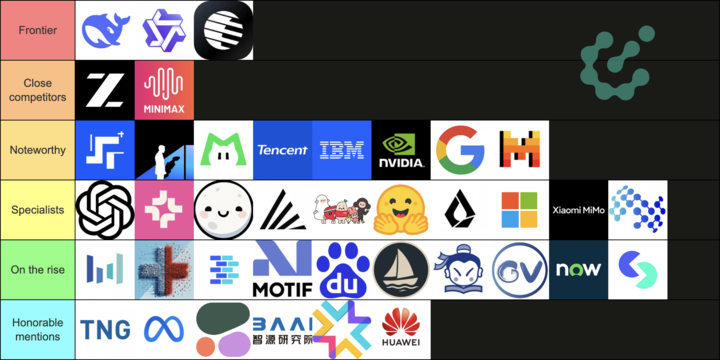
Core Insights - The recent ranking of open-source AI models highlights the dominance of Chinese models, with DeepSeek, Qwen, Kimi, Zhipu, and MiniMax leading the global landscape, while OpenAI and Meta's models lag behind [3][5][25]. Group 1: Performance and Market Position - Chinese open-source models are rapidly closing the performance gap with closed-source giants, excelling in dimensions such as performance, pricing, ecosystem, and usability [5][25]. - Kimi's K2 Thinking model, featuring a trillion parameters, has outperformed OpenAI's GPT-5 and Anthropic's Claude 4.5 in various benchmarks [11][14]. - MiniMax M2 has also shown strong performance, ranking fifth in comprehensive lists, surpassing competitors like Gemini 2.5 Pro and Claude Opus 4.1 [14][79]. Group 2: Technological Advancements - The introduction of interleaved thinking in models like MiniMax M2 and Kimi K2 Thinking allows for more efficient task execution by alternating between action and reflection [34][36]. - MiniMax M2 employs a full attention mechanism, which, despite increasing training and inference demands, has proven to deliver better performance compared to sparse attention models [75][78]. Group 3: Cost and Accessibility - MiniMax's API offers competitive pricing at $0.3/$1.2 per million input/output tokens, although its verbose nature leads to high token usage, which can offset cost advantages [79]. - The open-source movement in China is gaining momentum, with MiniMax's release reinforcing the leadership established by DeepSeek and other Chinese AI labs in the open-source domain [80][84]. Group 4: Community and Developer Adoption - There is a growing recognition among developers for the practicality and affordability of Chinese open-source models, with many citing them as preferable alternatives to established closed-source options like OpenAI [25][84]. - The rapid updates and releases from various Chinese companies indicate a robust and collaborative open-source ecosystem that is continuously evolving [11][14].

郑智化就“连滚带爬”表述致歉;春秋航空招聘已婚已育空嫂;宗馥莉心腹祝丽丹离职;安徽成汽车产量第一省;长安汽车一4S店起火丨邦早报
创业邦· 2025-10-28 00:10
Group 1 - Zhu Lidan, the legal representative of Hongsheng Group controlled by Zong Fuli, has left the company, with her office now assigned to Kou Jing [3][4] - Zhu Lidan has been a core member of Hongsheng Group and has had a long-standing working relationship with Zong Fuli [3] - There are reports that Zhu Lidan was summoned by relevant authorities twice since September, and her position was previously marked as "to be determined" [4] Group 2 - Changan Automobile confirmed a fire incident at a 4S store in Anhui, but no information on the cause of the fire has been provided [6] - Meituan announced a nationwide rollout of pension insurance subsidies for delivery riders starting in November, marking the first such scheme available to all riders [12][13] - Spring Airlines has launched a recruitment campaign for "air sisters," targeting married women with children and expanding the age limit to 40 years [13] Group 3 - JD.com has been granted an insurance brokerage license in Hong Kong, marking its entry into the financial market [13] - Tesla's board chair warned that if Elon Musk's $1 trillion compensation plan is not approved, the company may face significant value loss [13] - High-profile education company Gaotu is under investigation for allegedly organizing illegal offline subject training in Beijing [13] Group 4 - Amazon plans to invest over €1.4 billion in the Netherlands over the next three years, the largest investment commitment since entering the market [14] - Porsche responded to reports of multiple gasoline vehicle discontinuations, clarifying that the fuel version of Macan is not included in the changes [15] - AI startup Mercor raised $350 million at a valuation of $10 billion, with participation from notable investors [15][16] Group 5 - The global mobile game in-app purchase revenue is expected to increase by 6% to $85.4 billion by 2025 [20] - China is projected to generate over 400 million discarded mobile phones annually, with low recycling prices and privacy concerns hindering recovery efforts [20] - Anhui has become the top province in automobile production, with 15 provinces expected to produce over one million vehicles this year [20]