Qwen(千问)

Search documents
前 P10:阿里高层最不缺有认知的人,最缺的是愿意默默付出和实践的人
程序员的那些事· 2026-03-16 13:37
Core Viewpoint - The article discusses the departure of Junyang Lin from Qwen and highlights the importance of practical action over mere cognitive understanding in the AI era, as emphasized by Frank Wang. Group 1 - Junyang Lin announced his departure from Qwen on March 4, 2026 [1] - Frank Wang believes that while there are many knowledgeable individuals in Alibaba, there is a lack of those willing to work quietly and implement ideas [2] - In the AI era, cognitive understanding is not the key; rather, the ability to respect common sense and take action is crucial for success [2]

黄仁勋预测:所有软件都将智能体化;OpenClaw回应爆火丨AIGC日报
创业邦· 2026-03-08 01:11
Group 1 - OpenClaw has gained significant popularity in China, with nearly a thousand developers and AI enthusiasts participating in a cloud installation event at Tencent's headquarters, indicating a new level of adoption for the platform [2] - Peter Steinberger, the founder of OpenClaw, acknowledged the enthusiastic response from the Chinese market by sharing the event on social media [2] - Lin Junyang, a core leader of Qwen, announced his departure from the project, expressing gratitude and emotional reflections on his contributions to Alibaba Cloud [2] Group 2 - Mozilla announced a collaboration with Anthropic to utilize the AI model ClaudeOpus4.6, which identified 22 vulnerabilities in the Firefox browser within two weeks, including 14 classified as high-risk, representing 20% of the total high-risk vulnerabilities expected to be fixed in 2025 [4] - NVIDIA CEO Jensen Huang predicted that all software will become "agentic," transitioning from traditional licensing models to a "Token leasing" approach, emphasizing the need for software companies to evolve into intelligent agent providers [4] - Huang highlighted that future software companies will not rely solely on traditional licensing for revenue but will instead rent "professional agents" to perform specific tasks, leading to a more scalable business model [4]

从国际学会看中国AI人才的去留纠葛
日经中文网· 2026-02-04 03:24
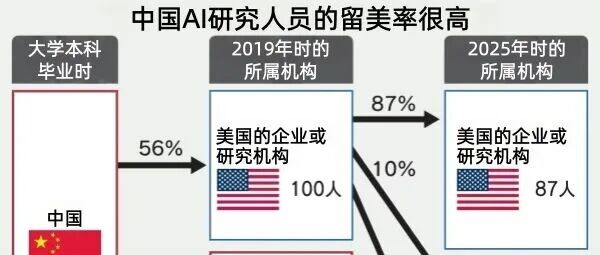
Core Viewpoint - The article highlights the increasing prominence of Chinese companies and researchers in the AI field, particularly at the NeurIPS conference, despite geopolitical tensions between the US and China. It emphasizes ByteDance's role as a leading sponsor and its efforts to attract top talent back to China, reflecting a shift in the landscape of AI research and development opportunities. Group 1: ByteDance's Role and Sponsorship - ByteDance is a top-level sponsor at NeurIPS, showcasing its commitment to advancing AI research, particularly in the fields of biology and materials chemistry [4][5] - The company aims to attract talent by setting up recruitment booths at the conference, utilizing both English and Chinese to engage potential candidates [5] - The number of participants at NeurIPS has grown significantly, with approximately 25,000 attendees in 2025, a 6.5-fold increase from 2015 [5] Group 2: Chinese Research Contributions - Chinese institutions, particularly Tsinghua University, have shown outstanding performance in paper submissions, with Tsinghua leading in accepted papers at NeurIPS 2025 [7] - The reliance of US companies on Chinese talent is highlighted, with 38% of top AI researchers in the US having graduated from Chinese universities [7] - A notable paper from Alibaba's "Qwen" research team was recognized as one of the best at the conference [7] Group 3: Talent Migration Trends - There is a noticeable trend of Chinese researchers considering returning to China due to tightening immigration policies in the US, which has created an unstable environment for them [10][11] - The article notes that 87 out of 100 Chinese researchers tracked from a previous NeurIPS event remained in the US, indicating a strong pull of US institutions [9] - However, current sentiments suggest a shift, with more Chinese researchers contemplating opportunities back home, as companies like ByteDance and Alibaba actively recruit at international conferences [11][13] Group 4: Opportunities in China - The article suggests that the current geopolitical climate presents a unique opportunity for Chinese companies to attract talent from the US, with many researchers now seeing viable AI opportunities in China [11][13] - The trend of returning talent is exemplified by individuals like Yang Zhilin, who founded a company in China after studying in the US, and Yao Shunyu, who transitioned from OpenAI to Tencent [13][14] - The perception is growing that engaging in cutting-edge AI research is increasingly feasible within China, making it an attractive option for returning talent [13]
DeepSeek冲击一年,中国大模型超1500种
日经中文网· 2026-01-26 03:12
Core Insights - The article discusses the emergence of Chinese AI companies, particularly DeepSeek, which is expected to disrupt the market starting January 2025, showcasing a shift towards self-reliance in AI development rather than following the U.S. model [2][8] - The performance of Chinese AI models, such as Qwen from Alibaba, has significantly improved, with Alibaba's stock rising approximately 90% over the past year [2][7] - The article questions the effectiveness of U.S. high-tech export controls, suggesting that while they may still pose some threat, Chinese companies are developing capabilities that could mitigate these restrictions [8][9] Summary by Sections DeepSeek's Market Impact - DeepSeek is anticipated to make a significant impact in the AI market starting January 2025, with its performance in large language models (LLMs) being highly rated [2][5] - On January 27, 2025, DeepSeek surpassed OpenAI's ChatGPT in the Apple app download rankings, indicating its growing popularity [2] Performance of Chinese AI Models - DeepSeek ranked 10th in the global LLM rankings, praised for its mathematical reasoning capabilities and cost-effectiveness [6] - The total number of LLMs released in China has reached 1,509, making it the leading country in this regard [7] - Alibaba's Qwen series has achieved over 700 million downloads, becoming the most downloaded open-source AI on the Hugging Face platform [7] Financial Performance and Projections - Alibaba's market capitalization increased by approximately HKD 1.5 trillion, with a projected revenue growth of over 35% for its cloud services in 2026, potentially accelerating to 40% in 2027 [7][8] - The stock price of Zhiyuan, a Chinese AI company, rose by 22% following the announcement of a domestically developed multimodal AI model [8] Competitive Landscape - The article highlights the different approaches of Chinese and U.S. AI companies, with China focusing on efficiency and lightweight solutions rather than solely on cutting-edge GPUs and massive investments [8] - The Chinese government is actively promoting the widespread application of AI across various sectors, indicating a strategic push towards integrating AI into the economy [8]

中国开源AI模型崛起,占全球份额15%
3 6 Ke· 2026-01-19 03:41
Core Insights - Chinese companies' generative AI is projected to capture approximately 15% of the global market share by November 2025, a significant increase from 1% a year prior [2][3] - The rise of open-source models like DeepSeek and Qwen (千问) is notable, with 40% of Chinese AI models being utilized for advanced tasks such as programming and design [3][5] - Japan's reliance on Chinese open-source models for AI development poses risks, as changes in model rules could abruptly affect development and usage [5][6] Group 1 - The global market share of Chinese generative AI is expected to reach 15% by November 2025, up from 1% a year earlier [2] - The average market share of Chinese open-source AI from November 2024 to November 2025 is projected at 13%, a significant rise from 1.2% at the end of 2024 [2] - In some weeks, the market share of Chinese open-source AI has reportedly reached as high as 30% [2] Group 2 - DeepSeek's model "R1," released in January 2025, has gained attention for its high performance at a low cost [3] - DeepSeek ranks 9th among 92 models in the AI model scoring published by NIKKEI Digital Governance, making it the top open-source model, surpassing Google's and OpenAI's models [5] - Six out of the top ten models developed by Japanese companies are based on DeepSeek and Qwen [5] Group 3 - Japan's Ministry of Economy, Trade and Industry has included support policies in the 2026 budget to develop domestic open-source models, aiming for a scale of 1 trillion yen over five years [5] - The ability to integrate various data types, such as images and voice, is essential for Japanese AI to compete with Chinese and American models [6] - The increasing performance requirements for AI in business settings highlight the growing challenges faced by Japanese developers [6]
中国开源AI模型崛起,占全球份额15%
日经中文网· 2026-01-19 03:03
Core Insights - The global market share of generative AI developed by Chinese companies is projected to reach approximately 15% by November 2025, a significant increase from 1% a year prior [2][4] - Chinese generative AI models are increasingly utilized for advanced tasks such as programming and design, with 40% of these models being applied in such areas [5] Group 1: Market Growth and Trends - The market share of Chinese open-source AI is expected to average 13% from November 2024 to November 2025, a substantial rise from 1.2% at the end of 2024, with some weeks seeing shares reach 30% [4] - The emergence of open-source models like DeepSeek and Qwen (千问) has contributed to the rapid growth of Chinese generative AI, which is now influencing global AI technology trends [5] Group 2: Performance and Competition - DeepSeek's model "R1," released in January 2025, has gained international attention for its high performance at a low cost, ranking 9th among 92 models in performance tests, surpassing models from Google and OpenAI [7] - Six out of the top ten AI models developed by Japanese companies are based on Chinese open-source models like DeepSeek and Qwen, indicating a significant reliance on these technologies [8] Group 3: Risks and Developments in Japan - Japan's dependency on Chinese open-source models poses risks, as changes in the rules governing these models could suddenly restrict their development and use [8] - In response to the reliance on foreign models, Japan is attempting to develop its own open-source models, with a budget of 1 trillion yen planned over five years to support this initiative [9]

半年196个DeepSeek大单梳理,这5个省份热钱最多
3 6 Ke· 2025-07-07 11:36
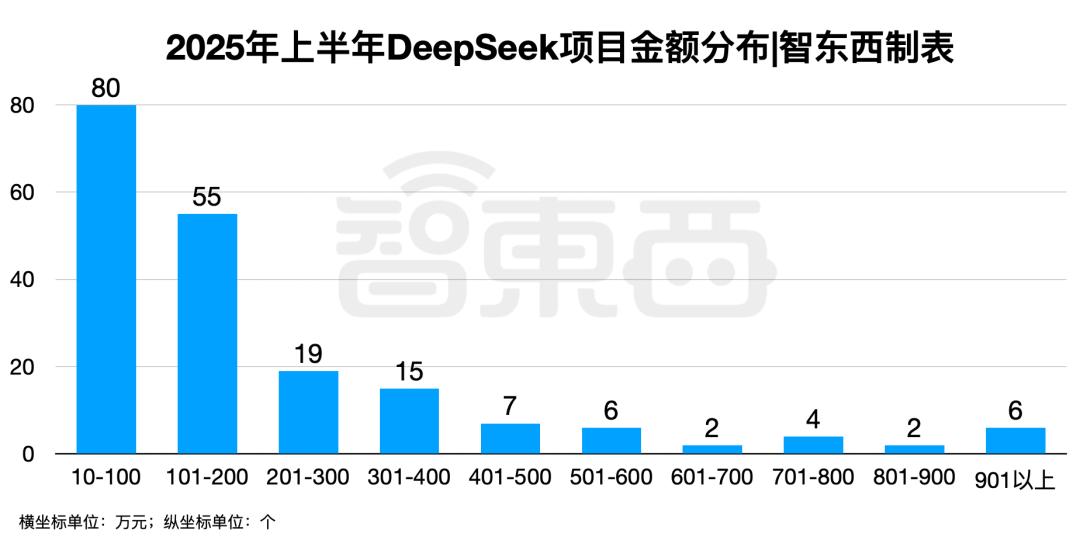
Group 1 - The core viewpoint of the article highlights the significant growth in DeepSeek government and enterprise projects in China, with at least 196 projects exceeding 100,000 yuan in budget from January 1 to June 30, 2025, totaling over 1.1 billion yuan [1][3] - The largest project is valued at 450 million yuan, focused on a national biosafety monitoring and early warning information platform, with the bidding entity being Shaanxi Chang'an Pioneer Life Science Industry Innovation Center [3][8] - Most projects are integrated software and hardware solutions, with a notable absence of purely software projects, indicating a trend towards deploying DeepSeek integrated machines or large model computing clusters [3][4] Group 2 - The distribution of project budgets shows that 80 projects are between 100,000 and 1 million yuan, 55 projects are between 1 million and 2 million yuan, and 19 projects are between 2 million and 3 million yuan, indicating a predominance of smaller projects [1][3] - Major companies involved in bidding include China Mobile, China Telecom, Alibaba Cloud, Tencent Cloud, Baidu, and others, showcasing competitive dynamics among cloud giants and AI unicorns [3][4] - Some projects mention the use of Qwen and Kimi large models, indicating a diversification in the technology being adopted for these projects [3][4]