
TOPCon

Search documents
光伏设备商基本面筑底,看好太空算力应用场景打开&海外地面需求增长
Zhong Guo Neng Yuan Wang· 2026-02-25 02:31
Group 1 - The core viewpoint of the report indicates that the photovoltaic equipment industry is expected to enter a recovery phase in 2026, following a thorough adjustment in 2025, with leading equipment manufacturers managing cash flow effectively through various collection models [2] - The report highlights that the demand for photovoltaic equipment will be driven by overseas markets, particularly in the U.S. and the Middle East, where local manufacturing policies and resource advantages are expected to enhance production capacity [3] - The transition from high-cost gallium arsenide to more cost-effective silicon-based technologies, particularly HJT, is anticipated to play a crucial role in the industry's growth, especially in the context of space computing applications [2][3] Group 2 - The report emphasizes that the photovoltaic industry is experiencing a supply-demand imbalance, which is prompting a new round of technological iterations as a key variable for capacity reset [3] - HJT technology is noted for its advantages in low labor, electricity, and water consumption, making it well-suited for the U.S. manufacturing environment, while also avoiding patent risks associated with TOPCon technology [3] - The investment recommendation includes focusing on leading companies in HJT technology, low-oxygen single crystal furnaces, automation in components, and ultra-thin silicon wafer cutting equipment [4]
东吴证券:光伏设备商基本面筑底 看好太空算力应用场景打开&海外地面需求增长
智通财经网· 2026-02-24 06:24
Core Viewpoint - The solar photovoltaic (PV) industry is expected to undergo a significant adjustment in 2025, with a recovery in equipment orders anticipated in 2026 as supply-side improvements and demand from overseas markets emerge [1]. Group 1: Industry Outlook - The fundamental aspects of the solar PV market are expected to be fully cleared by 2025, leading to a phase of deep adjustment characterized by increased losses among main chain companies and a slowdown in capacity expansion [1]. - Leading equipment manufacturers are enhancing cash flow management through collection models like "3421/3601," focusing on receivables from top clients, which mitigates operational risks [1]. - The acceleration of the elimination of outdated capacity and the gradual optimization of industry standards and pricing mechanisms signal clear improvements on the supply side [1]. Group 2: Technological Advancements - The application of space computing is accelerating, transitioning solar energy from ground-based systems to orbital energy systems, which opens up long-term growth potential for the industry [1]. - The shift from high-cost gallium arsenide to more cost-effective and scalable silicon-based technologies is expected during the scaling phase, with HJT technology showing advantages in weight reduction and adaptability [1]. Group 3: Demand Drivers - The overseas ground demand is projected to be a significant source of incremental growth in 2026, driven by the U.S. and Middle East markets [2]. - The U.S. is maintaining high installation levels, with domestic manufacturing policies enhancing supply chain security and cost control, particularly benefiting HJT technology due to its lower operational costs [2]. - Middle Eastern countries are increasing their installation plans, with Chinese main chain companies accelerating local factory setups, leading to a clear trend of rising overseas revenue [2]. Group 4: Technological Iteration - The ongoing price decline of TOPCon technology is compressing profit margins, necessitating the introduction of new technologies [3]. - The Ministry of Industry and Information Technology is promoting advanced capacity to replace outdated capacity, favoring high-efficiency and low-energy consumption routes [3]. - HJT technology is achieving breakthroughs in production efficiency and silver consumption, further enhancing cost advantages amid rising silver prices [3]. Group 5: Investment Recommendations - The company recommends focusing on leading firms in HJT technology, low-oxygen monocrystalline furnaces, automated components, and ultra-thin silicon wafer cutting equipment as key investment opportunities [4].



光伏反内卷攻坚,政企同心方得始终
第一财经· 2026-01-27 13:08
Core Viewpoint - The photovoltaic industry is undergoing a deep reform to combat internal competition, with regulatory measures and policy adjustments reflecting a commitment to high-quality development. However, many companies are still facing significant losses, indicating that this battle is not a short-term fix but a necessary step to resolve structural issues within the industry [2][5]. Industry Performance - Major companies like Tongwei Co., Ltd. and LONGi Green Energy are projected to incur substantial losses in 2025, with estimated net losses of 9 to 10 billion yuan and 6 to 6.5 billion yuan respectively. Other companies such as JA Solar, JinkoSolar, and Trina Solar are also expected to report significant losses, highlighting the severe challenges faced by the industry [2][3]. - The average gross margin for the entire industry is only 3.64%, with many companies trapped in a cycle of "production equals loss" due to oversupply and rising raw material costs [3][4]. Causes of Losses - The industry's performance crisis is primarily attributed to excessive homogenous production capacity and fierce price competition, compounded by soaring raw material costs. The supply of silicon materials is projected to exceed global demand by more than double over the next three years, leading to a significant imbalance [3][4]. - The price of silver, a key material in photovoltaic cells, has surged by 231% in 2025, pushing companies to adopt cost-cutting measures at the expense of technological innovation and quality [4][5]. Recommendations for Improvement - Companies must shift their focus from price competition to technological innovation and quality improvement, investing in advanced battery technologies such as TOPCon, BC, and ABC to enhance efficiency and reduce costs [4][6]. - The industry needs to establish self-regulatory standards to combat unfair competition practices, such as selling below cost and misrepresenting product capabilities, while promoting collaboration among companies to consolidate resources [4][6]. Government Role - Government policies and regulatory actions are crucial for supporting the industry's reform efforts. A unified and clear policy direction is necessary to stabilize market expectations and foster industry consensus [5][6]. - Regulatory bodies should enhance oversight on low-price dumping and set higher energy consumption and environmental standards for mature production stages, while also optimizing bidding rules to prioritize technology and quality over price [5][6]. Future Outlook - The photovoltaic industry is at a critical juncture, with the potential for recovery as companies begin to reduce losses and improve profitability. Analysts suggest that the industry may see a turning point in profitability by early 2026 [6][7]. - A collaborative effort between companies and government is essential to ensure that innovation becomes the cornerstone of industry development, allowing China to transition from a manufacturing hub to a center of innovation in the global energy transformation [7].







通威邢国强:技术创新助力破除光伏内卷|能动天下④
2 1 Shi Ji Jing Ji Bao Dao· 2026-01-05 09:57
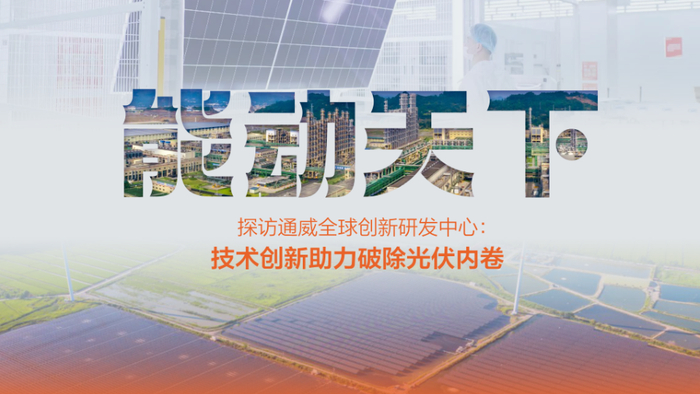
Core Viewpoint - The article emphasizes the importance of technological innovation for Tongwei Co., Ltd. to navigate the challenges of homogenization in the photovoltaic industry, particularly through the establishment of a global innovation research and development center set to be operational by June 2024 [3]. Group 1: Company Strategy - Tongwei has initiated the construction of a global innovation R&D center to serve as a guiding point for direction, risk management, positioning, and technological expansion [3]. - The company adopts a "saturation strike" approach in its technology route selection, indicating a commitment to extensive research and development without budget limits [5]. - Tongwei currently has a production capacity of 100GW for TOPCon technology and plans to increase R&D efforts in this area [5]. Group 2: Industry Context - The photovoltaic industry is experiencing a cyclical downturn and intense competition, which Tongwei views as an opportunity for technological innovation to break through the current challenges [5]. - Despite the harsh market environment, the company maintains a high level of confidence in the industry's development, believing that a diversified technological reserve will ensure stability and longevity [5].
通威邢国强:技术创新助力破除光伏内卷
2 1 Shi Ji Jing Ji Bao Dao· 2026-01-05 09:44
Core Viewpoint - The article discusses the strategic importance of technological innovation for Tongwei Co., Ltd. in overcoming challenges in the photovoltaic (PV) industry, particularly amid homogenized competition and market uncertainties [2][4]. Group 1: Company Initiatives - Tongwei Co., Ltd. has initiated the construction of a global innovation research and development center, set to be operational by June 2024, which aims to guide the company in direction, risk management, positioning, and technology expansion [2]. - The company emphasizes a "saturation strike" approach in its technology route selection, indicating a commitment to extensive research and development without budget limits [5]. Group 2: Industry Context - The photovoltaic industry is currently experiencing a cyclical downturn and intense competition, referred to as "involution," where technological innovation is viewed as a key method to break through these challenges [5]. - Despite the harsh market environment, the company maintains a strong confidence in the industry's long-term growth, describing the development of the PV sector as a "spiral upward" trend [5].
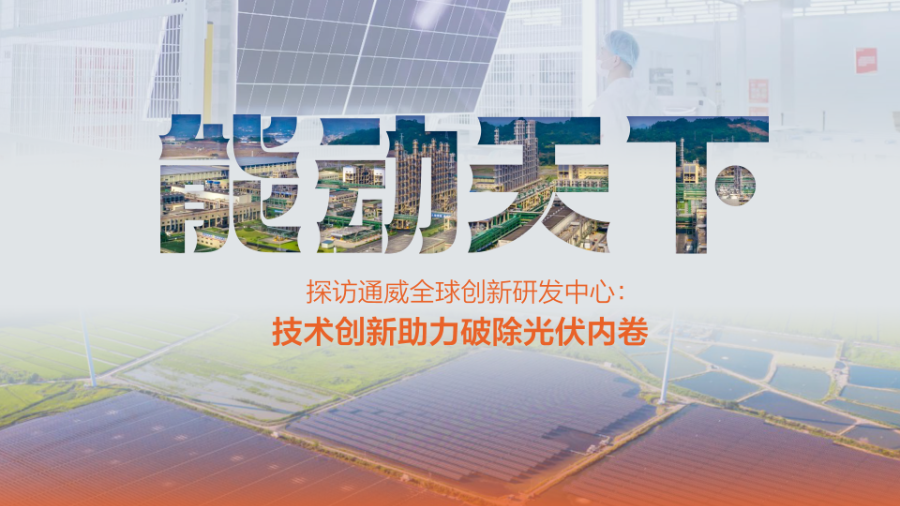
通威邢国强:技术创新助力破除光伏内卷|能动天下
2 1 Shi Ji Jing Ji Bao Dao· 2026-01-05 09:33
Core Insights - The article discusses the establishment of a global innovation research and development center by Tongwei Co., Ltd., a leading company in the photovoltaic industry, aimed at addressing the challenges of homogenization in the solar market through technological innovation [3][5]. Group 1: Company Developments - Tongwei Co., Ltd. has initiated the construction of a global innovation R&D center, which is set to be operational by June 2024, serving as a guiding point for the company's direction, risk management, and technological expansion [3]. - The company has a current production capacity of 100 GW for TOPCon technology and plans to increase its R&D efforts in this area, indicating a commitment to diversifying its technological portfolio [5]. Group 2: Industry Context - The photovoltaic industry is experiencing a cyclical downturn and intense competition, referred to as "involution," making technological innovation a crucial strategy for companies to differentiate themselves and succeed [5]. - The development trajectory of the solar industry is characterized as a "spiral upward" trend, suggesting that despite current market challenges, there is a sustained confidence in long-term growth and innovation [5].
光伏厂商为何跨界收购锂电结构件公司?国晟科技: 为满足"风光储"一体化发展战略
Mei Ri Jing Ji Xin Wen· 2025-12-09 11:20
Core Viewpoint - Guosheng Technology is attempting to expand into the lithium battery structural components sector through an acquisition, despite its photovoltaic business not being stable, which has raised inquiries from the Shanghai Stock Exchange [1] Group 1: Business Performance - Guosheng Technology's main businesses are photovoltaic and ecological landscaping, with the photovoltaic segment generating revenue of 308 million yuan and a cost of 344 million yuan in the first half of 2025, resulting in a negative gross profit [2] - The company has been experiencing significant revenue declines, with continuous losses over the years [1][2] Group 2: Acquisition Rationale - The acquisition of Fuyue Technology is seen as a strategic move to create a second growth curve for the company, aligning with its "wind-solar-storage" integrated development strategy [3] - Fuyue Technology operates in the lithium battery sector, which is considered a sunrise industry with promising growth potential, and its products are expected to meet national industrial development directions [3] Group 3: Funding for Acquisition - The total transaction price for the acquisition is 241 million yuan, with funding sourced primarily from acquisition loans covering at least 80% of the total price, amounting to 192 million yuan [5][6] - The seller will provide a performance compensation guarantee of 20% of the transaction price, effectively offsetting the need for the company to use its own funds for the acquisition [6] Group 4: Financial Projections and Assurances - Guosheng Technology expects to receive performance compensation from Guosheng Energy totaling 104 million yuan by the end of 2026, which will aid in loan repayment [8] - Fuyue Technology is projected to generate approximately 60 million yuan in free cash flow from 2025 to 2028, indicating potential for future profitability [8]

拉普拉斯三季报:技术迭代与“反内卷”政策护航 N型设备龙头凸显成长韧性
Zheng Quan Shi Bao Wang· 2025-10-29 14:39
Core Viewpoint - The company Laplace (688726.SH) demonstrates resilience in the N-type photovoltaic cell equipment sector, achieving stable revenue and profit growth despite industry challenges [1][5]. Group 1: Financial Performance - In the first three quarters of 2025, Laplace reported a total revenue of 4.321 billion yuan, reflecting a year-on-year increase of 0.43% [1]. - The total profit for the same period reached 676 million yuan, marking a year-on-year growth of 4.77% [1]. Group 2: Industry Policy and Market Dynamics - The introduction of "anti-involution" policies aims to alleviate overcapacity in the photovoltaic industry and promote high-quality development [2]. - The Ministry of Industry and Information Technology and the State Administration for Market Regulation issued a plan to eliminate low-price competition in the photovoltaic sector [2]. - The tightening of energy consumption standards for silicon materials is expected to force the elimination of outdated production capacity [2]. Group 3: Demand and Market Outlook - The demand for high-efficiency photovoltaic products, particularly N-type products like TOPCon, is anticipated to rise due to new policies and market conditions [3]. - The China Photovoltaic Association has revised its forecast for the installed capacity growth in 2025 from 215-255 GW to 270-300 GW [3]. - The government aims for solar and wind power installations to exceed 3.6 billion kilowatts by 2035, indicating a strong long-term demand for photovoltaic products [3]. Group 4: Technological Advancements - Laplace is accelerating technological iterations to enhance product efficiency, focusing on new high-efficiency photovoltaic cell technologies like TOPCon and XBC [4]. - The company significantly increased its R&D investment to 119 million yuan in the third quarter, a year-on-year growth of 71.50% [4]. - Laplace is actively pursuing international patent applications to strengthen its technological advantages and facilitate market expansion in regions like Southeast Asia, the U.S., and the Middle East [4]. Group 5: Future Growth Potential - The photovoltaic industry is in a transitional phase characterized by capacity reduction, technological upgrades, and demand recovery [5]. - As the effects of "anti-involution" policies become evident and demand for high-efficiency technologies rises, Laplace is well-positioned to regain growth momentum [5].
隆基绿能、晶科能源,和解!
DT新材料· 2025-09-19 16:04
Group 1 - Longi Green Energy and JinkoSolar have reached a joint statement to end all ongoing patent disputes globally and have agreed on cross-licensing arrangements for some core patents [2][3] - The patent disputes between Longi Green Energy and JinkoSolar began in the second half of last year and escalated in early this year, with multiple lawsuits filed in various jurisdictions [3] - The patent battles are seen as a commercial strategy to limit competitors' market competitiveness, particularly in foreign markets where litigation risks influence customer choices [3] Group 2 - JinkoSolar is a leader in TOPCon technology, with over 5,500 patent applications, 75% of which are invention patents, and expects to achieve 40-50 GW of high-power TOPCon capacity by the end of 2025 [4] - JinkoSolar's patent fees increased by nearly 50% year-on-year to 0.14 billion [4] - Longi Green Energy has over 3,500 authorized patents and 480 patents for BC battery modules, with a self-owned HPBC2.0 battery capacity of 24 GW as of June [4] - In terms of shipment volume, JinkoSolar led with 41.84 GW of solar module shipments in the first half of the year, surpassing Longi Green Energy's 39.57 GW [4] - JinkoSolar reported a loss of 2.909 billion, while Longi Green Energy's loss was 2.569 billion, making it the least loss-making among the top five module manufacturers, reducing losses by 2.661 billion year-on-year [4]
专利战打了快一年,隆基、晶科两大光伏龙头握手言和
Xin Lang Cai Jing· 2025-09-19 14:09
Core Viewpoint - The patent dispute between Longi Green Energy and JinkoSolar has been resolved, marking a shift from price competition to technology-driven high-quality development in the photovoltaic industry [1][2]. Group 1: Patent Dispute Resolution - Longi Green Energy and JinkoSolar announced a joint statement on September 19, 2023, confirming the settlement of their global patent litigation [1]. - The agreement includes the cessation of all ongoing patent disputes and a cross-licensing arrangement for certain core patents [1]. - The resolution reflects both companies' commitment to intellectual property respect and a willingness to explore deeper cooperation in technology development [1][2]. Group 2: Industry Context - The photovoltaic industry is transitioning from price competition to a focus on technological innovation, which is crucial for breaking through intense market competition [2]. - The patent disputes between the two companies began in the second half of the previous year and escalated in early 2023, with multiple lawsuits filed across various jurisdictions [6][7][8][9]. - The increase in patent disputes in the photovoltaic sector is attributed to the growing importance of intellectual property and the strategic use of patents to limit competitors' market power [11]. Group 3: Technological Focus - Both companies are likely to have reached an agreement regarding the TOPCon and BC technologies, which are key areas of focus for innovation in the photovoltaic sector [12]. - JinkoSolar has applied for over 5,500 patents, with 75% being invention patents, and reported a nearly 50% year-on-year increase in patent fees [13]. - Longi Green Energy has over 3,500 authorized patents and 480 patents related to BC technology, with a production capacity of 24 GW for HPBC2.0 batteries [17]. Group 4: Market Position and Financial Performance - In terms of shipment volume, JinkoSolar led the market with 41.84 GW of photovoltaic module shipments in the first half of the year, surpassing Longi Green Energy's 39.57 GW [17]. - However, JinkoSolar reported a loss of 2.909 billion yuan, while Longi Green Energy's loss was 2.569 billion yuan, indicating a smaller loss compared to its competitors [17]. - As of September 19, 2023, Longi Green Energy's stock price increased by 0.48% to 16.9 yuan per share, with a market capitalization of approximately 128.1 billion yuan, while JinkoSolar's stock price remained stable at 5.35 yuan per share, with a market capitalization of about 53.5 billion yuan [17].
