
VCSEL

Search documents
OFC 2026 展望:从可插拔光器件与光子引擎(PO)到 CPU 及其他终端设备的 AI 数据中心光互连趋势-OFC 2026 Outlook_ AI Data Center Optical Interconnect Trends from Pluggable Optics and LPO to CPO and MicroLED
2026-03-12 09:08
Summary of Key Points from OFC 2026 Outlook on AI Data Center Optical Interconnect Trends Industry Overview - The document discusses the optical communications ecosystem, particularly focusing on trends in AI data centers and the transition from traditional copper interconnects to optical solutions [7][10]. Core Themes and Insights 1. **Shift in Data Center Bottlenecks**: As generative AI models scale, the primary bottleneck is moving from transistor performance to interconnect bandwidth and latency, highlighting the importance of optical interconnects [4][8]. 2. **Optical Interconnects as Critical Components**: With AI clusters expanding to hundreds of thousands of GPUs, optical interconnects are becoming essential for overcoming bandwidth limitations and latency issues in AI infrastructure [8][10]. 3. **Technological Evolution**: The document outlines the evolution from pluggable optics to Linear Pluggable Optics (LPO) and Co-Packaged Optics (CPO), emphasizing the need for higher bandwidth and lower power consumption [14][19][100]. Key Technologies and Developments 1. **Pluggable Optics**: Currently the mainstream solution, integrating Digital Signal Processing (DSP) for interoperability but with higher power and thermal density [17]. 2. **Linear Pluggable Optics (LPO)**: Aimed at reducing power and latency by removing DSP, relying on high-quality SerDes [18][77]. 3. **Co-Packaged Optics (CPO)**: Places optical engines near the switch ASIC package, significantly reducing power consumption (approximately 5.5 W per 800G port for CPO compared to 15 W for pluggables) [19][79]. Market Dynamics - The demand for 800G optics is transitioning to mainstream production, with 1.6T optics expected to ramp up in the second half of 2026 [12][100]. - The IEEE's 802.3dj standards for 200G/lane to 1.6T are projected to be completed by late 2026, which will catalyze broader adoption of 1.6T optics [13]. Supply Chain and Manufacturing Challenges 1. **Laser Supply Constraints**: The demand surge from AI data centers has created bottlenecks in laser light sources, particularly Electro-Absorption Modulated Lasers (EMLs), leading to extended lead times [29][33]. 2. **Alternative Solutions**: The industry is exploring external continuous-wave (CW) lasers and silicon photonics modulators as alternatives to EMLs to broaden the supplier base [31][32]. Reliability and Testing - CPO technology is approaching production readiness, with reported reliability improvements, but it introduces new challenges in testing and operational models [20][37][42]. - The testing process for CPO is more complex than for pluggable optics, necessitating earlier defect screening and comprehensive testing protocols [46][48]. Future Outlook - The document concludes that while pluggable optics will remain dominant in the near term, CPO and Optical I/O (OIO) technologies will become increasingly attractive as bandwidth demands grow and copper's limitations become more pronounced [100]. - The integration of optical technologies into chiplet architectures is expected to drive further advancements in AI data center infrastructure [93][100]. Additional Insights - The emergence of microLED technology as a potential alternative for ultra-short reach optical interconnects is noted, with advantages in energy efficiency and bandwidth scaling [58][70]. - Companies like NVIDIA, Broadcom, and Marvell are leading the charge in developing high-capacity switch silicon to support the expanding AI infrastructure [72][74]. This summary encapsulates the critical developments and trends in the optical interconnect landscape as discussed in the OFC 2026 Outlook, providing insights into the future of AI data center connectivity.

三安光电:“碳”索未来,光联万物-20260310
China Post Securities· 2026-03-10 10:24
Investment Rating - The report assigns a "Buy" rating for the company, marking its first coverage [1][8]. Core Insights - The company is positioned in a high-growth phase driven by AI computing, with a focus on developing a full-speed optical chip matrix, including 400G, 800G, and 1.6T technologies. The optical communication sector is experiencing significant growth, supported by increasing bandwidth demands and the adoption of next-generation technologies [4]. - The company has established a vertically integrated manufacturing platform for silicon carbide (SiC), with production capabilities across various stages of the supply chain. This positions the company to meet the growing demand in sectors such as new energy vehicles and data centers [5]. - The LED industry is witnessing a recovery in terminal demand, with some product prices stabilizing. The company plans to enhance its high-end LED product offerings and has initiated a $239 million acquisition of Lumileds to accelerate its entry into high-end markets [6]. Financial Projections - Revenue projections for the company are estimated at 161.06 billion, 182.41 billion, 217.43 billion, and 257.39 billion yuan for the years 2024, 2025, 2026, and 2027 respectively, with growth rates of 14.61%, 13.26%, 19.20%, and 18.38% [10][11]. - The company is expected to report a net profit attributable to the parent company of -2.4 billion, 4.5 billion, and 9.8 billion yuan for the years 2025, 2026, and 2027, indicating a significant turnaround from a loss in 2025 to profitability in subsequent years [8][10].

长光华芯:公司面向多种技术路线和发展构建了完整的产品矩阵共同来满足日益增长的算力需求
Zheng Quan Ri Bao Zhi Sheng· 2026-02-25 12:45
Group 1 - The core viewpoint of the article is that Changguang Huaxin has developed a comprehensive product matrix in the field of data communication chips to meet the increasing demand for computing power [1] Group 2 - The company is focusing on various technological routes and developments, including EML, DFB, VCSEL, PD, and silicon photonic chips [1] - This product matrix is designed to address the growing needs in the computing power sector [1]

中国银河给予海信视像“推荐”评级,商业航天影子龙头,控股乾照光电
Sou Hu Cai Jing· 2026-01-11 12:39
Group 1 - The core viewpoint of the report is that China Galaxy has given Hisense Visual (600060.SH) a "recommended" rating based on its strong position as the largest shareholder of Qianzhao Optoelectronics [1] - Qianzhao Optoelectronics is consolidating its LED chip business while rapidly expanding into solar cells and VCSEL (Vertical-Cavity Surface-Emitting Laser) sectors, entering commercial aerospace and optical communication fields [1] - The report highlights an increase in the commercial aerospace sector's demand, particularly for solar cells used in satellites, which is expected to see significant growth [1]

三安光电:公司光技术产能2750片/月,已实现批量出货
Zheng Quan Ri Bao Wang· 2026-01-08 14:09
Core Viewpoint - Company Sanan Optoelectronics (600703) has confirmed its optical technology production capacity of 2,750 pieces per month, primarily serving domestic customers with various laser and detector products for 800G optical modules [1] Group 1 - The company produces CW light sources, VCSELs, EMLs, PDs, and EMPDs [1] - The company has achieved mass shipments of its products [1]
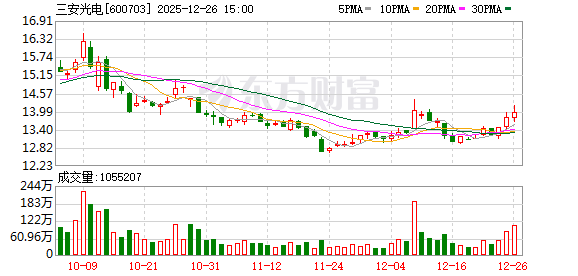
三安光电:公司可提供用于800G光模块的CW光源等激光器、探测器产品
Zheng Quan Ri Bao· 2025-12-26 13:33
Core Viewpoint - Sanan Optoelectronics has confirmed its capability to provide laser products for 800G optical modules, including CW light sources, VCSELs, EMLs, PDs, and EMPDs, and has achieved bulk shipments [2] Group 1 - The company has responded to investor inquiries on its interactive platform regarding its product offerings [2] - The products mentioned are essential components for high-speed optical communication systems [2] - The successful bulk shipment indicates the company's operational readiness and market demand for its products [2]

一颗VCSEL芯片,打开中国半导体新局面
半导体行业观察· 2025-12-12 01:12
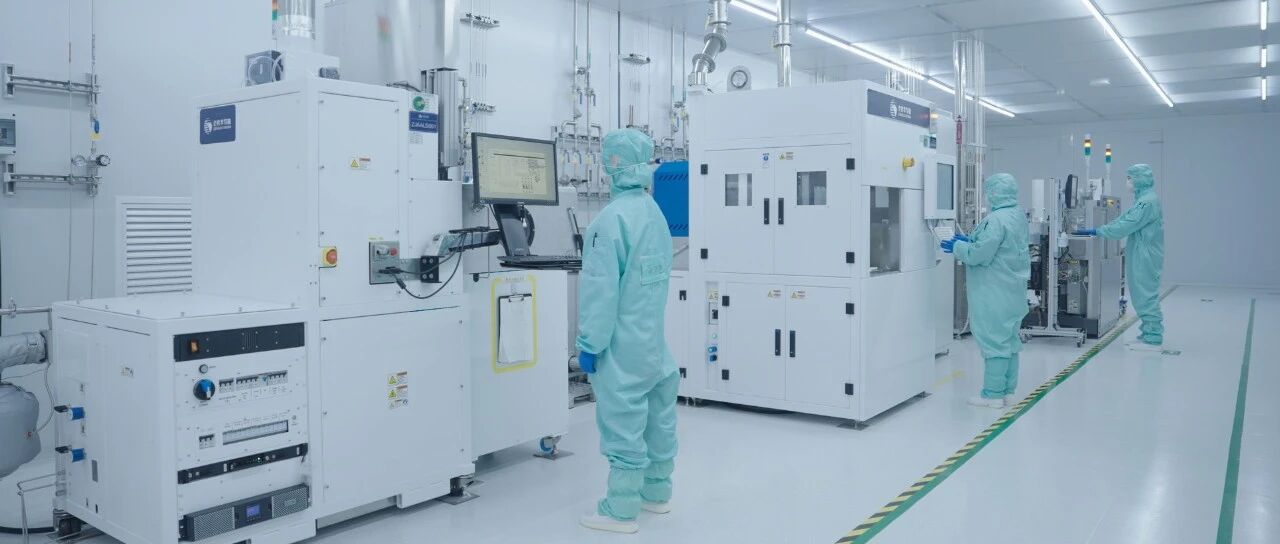
Core Viewpoint - The article emphasizes the rising importance of compound semiconductors, particularly VCSEL technology, in the context of the smart era driven by AI and intelligent vehicles, highlighting the shift from traditional silicon chips to these advanced materials [1][2][4]. Group 1: VCSEL Technology - VCSEL (Vertical Cavity Surface Emitting Laser) is a semiconductor laser that emits light vertically, offering advantages such as low threshold current, stable single-wavelength operation, and low manufacturing costs [3][4]. - The VCSEL market is projected to reach $1.4 billion by 2028, driven by demand from data centers and smart vehicles [4]. - The introduction of VCSEL in Apple's Face ID technology in 2017 significantly boosted its visibility and application in consumer electronics [3][4]. Group 2: China's Semiconductor Industry - Chinese companies are now leading the main application areas for VCSEL, such as optical modules and lidar, marking a shift from previous reliance on foreign giants [6][8]. - The article discusses the transition of China's semiconductor industry from imitation to innovation, with a focus on achieving original technology breakthroughs [6][8]. - The establishment of local VCSEL production capabilities is deemed essential for China's semiconductor self-sufficiency [6][8]. Group 3: Industry Trends and Future Outlook - The current AI infrastructure market is characterized by rapid changes, with significant growth expected in server and storage infrastructure spending, projected to reach $758 billion by 2029 [10]. - The industry is moving towards collaborative designs among multiple manufacturers, indicating a shift from isolated chip development to a more integrated ecosystem [12]. - The company aims to play a significant role in the "optical interconnect" and "optical sensing" markets, positioning itself as a key player in the global semiconductor landscape [12].
乾照光电:目前光模块使用8通道并联技术,1.6T光模块主要采用200G的光芯片
Zheng Quan Ri Bao Zhi Sheng· 2025-11-20 13:46
Core Insights - The company is actively pursuing a second growth curve, focusing on emerging fields such as gallium arsenide solar cells, VCSEL, and optical communication [1] Company Developments - The company has sent samples of its 10G/25G products for customer validation in the optical communication sector [1] - The 50G/100G products have entered the wafer stage, indicating progress in product development [1] Industry Trends - Currently, optical modules utilize 8-channel parallel technology, with 1.6T optical modules primarily employing 200G optical chips [1]

乾照光电:目前光模块使用8通道并联技术,1.6T光模块主要采用 200G的光芯片
Zheng Quan Ri Bao Wang· 2025-11-20 13:16
Core Viewpoint - The company is actively pursuing a second growth curve by focusing on emerging fields such as gallium arsenide solar cells, VCSEL, and optical communication [1] Group 1: Company Developments - The company has sent samples of its 10G/25G products for customer validation in the optical communication sector [1] - The 50G/100G products have entered the wafer stage, indicating progress in product development [1] Group 2: Industry Trends - Currently, optical modules utilize 8-channel parallel technology, with the 1.6T optical module primarily employing 200G optical chips [1]
乾照光电:公司重点聚焦砷化镓太阳能电池、VCSEL及光通信等新兴领域
Zheng Quan Ri Bao Wang· 2025-11-06 11:47
Core Viewpoint - The company is actively pursuing a second growth curve by focusing on emerging fields such as gallium arsenide solar cells, VCSEL, and optical communication [1] Group 1: Company Strategy - The company is expanding its business into the commercial aerospace sector, extending from epitaxial wafers to chips, thereby forming a vertical industry chain [1] - This strategic move is aimed at further enhancing the company's value [1]
