
CW光源

Search documents
仕佳光子(688313):光通信上游“卖水者”
Shenwan Hongyuan Securities· 2026-03-24 15:38
Investment Rating - The report initiates coverage with a "Buy" rating for the company, citing strong growth potential in the optical communication sector driven by increasing demand for high-speed data centers and AI applications [9][10]. Core Insights - The company is a leading manufacturer of optical chips and devices in China, focusing on both passive and active components. Its product range includes AWG chips, DFB lasers, and various optical fibers and cables, positioning it well within the high-growth optical communication market [7][20]. - The company has demonstrated a V-shaped recovery in its financial performance, with significant revenue growth driven by the demand for AWG and MPO products, achieving a revenue of 1.075 billion yuan in 2024, a 42.4% increase year-on-year [9][36]. - The report highlights the potential underestimation of the company's growth in AWG and MPO technologies, particularly as the market shifts towards 1.6T optical modules, where the company is a key supplier [9][12]. Summary by Sections 1. Company Overview - The company has established a comprehensive product matrix covering passive and active optical components, including PLC splitters, AWG chips, and various types of optical cables, catering to the data communication, telecommunications, and sensing markets [20][22]. - The ownership structure is stable, with significant control by the actual controller and state-owned capital, enhancing governance and resource allocation [30][33]. 2. Market Dynamics - The optical communication industry is experiencing robust growth, driven by the increasing demand for high bandwidth and low latency in data centers and telecommunications, with a projected CAGR of 17% for the optical communication chip market from 2025 to 2030 [62][68]. - The company is positioned to benefit from the ongoing shift towards domestic production and technological advancements in the optical communication sector, particularly in the context of U.S.-China trade tensions [68]. 3. Financial Performance and Projections - The company is expected to achieve revenues of 2.129 billion yuan in 2025, 3.031 billion yuan in 2026, and 4.087 billion yuan in 2027, with corresponding net profits of 342 million yuan, 626 million yuan, and 902 million yuan, indicating strong growth momentum [8][10]. - The gross margin is projected to stabilize around 34% in the coming years, reflecting improved operational efficiency and product mix [11][44]. 4. Strategic Positioning - The company is recognized as a critical supplier in the optical communication supply chain, providing essential components for high-speed optical modules, which are increasingly vital for AI infrastructure [26][48]. - The strategic acquisition of core assets, such as the planned purchase of MT connectors, aims to enhance vertical integration and secure supply chain stability, further strengthening the company's market position [12][20].

中际旭创:公司有能力持续扩大CW光源的供给能力
Zheng Quan Ri Bao Wang· 2026-02-01 12:42
Core Viewpoint - The company indicates that the supply of optical chips is relatively tight due to a limited number of high-end optical chip suppliers and longer production cycles, which results in capacity growth lagging behind demand [1] Group 1: Supply Chain Dynamics - The supply of high-end optical chips is constrained, primarily because there are few suppliers and the production cycle is longer [1] - The company's ability to expand the supply capacity of CW light sources is supported by the increasing proportion of silicon photonics products [1] Group 2: Strategic Initiatives - The company plans to alleviate the tight supply of optical chips by introducing more suppliers and leveraging its market share and order scale advantages [1] - Collaborations with manufacturers that have large-scale production capabilities are being considered to secure long-term capacity [1]

光芯片深度:芯光璀璨,智算未来
Changjiang Securities· 2026-01-31 11:05
Investment Rating - The investment rating for the optical chip industry is "Positive" and maintained [11] Core Viewpoints - Optical chips are a high-value segment within the optical communication industry, characterized by significant technical barriers and value [3][9] - The industry predominantly adopts the IDM model, which covers the entire process from design to manufacturing and testing, leading to high entry barriers [7][50] - Domestic optical chip manufacturers are expected to benefit from a combination of industry growth, structural opportunities in silicon photonics, and increased market share from domestic replacements [8][9] Summary by Sections Optical Chips - Optical chips are the core active components in optical communication, determining the quality, speed, and energy efficiency of optical signal transmission [6][21] - The transition from traditional discrete solutions to high-integration silicon photonics solutions is accelerating, driven by the limitations of existing technologies [6][36] Manufacturers of Optical Chips - Manufacturers typically use the IDM model, which enhances collaboration with downstream module manufacturers and allows for rapid iteration and optimization of processes [7][50] - The industry faces significant barriers in R&D iteration, process yield, and capacity expansion, with domestic manufacturers focusing on the CW light source route due to its shorter production chain and better yield optimization [7][9] AI and Connectivity Demand - The demand for optical chips is expected to rise due to the commercialization of AI by North American cloud providers, leading to increased capital expenditures and a positive feedback loop in computing power investments [8][9] - The supply side is constrained by a concentrated upstream InP substrate market and long expansion cycles, with a predicted 25%-30% shortfall in optical chips [8] Investment Recommendations - The report recommends focusing on leading domestic CW light source manufacturers, particularly Shijia Photon, and paying attention to Yuanjie Technology [9][12]
三安光电:公司光技术产能2750片/月,已实现批量出货
Zheng Quan Ri Bao Wang· 2026-01-08 14:09
Core Viewpoint - Company Sanan Optoelectronics (600703) has confirmed its optical technology production capacity of 2,750 pieces per month, primarily serving domestic customers with various laser and detector products for 800G optical modules [1] Group 1 - The company produces CW light sources, VCSELs, EMLs, PDs, and EMPDs [1] - The company has achieved mass shipments of its products [1]

“易中天”持续狂飙背后的算力革命:硅光不再是替补,而是新王当立
Hua Er Jie Jian Wen· 2026-01-07 07:17
Core Viewpoint - The optical communication industry is undergoing a transformation from "quantitative change" to "qualitative change," with Silicon Photonics emerging as the key solution for computing interconnects in the AI era [1] Group 1: Market Dynamics - The Silicon Photonics market revenue is projected to surge from $1.4 billion in 2023 to $10.3 billion by 2029, with a CAGR of 45% [4] - Traditional optical modules face challenges such as the "power wall" and "size wall" when reaching 1.6T rates, while Silicon Photonics can reduce component size by approximately 30% and power consumption by about 40% [6] Group 2: Value Chain Restructuring - The value chain in the optical module industry is being violently restructured, with core profits shifting from upstream optoelectronic chips to midstream PIC design [1][7] - Companies with independent PIC design capabilities will transition from mere "assembly factories" to technology firms with core chip design capabilities, significantly enhancing their profit levels and influence in the global supply chain [11] Group 3: Key Players and Beneficiaries - Leading companies in the Silicon Photonics chip and module sector include Zhongji Xuchuang and Xinyi Sheng, which have established strong barriers in PIC design and packaging capabilities [14] - Supporting components and solutions, such as those from Tianfu Communication, are crucial in the Silicon Photonics supply chain, benefiting from increased integration levels [15] - CW light sources are essential for Silicon Photonics, with companies like Yuanjie Technology and Shijia Photonics positioned to gain from the demand for external light sources [15]


兆驰股份(002429) - 投资者关系活动记录表(2025-008)
2025-12-25 15:06
Group 1: Company Overview and Market Position - The company has established partnerships with major domestic clients and is actively expanding into international markets [1][2] - The 200G and below low-speed optical modules have achieved stable mass production, while 400G/800G high-speed modules are in the sample testing phase with expected small batch shipments in Q2 2026 [1][2] Group 2: Strategic Development and Capacity Expansion - The company adopts a customer demand-driven approach for capacity expansion, focusing on small batch production to explore market needs before scaling up [3] - A stepwise development strategy is employed, starting with mature products to build customer resources and industry experience before moving to high-value products [3] Group 3: Importance of 200G and Below Optical Modules - The decision to prioritize 200G and below optical modules is based on their strong demand stability and significant economies of scale, which enhance market competitiveness [5] - Stable mass production of these modules supports the development of high-speed module production lines and improves overall operational efficiency [5] Group 4: Core Competencies and Innovations - The company has strong capabilities in scaling production and converting laboratory technologies into market-ready products, which benefits the optical communication business [6] - Emphasis on innovation and cost structure optimization through continuous process improvements and automation enhances competitive advantages [7] Group 5: Micro LED Technology Strategy - The Micro LED optical interconnect technology addresses key issues in high bandwidth and high-speed scenarios, positioning the company for long-term growth in optical communication [8][10] - Current focus is on achieving breakthroughs in core light source technology and building intellectual property barriers for future industrialization [10] Group 6: Smart Terminal Business Outlook for 2026 - The smart terminal business is expected to recover in 2026 due to global layout strategies, automation improvements, and diversification of product offerings [10]

硅光模块行业:AI驱动高成长,从物理结构和产业链视角拆解硅光投资机会
2025-12-08 00:41
Summary of the Conference Call on Silicon Photonic Module Industry Industry Overview - The silicon photonic module industry is expected to experience rapid growth driven by AI, with the penetration rate of 1.6T optical modules and silicon photonic technology projected to rise from 20% to over 50% by 2026, benefiting from cost advantages and production capacity improvements [1][2][7] Key Points and Arguments - **Cost Efficiency**: Silicon photonic solutions utilize silicon substrates to integrate modulators, detectors, and waveguides, achieving high integration and low costs. For 800G optical modules, only four continuous wave (CW) laser sources are needed, significantly reducing costs compared to traditional EML solutions [1][5][8] - **Supply Constraints**: The 200G EML chip is in short supply due to high process barriers and low yield, making silicon photonic solutions more attractive for 1.6T demand. Downstream customers are increasingly accepting silicon photonic technology in data centers, with expectations for significant adoption by 2026 [2][23] - **Market Dynamics**: The current market focus is on the supply side, particularly the availability of core materials such as 200G EML chips and CW laser sources. While indium phosphide material supply is sufficient, the 200G EML chip remains critically tight due to its complex manufacturing process [2][20][31] Important but Overlooked Content - **Integration and Production**: The design of silicon photonic integrated circuits (PIC) is primarily led by North American companies, with wafer foundry services concentrated among a few firms like Tower Semiconductor. Investors should monitor Tower's capacity expansion and distribution [2][25] - **Future Trends**: The industry is expected to shift towards single-sided integration to enhance integration density and reduce losses between discrete components. This transition will be crucial as the market approaches the next generation of products [11] - **Investment Opportunities**: Investors should focus on companies leading the transition from traditional solutions to silicon photonic solutions, as these firms are likely to enjoy high margins and solidify market share. Additionally, attention should be given to upstream material supply situations to assess overall industry supply-demand balance and price trends [29][30][37] Conclusion - The silicon photonic module industry is poised for significant growth, driven by technological advancements and supply-demand dynamics. Key players such as Zhongyi Xuchuang and NewEase are recommended for investment, particularly in light of potential supply gaps in critical components like CW laser sources and Faraday rotators [36][37]
西部证券晨会纪要-20251204
Western Securities· 2025-12-04 01:40
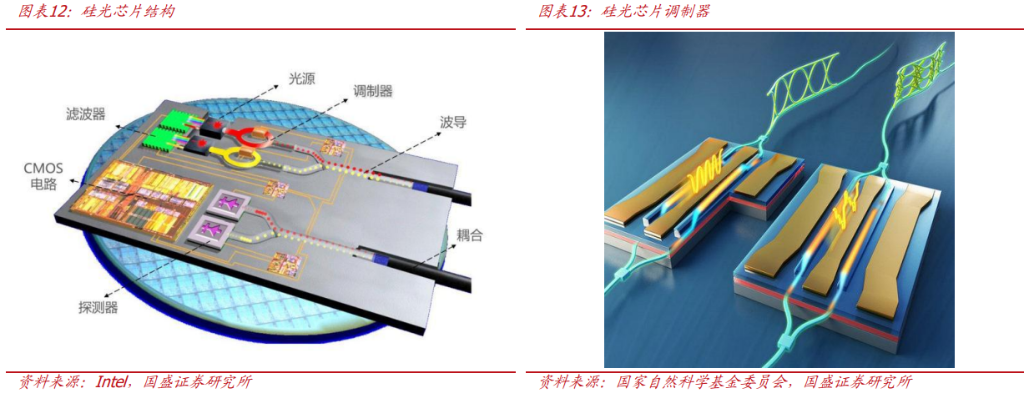
Core Conclusions - The report emphasizes that companies that are the first to enter mass production of silicon photonic modules are likely to enjoy high margins during the industry's acceleration phase and benefit from market share consolidation [1][8] - Leading silicon photonic module manufacturers are expected to receive priority supply chain support, with key materials such as silicon photonic chips and CW light sources likely to see accelerated domestic substitution and market share breakthroughs [1][8] Industry Overview - Since 2025, the optical module industry has maintained high prosperity due to the continuous growth in AI computing demand. Silicon photonic modules are gaining recognition from end customers due to their high integration, low energy consumption, and low cost. Additionally, silicon photonic solutions are becoming a key supplement to capacity supply amid shortages of EML raw materials [5] - Silicon photonic technology is currently in the phase of integration and application, with future trends pointing towards higher speeds, greater integration, advanced packaging, and broader application fields [5] Physical Structure Analysis - Key components of silicon photonic modules include: 1. Lasers: Responsible for converting electrical signals into optical signals, with external CW light sources being the mainstream solution. Heterogeneous bonding technology is expected to become the mainstream solution for on-chip lasers in the future. 2. Modulators: Currently dominated by silicon-based substrates, with MZM being the mainstream solution. Thin-film lithium niobate modulators are expected to see large-scale application in the 3.2T era. 3. Detectors: Silicon-based germanium detectors are the mainstream solution. 4. Other passive devices: Such as (de)multiplexers, resonators, etc. 5. Electrical chips: Such as DSP, TIA, Driver, etc. [6] Industry Chain Analysis - The silicon photonic module industry chain can be divided into several segments: 1. Upstream: Key materials, including silicon photonic chips, which are primarily designed by North American manufacturers. The wafer foundry segment has high process barriers, with capacity concentrated in Tower Semi, GF, and TSMC. 2. CW Light Sources: Mainly composed of InP, with major suppliers including Sumitomo Electric and AXT. Domestic suppliers include Yuanjie Technology and Shijia Photonics. 3. DSP: Mainly designed by Broadcom and Marvell, with TSMC responsible for foundry. 4. Midstream: Optical module packaging, with representative companies such as Zhongji Xuchuang and Xinyi Technology. 5. Downstream: System integrators or end customers [7] Investment Recommendations - Companies that lead in the mass production of silicon photonic modules are expected to enjoy high margins and benefit from market share consolidation during the industry's acceleration phase. Key areas of focus include: 1. Silicon photonic chip design: Attention should be paid to the layout and further participation of optical module manufacturers in the silicon photonic chip design segment, with recommendations to focus on Zhongji Xuchuang and Xinyi Technology. 2. Substrates and epitaxy: Focus on heterogeneous integration and InP material suppliers, recommending Sumitomo Electric and AXT. 3. Silicon photonic wafer foundry: Monitor capacity scale and expansion, as well as the potential for domestic substitution, recommending Tower Semi, GlobalFoundries, TSMC, and SMIC. 4. CW Light Sources: Look for investment opportunities amid supply-demand mismatches and capacity expansion, recommending Yuanjie Technology and Shijia Photonics. 5. Silicon photonic modules: Focus on companies that achieve early scale and technological leadership, which may significantly enhance profitability, recommending Zhongji Xuchuang, Xinyi Technology, Cambridge Technology, Tianfu Communication, and Guangxun Technology [8]
硅光模块行业深度报告:AI驱动高成长,从物理结构和产业链视角拆解硅光投资机会
Western Securities· 2025-12-03 09:33
Investment Rating - The industry investment rating is "Overweight" and has been maintained from the previous rating [11]. Core Insights - The report highlights that the silicon photonics module industry is experiencing high growth driven by increasing AI computing power demands and the advantages of silicon photonics technology, such as high integration, low energy consumption, and cost-effectiveness [7][10]. - The report identifies a shift in the industry towards silicon photonics as a key supply supplement due to shortages in EML raw materials, indicating a growing acceptance of silicon photonics solutions among end customers [27][28]. Summary by Sections Silicon Photonics Technology Overview, Industry Rhythm, and Development Trends - Silicon photonics technology utilizes silicon as the optical medium and is compatible with CMOS processes to manufacture photonic and optoelectronic devices, enabling applications in optical communication and computing [7][16]. - The current stage of silicon photonics technology is focused on integration and application, with future trends pointing towards higher speeds, greater integration, advanced packaging, and broader application fields [29]. Breakdown of Silicon Photonics Principles and Structural Components - Key components include: 1. Lasers: External CW lasers are the mainstream solution, with heterogeneous bonding technology expected to become prevalent for on-chip lasers [8]. 2. Modulators: Silicon-based substrates are predominant, with MZM being the mainstream solution [8]. 3. Detectors: Silicon-germanium detectors are the mainstream solution [8]. 4. Other passive devices include multiplexers and resonators [8]. Analysis of the Silicon Photonics Module Industry Chain - The industry chain is divided into three segments: 1. Upstream: Core materials, including silicon photonic chips, with design led by North American firms and manufacturing concentrated among a few foundries [9]. 2. Midstream: Module packaging, with leading companies closely collaborating with clients and maintaining high market shares [9]. 3. Downstream: System integrators or end customers [9]. Investment Recommendations - Companies that lead in the mass production of silicon photonics modules are expected to enjoy high margins and benefit from market share consolidation [10]. - Key areas of focus include: 1. Silicon photonic chip design: Companies like Zhongji Xuchuang and Xinyi Sheng are recommended for their strategic positioning [10]. 2. Substrate and epitaxy: Companies like Sumitomo Electric and AXT are highlighted for their roles in material supply [10]. 3. Silicon photonic wafer foundries: Tower Semiconductor, GlobalFoundries, TSMC, and SMIC are noted for their capacity and expansion potential [10]. 4. CW light sources: Companies like Yuanjie Technology and Shijia Photonics are recommended due to supply-demand mismatches [10]. 5. Silicon photonic modules: Companies like Zhongji Xuchuang, Xinyi Sheng, Cambridge Technology, Tianfu Communication, and Guangxun Technology are highlighted for their technological leadership [10].
通信ETF(515880)午后涨超1%,光模块景气度与上游供应链引关注
Mei Ri Jing Ji Xin Wen· 2025-11-20 06:21
Group 1 - The optical module industry is experiencing a continuous increase in demand, with high visibility for next year's demand and ongoing upward revisions of order guidance, leading to a supply-demand imbalance becoming the norm in the industry [1] - Key upstream materials affecting the delivery capabilities of optical module manufacturers include EML optical chips, CW light sources, silicon optical chips, and passive optical devices, highlighting investment opportunities in these core upstream segments [1] - Silicon photonics technology is gaining significant advantages and is continuously capturing market share from EML, particularly excelling at 1.6T rates [1] Group 2 - Leading companies in the industry are actively expanding their production capacity, with Tower Semiconductor planning to increase its silicon photonics and silicon germanium business, targeting over $220 million in silicon photonics revenue by 2025 [1] - The optical module and optical chip businesses are transitioning from technological breakthroughs to a phase of scaling up, with future adaptations to market changes expected through deep collaboration and innovation [1] - The Communication ETF (515880) tracks the communication equipment index (931160), focusing on companies involved in communication network infrastructure and terminal equipment production, reflecting the overall performance and development trends of the communication equipment industry [1]