Varsapura

Search documents
再问米哈游“创新不停 瓶颈却至”,下一个爆款究竟在哪里?
Xin Lang Cai Jing· 2026-01-22 06:06
Core Viewpoint - In 2025, miHoYo's performance reflects a duality of innovation persistence and emerging bottlenecks, with significant revenue growth driven by established IPs but concerns over a lack of new product innovation [3][16][27] Revenue and Growth - miHoYo's game business revenue is projected to reach 78 billion, a year-on-year increase of 38%, significantly outpacing Tencent's 8% and NetEase's 12% growth [3][16] - The combined revenue from "Genshin Impact" and "Honkai: Star Rail" is expected to exceed 44 billion, with "Honkai: Star Rail" achieving over 4 billion in annual revenue [3][16] Innovation and Product Development - The company's innovation in 2025 focuses on deepening technology within mature IPs and exploring flagship new products, but it remains tied to a single genre, limiting growth potential compared to Tencent and NetEase's multi-genre strategies [5][18] - The announcement of the UE5 flagship title "Varsapura" is a highlight, yet it is still in the prototype stage and has not yet generated revenue [6][19] Legal and Management Challenges - miHoYo has initiated 12 lawsuits related to leaks, including a record claim of 230 million against the leak of "Varsapura" test materials, indicating a strong stance on protecting innovation [7][20] - Frequent leaks have exposed management vulnerabilities, leading to concerns about user expectations and the potential for reduced innovation space [20] Strategic Focus and Investment - The company's strategy emphasizes focusing on core genres and investing in the supply chain, with three founders maintaining stable roles to support business operations [9][22] - Three invested companies have filed for IPOs in 2025, aiming to cover the entire innovation chain from development to monetization [10][23] Market Position and Competitive Landscape - miHoYo's valuation increased by 38% in 2025, higher than Tencent's decline of 12% but lower than NetEase's 25% growth, indicating a reliance on the success of future products like "Varsapura" for maintaining high valuation [11][24] - The company faces challenges in expanding into new genres and markets, particularly in response to competition from ByteDance's casual games and the lack of a comprehensive monetization strategy [11][24] Conclusion - miHoYo's 2025 performance illustrates a balance between ongoing innovation and the need to overcome strategic conservatism and ecological weaknesses, with future success likely hinging on the successful launch of "Varsapura" and diversification beyond existing IPs [26][27]

游戏主业增长承压 米哈游押注投资与AI,寻求新增长点
Mei Ri Jing Ji Xin Wen· 2026-01-12 14:00
Core Insights - The capital market was disrupted by the investment performance of MiniMax, a gaming company that went public on January 9, 2026, with a closing increase of 109.1% and a market capitalization exceeding 100 billion HKD [1] - MiHoYo, a game company known for its hit title Genshin Impact, has become a significant player in the investment landscape, holding 11.86% of Suplay and 7.34% of MiniMax, showcasing its successful investment strategy [1][2] Investment Strategy - MiHoYo's investment strategy has evolved from financial investments to strategic partnerships, with a focus on leveraging its IP and capital to enhance business growth [3][9] - The company has successfully transformed Suplay, which initially struggled, through an $8 million investment and subsequent IP licensing agreements, leading to a revenue increase from 146 million CNY in 2023 to 281 million CNY in 2024, a growth of 92.5% [4][3] Strategic Collaborations - MiHoYo's investment in MiniMax is characterized by a forward-looking strategy, as it partnered with leading investors in the AI space before the market boom, integrating MiniMax's technology into its games to enhance user experience [5][6] - The collaboration between MiHoYo and MiniMax exemplifies a win-win scenario, where MiHoYo's games provide real-world applications for MiniMax's technology, while the latter enhances the gaming experience [6] Investment Timeline - MiHoYo's investment timeline reflects a shift from focusing on the ACG (Anime, Comic, and Game) ecosystem to exploring cutting-edge technologies, including brain-computer interfaces and nuclear fusion, indicating a strategic foresight into future trends [8][9] - The company has also invested in the AI and social platform Soul, becoming its second-largest institutional shareholder, which aligns with its strategy to tap into the "social + virtual avatar" market [7] Market Challenges - Despite its successful investments, MiHoYo's core gaming business faces challenges, including declining market share and increased competition from Tencent and NetEase, which have pressured its growth [10][11] - The company has seen a drop in its ranking among global mobile game publishers, indicating a need for new breakthroughs to maintain its competitive edge [10][11]
上海交大一间宿舍,走出3个百亿宅男
首席商业评论· 2025-12-14 03:49
Core Viewpoint - The article highlights the remarkable journey of miHoYo, a gaming company that evolved from a small startup to the third-largest gaming company in China, with a valuation of 175 billion yuan, focusing on creating a virtual world that can accommodate a billion people by 2030 [7][34]. Group 1: Company Background and Founding - miHoYo was founded by a group of talented students from Shanghai Jiao Tong University, who initially started with a small loan and a passion for gaming and anime [8][10]. - The founders, including Cai Haoyu and Liu Wei, were recognized for their exceptional academic achievements and shared a common interest in the emerging subculture of anime and gaming [10][12]. - The company was officially established in 2011, with a mission to "save the world through technology" [14][15]. Group 2: Early Challenges and Breakthroughs - The initial years were challenging, with the first game, "Fly Me 2 The Moon," receiving only 3,000 downloads, prompting the team to rethink their business model [16][18]. - miHoYo's breakthrough came with the release of "崩坏学园2" (Honkai Academy 2) in 2014, which capitalized on the rise of mobile gaming and the popularity of the Bilibili platform, leading to significant revenue growth [22][24]. - The company focused on creating a successful commercial product while maintaining its unique style, which resulted in "崩坏学园2" generating revenues of 0.95 billion yuan in 2014 and 2.67 billion yuan in 2016 [24][25]. Group 3: Major Successes and Expansion - The launch of "崩坏3" in 2016 marked a significant turning point, with the game achieving over 1 billion yuan in revenue within the first month and eventually surpassing Tencent's "Honor of Kings" in popularity [29][31]. - Following this success, miHoYo invested heavily in the development of "原神" (Genshin Impact), which was released in 2020 and generated over 3 billion USD in its first month, solidifying the company's position in the global gaming market [32][34]. - By 2022, miHoYo had become the third-largest gaming company in China, with revenues of 27.34 billion yuan, primarily driven by "原神" and "崩坏: 星穹铁道" [36][37]. Group 4: Future Aspirations and Innovations - miHoYo aims to create a virtual world that can host a billion users by 2030, expanding its focus beyond gaming to include AI, brain-computer interfaces, and nuclear fusion technologies [39][41]. - The company has established partnerships with institutions like Shanghai Jiao Tong University to develop cutting-edge technologies and has launched new ventures in AI and the metaverse [39][41]. - The upcoming game "Varsapura" is positioned as a key step towards achieving the ambitious goal of creating a more immersive virtual world [43][45].

一场游戏圈赛博围猎后,没有人是赢家
3 6 Ke· 2025-12-08 11:32
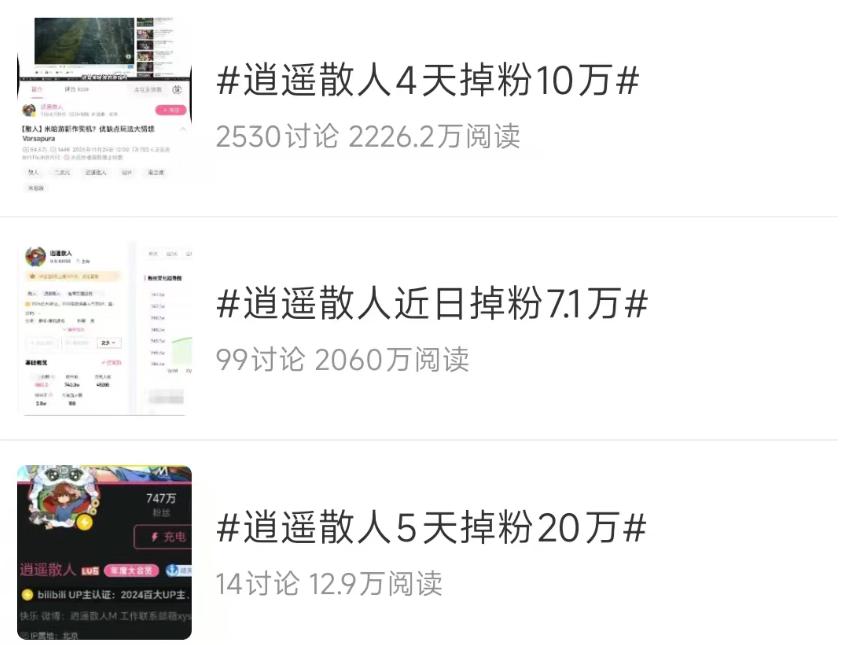
Group 1 - The article discusses a recent controversy in the gaming industry involving miHoYo's new game "Varsapura" and the backlash against a character named "Dahlia" from "Honkai: Star Rail," which some players believe exploits a historical murder case [5][8][22] - The controversy escalated when a prominent Bilibili content creator, known as "Xiaoyao Sanren," faced criticism for his video on the game, leading to accusations of indirectly supporting miHoYo during a sensitive time [8][15] - Players expressed their dissatisfaction with miHoYo's silence on the issue, which intensified the backlash, resulting in some content creators severing ties with the company [11][13][21] Group 2 - The backlash against miHoYo and Xiaoyao Sanren reflects a broader trend in the gaming community where issues of political correctness and gender representation are increasingly scrutinized [22][36] - The article highlights that this controversy is not isolated, as miHoYo has faced similar issues in the past, but the current situation is marked by a more severe focus on political correctness [22][31] - The gaming community is becoming more polarized, with players prioritizing identity politics over the enjoyment of the games themselves, leading to a fragmented environment [39][41]
次世代游戏公司,困在性别里
3 6 Ke· 2025-12-05 08:15
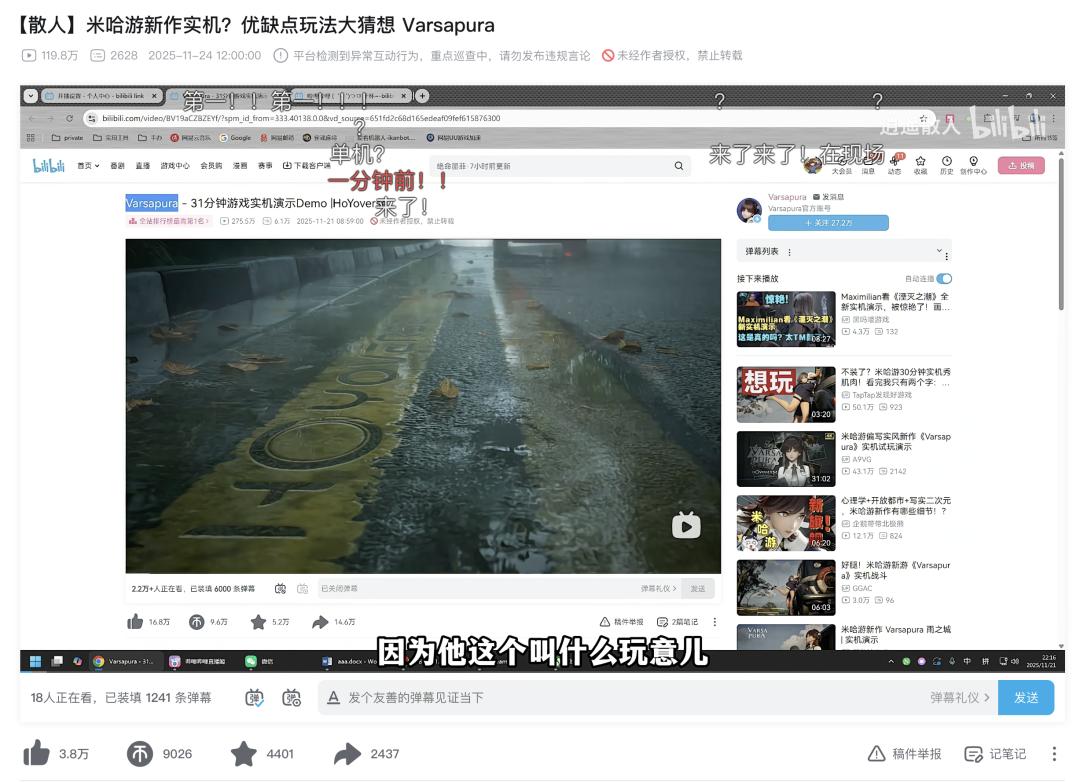
Core Viewpoint - The incident involving the content creator "逍遥散人" highlights the challenges faced by next-generation gaming companies in navigating gender issues and community expectations, particularly in relation to the game "Varsapura" [1][4][28]. Group 1: Incident Overview - The release of a gameplay video for "Varsapura" led to a significant backlash against the content creator, resulting in a loss of 450,000 followers and the termination of collaborations with brands [1][3]. - The creator's response to fans urging him to delete the video was perceived as a betrayal by his predominantly female audience, leading to further scrutiny of his past statements [3][4]. Group 2: Industry Trends - The gaming company miHoYo has shifted its strategy, releasing multiple game trailers in a year, contrasting with its previous approach of lengthy development cycles [7][8]. - The company has introduced diverse game types, yet the core narrative remains consistent with its established style, which may not meet the evolving expectations of its audience [9]. Group 3: Gender Dynamics in Gaming - The incident reflects a broader issue within the gaming industry where companies are labeled based on gender perceptions, impacting their ability to innovate and expand their offerings [19][21]. - Players' emotional investments in gendered branding create a challenging environment for companies attempting to diversify their game portfolios, often leading to backlash when they deviate from established norms [22][27]. Group 4: Consequences of Labeling - The labeling of companies as "female-friendly" or "male-oriented" can restrict their market strategies, making them hesitant to explore new genres or themes [28][34]. - The cycle of backlash against companies attempting to break gender norms can lead to a reduction in the diversity of games available to players, ultimately harming the gaming ecosystem [36].