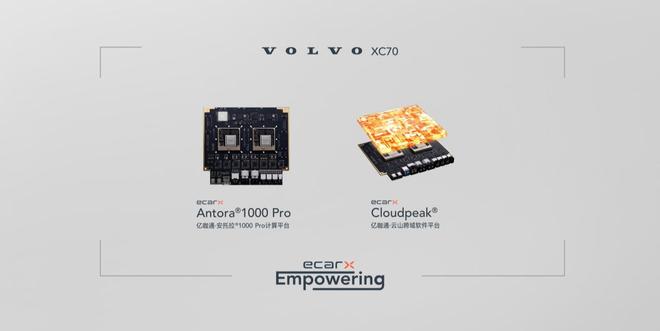
XC70

Search documents
车企“比惨大会”召开!全是特朗普惹的祸?
电动车公社· 2026-02-14 16:05
Core Insights - The global automotive landscape is undergoing significant changes due to the rise of new energy vehicles, with Chinese automakers emerging as top competitors while traditional giants face strategic transformation challenges [1][2]. Group 1: Tesla - Tesla's 2025 financial report shows total revenue of $94.827 billion, a 3% year-over-year decline, marking the first revenue drop in its history [7]. - The company delivered 1.636 million vehicles in 2025, an 8.6% decrease from 2024, leading to a 10% drop in automotive revenue, which constitutes over 70% of total income [9]. - Despite record revenue from energy generation and storage, Tesla's overall revenue decline remains unmitigated [10]. - R&D investment surged by 41% to $6.411 billion, focusing on autonomous driving and humanoid robots, indicating a shift in strategic priorities [14]. Group 2: General Motors - General Motors reported 2025 revenue of $185 billion, down 1.3%, with net profit falling 55.1% to $2.697 billion due to a $7.9 billion charge for strategic restructuring [17][19]. - The company maintains strong cash flow of $10.6 billion despite the profit drop, attributed to one-time restructuring costs and market adjustments [20]. - GM's outlook for 2026 is optimistic, expecting net profit between $10.3 billion and $11.7 billion, supported by a solid market position in the U.S. and new product launches in China [24]. Group 3: Ford - Ford's 2025 revenue reached $187.3 billion, a 1% increase, but it reported a net loss of $8.2 billion, primarily due to a $19.5 billion charge related to electric vehicle restructuring [26][30]. - The company faces challenges similar to GM, with traditional vehicles performing well while electric vehicle strategies require adjustment [32]. Group 4: Hyundai - Hyundai's 2025 revenue was 186.3 trillion KRW (approximately 888.7 billion RMB), a 6.3% increase, but operating profit fell 19.5% to 11.47 trillion KRW [34]. - The decline in profit is largely due to increased tariffs on exports to the U.S., despite a reduction in tariffs effective November 2025 [38]. - The company is also navigating the transition to electric vehicles, which requires adjustments to its product lineup [39]. Group 5: Volvo - Volvo's 2025 revenue was 357.3 billion SEK (approximately 278.8 billion RMB), down 11%, with operating profit plummeting 99% [42]. - The decline is attributed to tariffs, weak demand, and price pressures, prompting a cost-cutting plan involving layoffs [45]. - Despite challenges, Volvo's electric vehicle offerings are performing well, particularly in the Chinese market [48]. Group 6: Great Wall Motors - Great Wall Motors reported 2025 revenue of 222.79 billion RMB, a 10.19% increase, but net profit fell 21.71% to 9.912 billion RMB [52]. - The company achieved record sales of 1.3237 million vehicles, indicating strong growth despite profit declines due to increased investments in new technologies and marketing [54]. - The focus on electric vehicle development, particularly through its premium brand WEY, is expected to enhance growth potential [56]. Group 7: GAC Group - GAC Group's 2025 sales fell 14.06% to 1.72 million vehicles, with a projected loss of 8-9 billion RMB [58]. - The decline is linked to poor performance in traditional fuel vehicles and slower growth in its electric vehicle segment [59]. - The company is pursuing deep collaborations with local suppliers to accelerate its electrification strategy [60]. Group 8: Toyota - Toyota's revenue for the first three quarters of the 2026 fiscal year was 38.09 trillion JPY (approximately 1.72 trillion RMB), a 6.8% increase, but net profit dropped 26.1% to 3.03 trillion JPY [63]. - The profit decline is primarily due to the impact of U.S. tariff policies, despite a 10.5% profit increase in the Chinese market [66][68]. - Toyota is implementing a company-wide plan to reduce its breakeven point and improve operational efficiency [71].






沃尔沃2025全年销量下滑7%,但12月销量增长2%
Xin Lang Cai Jing· 2026-01-08 10:44
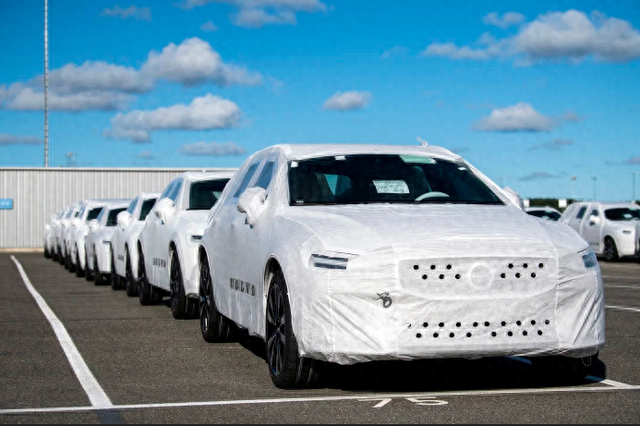
Core Insights - Volvo's global sales are projected to grow by 2% to 75,000 units by December 2025, despite a slight decline in the European market [1][3] - The overall sales for Volvo in 2025 are expected to decrease by 7% to 710,000 units, with the XC60 SUV being the best-selling model at 230,000 units [1] - Key markets for Volvo include China, the United States, the United Kingdom, Germany, and Sweden [1] Sales Performance - Sales in Europe decreased by 0.2%, while the U.S. and China saw increases of 0.8% and 1.2%, respectively [1] - The growth in sales is attributed to the rise in demand for pure electric and plug-in hybrid products [3] - The XC70 plug-in hybrid model, launched in China, is experiencing increasing sales and is planned for a later release in Europe [3]
Volvo Car (OTCPK:VLVC.Y) Update / Briefing Transcript
2025-11-06 09:02
Volvo Car Update Summary Company Overview - **Company**: Volvo Cars (OTCPK: VLVC.Y) - **Date of Briefing**: November 06, 2025 Key Industry Insights - **Electrification**: The automotive industry is shifting towards electrification as the primary growth segment, with Battery Electric Vehicles (BEVs) being the only segment showing growth while traditional Internal Combustion Engine (ICE) vehicles are declining [22][50]. - **Hyper Competition**: The industry is experiencing increased competition, particularly from new entrants in the Chinese market, which is affecting Western manufacturers [8][17]. - **Globalization to Regionalization**: The market is transitioning from globalization to regionalization, necessitating localized strategies for marketing and production [12][58]. Core Company Strategies 1. **Cost and Cash Program**: Volvo has initiated a SEK 18 billion cost and cash program aimed at improving performance and profitability, with early signs of success [4]. 2. **Product Strategy**: The introduction of the EX60 is expected to increase the addressable BEV market by 200%, expanding Volvo's market share significantly [26]. 3. **Electrification Commitment**: Volvo aims to have a fully electric lineup by 2030, with a focus on addressing customer concerns regarding range, charging time, and pricing parity with ICE vehicles [10][32]. 4. **Core Computing System**: Development of a unified software platform to enhance vehicle features and reduce reliance on multiple suppliers [11][60]. Financial Performance and Growth - **Market Share**: The XC90 petrol and PHEV versions hold significant market shares of 18% and 22% respectively in the large SUV segment [24]. - **Order Growth**: There has been a notable increase in year-over-year retail order growth for BEVs in Europe, indicating a positive market trend [27]. - **Profitability Goals**: The company anticipates a 2-3 percentage point increase in profitability driven by electrification and a diversified product lineup [45]. Customer-Centric Approach - **Simplified Offerings**: Volvo plans to streamline its product offerings to enhance customer experience, focusing on transparency and ease of purchase [34][40]. - **Targeted Marketing**: A shift towards more efficient, targeted marketing strategies to reach specific consumer demographics, such as the Latino community in the U.S. [41][43]. - **Digital Transformation**: Implementation of AI-driven tools to improve the online car buying experience and customer engagement [38][39]. Challenges and Solutions - **Customer Hesitation**: Addressing customer concerns about BEVs, including range anxiety and charging infrastructure, is critical for market acceptance [30][32]. - **Regional Adaptation**: Tailoring products to meet the specific needs of different markets, such as the U.S. and China, to avoid logistical and tariff costs [58][59]. Conclusion Volvo Cars is positioning itself as a leader in the transition to electrification while navigating the challenges of hyper competition and regionalization. The company's strategic focus on cost reduction, product innovation, and customer-centric approaches aims to enhance profitability and market share in the evolving automotive landscape.
直击2025成都车展|鸿蒙智行集齐“五界”品牌,小米汽车首次参展
Zhong Guo Zheng Quan Bao - Zhong Zheng Wang· 2025-08-31 00:49
Core Insights - The 28th Chengdu International Auto Show has opened with a theme of "Leading the Trend, Moving Towards the New," featuring nearly 120 automotive brands and over 1,600 vehicles on display, covering an area of 220,000 square meters [1] - The exhibition area for new energy brands has expanded by 40% compared to last year, marking a historical high, with significant participation from companies like Xiaomi, BYD, and Changan [1] - The auto show is seen as a crucial indicator for the development of the automotive market in Central and Western China, with expectations of stimulating automotive consumption in the second half of the year [1] Industry Trends - Domestic brands have emerged as the main attraction at the auto show, with a reported retail sales growth of 10.2% in the passenger car market for the first seven months of 2025 [2] - The new energy vehicle market has seen a significant increase, with cumulative retail sales reaching 6.455 million units, a year-on-year growth of 29.5% and a penetration rate of 50.7% [2] - Major brands like NIO, Leap Motor, and Hongmeng Zhixing have expanded their exhibition spaces, showcasing new models and technologies [2][3] Product Launches - Numerous models made their global or Chinese debuts at the auto show, highlighting the increasing trends of electrification and smart technology in vehicle design [4] - Foreign and joint venture brands are focusing on "electrification" and "localization," with Volvo and Mercedes-Benz showcasing new models that emphasize safety and environmental considerations [5] - The auto show serves as a key platform for connecting the global automotive industry chain and promoting regional consumption upgrades in Central and Western China [5] Market Outlook - The auto show is expected to boost consumer purchasing desires, with many new models reportedly setting new pre-order records [6] - The automotive industry is showing signs of improvement, with projections for 2025 indicating a 6% growth in domestic passenger car retail sales and a 27% increase in new energy vehicle wholesale [6]
亿咖通押注全栈智能,借沃尔沃新车量产切入豪华赛道
Jing Ji Guan Cha Bao· 2025-08-29 11:32
Group 1 - Volvo launched the new XC70 in China on August 27, which features the latest intelligent cockpit solution from ECX, a company under the Geely system [2] - ECX has been enhancing its "hardware-software integration" capabilities, with the Antora® 1000 Pro computing platform and the Cloud Mountain cross-domain software platform being key to penetrating the high-end market [2] - The collaboration model between ECX and Volvo signifies a shift from traditional parts supply to joint development between automotive and technology companies, marking a significant milestone for ECX in the luxury brand ecosystem [2] Group 2 - In the capital market, the narrative of intelligence has become a crucial component of automotive company valuations, and ECX's ability to leverage full-stack technology and luxury brand endorsement will determine its growth potential [3] - The XC70 represents just the beginning for ECX, with the real challenge being its ability to prove its irreplaceability in more high-end projects in the coming years [3]