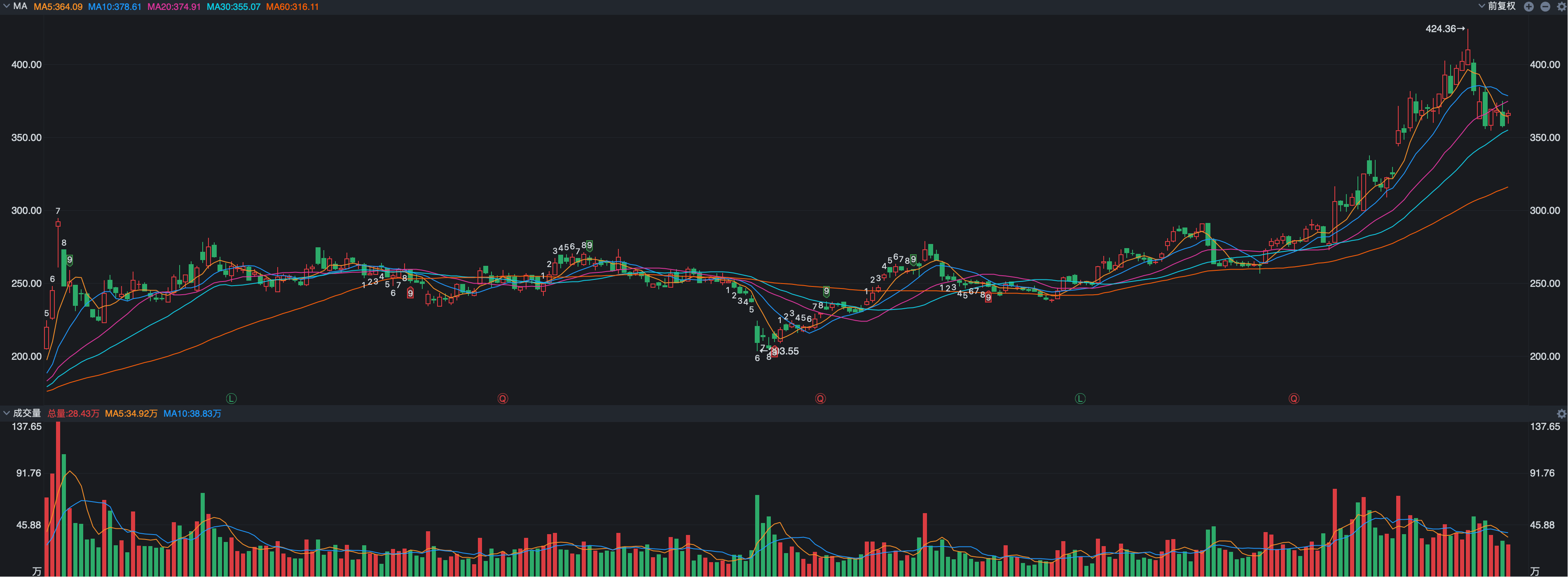
iPhone 17标准版

Search documents
国人太买单!iPhone 17国内销量突破1550万台:安卓等厂商要加油了
Xin Lang Cai Jing· 2026-01-07 01:45
Core Insights - The iPhone 17 series has achieved sales exceeding 15 million units in China, with a total of 15.57 million units sold as of week 52 of 2025 [1][6] - The standard version of the iPhone 17 has been the primary driver of this sales growth [1][6] Sales Performance - The iPhone 17 standard version's sales in China are nearly double that of the iPhone 16 during the same period [2][7] - The success of the standard version is attributed to its "more for the same price" strategy, which includes an upgrade from 128GB to 256GB storage while maintaining the same price [2][7] Market Position - Given the current sales momentum, Apple is likely to maintain its position as the leading global smartphone vendor in 2026, despite competition from Xiaomi and Huawei [2][7] - The high-end market remains less threatened by competitors, reinforcing Apple's stronghold under CEO Tim Cook [2][7]



iPhone 17系列中国销量破1500万 标准版成增长主力
Xin Lang Cai Jing· 2026-01-07 01:40
Core Insights - The iPhone 17 series has shown strong sales performance in the Chinese market, surpassing 15 million units sold, with a cumulative sales figure of 15.57 million units as of week 52 of 2025, indicating robust market appeal [2][3] - The standard model of the iPhone 17 has become the key driver of overall sales growth, with its sales nearly doubling compared to the previous generation during the same period [2][3] - The growth in sales is attributed to a more competitive product positioning, with significant upgrades including an increase in base storage capacity from 128GB to 256GB and the introduction of a 120Hz ProMotion adaptive refresh rate display, enhancing user experience [2][3] Industry Position - Apple maintains a solid lead in the high-end smartphone market, facing competition from local brands that have not yet posed a substantial challenge in this segment [3] - With ongoing product innovation and strong user loyalty, Apple is expected to continue leading global smartphone shipments through 2026 [3]
后悔药难买!中国关税低于印度,苹果100亿投资套牢印度!
Sou Hu Cai Jing· 2025-11-20 23:24
Group 1: Tariff Policy Changes - The average tariff on U.S. imports from India surged from 10% to 17.3% in 2025, while tariffs on electronic products from China decreased from 25% to 15% due to a temporary trade agreement [1][3] - This policy reversal has disrupted Apple's supply chain strategy, leading to increased export costs for iPhones produced in India [3] Group 2: Cost and Efficiency Challenges in India - Apple faces a 2.3 percentage point price difference due to the higher 17.3% tariff on Indian iPhones compared to the 15% tariff on Chinese counterparts [3] - 80% of camera modules and 60% of OLED panels for Indian factories are imported from China, increasing overall costs by 5-10% [4] - Production efficiency in India is significantly lower, with output per worker at only 50% of that in China and an automation rate of less than 30% [4] Group 3: Policy Risks and Geopolitical Dynamics - India's tax pressure on Apple reflects a broader strategy of redistributing globalization benefits, utilizing legal tools to claim a portion of Apple's global profits [5] - The fiscal crisis in India, with a deficit rate of 7.3% and a 12% depreciation of the rupee, has led to increased taxation on multinational companies as a quick fix for revenue [5] Group 4: Strategic Dilemmas for Apple - Apple has invested over $5 billion in India, creating five factories and employing 150,000 workers, making immediate withdrawal costly [6] - The Indian smartphone market is rapidly growing, with Apple's market share reaching 8% in 2025, presenting a dilemma between maintaining investment and facing increased costs [6] Group 5: China's Competitive Advantages - China's vertical integration allows for production line changes within 72 hours, compared to 2-3 weeks in India, highlighting a significant operational advantage [8] - China has a larger pool of electronic engineers, with 60% of the global total, compared to India's 15%, enhancing its manufacturing capabilities [8] - Policy stability in China, through mechanisms like the "chain long system," ensures a reliable supply of raw materials, contrasting with India's delayed subsidy disbursements [8] Group 6: Insights on Global Supply Chains - Apple's challenges in India illustrate the complexities of supply chain restructuring driven by geopolitical factors, emphasizing the importance of policy stability and mature industrial ecosystems [9] - The case reinforces the strategic value of a complete industrial chain, suggesting that even with tariff pressures, a mature manufacturing ecosystem can offset cost disadvantages [9]
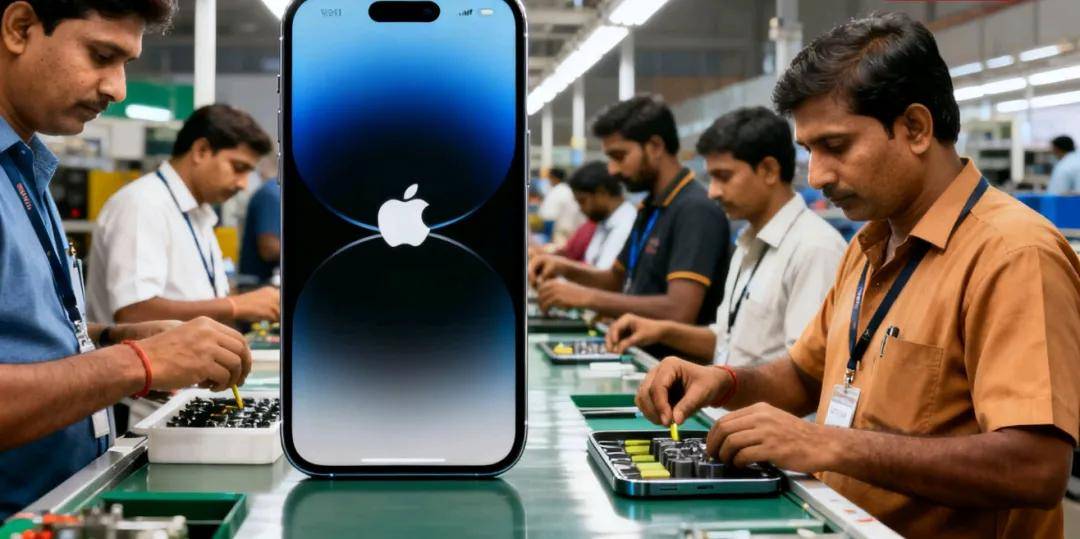
iPhone Air遇冷 下一代恐推迟发布
Bei Jing Shang Bao· 2025-11-11 15:49
Core Viewpoint - Apple has decided to postpone the release of the next-generation iPhone Air due to lower-than-expected sales, significantly impacting its supply chain [1][2]. Group 1: Product Release and Supply Chain Impact - Apple has informed internal engineers and external suppliers to remove the iPhone Air 2 development project from the 2026 fall release schedule, with no new timeline provided [1]. - Foxconn, one of the assembly partners for iPhone Air, has dismantled all but one production line and is expected to cease production by the end of the month [1]. - Another partner, Luxshare Precision, completed its production tasks by the end of October [1]. Group 2: Market Performance and Consumer Reception - The iPhone Air, positioned between the iPhone 17 standard and Pro versions, has not met sales expectations, partly due to its high starting price of $999 and compromises in key configurations [2][3]. - The iPhone Air's initial pre-order phase saw rapid sell-outs, but the market interest did not sustain after the official launch on October 22 [2]. - Complicated eSIM activation processes have deterred some consumers from purchasing the iPhone Air [2]. Group 3: Analysis of Market Positioning - Analysts suggest that the existing iPhone 17 Pro and standard models adequately meet high-end user needs, leaving little room for the iPhone Air to carve out a new market segment [3][4]. - Historical attempts by Apple to introduce new models like the mini and Plus have also failed to establish new market segments, indicating a pattern of challenges in expanding the iPhone lineup [3][4]. - The iPhone Air's ultra-thin design has been criticized for sacrificing user experience, with consumers favoring models that offer better performance and features [4][5].
iPhoneAir销量未达预期推迟发布,富士康拆除生产线
Xin Lang Ke Ji· 2025-11-11 11:12
Core Viewpoint - Apple has decided to postpone the release of the next-generation iPhone Air due to disappointing sales, significantly impacting the supply chain [1][2]. Group 1: Product Development and Release - Apple has removed the iPhone Air 2 development project from the 2026 fall release schedule and has not provided a new timeline [1]. - The iPhone Air was initially planned to launch alongside the iPhone 18 Pro series and iPhone Fold [1]. - Industry insiders suggest that Apple may redesign the iPhone Air and potentially release it in spring 2027 alongside the iPhone 18 and iPhone 18e [1]. Group 2: Supply Chain Impact - Foxconn, one of the assembly partners for iPhone Air, has dismantled all but one and a half production lines and is expected to cease production by the end of the month [1]. - Another partner, Luxshare Precision, ended its production tasks by the end of October [1]. - Analysts predict that by the first quarter of 2026, most suppliers will reduce their production capacity by over 80%, with some long-lead components expected to cease production by the end of 2025 [2]. Group 3: Market Performance and Consumer Response - The iPhone Air, positioned between the iPhone 17 standard and Pro versions, features the thinnest body in iPhone history at 5.6 mm and weighs 165 grams, but its high starting price of $999 has limited consumer interest [2]. - Initial pre-orders for the iPhone Air sold out quickly, but the market enthusiasm did not continue after the official release on October 22 [2]. - Complicated eSIM activation processes have also deterred potential buyers [2]. Group 4: Competitive Landscape - Existing iPhone 17 Pro and standard models effectively meet the needs of most high-end users, leaving little room for the iPhone Air to capture new market segments [3]. - Historical analysis shows that previous models like mini, Plus, and now Air have failed to successfully carve out new market niches [3].
苹果或推迟发布下一代iPhone Air,富士康已拆除大量生产线
Xin Lang Cai Jing· 2025-11-11 07:13
Core Insights - Apple has decided to postpone the release of the next-generation iPhone Air due to lower-than-expected sales, significantly impacting its supply chain [1] - The iPhone Air 2 development project has been removed from the 2026 fall release schedule, with no new timeline provided [1] - Apple may redesign the iPhone Air for a potential launch in spring 2027 alongside the iPhone 18 and iPhone 18e [1] Product Details - The iPhone Air is positioned between the iPhone 17 standard and iPhone 17 Pro, featuring the thinnest body in iPhone history at 5.6 mm and weighing 165 grams [2] - It has a 5-level titanium frame made of 80% recycled titanium, ensuring both lightness and durability, and is the first smartphone to support only eSIM [2] Market Performance - The starting price of the iPhone Air is $999, which does not significantly differ from the standard high-end models, leading to consumer preference for the more feature-rich iPhone 17 standard or Pro versions [4] - The iPhone Air's initial pre-order phase saw rapid sell-outs, but the market enthusiasm did not continue post-launch, partly due to the cumbersome eSIM activation process [6] - Analysts predict that by Q1 2026, most suppliers will reduce their production capacity by over 80% due to the lack of demand for the iPhone Air [6] Historical Context - Previous models like the iPhone mini, Plus, and now the Air have failed to successfully carve out new market segments, with the mini being too small for most users and the Plus lacking sufficient differentiation in performance and price [7]
iPhone17 Pro氧化问题越来越严重,苹果正调查原因
Guan Cha Zhe Wang· 2025-10-27 12:41
Core Viewpoint - Apple is reportedly recalling iPhone 17 Pro and iPhone 17 Pro Max devices due to a color fading issue, which is believed to be a limited manufacturing defect rather than a widespread problem [1][9]. Group 1: Issue Overview - Users have reported color changes in their iPhone 17 Pro and Pro Max, particularly in the "Starry Orange" color, leading to significant attention on social media [1]. - The fading issue has been observed mainly at the edges and around the camera bump, while the back panel with the Apple logo remains largely unchanged [1]. - Some users have also noted similar fading in the deep blue version of the iPhone 17 Pro, although the color difference is less pronounced [3]. Group 2: Technical Analysis - Apple has advised against using bleach or hydrogen peroxide for cleaning the iPhone 17 Pro, suggesting that exposure to such substances or prolonged UV light may contribute to the discoloration [7]. - Analysts suggest that the issue may stem from the aluminum alloy used in the iPhone 17 Pro, which is less corrosion-resistant than the titanium alloy used in previous models, making it more susceptible to oxidation [7]. - The anodization process, which is intended to protect the aluminum, may not have been properly sealed during production, allowing the aluminum to oxidize and change color [8]. Group 3: Company Response - As of now, Apple has not officially responded to the reports of color fading, but users have indicated that Apple is providing replacement services for affected devices [9].

拆完iPhone Air后,我觉得苹果还有牙膏能挤
3 6 Ke· 2025-10-27 04:21
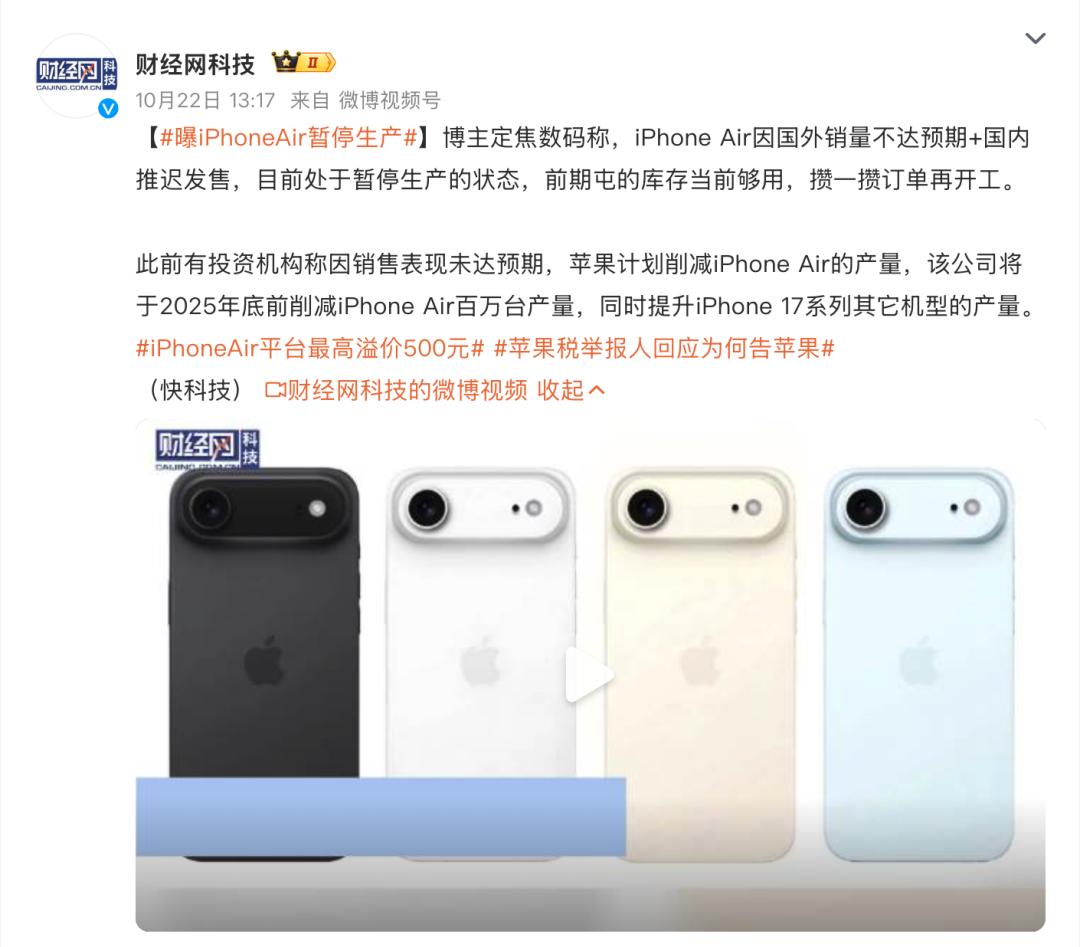
Core Viewpoint - The iPhone Air is not discontinued; rather, it is in a temporary halt of metal component production due to sufficient existing inventory to meet current orders. Apple plans to resume production after accumulating more orders [4][5]. Sales Expectations - Initial sales expectations for the iPhone Air were low, with internal estimates around one million units, compared to tens of millions for the iPhone 17 standard and Pro versions [5]. Technical Exploration - The iPhone Air serves as a platform for Apple's future technological explorations, focusing on materials, design, and miniaturization of components, rather than solely testing for foldable screens [11][56]. Material and Design Innovations - The iPhone Air is the only model this year to utilize grade 5 titanium, which enhances strength, heat resistance, and durability compared to pure titanium [15][18][21]. - The device features a unique stacking design that optimizes internal space, allowing for a larger battery while maintaining structural integrity [24][26]. Component Miniaturization - The iPhone Air employs a dual-layer stacked motherboard, significantly reducing thickness and weight while maintaining high processing power, indicating potential applications in wearable technology [42][46]. - The use of System-in-Package (SiP) technology allows for higher integration and performance in a smaller footprint, reflecting a shift in Apple's design philosophy towards prioritizing compactness and efficiency [46][52]. Future Directions - The iPhone Air embodies Apple's commitment to innovative design and future technology, hinting at aspirations for a more integrated and advanced device, potentially resembling a transparent iPhone [56][58].
A股早评:创业板指高开0.81%,可燃冰、黄金、苹果概念盘初活跃
Ge Long Hui· 2025-10-21 01:35
Core Viewpoint - The A-share market opened with all three major indices rising, indicating positive market sentiment and investor confidence [1] Group 1: Market Performance - The Shanghai Composite Index opened up 0.18% at 3870.75 points [1] - The Shenzhen Component Index opened up 0.52% [1] - The ChiNext Index opened up 0.81% [1] Group 2: Sector Performance - Energy sectors such as shale gas and combustible ice opened high, with ShenKong Co. and Petrochemical Machinery hitting the daily limit, and DeShi Co. rising over 15% [1] - Gold stocks continued their upward trend, with Zhaojin Mining, Sichuan Gold, and Zhongjin Gold each rising over 3% as spot gold prices surpassed $4381 per ounce, reaching a new high [1] - Apple-related stocks opened high, with Muzi Technology rising nearly 11%, and Lens Technology and Luxshare Precision both increasing by about 5%, driven by a significant increase in iPhone 17 standard edition sales, while Apple shares rose nearly 4% overnight [1] - The port and shipping sector opened lower, with Haitong Development falling over 8% and Haixia Co. dropping over 4% [1]

LPR为何持续按兵不动,宁王业绩超预期,带来啥影响?
Sou Hu Cai Jing· 2025-10-21 00:44
Group 1: Monetary Policy and LPR - The People's Bank of China (PBOC) has kept the Loan Prime Rate (LPR) unchanged at 3% for 1-year and 3.5% for over 5 years for five consecutive months [1] - The stability in LPR is attributed to several factors, including the historical low net interest margin of commercial banks, lack of tight funding conditions, and the need to avoid widening the interest rate differential with the US [1][2] - The PBOC's approach to LPR adjustments is strategic, focusing on actual market demand rather than blindly lowering rates to stimulate financing [2] Group 2: Company Performance - CATL reported a net profit of 18.55 billion yuan for Q3 2025, a year-on-year increase of 41.21%, with a total net profit of 49 billion yuan for the first three quarters, up 36.2% [4] - The performance of CATL is seen as exceeding expectations, providing support for its stock price despite concerns about high valuations [4] - CATL's growth rate remains robust, suggesting strong operational performance akin to that of a younger company, contributing to its stock price doubling since its Hong Kong listing [4] Group 3: Consumer Electronics - iPhone 17 standard version sales have surged, nearly doubling those of the iPhone 16, attributed to improved specifications without a price increase [4] - The strong sales reflect the market's positive response to Apple's ecosystem and product quality, reinforcing confidence in Apple's future growth and its supply chain [5]